HTPB in Construction: Fireproof and Moisture-Proof Materials
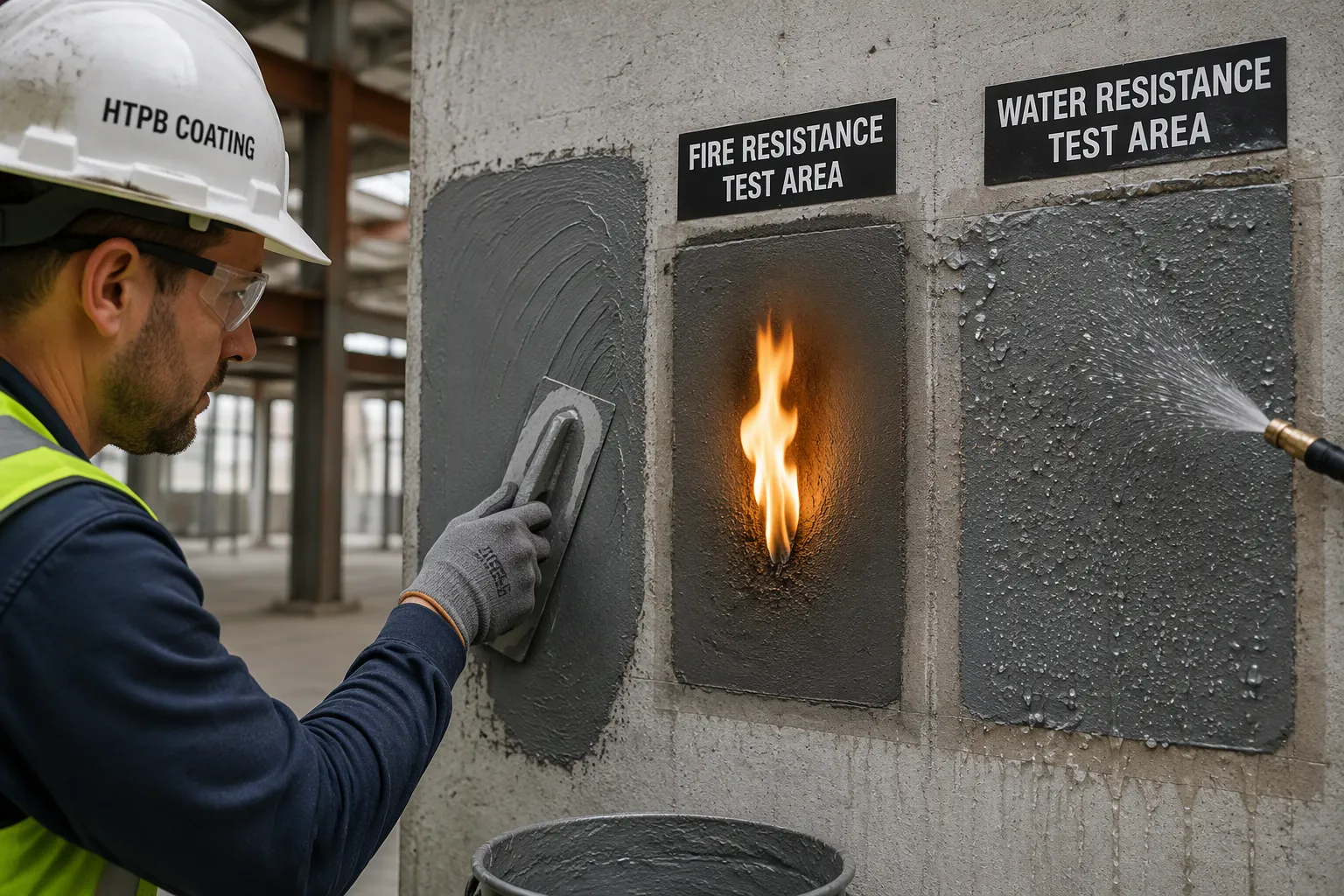
HTPB cures into a hydrophobic, rubber-tough polymer. This polymer forms a char layer instead of dripping when exposed to flame. One material therefore delivers both a moisture barrier and fire-resistant protection. As a reactive liquid resin, HTPB bonds chemically to concrete, metal, and insulation. Protection becomes integral to the substrate rather than a coating that peels. These combined properties drive the growing application of Hydroxyl-Terminated Polybutadiene (HTPB) in fireproof and moisture-proof materials for construction. Formulators increasingly use HTPB in sealants, waterproof membranes, and composite panels for roofs, basements, and facades.
Key Takeaways
- HTPB provides both fire and moisture protection in one material.
- HTPB bonds chemically to surfaces, creating a durable and seamless barrier.
- HTPB saves money over time by reducing repairs and extending service life.
Fireproof Applications of Hydroxyl-Terminated Polybutadiene (HTPB) in Construction
How HTPB Forms a Fire-Resistant Char Layer
HTPB burns in a very different way from most organic polymers. Common plastics melt and drip when a flame reaches them. HTPB does not. The polymer chain has a butadiene backbone with a high carbon content and a low oxygen content. Heat drives the resin through a decomposition path that releases volatile fragments and leaves a carbon-rich residue behind. That residue builds into a continuous char layer on the surface.
The char layer does most of the protective work. It acts as a thermal shield between the flame and the unburned material underneath. It also limits the flow of fuel vapor toward the flame zone. A dense, coherent char slows heat transfer and starves the fire. HTPB chemistry favors this outcome because the backbone crosslinks during cure. A crosslinked network holds its shape under heat instead of flowing away.
Formulators strengthen the char with additives. Phosphorus compounds push the residue yield higher. Mineral fillers such as aluminum trihydroxide release water vapor and cool the surface. Intumescent packages expand the char into a thick, insulating foam. Each additive changes the char structure, so the fire performance of an HTPB system depends on the full formulation, not on the resin alone. This char-forming behavior sits at the center of the Application of Hydroxyl-Terminated Polybutadiene (HTPB) in Fireproof and Moisture-Proof Materials for Construction.
Formulations and Fire Performance Data
An HTPB fire-protective formulation typically contains four building blocks. The resin provides the crosslinkable backbone. A curative such as an isocyanate or a peroxide system sets the network. Fillers and flame retardants tune the fire response. Additives control viscosity, adhesion, and cure speed. The ratio of these components decides how the material performs in a fire test.
Typical fire performance ranges for filled HTPB systems appear below. Actual values depend on formulation, thickness, and test method, so engineers should always request test data for the specific product.
| Property | Typical Range for Filled HTPB Systems | Test Basis |
|---|---|---|
| Limiting oxygen index | 26–32 percent | ASTM D2863 |
| Peak heat release rate | 40–120 kW/m² | Cone calorimeter, ASTM E1354 |
| Char residue at 600 °C | 20–45 percent by mass | Thermogravimetric analysis |
| Flame spread index | 10–25 | ASTM E84 |
| Smoke developed index | 50–200 | ASTM E84 |
Higher filler loading usually lowers the heat release rate and raises the char yield. The trade-off is viscosity and flexibility. A heavily filled system becomes harder to apply and less elastic. Formulators balance fire performance against the mechanical demands of the joint or membrane. Thick sections perform better than thin ones because the char layer needs depth to insulate effectively.
Application Methods for Fire-Rated Assemblies
HTPB systems reach fire-rated assemblies through several application routes. Each route suits a different construction detail.
Spray application works well for large surfaces such as structural steel and tunnel linings. Two-component spray equipment meters and mixes the resin and curative at the nozzle. The material builds thickness in passes. Spray crews control film thickness with wet-film gauges and verify it after cure.
Trowel and cast application suits thick intumescent layers and penetration seals. The mixed resin flows into voids around pipes and cables. It cures in place and forms a tight seal that expands under fire exposure.
Injection methods fill cracks and joints in fire-rated walls and floors. Low-viscosity HTPB grouts penetrate narrow gaps and bond to the surrounding concrete. Preformed HTPB strips and gaskets serve curtain wall joints and expansion gaps. Factory cure gives these products consistent properties.
Composite panels represent another growing route. Manufacturers sandwich HTPB-based layers between facings to build fire-resistant cladding and roof panels. The resin bonds to the facings during lamination. This bonding supports the Application of Hydroxyl-Terminated Polybutadiene (HTPB) in Fireproof and Moisture-Proof Materials for Construction across prefabricated building systems.
Fire Codes and Test Standards
Fire codes treat HTPB systems like other fire-protective materials. The product must pass recognized tests, and the assembly must meet the code requirements for its occupancy and location.
Common test standards include ASTM E84 for surface burning characteristics, ASTM E119 for fire-resistance ratings of assemblies, and ASTM E814 for penetration firestops. UL 263 covers fire-resistance ratings in the United States, and UL 723 covers surface burning. European projects often reference EN 13501-1 for reaction to fire and EN 1366 series tests for service installations.
Approval paths vary by market. In the United States, listed products carry a UL or Intertek mark tied to a specific assembly. In Europe, manufacturers issue a declaration of performance backed by a notified body test. Specifiers should confirm three things. The tested assembly must match the field assembly. The product must carry a current listing. The installer must follow the listed application method.
Codes also govern where fire protection is mandatory. Structural steel in high-rise buildings, shaft penetrations, and fire walls all carry rating requirements. HTPB systems can meet these requirements when the tested assembly supports the rating. Documentation matters as much as chemistry here. A strong test result means little without a listing that covers the actual construction detail.
Cost Considerations for Fire Protection
Fire protection cost has several layers. Material cost is only the first. Installation labor, surface preparation, inspection, and maintenance all add to the total.
HTPB fire-protective materials cost more per kilogram than basic cementitious sprays. The gap narrows at the project level. HTPB systems often apply in thinner layers because of their char efficiency. They also bond directly to the substrate, so they need less surface preparation and fewer primer coats. Faster cure shortens the time a space stays out of service.
Life-cycle cost favors durable systems. A fire-protective layer that stays bonded for decades avoids reapplication. A coating that peels or cracks forces repair and re-inspection. HTPB chemical bonding reduces that risk. The table below summarizes the main cost drivers.
| Cost Factor | Effect on Project Cost |
|---|---|
| Material price per unit | Higher than cementitious sprays |
| Applied thickness | Often lower, which offsets material price |
| Surface preparation | Reduced by direct chemical bonding |
| Cure and downtime | Short cure shortens schedule impact |
| Inspection and listing compliance | Similar to other listed systems |
| Maintenance over service life | Low when the bond holds |
Project teams should compare bids on installed cost, not material price alone. A higher-priced material with a thinner profile and faster schedule can win on total cost. The same logic applies to the moisture-proof side of the Application of Hydroxyl-Terminated Polybutadiene (HTPB) in Fireproof and Moisture-Proof Materials for Construction, where one bonded layer can replace a separate primer and membrane.
Moisture-Proof Performance
Water damages buildings in slow, quiet ways. It seeps through hairline cracks, rides along capillaries in concrete, and condenses behind facings. HTPB counters this threat at the molecular level. The butadiene backbone is a hydrocarbon chain, and hydrocarbon chains repel water. This inherent hydrophobicity means the cured polymer does not absorb moisture, swell, or soften when water presses against it. The same resin that forms a protective char under flame also blocks liquid water and water vapor. That dual function explains the growing Application of Hydroxyl-Terminated Polybutadiene (HTPB) in Fireproof and Moisture-Proof Materials for Construction.
Barrier Properties and Substrate Adhesion
HTPB delivers moisture protection through two mechanisms. First, the cured film has very low water vapor transmission. A dense, crosslinked network leaves little free volume for water molecules to pass through. Second, the resin bonds chemically to the substrate. Hydroxyl groups on the polymer chain react with active sites on concrete, metal, and insulation surfaces. The result is a continuous, gap-free interface.
This chemical bond separates HTPB from simple coatings. A paint film sits on top of concrete and relies on mechanical keying. Water eventually finds a path under the film, and the coating blisters or peels. An HTPB membrane becomes part of the surface. Water cannot migrate behind a layer that has no seam at the interface.
The table below shows typical barrier values for cured HTPB membranes.
| Property | Typical Value | Test Basis |
|---|---|---|
| Water vapor transmission rate | 0.1–0.5 g/m²·day | ASTM E96, dry cup |
| Water absorption after 28 days | Less than 2 percent by mass | ASTM D570 |
| Adhesion to concrete | 1.5–3.0 MPa | ASTM D4541 pull-off |
| Hydrostatic head resistance | 50–100 m | DIN 1048 / ASTM D5385 |
| Flexibility after aging | Passes mandrel bend | ASTM D522 |
These values vary with formulation and film thickness. Specifiers should request product-specific data. The adhesion figure matters most. Strong pull-off values prove that the membrane will stay in place under hydrostatic pressure and thermal movement.
Durability and Long-Term Water Resistance
A waterproofing layer must survive decades of wetting, drying, freezing, and thermal cycling. HTPB handles these stresses well. The hydrocarbon backbone resists hydrolysis, so water does not break the polymer chains. Many organic materials degrade when water attacks their chemical bonds. HTPB does not share this weakness.
Ultraviolet light poses a separate challenge. Standard HTPB formulations can degrade under direct sun exposure. Formulators address this issue with UV stabilizers, opaque topcoats, or protective cover layers. Buried and covered applications, such as basement membranes and roof underlayments, avoid the problem entirely.
Thermal movement tests the bond between membrane and substrate. Concrete expands and contracts with temperature. A rigid membrane cracks under this movement. HTPB stays rubber-tough across a wide temperature range. It stretches with the substrate and recovers its shape. Elongation at break typically runs from 200 to 500 percent for flexible formulations.
Freeze-thaw cycles punish trapped moisture. Water expands when it freezes and pries apart weak materials. HTPB membranes resist this damage because they absorb almost no water. Laboratory freeze-thaw testing shows stable adhesion and no cracking after hundreds of cycles. Field performance in cold climates supports these results. This durability record strengthens the case for the Application of Hydroxyl-Terminated Polybutadiene (HTPB) in Fireproof and Moisture-Proof Materials for Construction in below-grade and exterior work.
Application Methods for Waterproofing
HTPB waterproofing reaches the jobsite in several forms. Each form matches a specific construction need.
Liquid-applied membranes dominate flat roofs, plaza decks, and basement walls. Crews spray, roll, or squeegee the mixed resin onto the prepared surface. The material cures in place and forms a seamless layer with no laps or joints. Two-component equipment meters resin and curative for consistent mixing. Single-component moisture-cure products simplify small jobs.
Injection grouts seal cracks and cold joints in concrete structures. Low-viscosity HTPB grout flows into narrow openings and cures in place. The cured resin remains flexible, so the repair moves with the structure. This method suits parking garages, tunnels, and water-retaining structures.
Preformed sheets and panels serve applications that need factory-controlled thickness. Manufacturers cure HTPB resin into sheet goods and bond them to facings. Roof membranes and composite wall panels use this format. The factory process delivers uniform properties and speeds field installation.
Surface preparation decides the success of any method. The substrate must be clean, sound, and free of loose material. Concrete should reach a defined moisture content before application. Crews prime porous surfaces when the product data sheet requires it. Proper preparation lets the chemical bond form across the full contact area.
Building Code and Standards Compliance
Waterproofing codes focus on where protection is required and how to prove it works. Basements, roofs, wet areas, and exterior walls all carry requirements in most building codes. The International Building Code and International Residential Code set these rules in the United States. Local amendments often add detail.
Test standards give specifiers a common language. ASTM D6134 covers waterproofing membranes for plaza decks. ASTM D1970 addresses underlayments for steep-slope roofs. ASTM C836 covers liquid-applied waterproofing for below-grade use. European projects reference EN 13967 and EN 13969 for flexible sheets and damp-proofing.
Compliance follows a familiar path. The manufacturer tests the product to the relevant standard. A listing or declaration of performance documents the result. The specifier checks that the tested product matches the field application. Installation must follow the manufacturer's written instructions. Inspection records close the loop.
Green building programs also influence material choice. Some rating systems reward low volatile organic compound content and long service life. HTPB systems score well on both counts. Water-based and solvent-free formulations reduce emissions. Long service life reduces material turnover.
Cost Considerations for Moisture Protection
Moisture protection budgets follow the same logic as fire protection budgets. Installed cost matters more than material price. A cheap membrane that fails in five years costs far more than a durable system that lasts thirty.
HTPB materials carry a higher unit price than basic asphalt or cementitious products. Several factors offset this premium. Seamless application removes lap joints and the labor to seal them. Direct bonding cuts primer and surface preparation steps. Fast cure returns the space to service sooner. Fewer callbacks reduce warranty costs.
| Cost Factor | Effect on Project Cost |
|---|---|
| Material price per unit | Higher than basic membranes |
| Seam and lap labor | Eliminated by seamless application |
| Surface preparation | Reduced by chemical bonding |
| Cure and downtime | Short cure lowers schedule cost |
| Repair frequency | Low, thanks to flexibility and adhesion |
| Service life | Long, which spreads cost over decades |
Project teams should weigh first cost against life-cycle cost. A basement membrane that never needs excavation for repair pays back its premium many times. The same holds for a roof that avoids leak investigations and interior damage. The Application of Hydroxyl-Terminated Polybutadiene (HTPB) in Fireproof and Moisture-Proof Materials for Construction makes economic sense when owners count the full cost of ownership.
HTPB vs. Alternative Materials
Performance Comparison
HTPB competes with cementitious sprays, intumescent paints, asphalt membranes, and sheet goods. Each option brings distinct strengths to a project.
| Property | HTPB Systems | Cementitious Sprays | Intumescent Paints | Asphalt and Sheet Membranes |
|---|---|---|---|---|
| Fire mechanism | Char layer, no dripping | Mineral barrier | Thin intumescent char | Varies by product |
| Moisture barrier | Inherent, built in | None | None | Good |
| Bond to substrate | Chemical | Mechanical | Mechanical | Mechanical or adhesive |
| Flexibility | High, rubber-tough | Low, rigid | Low, thin film | Moderate |
| Seamless application | Yes | Yes | Yes | No, laps required |
Where Each Option Fits Best
Cementitious sprays suit large steel members and budget-driven fire protection. Intumescent paints fit exposed steel where thin profiles matter. Asphalt and sheet membranes serve flat roofs and simple below-grade walls. HTPB fits details that demand both fire and moisture protection from one bonded layer. Complex penetrations, wet-and-fire-rated joints, and prefabricated panels all favor HTPB.
Compliance Comparison
All four options can meet code when properly listed. Cementitious and intumescent products carry mature UL and EN listings. Sheet membranes hold established waterproofing certifications. HTPB systems carry listings for both fire and moisture applications. Specifiers should verify that each listing covers the actual assembly.
Cost Comparison
Cementitious sprays win on first cost for pure fire protection. Intumescent paints cost more per unit but apply thin. Sheet membranes price competitively for large flat areas. HTPB carries a premium unit price. Its combined fire-and-moisture function, seamless application, and long service life often offset that premium across the full project budget.
HTPB combines char-forming fire resistance with inherent hydrophobicity in one reactive resin system. Chemical bonding extends service life. The Application of Hydroxyl-Terminated Polybutadiene (HTPB) in Fireproof and Moisture-Proof Materials for Construction fits best where integral bonding, flexibility, and long-term durability matter more than the lowest first cost. Specify HTPB-based systems when a project needs documented fire performance and durable moisture protection from one material.
FAQ
Does one HTPB layer provide both fire and moisture protection?
Yes. A single cured HTPB membrane forms a char layer under flame and repels water through its hydrocarbon backbone. One bonded layer handles both duties.
How long does HTPB protection last?
Cured HTPB resists hydrolysis and stays flexible through thermal cycling. Covered and buried applications typically deliver decades of service. Direct sun exposure needs UV stabilizers or a protective topcoat.
Where do HTPB systems fit best?
HTPB suits details that need fire and moisture protection from one material. Complex penetrations, wet-and-fire-rated joints, basement walls, and prefabricated panels all match its strengths.
See Also
Protect Doors and Hinges from Wildfire and Flood Damage
Choosing Pressure Vessel Materials per ASME BPVC Section Eight
Silicone Sealant for Construction and Decoration: Modern Homes' Secret Glue