HTPB and CTPB A Side by Side Evaluation

You encounter two materials with different end groups: HTPB (Hydroxyl-terminated polybutadiene) CAS 69102-90-5; Carboxyl-terminated polybutadiene(CTPB) CAS 586976-24-1. HTPB appears in car parts, adhesives, sealants, coatings, and rocket propellants. CTPB finds use in energy storage and advanced composites. You consider mechanical strength, chemical compatibility, and performance in your Comprehensive Comparison between HTPB and CTPB.
Key Takeaways
- HTPB is ideal for applications requiring strength and durability, such as aerospace and military uses. It offers excellent chemical resistance and flexibility in harsh conditions.
- CTPB excels in low-temperature flexibility and toughness, making it suitable for toughened epoxies and flexible composites. It enhances the performance of materials in energy storage and advanced applications.
- When choosing between HTPB and CTPB, consider your project's specific needs. HTPB is better for high-performance and chemical-resistant applications, while CTPB is a cost-effective option for flexible and tough materials.
Chemical Structure and Composition of HTPB (Hydroxyl-terminated polybutadiene) CAS 69102-90-5; Carboxyl-terminated polybutadiene(CTPB) CAS 586976-24-1
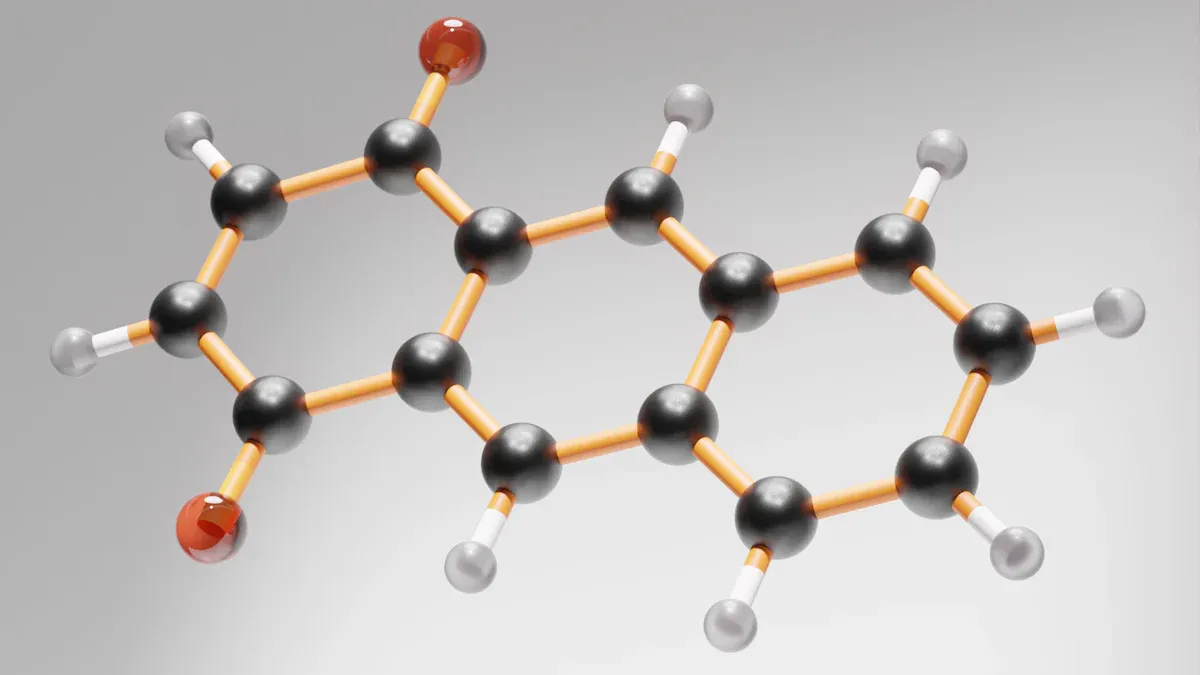
HTPB Structure and Key Features
You find that HTPB has a flexible backbone with hydroxyl groups at each end. These hydroxyl groups act like handles that help HTPB react with other chemicals, especially isocyanates. This reaction forms strong urethane bonds. HTPB works as a polyol in polyurethane products. The structure can change based on the number of cis, trans, and vinyl units in the chain. If you increase the cis units, you get more elasticity. More trans units give you extra strength. Scientists use tools like FTIR and NMR to study HTPB and see how these changes affect things like viscosity and glass transition temperature.
Note: The molecular weight and microstructure of HTPB can be adjusted to fit different uses, such as adhesives or rocket propellants.
CTPB Structure and Key Features
CTPB has carboxyl groups at both ends of its chain. These carboxyl groups make CTPB very good at forming crosslinks with polar curing agents. You see that CTPB is a liquid rubber with excellent cold resistance and flexibility. The carboxyl groups can react with epoxy resins, which helps toughen the final product. CTPB also has a high cis-1,4 content, which gives it great low-temperature flexibility. Compared to similar materials, CTPB has lower viscosity and better processability.
- The carboxyl groups in CTPB help it bond with other chemicals.
- CTPB’s structure lets it stay flexible even in cold environments.
- You can use CTPB to improve the toughness of epoxy resins.
Direct Comparison Table
| Feature | HTPB (Hydroxyl-terminated polybutadiene) CAS 69102-90-5 | CTPB (Carboxyl-terminated polybutadiene) CAS 586976-24-1 |
|---|---|---|
| Terminal Groups | Hydroxyl (-OH) | Carboxyl (-COOH) |
| Main Reactivity | Isocyanates (forms urethane) | Epoxy, polar curing agents |
| Flexibility | Adjustable (cis/trans ratio) | High (high cis-1,4 content) |
| Viscosity | Variable | Lower |
| Cold Resistance | Moderate | Excellent |
| Typical Use | Polyurethane, adhesives, propellants | Epoxy toughening, composites, energy storage |
You can see that HTPB (Hydroxyl-terminated polybutadiene) CAS 69102-90-5; Carboxyl-terminated polybutadiene(CTPB) CAS 586976-24-1 have different end groups, which change how they react and what products you can make with them.
Physical and Chemical Properties of HTPB (Hydroxyl-terminated polybutadiene) CAS 69102-90-5; Carboxyl-terminated polybutadiene(CTPB) CAS 586976-24-1
Mechanical Properties
You can see that HTPB gives you strong and flexible materials. It stretches well, especially at low temperatures. CTPB also gives flexibility, but it does not stretch as much as HTPB when it gets cold. If you want a material that stays tough and does not break easily, HTPB works better. CTPB helps make things like composites and energy storage devices, but it does not match HTPB’s strength in cold weather.
Thermal and Chemical Stability
You need to know how these materials handle heat. The table below shows how HTPB and CTPB compare:
| Property | HTPB | CTPB |
|---|---|---|
| Thermal Stability | High | Moderate |
| Extensibility at Low Temperature | Better | Lower |
| Anti-aging Properties | Superior | Inferior |
HTPB stands up to high temperatures and lasts longer. CTPB works well, but it does not resist heat and aging as much as HTPB.
Reactivity and Curing Behavior
You will find that HTPB and CTPB react with different chemicals. HTPB reacts with isocyanates to make strong urethane bonds. CTPB reacts with epoxy resins or isocyanates, which lets you use it in many ways. Here is a quick look at how they cure:
| Polymer Type | Curing Agent | Reaction Conditions | Key Outcomes |
|---|---|---|---|
| HTPB | Diglycidyl ethers | 80–120°C for 2–4 hours | Complete end-capping, controlled viscosity |
| CTPB | Epichlorohydrin | Controlled with NaOH | Epoxy-terminated products, lower viscosity |
You can use HTPB (Hydroxyl-terminated polybutadiene) CAS 69102-90-5; Carboxyl-terminated polybutadiene(CTPB) CAS 586976-24-1 in different ways because their end groups react with different curing agents. This gives you choices for making strong, flexible, or tough materials.
Performance in Applications for HTPB (Hydroxyl-terminated polybutadiene) CAS 69102-90-5; Carboxyl-terminated polybutadiene(CTPB) CAS 586976-24-1

HTPB Typical Applications and Performance
You will find HTPB in many industries. Aerospace and defense use HTPB for its strong and flexible properties. You can see it in rocket propellants, coatings, adhesives, and sealants. HTPB works well in these areas because it stays flexible at low temperatures and resists chemicals. You can also use HTPB in industrial products that need to last a long time.
Here is a table that shows where you might use HTPB and how you measure its performance:
| Application Areas | Performance Metrics |
|---|---|
| Aerospace and Defense | Low-temperature flexibility |
| Industrial Applications | Hydrolytic stability |
| Chemical resistance | |
| Mechanical properties for each use | |
| Low moisture vapor transmission |
You can measure HTPB’s effectiveness with several tests. For example, in aerospace and defense, you look for high adhesion, low water absorption, and strong resistance to chemicals. HTPB also keeps its gloss and color even after long exposure to sunlight or weather.
Here are some typical performance results for HTPB in aerospace and defense:
| Performance Metric | Value |
|---|---|
| Adhesion Rating (ASTM D3359) | 5B |
| Chemical Resistance (JP-8 fuel) | Volume swell < 10% after 7 days |
| Gloss Retention (QUV weathering) | > 90% after 1,000 hours |
| Low Tg | -75°C |
| Water Absorption Rate | < 1% by weight |
| Dielectric Strength | > 20 kV/mm |
| Corrosion Rate (saline environments) | < 0.1 mm/year |
| Weight Loss (salt spray exposure) | Up to 50% reduction |
You can use HTPB for military camouflage coatings. These coatings help hide vehicles from infrared cameras. You can also use HTPB to protect optical fibers and electronic sensors. It keeps out water and lets sound pass through, which is important for underwater cables.
Tip: If you need a material that stays strong and flexible in harsh conditions, HTPB is a good choice.
CTPB Typical Applications and Performance
You will find CTPB in products that need to be tough and flexible. CTPB works well in epoxy resins, adhesives, composite propellants, and elastomers. You can use CTPB to make materials that resist breaking and absorb energy during impacts.
Here is a table that shows where you might use CTPB and how it performs:
| Application Area | Performance Data |
|---|---|
| Toughened Epoxy Resins | Fracture energy increases from 100–200 J/m² to 500–1,500 J/m² with 10–20% CTPB |
| Composite Solid Propellants | Tensile strengths of 0.5–1.5 MPa, elongations of 30–80%, Isp of 240–260 s, burn rates 5–15 mm/s at 7 MPa |
| Epoxy Adhesives in Aerospace | Improved moisture resistance, higher strain-to-failure, GIC up to 1,500 J/m² |
| Crosslinked Networks | Storage moduli (E') of 1–10 MPa at 25°C, up to 200 MPa for highly crosslinked |
| Elastomers | Tensile strengths of 2–5 MPa (unfilled), up to 15 MPa with fillers, fracture toughness 0.5–3.0 MPa·m^0.5 |
You can see that CTPB makes epoxy resins much tougher. If you add CTPB, the resin can absorb more energy before it breaks. This helps in aerospace adhesives and composite materials. CTPB also helps propellants burn evenly and gives them good strength and flexibility.
Note: If you need to improve the toughness of an epoxy or want a flexible elastomer, CTPB is a strong option.
Comparative Performance Analysis
You can compare HTPB and CTPB by looking at their strengths in different uses. HTPB gives you high flexibility, strong chemical resistance, and long-lasting performance. You will see HTPB in aerospace, defense, and industrial coatings. It stands up to harsh weather, chemicals, and water.
CTPB gives you better toughness and flexibility at low temperatures. You will find CTPB in toughened epoxies, adhesives, and propellants. It helps materials absorb energy and resist breaking. CTPB also works well in flexible elastomers and crosslinked networks.
Here is a summary table to help you compare:
| Feature/Use Case | HTPB | CTPB |
|---|---|---|
| Flexibility | High, especially at low temperatures | Very high, especially in elastomers |
| Chemical Resistance | Superior | Good |
| Toughness | Good | Excellent in epoxies and adhesives |
| Weather Resistance | Excellent | Moderate |
| Moisture Barrier | Strong | Improved in adhesives |
| Typical Applications | Aerospace coatings, propellants, sealants | Epoxy toughening, adhesives, propellants |
You should choose HTPB if you need a material that lasts in tough environments and resists chemicals. You should choose CTPB if you want to make tough, flexible materials or improve the performance of epoxies and adhesives.
You can see that HTPB (Hydroxyl-terminated polybutadiene) CAS 69102-90-5; Carboxyl-terminated polybutadiene(CTPB) CAS 586976-24-1 each have unique strengths. Your choice depends on what you need for your project.
Advantages and Disadvantages of HTPB (Hydroxyl-terminated polybutadiene) CAS 69102-90-5; Carboxyl-terminated polybutadiene(CTPB) CAS 586976-24-1
HTPB Pros and Cons
When you use HTPB, you get many benefits in different industries.
Pros:
- You can boost bonding strength and flexibility in adhesives.
- HTPB improves adhesion and durability when you add it to paints.
- You get resilience and elasticity in rubber products.
- Aerospace and military sectors rely on HTPB for fuel binders in solid rocket propellants.
- You can use HTPB as a plastic modifier to make materials tougher and more durable.
- HTPB works well in coatings and sealants.
Cons:
- HTPB can cost more than some alternatives.
- You need to handle it carefully because it reacts with moisture.
- Sometimes, you may see limited compatibility with certain curing agents.
Tip: Always store HTPB in a dry place to keep its quality high.
CTPB Pros and Cons
CTPB also gives you unique advantages, especially in flexible and tough materials.
Pros:
- You get excellent low-temperature flexibility.
- CTPB helps toughen epoxy resins and adhesives.
- It offers good processability due to its lower viscosity.
- You can use CTPB in energy storage and advanced composites.
Cons:
- CTPB does not resist heat and aging as well as HTPB.
- You may find it less effective in harsh chemical environments.
- Sometimes, CTPB provides lower mechanical strength compared to HTPB.
Suitability for Specific Use Cases
| Use Case | Best Choice | Reason |
|---|---|---|
| Rocket Propellants | HTPB | Superior bonding and durability |
| Toughened Epoxy Resins | CTPB | Enhances toughness and flexibility |
| Industrial Coatings/Sealants | HTPB | Excellent chemical and weather resistance |
| Flexible Elastomers | CTPB | Outstanding low-temperature performance |
| Energy Storage Composites | CTPB | Good processability and flexibility |
You should match your material choice to your project’s needs. HTPB works best for strength and durability. CTPB fits when you need flexibility and toughness at low temperatures.
Cost, Availability, and Practical Considerations for HTPB (Hydroxyl-terminated polybutadiene) CAS 69102-90-5; Carboxyl-terminated polybutadiene(CTPB) CAS 586976-24-1
Market Availability
You can find both HTPB and CTPB in many parts of the world. Suppliers in North America, Europe, and Asia-Pacific offer these materials. This wide coverage means you can get them for your project almost anywhere. Here is a table that shows where you can find HTPB and CTPB:
| Region | Countries Covered |
|---|---|
| North America | United States, Canada, Mexico |
| Europe | Germany, United Kingdom, France, Italy, Spain, BeNeLux, Russia |
| Asia-Pacific | China, Japan, India, South Korea, Australia, Indonesia, Malaysia, Vietnam |
You can see that these regions have strong chemical industries. This helps you get steady supplies and support.
Cost Comparison
HTPB usually costs more than CTPB. You pay more for HTPB because it has higher purity and special uses, like in rocket propellants. CTPB often costs less and works well in large projects, such as making tough adhesives or flexible composites. You should check prices from different suppliers. Prices can change based on quality, order size, and shipping.
Tip: If you need a material for high-performance uses, you may want to invest in HTPB. For cost-sensitive projects, CTPB can save you money.
Handling and Safety
You must handle both HTPB and CTPB with care. Wear gloves and goggles to protect your skin and eyes. Store these chemicals in sealed containers away from heat and sunlight. HTPB reacts with moisture, so keep it dry. CTPB can irritate your skin if you touch it. Always read the safety data sheet before you start your work.
Note: Safe handling keeps you and your team healthy and helps your project succeed.
You see that HTPB gives you strength and durability, while CTPB offers flexibility and toughness. Choose HTPB for harsh environments or chemical resistance. Pick CTPB for toughened epoxies or flexible composites. Remember, your project needs guide your best choice.
FAQ
What is the main difference between HTPB and CTPB?
You see HTPB has hydroxyl end groups. CTPB has carboxyl end groups. This changes how you use and cure each material.
Can you mix HTPB and CTPB in one application?
You can blend them, but you must check compatibility. Each reacts best with different curing agents. Test before using in your project.
Which material should you choose for cold environments?
You should choose CTPB. It stays flexible at low temperatures. HTPB works, but CTPB gives you better cold resistance.
See Also
How PHE Plates Boost System Efficiency By 2025
Benefits And Cost Review Of Plate Packs In 2025
CHIP's Achievements And Changes In Children's Health Coverage