Why Aerospace Manufacturers Choose HTPB for Advanced Elastomer Solutions
Aerospace manufacturers trust HTPB(Hydroxyl-terminated polybutadiene) CAS 69102-90-5 for High Performance Elastomers because it delivers strong, adaptable solutions in tough environments. This material plays a key role in solid rocket propellants, insulation, composite matrix resins, sealants, and coatings. Its high elasticity and crack resistance help equipment perform safely in space.
Key Takeaways
- HTPB is a versatile material used in solid rocket propellants, providing both binding and fuel functions. This dual role enhances performance and safety during launches.
- Aerospace engineers value HTPB for its high elasticity and thermal stability, which help withstand extreme conditions in space, ensuring reliable operation.
- HTPB can be customized for various applications, allowing manufacturers to adjust its properties for specific aerospace needs, enhancing performance and efficiency.
HTPB(Hydroxyl-terminated polybutadiene) CAS 69102-90-5 in Solid Rocket Propellants
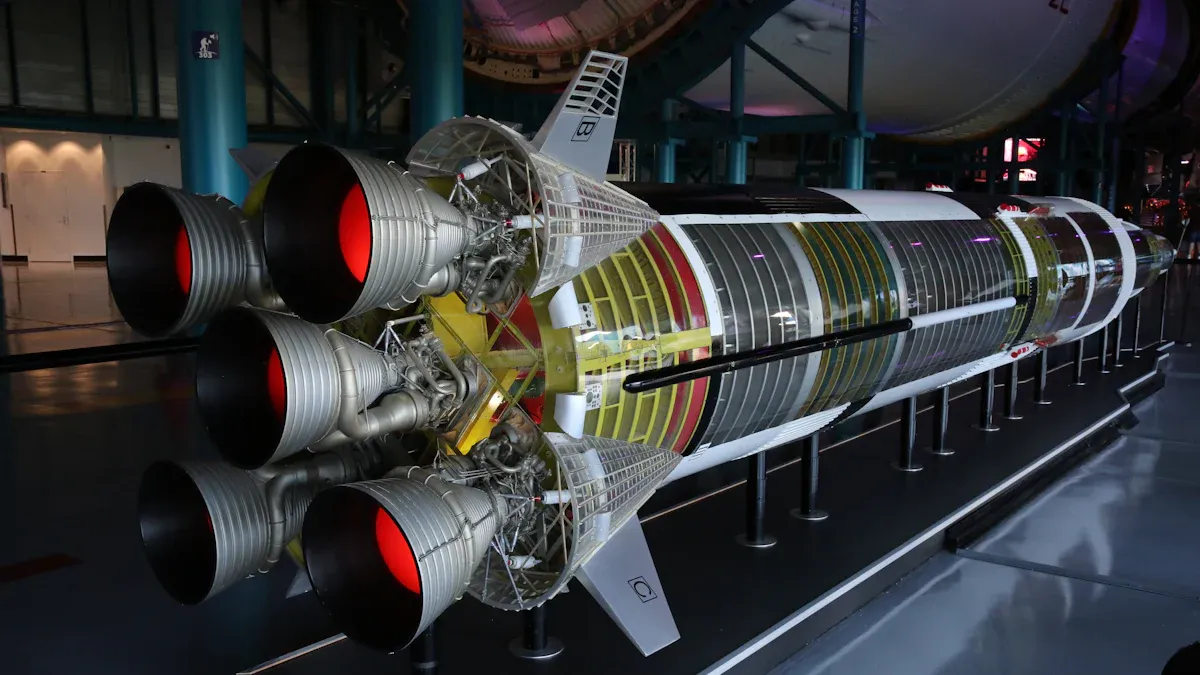
Binder and Fuel Component Functionality
HTPB(Hydroxyl-terminated polybutadiene) CAS 69102-90-5 for High Performance Elastomers plays a vital role in solid rocket propellants. Engineers use this material as both a binder and a fuel component. The binder holds together the oxidizer, fuel, and other ingredients, forming a solid but flexible mass. This structure helps the propellant resist cracking during storage and launch. The reactive hydroxyl groups in HTPB allow it to form a strong three-dimensional network when mixed with curing agents. This network gives the propellant its toughness and elasticity.
HTPB-based propellants also act as a fuel source. When the rocket ignites, the polymer burns along with the other ingredients, adding energy to the system. This dual function makes HTPB a popular choice for modern propulsion systems.
The following table compares HTPB with other common binders used in solid rocket propellants:
| Binder Type | Fuel Type | Thermal Stability (°C) | Specific Impulse (s) | Market Share (%) |
|---|---|---|---|---|
| HTPB | Aluminum Powder | 180 | 300 | 50 |
| PU | Hydrazine | 200 | 310 | 30 |
| DPE | Ammonium Perchlorate | 220 | 320 | 15 |
| Epoxy | Composite Fuel | 190 | 295 | 5 |
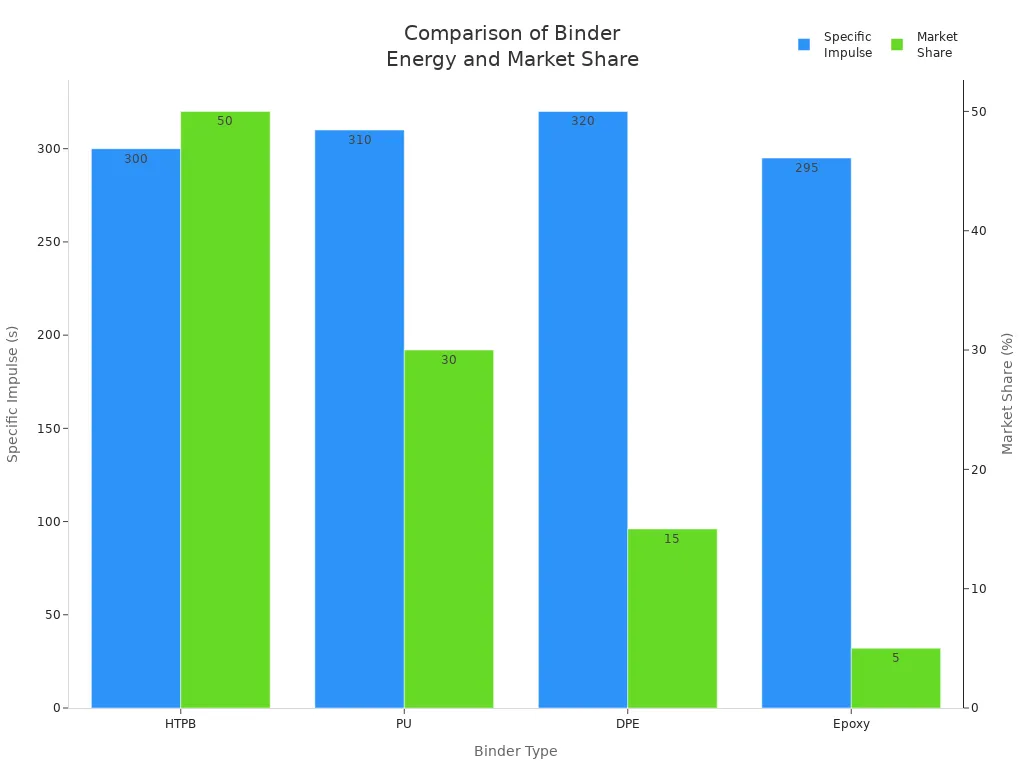
HTPB(Hydroxyl-terminated polybutadiene) CAS 69102-90-5 for High Performance Elastomers holds the largest market share among binders. Its balance of energy output, stability, and flexibility makes it the preferred choice for many aerospace manufacturers.
Performance Advantages in Propulsion Systems
HTPB-based propellants offer several performance advantages in propulsion systems. The material provides excellent flexibility, which helps the propellant withstand the stresses of launch and flight. High reactivity improves combustion efficiency, leading to better thrust. The thermal stability of HTPB ensures that the propellant remains safe and effective under high temperatures.
The table below highlights key properties that improve propulsion system performance:
| Property | Description |
|---|---|
| Flexibility | Excellent flexibility enhances the performance of propulsion systems. |
| Reactivity | High reactivity contributes to improved combustion efficiency. |
| Thermal Stability | Better thermal stability compared to conventional materials. |
| Aging Resistance | Enhanced aging resistance leads to longer-lasting propellant grains. |
| Combustion Modulation | Combustion rate and energy output can be controlled through formulation. |
| Low-Temperature Performance | Excellent performance in extreme space conditions. |
- HTPB-based propellants show high elasticity and resist cracking.
- They perform well at low temperatures, making them suitable for space missions.
- Engineers can enhance mechanical properties by adding special plasticizers and bonding agents.
Note: HTPB(Hydroxyl-terminated polybutadiene) CAS 69102-90-5 for High Performance Elastomers supports safe, reliable, and efficient rocket launches. Its unique chemical structure allows for customization, meeting the needs of different aerospace missions.
HTPB(Hydroxyl-terminated polybutadiene) CAS 69102-90-5 for Aerospace Materials and Components
Insulation, Liners, and Composite Matrices
Aerospace engineers use HTPB(Hydroxyl-terminated polybutadiene) CAS 69102-90-5 for High Performance Elastomers to create advanced insulation, liners, and composite matrices. These materials protect rockets and spacecraft from extreme temperatures and mechanical stress. HTPB-based systems offer several important benefits:
- They increase flexibility and impact resistance, which helps prevent cracks during launch and flight.
- The material forms a strong bond between the liner and the propellant, improving safety.
- Adjusting the isocyanate-to-hydroxyl ratio can make the bond even stronger and reduce moisture problems.
- Special additives help the binder and filler particles stick together, which reduces weak spots.
- The formulation allows better interaction with oxidizers, which boosts overall performance.
These features make HTPB-based insulation and liners a top choice for modern aerospace vehicles.
High-Temperature Resistance and Lightweight Strength
HTPB(Hydroxyl-terminated polybutadiene) CAS 69102-90-5 for High Performance Elastomers gives aerospace components the ability to handle high temperatures while staying lightweight. This property is important for parts that face intense heat, such as those near engines or in the outer layers of spacecraft. The following table shows how HTPB-based materials perform at different temperature ranges:
| Temperature Resistance | Category |
|---|---|
| Up to 100°C | Moderate |
| 150–200°C | Excellent |
| 200–250°C | Excellent |
These results show that HTPB-based materials can work well in environments where temperatures reach up to 250°C. The lightweight nature of HTPB also helps reduce the overall mass of aerospace structures. Lower weight means better fuel efficiency and higher payload capacity.
Note: Engineers often choose HTPB-based composites for both their strength and their ability to resist heat.
Sealants and Protective Coatings
HTPB-based elastomers serve as reliable sealants and protective coatings in aerospace applications. These materials seal joints and seams, keeping out moisture and harmful chemicals. The tough, elastic nature of HTPB helps coatings resist wear and tear from vibration and movement. Protective coatings made from HTPB also shield surfaces from corrosion and environmental damage. This extends the life of critical components and reduces maintenance needs.
Aerospace manufacturers value these properties because they help keep equipment safe and operational during long missions. HTPB-based sealants and coatings support the high standards required in the industry.
Key Advantages of HTPB(Hydroxyl-terminated polybutadiene) CAS 69102-90-5 in Aerospace Applications
Superior Energy Output and Efficiency
HTPB(Hydroxyl-terminated polybutadiene) CAS 69102-90-5 gives aerospace systems strong energy output and high efficiency. Many engineers use this material in propellant adhesives for rockets and missiles. It also works well in structural materials for spacecraft. The material helps with direction changes, escape systems, and slowing down vehicles in space. These uses show how HTPB supports many energy needs in aerospace.
- Used in propulsion systems for rockets and missiles
- Supports direction change and escape systems
- Helps with deceleration in space vehicles
Adaptability and Customization
Aerospace manufacturers can adjust HTPB to fit many needs. They can change its flexibility, chemical resistance, and viscosity. This makes it easy to use in different ways, such as spraying, brushing, or troweling. The table below shows some options for customization and their benefits:
| Customization Option | Benefits |
|---|---|
| Flexibility | Tailors materials for optimal performance |
| Chemical Resistance | Enhances durability and adhesive strength |
| Adaptability for Applications | Suitable for various aerospace manufacturing needs |
| Custom Viscosity | Allows for different application methods |
| Environmental Resistance | Aligns with sustainability goals |
This adaptability helps engineers create materials that match the exact needs of each mission.
Processing Maturity and Supply Chain Reliability
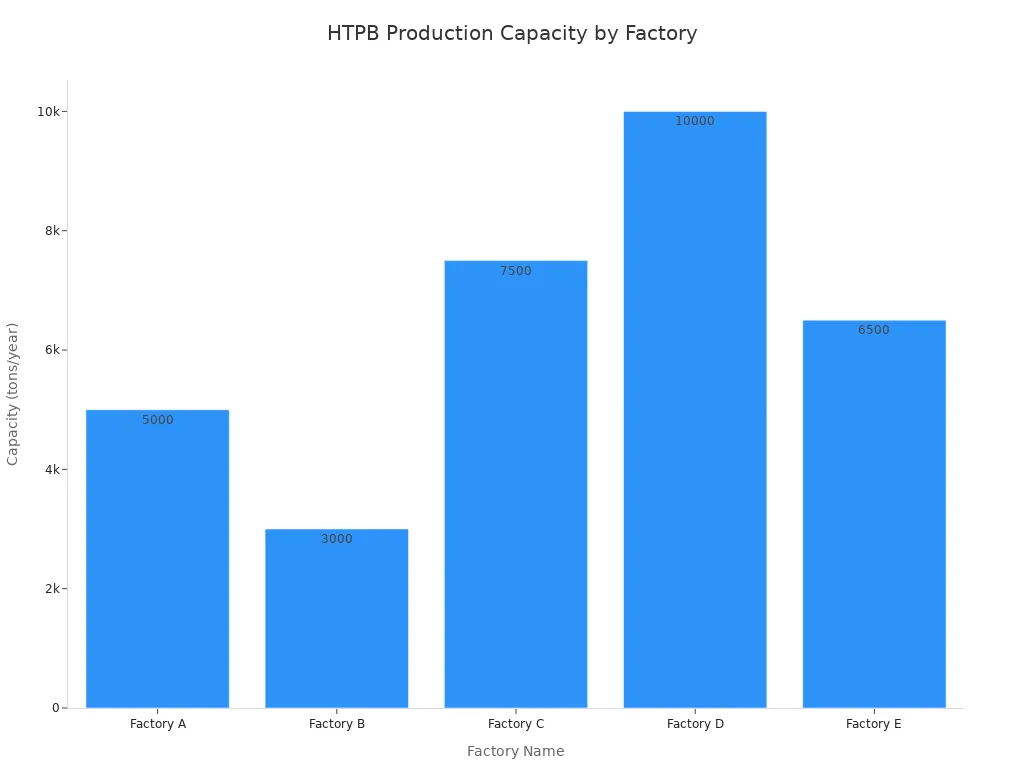
HTPB(Hydroxyl-terminated polybutadiene) CAS 69102-90-5 for High Performance Elastomers stands out for its reliable processing and strong supply chain. Manufacturers follow strict quality control to keep each batch consistent. They provide technical documents, safety data, and testing results. Many factories around the world produce HTPB, which helps keep supplies steady. The chart below shows the production capacity of several factories:
These strengths make HTPB a trusted choice for important aerospace projects.
HTPB(Hydroxyl-terminated polybutadiene) CAS 69102-90-5 for High Performance Elastomers gives aerospace manufacturers a trusted material. They rely on its strength and flexibility. This polymer meets strict industry standards. Many leaders in aerospace choose it for advanced elastomer solutions. Its performance supports both safety and innovation.
FAQ
What is HTPB used for in aerospace?
HTPB serves as a binder in solid rocket propellants. Engineers also use it in insulation, sealants, and protective coatings for spacecraft and aircraft.
How does HTPB improve rocket performance?
HTPB increases flexibility and energy output. It helps propellants resist cracking and supports efficient combustion during rocket launches.
Is HTPB customizable for different aerospace needs?
Yes. Manufacturers can adjust HTPB’s flexibility, viscosity, and chemical resistance. This allows engineers to match materials to specific aerospace applications.
See Also
Innovations in Heat Exchanger Manufacturing Boost Industrial Efficiency
Key Insights on WT20 Thoriated Tungsten for Superior TIG Welding
Understanding Nozzle Solutions for Gardeners and Bioprinting Professionals
New Materials Transforming the Supply Chain for Heat Exchangers
Advancements in Micro-Channel Tech for Hydrogen Fuel Cell Heat Exchangers