How HTPB and DDI Enhance Construction Adhesives for Long-Lasting Results

When you use HTPB(Hydroxyl-Terminated Polybutadiene) CAS No.69102-90-5 with DDI, you get adhesives that last longer and hold stronger. You can see the difference in performance in the table below:
| Property/Benefit | DDI (with HTPB) | MDI/TDI/IPDI |
|---|---|---|
| Bond Strength | Strong bonds inside the polymer | Weaker bonds |
| Toughness | More reliable and durable | Less durable |
| Performance | Resists breaking under stress | Prone to breaking |
This combination also stands up well to harsh conditions, so you can trust it for your construction needs.
Key Takeaways
- Using HTPB and DDI together creates stronger and more flexible adhesives that last longer in tough conditions.
- These adhesives resist water, chemicals, and extreme temperatures, making them ideal for outdoor and industrial applications.
- Incorporating a small amount of high-activity isocyanate curing agent improves adhesive performance and efficiency.
Key Properties of HTPB (Hydroxyl-Terminated Polybutadiene) CAS No.69102-90-5 and DDI
Unique Features of HTPB for Adhesive Performance
You can count on HTPB(Hydroxyl-Terminated Polybutadiene) CAS No.69102-90-5 to deliver strong and flexible adhesives. This material stays flexible even in very cold weather because it has a low glass transition temperature, around -75°C. It also resists water and chemicals, so your adhesive will last longer in tough environments. The table below shows some important properties:
| Property | Description |
|---|---|
| Low Glass Transition Temperature (Tg) | About -75°C, keeps adhesives flexible in cold conditions. |
| Hydrophobicity | Helps adhesives last longer in wet or harsh environments. |
| Chemical Resistance | Protects against damage from many chemicals. |
| Excellent Dielectric Properties | Makes it useful for electrical applications. |
HTPB(Hydroxyl-Terminated Polybutadiene) CAS No.69102-90-5 also gives adhesives high lap shear strength, which means they hold up well under stress. When you use antioxidants, this material resists UV light better, so it works well outdoors.
Distinct Advantages of DDI in Construction Applications
DDI brings several benefits to construction adhesives. You get lower toxicity, which makes your work environment safer. DDI also gives adhesives strong hydrolytic stability, so they last longer when exposed to water or moisture. The table below highlights these advantages:
| Property | Description |
|---|---|
| Hydrolytic Stability | Excellent resistance to water and moisture. |
| Weather Resistance | Stands up to sunlight and outdoor conditions. |
| Chemical Resistance | Resists many harsh chemicals and solvents. |
| Low Volatility | Releases fewer emissions, better for the environment. |
| Resistance to Yellowing | Keeps adhesives looking good over time. |
| Water Resistance | Outperforms traditional isocyanates in wet conditions. |
You can trust DDI to keep your adhesives strong and flexible, even when conditions get tough.
Importance of These Properties for Long-Lasting Adhesives
When you combine HTPB(Hydroxyl-Terminated Polybutadiene) CAS No.69102-90-5 with DDI, you get adhesives that resist cracking and breaking under stress. These adhesives keep their strength and flexibility, even in harsh weather or when exposed to chemicals. You will notice that structures bonded with these adhesives need fewer repairs and last longer. This means you save time and money on maintenance.
Tip: Using adhesives with these properties helps your construction projects stand up to tough conditions and last for years.
Synergistic Effects and Performance Benefits in Construction Adhesives
Chemical Interactions Between HTPB and DDI
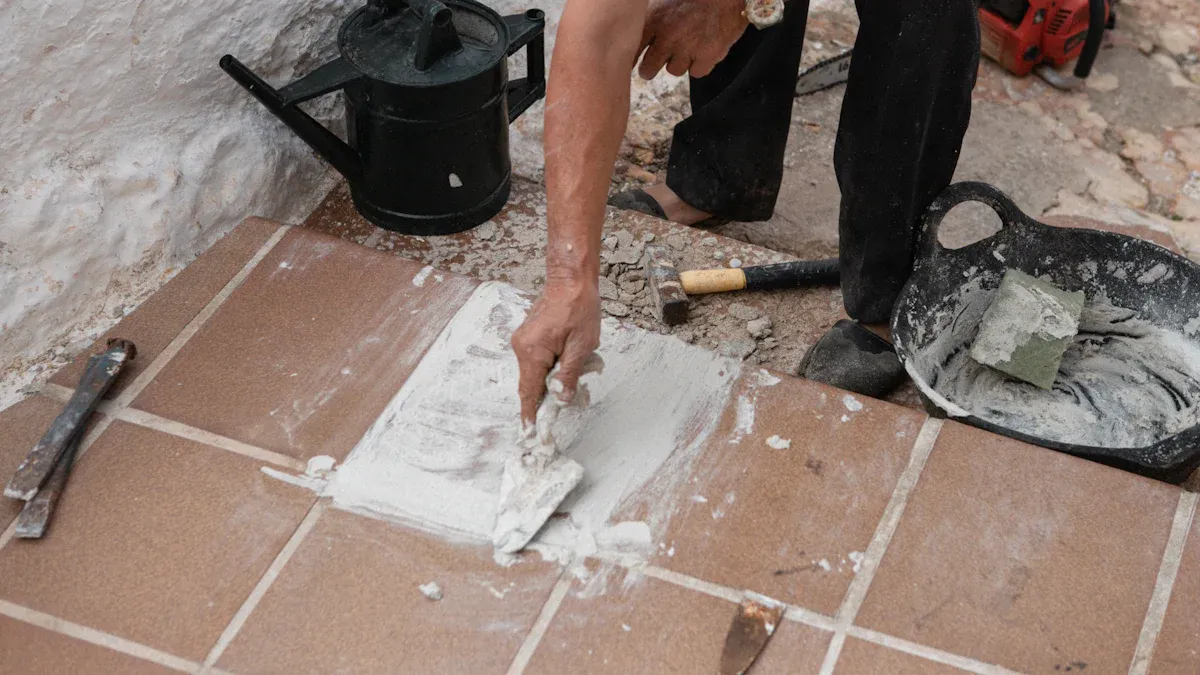
When you mix HTPB(Hydroxyl-Terminated Polybutadiene) CAS No.69102-90-5 with DDI, you create a strong chemical bond. The hydroxyl groups in HTPB react with the isocyanate groups in DDI. This reaction forms a tough polyurethane network. You get an adhesive that is both flexible and strong. The chemical structure helps the adhesive resist breaking and keeps it stable over time. You can rely on this bond to hold materials together, even when they face stress or movement.
Enhanced Strength, Flexibility, and Hydrolytic Stability
You will notice that adhesives made with HTPB(Hydroxyl-Terminated Polybutadiene) CAS No.69102-90-5 and DDI show much higher strength than traditional adhesives. The unique combination gives you:
- Shear strength that is nearly three times higher than standard adhesives.
- Tensile strength that can be up to 240% greater.
- Flexibility that allows the adhesive to move with the materials, not crack under pressure.
- Hydrolytic stability, so the adhesive does not break down when exposed to water.
These features mean you can use these adhesives in places where other glues might fail. You get a bond that lasts longer and needs less maintenance.
Resistance to Moisture, Chemicals, and Temperature Extremes
You want your adhesive to stand up to tough conditions. The hydrophobic backbone of HTPB(Hydroxyl-Terminated Polybutadiene) CAS No.69102-90-5 keeps water out. This prevents the adhesive from degrading, even in wet environments. You also get strong resistance to chemicals, so the adhesive does not weaken when exposed to harsh substances. The adhesive stays flexible at low temperatures and does not become brittle in the cold. It also resists high temperatures, so you can use it in hot climates or near machinery.
Note: These properties make the adhesive a smart choice for outdoor projects, industrial settings, and places with changing weather.
Real-World Application Examples
You can see the benefits of these adhesives in many industries. Here are some examples:
- Construction workers use these adhesives to bond metal, concrete, and glass. The adhesive holds up under heavy loads and vibration.
- Automotive manufacturers rely on the adhesive for parts that face heat, moisture, and chemicals.
- Aerospace engineers choose these adhesives for their high strength and ability to handle stress during flight.
- In cold climates, builders use the adhesive because it stays flexible and strong, even when temperatures drop.
You will find that lap shear strengths often exceed 10 MPa. The adhesive keeps its grip, even when exposed to water or chemicals. You get a reliable bond that stands the test of time.
You can achieve stronger, longer-lasting adhesives by using HTPB and DDI together. This combination gives you flexibility and resistance to harsh conditions. Manufacturers recommend adding a small amount of high-activity isocyanate curing agent and controlling viscosity. See the table below for best practices:
| Recommendation | Details |
|---|---|
| Curing Agent | Add 0.06%–0.25% high-reaction-activity isocyanate curing agent with DDI. |
| Mixing Process | Shorten curing agent adding time to improve efficiency. |
| Viscosity | Keep viscosity below 1,200 Pa·s after 5 hours at 50°C. |
FAQ
What makes HTPB and DDI better for construction adhesives?
You get stronger, more flexible bonds. These adhesives last longer and resist water, chemicals, and temperature changes.
Tip: Choose them for tough jobs.
Can you use HTPB and DDI adhesives outdoors?
Yes, you can. These adhesives resist sunlight, rain, and temperature swings.
- They work well for outdoor projects.
- You get reliable results in any weather.
Are HTPB and DDI adhesives safe to use?
You work with safer materials. DDI has lower toxicity than many other isocyanates.
| Feature | Benefit |
|-----------------|------------------|
| Low toxicity | Safer handling |
| Low emissions | Better air quality|