Unique Insights into Curing Agent Selection for HTPB CAS 69102-90-5
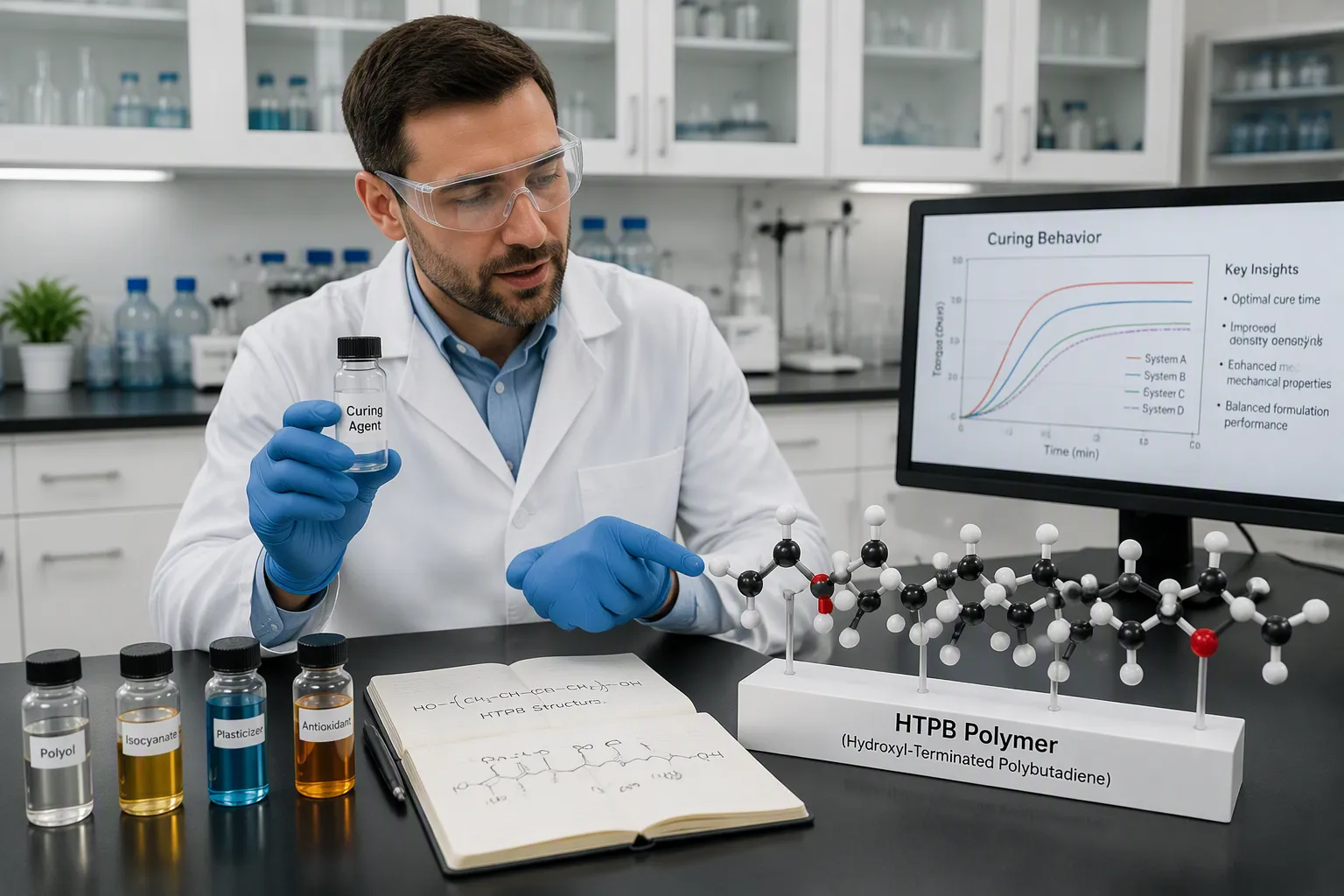
How do you choose the right curing agent for Hydroxyl-Terminated Polybutadiene (HTPB) CAS No. 69102-90-5? Your application demands specific performance, and the answer hinges on balance. You must weigh mechanical targets like tensile strength against practical curing conditions. For example, HTPB-isocyanate mixtures typically offer a pot life of 30 to 60 minutes at room temperature, giving you time to mix and cast before gelation. You also need chemical compatibility with your additives and cost constraints. This post provides a practical framework to guide your selection.
Key Takeaways
- The curing agent controls the final properties of HTPB. Choose an agent that matches your tensile strength, elongation, and hardness needs.
- Different curing agents like TDI, MDI, and IPDI offer different trade-offs. TDI cures fast but limits flexibility. IPDI is slower but more flexible and UV resistant.
- Check compatibility with fillers and additives before scaling. Fillers can react with the curing agent and cause defects. Test small batches first.
- Cost and availability often decide the final choice. A cheaper agent may cause more waste. Calculate the cost per successful batch, not just the price per kilogram.
Understanding Hydroxyl-Terminated Polybutadiene (HTPB) CAS No. 69102-90-5 and Its Curing Chemistry
Why HTPB's Structure Dictates Curing Agent Choice
You cannot separate the curing agent decision from the polymer's molecular architecture. Hydroxyl-Terminated Polybutadiene (HTPB) CAS No. 69102-90-5 possesses a backbone built from butadiene units. This backbone contains C=C double bonds that restrict rotational freedom. That restricted motion directly influences the prepolymer's viscosity. You will notice this effect when comparing HTPB to more flexible polyether backbones. The stiffer structure means you must account for flow behavior during mixing and casting.
The microstructure of the backbone matters even more. Increased content of 1,2-vinyl units raises the viscosity of HTPB prepolymers. These pendant vinyl groups create steric hindrance along the chain. You will find that two HTPB samples with identical molecular weights can behave differently. Their processing characteristics depend on this subtle structural variation.
The Critical Role of Hydroxyl Functionality in Crosslinking
The hydroxyl groups at each chain end serve as your reaction sites. These terminal -OH groups determine how the polymer participates in curing chemistry. You need to know the hydroxyl value of your specific HTPB batch. This number tells you how many reactive sites exist per gram of polymer. Higher hydroxyl values create more crosslink points in the final network.
The functionality of your HTPB also matters. Most commercial grades offer functionality between 2.0 and 2.6. You should verify this specification before selecting any curing agent. The functionality directly controls the crosslink density you can achieve.
How the Curing Agent Defines the Final Polymer Network
Your curing agent acts as the bridge between polymer chains. It converts the liquid prepolymer into a solid elastomer network. The choice of curing agent determines the distance between crosslink points. Shorter molecules like TDI create tighter networks with higher hardness. Longer molecules produce more flexible elastomers with greater elongation.
The curing agent also influences the chemical nature of those crosslinks. Urethane linkages from isocyanates offer excellent mechanical properties. The network you create must match your application's demands. You control this outcome through careful curing agent selection.
A Comparative Look at Common Curing Agents for HTPB
Isocyanates: The Workhorses (TDI, MDI, IPDI)
Isocyanates represent your most common choice for HTPB curing. These compounds react with your polymer's terminal hydroxyl groups. The chemical reaction forms urethane linkages throughout the material. Three main types serve different applications. Each offers distinct advantages.
Toluene diisocyanate (TDI) provides fast reaction rates. Pot life becomes shorter, often under 30 minutes at room temperature. The cured product shows high tensile strength. You sacrifice some elongation for this hardness. Choose TDI for rigid elastomers.
Methylene diphenyl diisocyanate (MDI) creates a more rigid backbone. The cured elastomer gains higher modulus. Thermal stability improves as well. MDI cures slightly slower than TDI. This option gives you more working time.
Isophorone diisocyanate (IPDI) belongs to the aliphatic isocyanate family. You select IPDI for better UV stability. The cured product maintains light color. The cure rate is slower than aromatic options. Higher temperatures or catalysts achieve full cure.
Epoxides and Epoxy Resins: For Modified Networks
Epoxy curing agents offer an alternative to isocyanates. They react with hydroxyl groups through a different chemical pathway. The result produces ether linkages instead of urethane bonds. This changes your network properties significantly.
Improved adhesion comes from epoxy curing. Epoxy-cured HTPB bonds well to metals and ceramics. The modulus becomes higher than isocyanate-cured systems. You sacrifice some elongation for greater stiffness.
Curing conditions differ from isocyanates. Epoxies typically require elevated temperatures. Longer cure cycles are part of the process. The pot life is generally longer. This gives you more flexibility during processing.
Polyfunctional Aziridines: Specialized Crosslinkers
Aziridines serve as crosslinkers for specific HTPB formulations. They react with carboxyl groups rather than hydroxyl groups. Your HTPB needs carboxyl functionality for this approach. You can also add carboxylated components to your formulation.
Low-temperature curing is the main advantage. Aziridine systems cure at room temperature. Some formulations cure below room temperature. The resulting network shows good chemical resistance. You use aziridines when you need to avoid isocyanates.
Limited availability affects your choice. Aziridine systems cost more than isocyanates. The application justifies the expense only in specific cases.
Other Agents: Anhydrides, Silanes, and More
Anhydrides offer another pathway for curing HTPB. These compounds react with hydroxyl groups to form ester linkages. The chemistry differs from isocyanates and epoxies. You need elevated temperatures for anhydride curing. Typical cure cycles run above 100°C. The resulting network shows excellent thermal stability. Anhydride-cured HTPB resists hydrolysis better than urethane systems. You choose this option for high-temperature applications. The main drawback involves longer cure times. Processing becomes less convenient for room-temperature operations.
Silanes serve a different purpose in HTPB formulations. They act as coupling agents rather than primary curatives. Silane molecules contain two reactive ends. One end bonds to the HTPB network. The other end bonds to inorganic fillers or substrates. You add silanes to improve adhesion and mechanical properties. The improvement comes from better filler dispersion. Moisture resistance also increases with proper silane selection. You typically use silanes at low concentrations. Levels between 0.5% and 2% by weight provide optimal results.
Other specialized agents exist for niche applications. Polyamines can cure HTPB under specific conditions. The reaction rate is fast and difficult to control. Metal alkoxides catalyze certain curing reactions. You might use them in combination with primary curatives. Carbodiimides scavenge moisture and stabilize the system. Each agent solves a particular problem.
Your choice among these options depends on your specific needs. Anhydrides suit high-temperature environments. Silanes enhance composite performance. Specialized agents address unique formulation challenges. You evaluate each option against your processing constraints and performance targets. The right selection expands your formulation possibilities beyond standard isocyanate systems.
Key Selection Criteria: Matching Curing Agent to Performance Needs
Defining Mechanical Property Targets (Tensile Strength, Elongation, Hardness)
You must start with clear mechanical targets before you evaluate any curing agent. These targets define the success of your final product. Tensile strength tells you how much stress your material can withstand before failure. Elongation measures how far it stretches before breaking. Hardness indicates surface resistance to indentation. Each application demands a different balance of these three properties.
The curing agent you select directly controls this balance. Shorter diisocyanate molecules like TDI create tight, rigid networks. These networks deliver high tensile strength but limit stretch. Longer curing agents produce looser networks with greater flexibility. You trade stiffness for elongation in nearly every selection.
Consider the baseline performance of unmodified Hydroxyl-Terminated Polybutadiene (HTPB) CAS No. 69102-90-5 cross-linked with TDI. The elongation at break reaches 275%. This number serves as your reference point. Any modification you make to the system shifts this value. Adding plasticizers increases elongation but reduces tensile strength. Incorporating fillers raises hardness but lowers stretch. You must decide which property matters most for your application.
The table below summarizes typical mechanical outcomes for different curing agent families:
| Curing Agent | Tensile Strength | Elongation | Hardness |
|---|---|---|---|
| TDI | High | Moderate (275% baseline) | High |
| MDI | Higher | Lower | Higher |
| IPDI | Moderate | Higher | Moderate |
| Epoxy | Moderate | Lower | High |
| Anhydride | Moderate | Moderate | Moderate |
Your mechanical targets narrow the field of viable curing agents. A rigid structural adhesive demands high tensile strength and hardness. You would select MDI or an epoxy system. A flexible sealant requires maximum elongation. IPDI or a longer-chain isocyanate serves you better. Write down your property requirements before you examine any chemical options.
Evaluating Curing Conditions (Temperature, Time, and Pot Life)
Your production environment dictates which curing conditions you can accept. Temperature requirements vary widely among curing agents. Some systems cure at room temperature. Others demand elevated heat for extended periods. You must match the chemistry to your available equipment and timeline.
Pot life represents the working time before your mixture begins to gel. This window determines how much material you can mix and cast in one batch. Fast-reacting systems like TDI offer only 20 to 30 minutes of working time. Slower systems like IPDI provide several hours. Your production scale influences this choice. Large castings require longer pot life. Small batches can tolerate faster cure rates.
Industrial practice for HTPB-isocyanate adhesive systems follows a specific protocol. The recommended schedule cures the material at 60°C for five to seven days. An optional post-curing step at 50°C for one to two weeks completes the cross-linking process. This extended schedule relieves internal stress and maximizes network formation. You need this level of patience for high-performance applications.
Room-temperature curing offers convenience but requires trade-offs. The reaction proceeds more slowly at lower temperatures. You may need catalysts to accelerate the process. These catalysts can affect the final properties of your cured material. Some formulations achieve acceptable cure at ambient conditions within 24 to 48 hours. The resulting network often shows lower crosslink density than heat-cured systems.
Consider your throughput requirements carefully. A five-day cure at 60°C occupies valuable oven space. Multiple batches require multiple ovens or careful scheduling. You might choose a faster-curing agent to increase production capacity. Alternatively, you might invest in additional curing capacity to maintain optimal network properties. Your decision balances chemistry against logistics.
Ensuring Compatibility with Fillers, Plasticizers, and Additives
Your formulation rarely contains only polymer and curing agent. Fillers modify mechanical properties and reduce cost. Plasticizers adjust flexibility and processability. Stabilizers protect against degradation. Each additive interacts with your curing chemistry in specific ways. You must verify compatibility before committing to a curing agent.
Fillers present the most common compatibility challenge. Carbon black, silica, and alumina trihydrate each carry surface chemistry that can interfere with curing. Moisture adsorbed on filler surfaces reacts with isocyanates. This side reaction consumes your curing agent and produces carbon dioxide. The gas creates bubbles in your cured product. You must dry fillers thoroughly before incorporation.
Plasticizers affect the curing reaction through dilution and mobility effects. They reduce the concentration of reactive groups in the mixture. This dilution slows the reaction kinetics. Some plasticizers migrate to the surface during cure. This migration disrupts network formation at the interface. You should test your specific plasticizer with your chosen curing agent.
The table below lists common additives and their compatibility considerations:
| Additive Type | Compatibility Issue | Mitigation Strategy |
|---|---|---|
| Carbon black | Moisture adsorption | Dry at 150°C before use |
| Silica | Surface hydroxyls react with isocyanates | Use hydrophobic grades |
| Aluminum powder | Catalyzes side reactions | Passivate surface |
| Dioctyl adipate | Slows cure rate | Increase catalyst level |
| Antioxidants | May contain active hydrogens | Select non-reactive types |
Your curing agent choice also affects how additives behave in the final network. Isocyanate-cured systems tolerate a wide range of fillers. Epoxy-cured systems bond strongly to mineral surfaces. This bonding improves reinforcement but complicates release from molds. You must consider these interactions during your selection process.
Testing compatibility requires small-scale experiments. Mix your proposed formulation without the curing agent first. Verify that all components remain stable together. Then add the curing agent and monitor the cure profile. Compare the results against your unfilled baseline. Any significant deviation signals a compatibility problem that requires formulation adjustment.
The most common formulation failure occurs when an additive reacts with the curing agent instead of remaining inert. Always screen new additives against your curing chemistry before scaling up production.
Your additives can also serve dual purposes. Some plasticizers improve low-temperature flexibility while extending pot life. Certain fillers enhance thermal conductivity while stabilizing the network. You can leverage these synergistic effects through careful formulation design. The key lies in understanding each component's role in the total system.
Balancing Cost and Availability in Your Selection
Cost and availability often decide your final choice more than technical performance. You might find the perfect curing agent for your application. Yet its price or supply constraints can force you toward a different option. You must weigh these practical factors against your performance targets from the start.
Price differences among curing agents are substantial. TDI stands as the most economical isocyanate option. Its widespread production keeps costs low. MDI costs more than TDI but remains affordable for most operations. IPDI commands a significant premium over both aromatic isocyanates. Its aliphatic structure requires more complex manufacturing. Epoxy curing agents fall in a middle range. Aziridines cost the most among common options. Their specialized chemistry and limited production volume drive prices upward.
Your purchasing volume changes the cost equation dramatically. Buying in bulk reduces per-unit prices for any curing agent. A small laboratory purchasing IPDI in liter quantities pays a premium. A large manufacturer buying drums of TDI secures favorable pricing. You should request quotes at your expected consumption level. The price difference between small and large quantities often exceeds fifty percent.
Availability varies by region and supplier network. TDI and MDI enjoy global distribution through multiple manufacturers. You can source these materials from many chemical suppliers. IPDI has fewer producers worldwide. This limited supply creates longer lead times. Aziridines come from a handful of specialty chemical companies. You may face minimum order quantities that exceed your needs.
The table below summarizes cost and availability factors across curing agent families:
| Curing Agent | Relative Cost | Availability | Shelf Life |
|---|---|---|---|
| TDI | Low | Excellent | 6-12 months |
| MDI | Low-Moderate | Excellent | 6-12 months |
| IPDI | High | Moderate | 12+ months |
| Epoxy resins | Moderate | Good | 12+ months |
| Aziridines | Very High | Limited | 3-6 months |
| Anhydrides | Moderate | Good | 6-12 months |
Hidden costs extend beyond the purchase price. Storage requirements add expenses you must consider. Isocyanates demand moisture-free storage containers. Moisture exposure degrades the material and reduces its effectiveness. You need proper ventilation in your storage area. TDI has a high vapor pressure at room temperature. This property requires careful handling and fume control. Your facility may need additional safety equipment for certain curing agents.
Shelf life affects your inventory strategy. Most isocyanates remain stable for six to twelve months when stored properly. Aziridines degrade much faster. Their shelf life rarely exceeds six months. You must rotate stock carefully to avoid waste. Buying large quantities of a short-shelf-life material creates risk. You might discard unused material before you finish your project.
Shipping costs and regulations also influence your total expense. Isocyanates ship as hazardous materials in many jurisdictions. This classification adds freight charges and documentation requirements. Some curing agents face shipping restrictions across borders. You should verify transportation regulations for your specific material. International shipments may require special permits or licensed carriers.
Your cost analysis should include waste and scrap rates. A cheaper curing agent that produces inconsistent results costs more in the long run. Failed batches waste your polymer, fillers, and labor. A more expensive curing agent with reliable performance often delivers lower total cost. You should calculate your true cost per successful batch, not just the price per kilogram.
The cheapest curing agent per kilogram rarely produces the cheapest finished product. Calculate your cost per successful batch, including waste, labor, and rework, before making your final decision.
Supplier reliability matters as much as price. A single-source supplier creates vulnerability in your supply chain. You should identify backup suppliers for critical curing agents. This strategy protects you from production interruptions. Some manufacturers qualify multiple suppliers for the same material. This qualification process takes time but provides security.
Consider your long-term formulation stability. Switching curing agents requires revalidation of your entire system. You must retest mechanical properties, cure kinetics, and compatibility. This validation costs time and money. You should factor these switching costs into your decision. Sometimes paying a premium for a consistent supplier makes financial sense.
Your final choice balances all these factors. A high-performance curing agent that you cannot source reliably creates production risk. An inexpensive option that fails your performance targets wastes resources. You need a material that meets your technical requirements, fits your budget, and arrives when you need it. Document your cost assumptions and revisit them regularly. Market prices fluctuate with supply and demand. Your curing agent selection should include periodic reviews to ensure it remains the best choice for your operation.
Application-Specific Curing Agent Recommendations for HTPB
Selecting Curing Agents for Propellants and Explosives
Propellant formulations demand the highest level of curing precision. You cannot afford variability in a rocket motor. The curing agent you choose directly affects burn rate, mechanical integrity, and aging stability. Your selection must account for the harsh environment of combustion and the long storage life required for tactical and strategic systems.
The industry standard for composite solid propellants centers on diisocyanate curing agents. You will find three dominant options in production formulations:
- HMDI (hydrogenated MDI)
- TDI (toluene diisocyanate)
- IPDI (isophorone diisocyanate)
Each offers distinct advantages for propellant processing. TDI provides fast reaction kinetics and high tensile strength. Its low viscosity helps you achieve good solids loading. However, TDI's high vapor pressure creates handling concerns. You need proper ventilation and containment systems.
IPDI appears frequently in modern propellant formulations. Its slower reaction rate gives you extended pot life. This working time proves essential for large motor castings. You can mix and pour thousands of kilograms before gelation begins. IPDI also delivers superior aging characteristics. The urethane bonds resist hydrolysis better than those from aromatic isocyanates.
HMDI offers a middle ground between TDI and IPDI. You get moderate reaction rates and good mechanical properties. The aliphatic structure provides UV stability. This property matters for motors stored in exposed conditions.
Some formulations use polymeric MDI or PAPI (polymethylene polyphenyl isocyanate). These multifunctional isocyanates increase crosslink density. You achieve higher modulus and improved creep resistance. The trade-off involves reduced elongation. Your motor design determines which property matters more.
The stoichiometric ratio between isocyanate and hydroxyl groups controls your final network. You must calculate this ratio precisely. The table below shows optimal ranges for different contexts:
| Context | Optimal NCO:OH Ratio | Key Property/Application |
|---|---|---|
| General polyurethane elastomers | 0.95–1.05 | Maximum tensile strength (2.5–4.0 MPa) and elongation at break (400–600%) |
| HTPB propellant formulations (using IPDI or polymeric MDI) | 0.95–1.00 | Propellant-specific curing system |
You notice the propellant range sits slightly below the general elastomer range. This difference serves a purpose. A slight excess of hydroxyl groups ensures complete isocyanate consumption. Residual isocyanates can react with moisture over time. That reaction produces carbon dioxide and creates voids in your propellant grain. You avoid this problem by keeping the ratio below 1.00.
The ratio also affects your burn rate. Higher crosslink density from higher NCO:OH ratios reduces burn rate. Lower ratios produce a softer binder that burns faster. Your motor designer specifies the target burn rate. You translate that specification into a precise stoichiometric ratio.
Processing temperature interacts with your curing agent choice. IPDI requires elevated cure temperatures around 60°C. TDI can cure at lower temperatures but takes longer. Your production facility's capabilities influence this decision. You need consistent temperature control throughout the cure cycle. Temperature variations create differential crosslink density. That variation leads to unpredictable mechanical performance.
Choosing Curing Agents for Adhesives and Sealants
Adhesive applications prioritize adhesion strength and durability. You bond dissimilar materials together. The curing agent must create strong interfacial bonds while maintaining cohesive strength within the adhesive layer. Your selection depends on the substrates you join and the service environment.
Isocyanate curing agents dominate structural adhesives based on Hydroxyl-Terminated Polybutadiene (HTPB) CAS No. 69102-90-5. The urethane linkages provide excellent adhesion to metals, ceramics, and many plastics. TDI-based adhesives deliver high green strength. You achieve rapid fixture times for production assembly. The cured bond shows good shear strength and peel resistance.
MDI offers advantages for high-temperature adhesive applications. The rigid aromatic structure maintains bond integrity at elevated temperatures. You select MDI when your joint experiences sustained thermal loads. The trade-off involves reduced flexibility. MDI-cured adhesives show lower elongation than TDI systems. Impact resistance decreases accordingly.
IPDI serves your needs when you require longer open time. You apply the adhesive and need time to position components. The slower reaction rate provides that working window. You also benefit from IPDI's UV stability. Outdoor applications maintain their properties longer without yellowing or embrittlement.
Sealant formulations demand flexibility above all. Your sealant must accommodate joint movement without failure. The cured material needs high elongation and low modulus. You achieve these properties through careful curing agent selection and stoichiometric control.
Longer-chain isocyanates produce more flexible sealants. You might use a combination of IPDI with a chain extender. The extender increases the distance between crosslink points. This molecular spacing allows greater chain mobility. Your sealant can stretch and recover without tearing.
The table below summarizes curing agent selection for different adhesive and sealant requirements:
| Application Requirement | Recommended Curing Agent | Key Benefit |
|---|---|---|
| Rapid fixture time | TDI | Fast cure at room temperature |
| High-temperature service | MDI | Thermal stability up to 150°C |
| UV-exposed outdoor joints | IPDI | No yellowing, stable properties |
| Maximum flexibility | IPDI + chain extender | Elongation above 500% |
| Chemical resistance | Epoxy-based system | Resistance to solvents and fuels |
Surface preparation affects your adhesive performance significantly. You must clean and prime substrates before application. The curing agent reacts with surface hydroxyl groups on metals. This reaction creates chemical bonds that enhance adhesion. Proper surface preparation maximizes these bonding opportunities.
You should test your adhesive formulation on actual substrates. Laboratory tests on idealized surfaces often mislead. Real-world surfaces contain contaminants and oxides. Your curing agent must tolerate these variations. Primer systems can improve consistency across different substrate conditions.
Optimizing Curing Agents for Coatings and Linings
Coatings and linings protect surfaces from environmental attack. You apply a thin layer of cured HTPB to shield the substrate. The curing agent determines your coating's barrier properties, chemical resistance, and durability. You need a system that forms a dense, defect-free film.
Isocyanate-cured coatings offer excellent adhesion and toughness. TDI-based systems cure quickly at ambient temperatures. You can apply multiple coats in a single day. The cured film resists abrasion and impact. This combination suits industrial flooring and equipment protection.
IPDI provides superior weatherability for exterior coatings. The aliphatic structure resists UV degradation. Your coating maintains its color and gloss over years of sunlight exposure. Aromatic isocyanates yellow and chalk under the same conditions. You select IPDI for architectural and automotive applications.
Moisture-curing urethane systems offer a convenient alternative. These formulations use isocyanate-terminated prepolymers. Atmospheric moisture triggers the curing reaction. You apply the coating and let humidity complete the cure. This approach works well for field applications where heat curing is impractical.
Epoxy-cured HTPB coatings provide exceptional chemical resistance. The ether linkages resist hydrolysis and solvent attack. You use these systems for chemical storage tanks and containment areas. The coating withstands exposure to acids, bases, and organic solvents. Your maintenance costs decrease with this protection.
The table below compares coating performance across curing agent families:
| Performance Property | Isocyanate-Cured | Epoxy-Cured | Anhydride-Cured |
|---|---|---|---|
| Adhesion to metal | Excellent | Excellent | Good |
| UV resistance | Poor (aromatic) / Good (aliphatic) | Good | Excellent |
| Chemical resistance | Good | Excellent | Excellent |
| Flexibility | Good | Moderate | Moderate |
| Cure temperature | Ambient to 80°C | 80-150°C | Above 100°C |
| Pot life | 30 min to 4 hours | 1-8 hours | 8-24 hours |
Your coating thickness affects curing agent selection. Thin films cure differently than thick sections. Solvent evaporation competes with the curing reaction. You need a balance between solvent release and crosslink formation. Fast-curing systems trap solvent in thick films. This entrapment creates blisters and pinholes. Slower systems allow solvent to escape before gelation.
Linings for pipes and tanks face additional challenges. You apply the lining to an interior surface. Access for inspection and repair is limited. Your curing agent must produce a reliable, defect-free lining on the first application. You cannot afford pinholes that expose the substrate to corrosive media.
You should consider the service temperature of your lined equipment. Anhydride-cured systems handle continuous service above 100°C. Isocyanate-cured linings soften at elevated temperatures. Your process conditions determine the maximum service temperature. Select a curing agent that maintains its properties at your operating temperature.
Abrasion resistance matters for linings handling slurries or particulate flows. You need a hard, tough surface that resists wear. Higher crosslink density improves abrasion resistance. You increase the NCO:OH ratio or use a multifunctional isocyanate. The harder surface sacrifices some flexibility. Your application's erosion rate determines the optimal balance.
Curing Agent Choices for Composites and Elastomers
Composites and elastomers push your curing agent selection in opposite directions. Composites demand stiffness and interfacial bonding. Elastomers demand flexibility and energy absorption. You rarely find one curing agent that serves both well. Your choice depends on which material class you produce.
Composite Applications: Prioritizing Interfacial Bonding and Modulus
Composite materials combine HTPB with reinforcing fibers or fillers. The polymer matrix transfers stress between reinforcement phases. Your curing agent determines how effectively that transfer occurs. Strong interfacial bonds prevent fiber pull-out and delamination. Weak bonds create failure points under load.
Isocyanate curing agents work well for glass fiber composites. The urethane linkages bond chemically to silane-treated glass surfaces. You achieve excellent wet-out and adhesion. TDI provides fast cure cycles for production efficiency. MDI offers higher modulus for structural applications. The rigid aromatic structure increases composite stiffness.
Epoxy-based curing systems excel in carbon fiber composites. The epoxy groups react with surface functional groups on carbon fibers. This reaction creates covalent bonds across the interface. You gain superior interlaminar shear strength. The trade-off involves longer cure cycles at elevated temperatures. Your production schedule must accommodate these requirements.
The table below compares curing agent performance in composite matrices:
| Property | Isocyanate-Cured | Epoxy-Cured |
|---|---|---|
| Interfacial bond strength | Good | Excellent |
| Matrix modulus | Moderate | High |
| Cure temperature | 25-80°C | 80-150°C |
| Fiber wet-out | Excellent | Good |
| Impact resistance | Good | Moderate |
| Moisture resistance | Moderate | Excellent |
Fiber surface treatment matters more than you might expect. Untreated fibers bond poorly to any matrix. You need proper sizing or coupling agents on your reinforcement. Silane coupling agents bridge the gap between fiber and matrix. These compounds contain reactive groups that bond to both phases. Your curing agent must remain compatible with these coupling agents.
Elastomer Applications: Maximizing Flexibility and Resilience
Elastomer products demand a different property profile. You need materials that stretch, recover, and absorb energy repeatedly. The curing agent controls crosslink density and network architecture. These factors determine your elastomer's flexibility and durability.
Longer-chain isocyanates produce more flexible elastomers. IPDI offers the best combination of reactivity and chain length. The aliphatic structure creates urethane linkages with greater rotational freedom. Your cured elastomer achieves higher elongation before failure. TDI produces tighter networks with higher modulus. You select TDI for applications requiring stiffness and load-bearing capacity.
The stoichiometric ratio becomes your primary control tool. Lower NCO:OH ratios create fewer crosslinks. The network becomes looser and more flexible. Higher ratios increase crosslink density. The elastomer becomes harder and more resistant to compression set. You adjust this ratio to fine-tune your final properties.
Plasticizers play a larger role in elastomer formulations. They reduce viscosity for processing and lower the glass transition temperature. Dioctyl adipate and dioctyl phthalate are common choices. These plasticizers also affect your curing chemistry. They dilute the reactive groups and slow the cure. You compensate with additional catalyst or higher cure temperatures.
The table below shows typical elastomer properties across curing agents:
| Curing Agent | Hardness (Shore A) | Elongation (%) | Rebound Resilience |
|---|---|---|---|
| TDI | 60-80 | 200-400 | Moderate |
| MDI | 70-90 | 150-300 | Low-Moderate |
| IPDI | 50-70 | 400-600 | High |
| IPDI + chain extender | 40-60 | 500-700 | Very High |
Processing Considerations for Both Material Classes
Your processing method influences curing agent selection. Composite fabrication often involves layup or filament winding. You need sufficient pot life to complete the process before gelation. Fast-curing systems limit your working time. Slow-curing systems increase production cycle times.
Filament winding demands precise control over cure onset. You wrap fibers around a mandrel at controlled tension. The resin must remain fluid during winding. Gelation begins only after you complete the winding process. IPDI or slower-curing isocyanates provide this control window. You can adjust the cure schedule to match your winding speed.
Elastomer casting follows a different pattern. You mix the components and pour into molds. The material must flow into complex cavity geometries. You need adequate pot life for complete mold filling. Vacuum degassing removes entrapped air before gelation. Your curing agent must allow enough time for these steps.
Thick elastomer sections present a unique challenge. The curing reaction generates heat. Large sections can overheat and degrade. You need a curing agent with controlled exotherm. Slower-reacting systems spread the heat over a longer period. This approach prevents thermal damage in thick castings.
The exotherm from curing thick elastomer sections can exceed 100°C above ambient. This temperature spike degrades the polymer network and creates voids. Always test your curing system in the thickest section you plan to produce.
Reinforcement and Filler Interactions
Fillers affect composite and elastomer properties differently. In composites, fillers reduce cost and modify matrix properties. In elastomers, reinforcing fillers dramatically improve mechanical performance. Carbon black and silica provide the greatest reinforcement. Your curing agent must interact properly with these fillers.
Carbon black surfaces contain functional groups that can react with isocyanates. This reaction consumes curing agent and alters stoichiometry. You must account for this consumption in your formulation. Silica surfaces carry hydroxyl groups that behave similarly. Hydrophobic silica grades reduce this interference. You select filler grades based on their compatibility with your curing chemistry.
The table below summarizes filler effects on curing:
| Filler Type | Effect on Cure | Recommended Action |
|---|---|---|
| Carbon black | Consumes isocyanate | Increase NCO:OH ratio by 5-10% |
| Fumed silica | Slows cure rate | Add catalyst or extend cure time |
| Alumina trihydrate | Minimal interference | Standard formulation |
| Glass fibers | Surface moisture | Dry fibers before use |
| Carbon fibers | Minimal chemical reaction | Standard formulation |
Testing Your Composite or Elastomer System
You cannot rely on published data alone. Your specific formulation requires empirical validation. Start with small test batches. Measure the mechanical properties of your cured material. Compare these results against your performance targets. Adjust your curing agent or stoichiometry based on the data.
Dynamic mechanical analysis provides valuable insight. This test measures stiffness and damping across a temperature range. You observe the glass transition temperature and rubbery plateau. These parameters reveal your network structure. A well-cured system shows a stable rubbery plateau above the glass transition.
Tensile testing tells you about strength and elongation. You pull a dumbbell specimen until failure. The stress-strain curve reveals modulus, yield point, and ultimate properties. Compare your results against industry standards for similar materials. Your curing agent selection should produce properties within the expected range.
Aging tests predict long-term performance. You expose samples to elevated temperatures, humidity, or chemicals. Then you retest mechanical properties. Property retention indicates the stability of your cured network. Some curing agents produce more durable networks than others. IPDI-cured systems typically show excellent aging resistance.
Your validation program should include multiple batches. Batch-to-batch consistency matters for production reliability. Test at least three separate mixes of your final formulation. Statistical analysis of the results confirms your process capability. This data supports your curing agent selection with confidence.
The right curing agent transforms HTPB into a high-performance composite matrix or elastomer. Your choice determines whether the final product meets its design requirements. Take the time to evaluate your options systematically. The effort pays dividends in product quality and manufacturing reliability.
Practical Tips for Testing and Validating Your Curing Agent Choice
Conducting Small-Scale Screening Trials for Initial Down-Selection
Start with small batches before you commit to large-scale production. Mix 50 to 100 grams of your formulation for each candidate curing agent. This small scale lets you test multiple options with minimal material waste. Test at least three to five candidates in your initial screening. Observe the gel time and viscosity changes during mixing. Note any unusual exotherm or gas evolution. These observations reveal compatibility issues early. A rapidly thickening mixture may indicate reactivity problems. Document your results for each candidate. You can quickly eliminate unsuitable curing agents. This screening step saves you time and money before you move to larger trials.
Measuring Cure Kinetics and Degree of Crosslinking for Process Control
You need quantitative data to control your curing process. Use differential scanning calorimetry to measure the heat flow during cure. This test reveals the onset temperature, peak temperature, and total heat of reaction. You can calculate the degree of cure at any time point. Use rheometry to track the storage modulus and loss modulus during cure. The crossover point indicates gelation. You can use this data to set your cure schedule. A consistent degree of crosslinking from batch to batch ensures reliable product performance. This data also helps you troubleshoot processing issues like incomplete cure or excessive exotherm.
Evaluating Mechanical Performance Under Simulated End-Use Conditions
Test your cured material under conditions that match its real service environment. Prepare standard test specimens from your formulation. Measure tensile strength, elongation, and hardness at room temperature first. Repeat the tests at the expected service temperature. This step validates your material's performance at operating conditions. You should also test after exposure to humidity, chemicals, or UV radiation. These simulated conditions reveal how your curing agent choice performs over time. Room-temperature testing does not guarantee success. Your material may fail under actual service conditions. Test your samples after accelerated aging to predict long-term stability. Always validate your final formulation under the harshest conditions it will encounter.
Start your selection process by defining your performance requirements. Map those needs against each curing agent's properties. Then validate your top candidates through rigorous testing. No universal "best" curing agent exists for Hydroxyl-Terminated Polybutadiene (HTPB) CAS No. 69102-90-5. Every choice involves trade-offs between properties, processing, and cost. Use the criteria and application examples from this post as your starting point. A strategic investment of time in upfront curing agent selection prevents costly formulation failures. This effort ensures your long-term product performance.
FAQ
What is the most common curing agent for HTPB?
TDI remains the most widely used curing agent for Hydroxyl-Terminated Polybutadiene (HTPB) CAS No. 69102-90-5. Its low cost, fast reaction rate, and high tensile strength make it a practical choice. You will find TDI in many propellant, adhesive, and elastomer formulations across the industry.
Can I cure HTPB at room temperature?
Yes, you can cure HTPB at room temperature with certain isocyanates like TDI. The reaction proceeds slower than at elevated temperatures. You may need catalysts to achieve full cure within 24 to 48 hours. Heat curing at 60°C produces a more complete network.
How should I store isocyanate curing agents?
Store isocyanates in sealed containers under dry conditions. Moisture degrades them and reduces their effectiveness. Keep them away from direct sunlight. Maintain storage temperatures between 15°C and 25°C. Check the shelf life regularly and rotate your stock to avoid waste.
What happens if I use too much curing agent?
Excess curing agent creates a brittle, overly crosslinked network. You lose elongation and flexibility. The material may crack under stress. Always calculate your NCO:OH ratio carefully before mixing. A ratio between 0.95 and 1.05 typically delivers optimal mechanical properties for most applications.
What is the difference between aromatic and aliphatic isocyanates?
Aromatic isocyanates like TDI and MDI cure faster and cost less. They yellow with UV exposure. Aliphatic isocyanates like IPDI resist UV damage and maintain color stability. They cure slower and cost more. Choose aliphatic options for outdoor applications that face prolonged sunlight.
See Also
Unexpected Methods To Fix Sulfur Recovery Catalyst Issues
Key Facts About WT20 Thoriated Tungsten For Improved TIG Welding
Contemporary Techniques For Aminoguanidine Bicarbonate Production And Uses
Industrial Applications And Solubility Of 2 5-Furandicarboxylic Acid
Evidence Based Strategies To Enhance 2 5-Furandicarboxylic Acid Sustainability