Key Application Fields of HTPB CAS 69102-90-5 in Aerospace and Construction
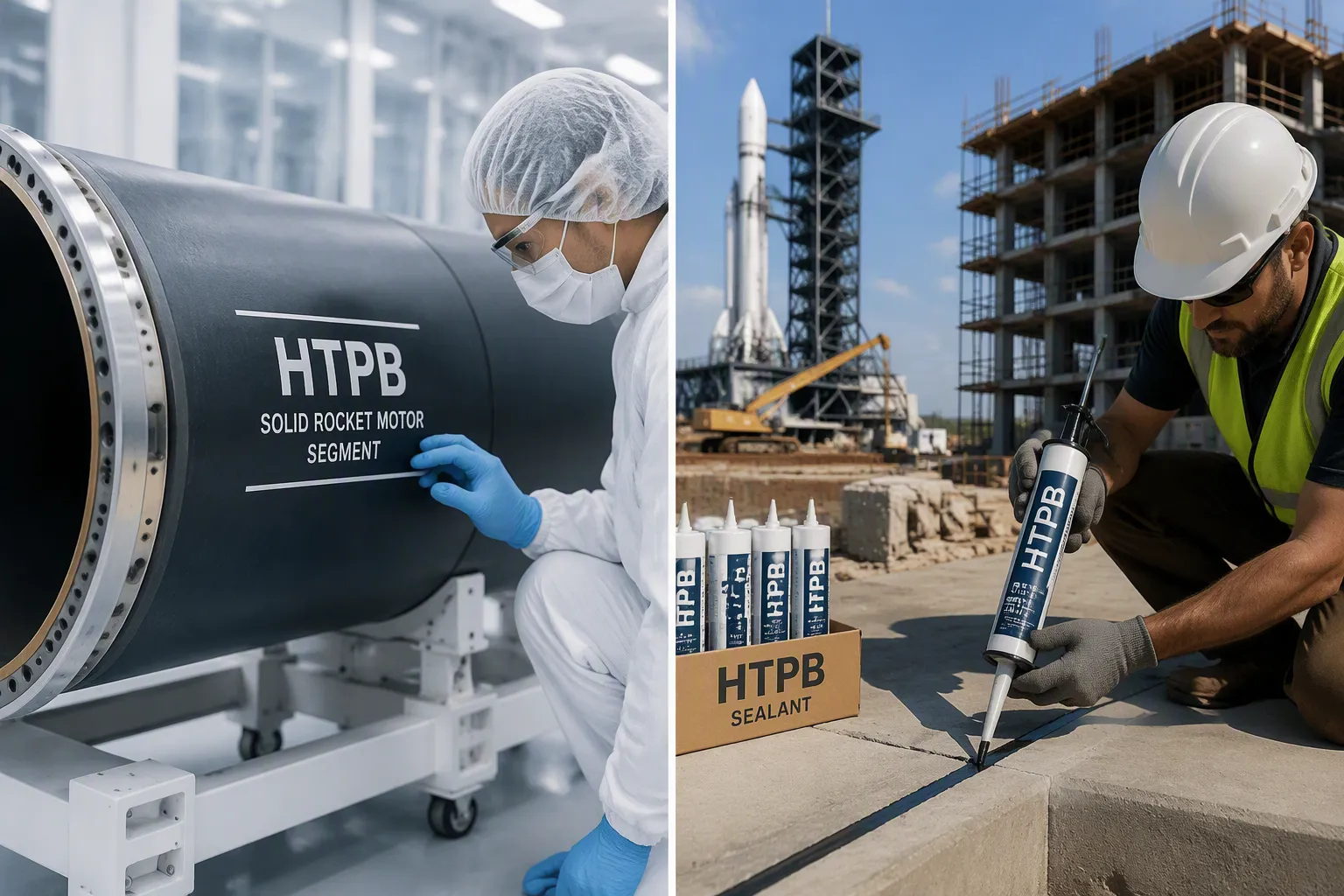
Hydroxyl-Terminated Polybutadiene(HTPB) CAS No. 69102-90-5 in adhesives offers high bond strength, low-temperature flexibility, and strong resistance to water. These traits suit aerospace fuel tanks, composite bonding, and thermal protection systems. Construction uses HTPB for insulating glass seals and structural joints that face weather and temperature swings. The global HTPB market grew from $150 million in 2019 to roughly $400 million by 2023.
Key Takeaways
- HTPB adhesives stay flexible in extreme cold and heat. They work well in aerospace fuel tanks and building seals.
- HTPB resists water damage and keeps bonds strong. This makes it perfect for outdoor and wet environments.
- HTPB bonds to many materials like metal, glass, and concrete. It handles temperature changes without cracking.
Aerospace Applications: Extreme Environments, Reliable Bonding
Cryogenic Encapsulants and Fuel Tank Sealants
Liquid hydrogen and liquid oxygen tanks reach temperatures near minus 253 degrees Celsius. Most polymers turn brittle at these extremes. Hydroxyl-Terminated Polybutadiene(HTPB) CAS No. 69102-90-5 in adhesives keeps its elastic nature far below freezing. This low glass-transition temperature allows the sealant to flex with the tank wall during rapid fueling and draining cycles. NASA has relied on HTPB-based compounds for solid rocket motor insulation and cryogenic tank liners for decades. The material bonds firmly to aluminum and stainless steel surfaces. It also resists the harsh oxidizers stored inside these vessels.
Thermal Shock Resistant Structural Adhesives
Aerospace structures face sudden temperature shifts during launch and reentry. A bonded joint must survive these swings without cracking. HTPB adhesives absorb thermal expansion differences between dissimilar materials. Metal skins expand at one rate. Composite panels expand at another. The flexible polymer network bridges this mismatch and distributes stress across the bond line. Engineers value this toughness for payload fairings and engine mounting brackets.
Elastomeric Coatings for Composite Protection
Composite airframes need protection from rain erosion, UV radiation, and micrometeorite impact. HTPB coatings cure into a rubbery layer with excellent tear strength. This layer deflects small particles and seals surface microcracks. The coating also dampens vibration, which extends the service life of sensitive electronic housings. Application methods include spray, brush, and molded sheet bonding.
Construction Applications: Moisture Resistance and Long-Term Durability
Insulating Glass Secondary Sealants
Insulating glass units trap a layer of air or gas between two panes. The primary seal keeps the gas inside. The secondary seal holds the unit together and blocks water vapor. Hydroxyl-Terminated Polybutadiene(HTPB) CAS No. 69102-90-5 in adhesives provides this secondary seal with strong elastic recovery. The sealant stretches with thermal movement without losing its grip on the glass or spacer. Moisture cannot pass through the cured polymer. This barrier prevents fogging between the panes. Buildings in humid climates depend on this protection for decades of clear vision.
Structural Adhesives for Facade and Panel Bonding
Modern facades use aluminum panels, stone veneers, and glass curtain walls. These materials expand and contract at different rates under sunlight. A rigid adhesive would crack under this stress. HTPB-based structural adhesives flex with the movement. They bond well to anodized aluminum, galvanized steel, and concrete. The adhesive distributes wind loads across the entire panel surface. This design eliminates stress points around mechanical fasteners. Panel replacement becomes easier because the bond line resists weather and UV radiation.
Moisture Barriers and Roof Membrane Adhesives
Roof membranes face rain, snow, and standing water. The adhesive must hold the membrane flat and seal every seam. HTPB formulations cure into a waterproof layer with excellent peel strength. They bond to concrete decks, insulation boards, and modified bitumen sheets. Water cannot creep under the membrane edge. This property prevents leaks and extends roof life. Cold-applied HTPB adhesives also reduce installation hazards compared to torch-down methods.
Performance Advantages of Hydroxyl-Terminated Polybutadiene(HTPB) CAS No. 69102-90-5 in Adhesives
Bond Strength and Substrate Compatibility
HTPB adhesives form strong bonds with many different materials. The polymer chain ends carry hydroxyl groups. These groups react with isocyanates to create urethane linkages. The cured network grips metal, glass, concrete, and composite surfaces with high strength. Aluminum and stainless steel present no adhesion problems. The polar hydroxyl groups interact well with metal oxide layers on these surfaces. Glass surfaces also bond firmly because of similar polar interactions. Concrete and masonry surfaces have rough textures. The HTPB adhesive flows into these small pits and locks into place after curing. This mechanical interlocking adds to the chemical bond strength.
Composite materials need special attention. Carbon fiber and fiberglass panels have smooth, low-energy surfaces. Formulators often add silane coupling agents to improve wetting. These additives bridge the gap between the polymer and the composite surface. The result is a bond that resists peeling and shear forces. Hydroxyl-Terminated Polybutadiene(HTPB) CAS No. 69102-90-5 in adhesives also tolerates slight surface contamination. Oils and dust reduce bond strength for many adhesives. HTPB formulations handle these conditions better than epoxy systems. This tolerance saves time during surface preparation on large aerospace and construction projects.
Flexibility and Thermal Cycling Performance
Temperature changes cause materials to expand and contract. A rigid adhesive cannot follow this movement. Cracks form at the bond line. Water enters these cracks and causes failure. HTPB solves this problem with its low glass-transition temperature. The polymer stays rubbery at temperatures as low as minus 70 degrees Celsius. It also maintains useful strength at temperatures above 100 degrees Celsius. This wide service window covers most aerospace and construction environments.
Thermal cycling tests reveal the true advantage. A bonded joint may face thousands of heating and cooling cycles over its service life. Each cycle stresses the adhesive. HTPB absorbs this stress through segmental motion in its polymer backbone. The chains stretch and relax without breaking. Epoxy adhesives lack this molecular flexibility. They build up internal stress with each cycle. Eventually, the stress exceeds the bond strength and the joint fails. HTPB joints survive far more cycles before any sign of fatigue. This durability explains why aerospace engineers specify HTPB for cryogenic tank liners and why construction engineers choose it for facade panels in climates with extreme temperature swings.
Hydrolytic Stability and Moisture Resistance
Water is the enemy of most adhesive bonds. Moisture penetrates the polymer network and attacks the bond interface. Many adhesives lose strength when exposed to humid air or standing water. HTPB resists this attack through its hydrocarbon backbone. The backbone contains no ester or amide groups. These groups are vulnerable to hydrolysis. Water molecules break these chemical bonds over time. The HTPB backbone has no such weak points. Water cannot cleave the carbon-carbon bonds in the polymer chain.
This hydrolytic stability provides long-term protection in wet environments. Insulating glass sealants must block water vapor for 20 years or more. Roof membrane adhesives sit under standing water for days after heavy rain. Structural joints on building facades face driving rain and high humidity. HTPB adhesives handle all these conditions without losing bond strength. The cured polymer also has low water vapor transmission. Moisture cannot pass through the adhesive layer. This barrier property protects sensitive substrates from water damage. The combination of hydrolytic stability and low permeability makes HTPB a top choice for any application where water is present.
Practical Formulation Tips for Engineers
Engineers can adjust HTPB formulations to meet specific performance targets. Several practical guidelines help formulators get the best results.
The hydroxyl value of the HTPB resin determines the crosslink density. A higher hydroxyl value creates more crosslink sites. This increases bond strength and hardness. A lower hydroxyl value produces a softer, more flexible adhesive. Formulators should select the hydroxyl value based on the required balance of strength and flexibility.
The isocyanate curative choice matters a great deal. Aromatic isocyanates like TDI and MDI react quickly and produce stiff bonds. Aliphatic isocyanates like HDI and IPDI cure more slowly. They also resist UV yellowing better. Outdoor applications should use aliphatic curatives.
The NCO to OH ratio controls the final network structure. A ratio near 1.0 gives the best balance of properties. Ratios below 1.0 leave unreacted hydroxyl groups. These groups can absorb moisture and weaken the bond. Ratios above 1.0 leave excess isocyanate. This excess can react with moisture in the air and create carbon dioxide bubbles.
Fillers and additives improve specific properties. Calcium carbonate lowers cost and increases hardness. Silica adds thixotropy for vertical applications. Silane coupling agents boost adhesion to glass and metal. Antioxidants and UV stabilizers extend outdoor service life. Plasticizers increase flexibility at low temperatures.
Cure conditions affect final performance. HTPB adhesives need moisture-free conditions during cure. Water reacts with isocyanate and creates bubbles. Elevated temperatures speed the cure reaction. A typical cure schedule is 24 hours at room temperature or 2 hours at 80 degrees Celsius. Post-curing at higher temperatures improves final strength and heat resistance.
Hydroxyl-Terminated Polybutadiene(HTPB) CAS No. 69102-90-5 in adhesives enables strong performance across aerospace and construction. Its flexibility, moisture resistance, and thermal cycling durability solve critical failure modes. New hybrid curing systems will expand its use in lightweight structures and energy-efficient buildings. Engineers should choose HTPB when flexibility and moisture resistance matter most.
FAQ
What makes HTPB different from epoxy adhesives?
HTPB stays flexible at very low temperatures. Epoxy turns brittle and cracks. HTPB also resists water damage far better. This difference matters for fuel tanks and outdoor building seals.
Can HTPB adhesives handle both extreme cold and high heat?
Yes. HTPB works from minus 70 degrees Celsius to above 100 degrees Celsius. This wide range covers aerospace launch conditions and building facade temperature swings. The polymer keeps its elastic nature across this entire window.
Why do formulators choose aliphatic isocyanates for outdoor HTPB adhesives?
Aliphatic isocyanates resist UV yellowing. Aromatic types like TDI and MDI discolor in sunlight. Outdoor facades and roof membranes need long-term color stability. Aliphatic curatives deliver this protection.
See Also
New Uses Of N,N-Dimethyl-N,N-Diphenylurea Across Multiple Industrial Sectors
Simplified Assistance For AHRI 400 And 401 Heat Exchanger Needs
Benefits And Cost Breakdown Of Plate Packs In 2025
Choosing Materials For Pressure Vessels Per ASME BPVC Section VIII