Mastering the HTHP Yarn Dyeing Process An Expert Guide
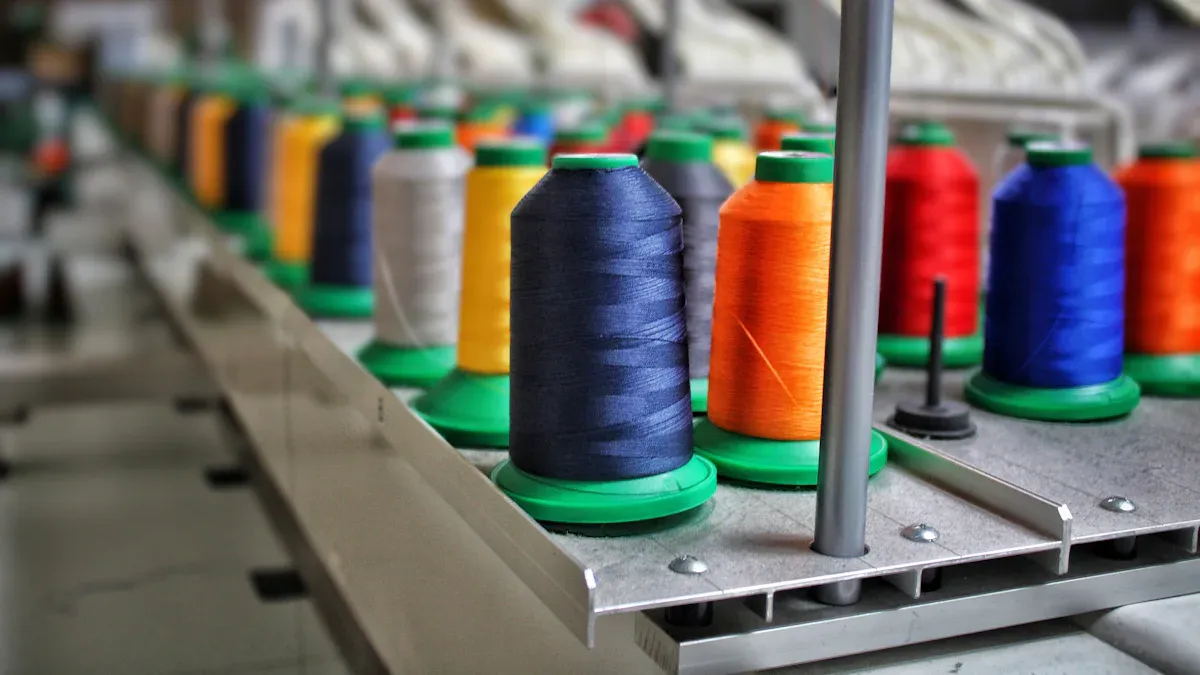
You apply high temperature (above 100°C) and pressure to force dye into synthetic fibers like nylon and polyester. This process achieves excellent results.
You will gain superior colorfastness, depth, and uniformity. These qualities surpass those from atmospheric dyeing.
An HTHP nylon yarn dyeing machine is the industry standard for its efficiency.
Key Takeaways
- HTHP dyeing uses high heat and pressure to color synthetic fibers like polyester and nylon. This method ensures deep, lasting color.
- The HTHP dyeing process has six steps. These steps include preparing the yarn, loading it correctly, making the dye bath, running the dyeing cycle, rinsing, and drying.
- Proper maintenance and safety are very important for HTHP machines. This helps the machine work well and keeps people safe.
Understanding HTHP Dyeing Fundamentals
What is HTHP Dyeing?
You can think of HTHP (High Temperature, High Pressure) dyeing as a specialized technique for synthetic fibers. It uses a sealed, pressurized vessel to achieve dyeing temperatures above the normal boiling point of water (100°C or 212°F). This method is essential for fibers like polyester and nylon. Their compact molecular structure resists dye penetration under normal atmospheric conditions. An HTHP nylon yarn dyeing machine creates the ideal environment to force dye deep into these fibers, ensuring vibrant and lasting color.
Why High Temperature and Pressure are Crucial
You need both high temperature and high pressure to achieve superior dyeing results. Each plays a distinct and vital role in the process. High pressure forces the dye liquor through the yarn packages, ensuring every fiber receives uniform color. It also raises the boiling point of water, allowing the system to operate at elevated temperatures without creating steam voids.
Note: The combination of heat and pressure is what makes HTHP dyeing so effective for synthetic materials.
High temperatures are equally important for several reasons:
- Fiber Swelling: Temperatures between 120-130°C cause the molecular structure of synthetic fibers to open up, or "swell." This creates pathways for dye molecules to enter.
- Dye Dispersion: The dye bath contains special chemicals like dispersants and leveling agents. Heat helps these agents keep the dye particles evenly distributed in the water.
- Dye Penetration: The increased pressure, often up to 300 kPa, works with the heat to push the dispersed dye molecules deep into the opened fiber structure.
Key Components of an HTHP Dyeing Machine
You will operate a complex piece of equipment when using an HTHP nylon yarn dyeing machine. The main vessel is a kier, a strong, sealed container built to withstand intense heat and pressure. Inside, a carrier holds the yarn packages. A powerful circulation pump moves the dye liquor through the yarn, while a heat exchanger controls the temperature precisely. Finally, a pressurization unit maintains the required pressure throughout the dyeing cycle.
The Complete HTHP Dyeing Process: A Step-by-Step Guide
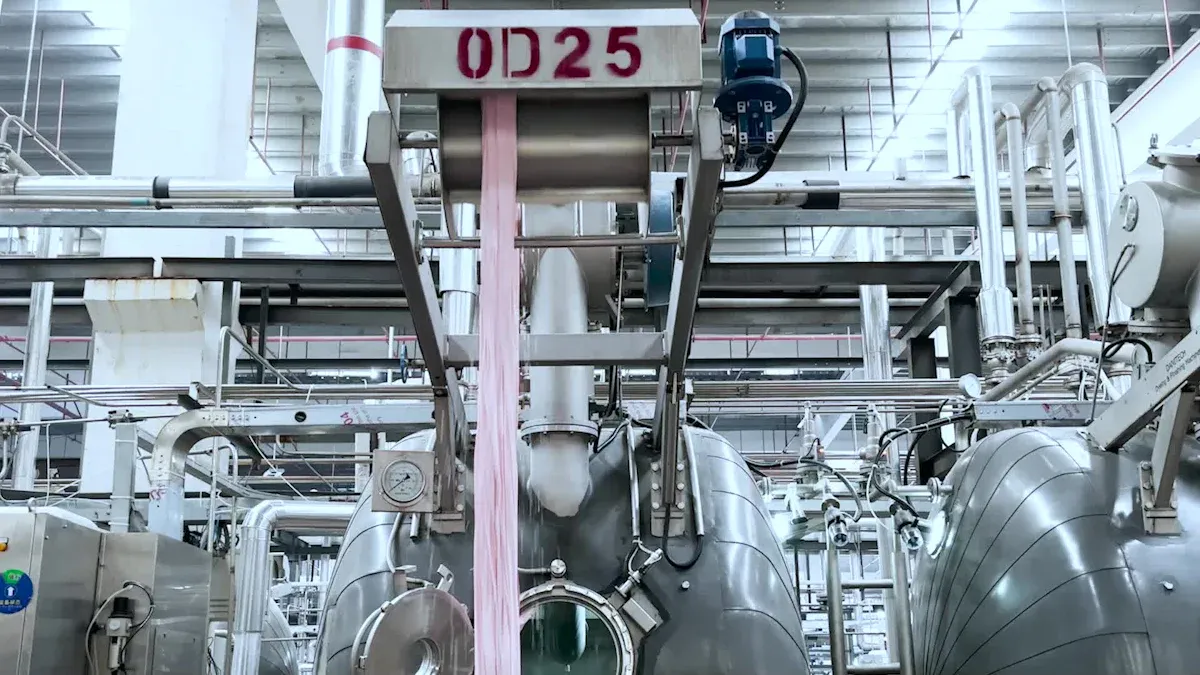
Executing a successful HTHP dyeing cycle requires precision and a deep understanding of each stage. You can achieve consistent, high-quality results by methodically following this six-step process. Each step builds upon the last, ensuring the final product meets exact color and fastness specifications.
Step 1: Yarn Preparation and Pre-Treatment
Your journey to a perfectly dyed yarn begins long before it enters the dyeing machine. Proper preparation is the foundation for success. You must ensure the polyester yarn is completely clean. Any oils, dust, or sizing agents from the manufacturing process will act as a barrier, preventing uniform dye penetration.
You should thoroughly wash the material to eliminate these impurities. This pre-treatment is crucial for optimizing the yarn's ability to absorb dye. For most polyester yarns, a wash with a mild detergent in warm water is sufficient to prepare the fibers for the intense conditions of the HTHP process. Skipping this step can lead to patchy, uneven color and poor fastness.
Step 2: Loading Yarn Packages Correctly
How you load the yarn into the machine carrier directly impacts the final quality. Your goal is to create a uniform density that allows dye liquor to flow evenly through every single fiber. Incorrect loading is a primary cause of dyeing defects.
Alert: Improper package density is a common source of failed dye lots. Pay close attention to winding and loading to prevent costly errors.
You must avoid these common loading pitfalls:
- Packages are too soft: If you wind the yarn too loosely, the dye liquor will find the path of least resistance. This causes "channeling," where dye rushes through easy paths and leaves other areas lighter or undyed.
- Packages are too hard: Winding the yarn too tightly restricts liquor flow. This starves the inner layers of the package of dye, resulting in a light or completely undyed core.
- Improper spacing: Using spacers with cones can cause the dye liquor to blow out at the joints, disrupting the uniform flow needed for level dyeing.
- Uncovered perforations: If you are using perforated cheeses, you must ensure the yarn covers all the holes evenly. Uncovered holes create another path for channeling.
Step 3: Preparing the Dye Bath Liquor
The dye bath is a complex chemical solution that you must prepare with precision. It contains more than just water and dye. You will add several auxiliaries to ensure the dye disperses correctly and penetrates the fiber evenly. The key components include:
- Disperse Dyes: These are the coloring agents, specifically designed for hydrophobic fibers like polyester.
- Dispersing Agents: These chemicals keep the fine dye particles from clumping together (agglomerating) in the water. Effective dispersion is critical for preventing spots and ensuring a level shade.
- Leveling Agents: These help the dye migrate from areas of high concentration to areas of low concentration, promoting an even color across the entire yarn package.
- pH Buffer: You need to maintain the dye bath at a specific acidic pH (typically 4.5-5.5) for optimal dye uptake.
For disperse dyes, you will use specific dispersing agents to maintain excellent colloidal stability under the high temperatures and shear forces inside the machine. Common types include:
- Anionic Surfactants: Products like sulfonates are frequently used for their effectiveness in polyester dyeing.
- Non-ionic Surfactants: These are valued for their compatibility with other chemicals in the bath.
- Polymeric Dispersants: These are high-molecular-weight compounds that stabilize complex dye systems and inhibit particle aggregation.
Step 4: Executing the Dyeing Cycle
With the yarn loaded and the dye bath prepared, you are ready to start the main event. The dyeing cycle is a carefully controlled sequence of temperature, pressure, and time. A typical cycle involves a gradual temperature rise, a holding period at peak temperature, and a controlled cooling phase.
You must carefully manage the rate of temperature rise to ensure level dyeing. The ideal rate depends on several factors:
- Shade Depth: You can use a faster heating rate for dark shades, but you must slow it down for lighter shades to prevent rapid, uneven uptake.
- Dye Properties: Dyes with good leveling properties allow for a faster ramp-up.
- Liquor Circulation: Efficient pump circulation allows for a faster heating rate.
A common strategy is to vary the rate. For example, you can heat quickly to 85°C, slow the rate to 1-1.5°C/min between 85°C and 110°C where dye absorption accelerates, and then increase it again up to the final dyeing temperature.
A standard dyeing profile for polyester might look like this:
| Parameter | Value |
|---|---|
| Final Temperature | 130–135°C |
| Pressure | Up to 3.0 kg/cm² |
| Dyeing Time | 30–60 minutes |
During the holding time at peak temperature (e.g., 130°C), the dye molecules penetrate and fix themselves within the swollen polyester fibers.
Step 5: Post-Dyeing Rinsing and Neutralization
Once the dyeing cycle is complete, you are not finished. You must remove any unfixed dye from the surface of the fibers. This step, known as reduction clearing, is essential for achieving good colorfastness and a bright, clean shade.
The primary purpose of reduction clearing is to strip away residual surface dye that could otherwise bleed or rub off later. This process typically involves treating the yarn in a strong reducing bath. You will create this bath with chemicals like sodium dithionite and caustic soda and run it at 70-80°C for about 20 minutes. This chemical treatment destroys or solubilizes the loose dye particles, allowing them to be washed away easily. After reduction clearing, you will perform several rinses, including a final neutralization rinse, to remove all chemicals and bring the yarn back to a neutral pH.
Step 6: Unloading and Final Drying
The final step is to remove the yarn from the HTHP nylon yarn dyeing machine and prepare it for use. After unloading the carrier, the yarn packages are saturated with water. You must remove this excess water efficiently to reduce drying time and energy consumption.
This is done through hydro-extraction. You will load the yarn packages onto spindles inside a high-speed centrifugal extractor. This machine spins the packages at very high RPMs (up to 1500 RPM), forcing water out without deforming the package or damaging the yarn. Modern hydro extractors with PLC controls allow you to select the optimal rotation speed and cycle time based on the yarn type. Achieving low and uniform residual moisture is key to ensuring cost-effective drying and a high-quality final product. After hydro-extraction, the yarn packages proceed to a final drying stage, typically in a radio-frequency (RF) dryer.
Operating an HTHP Nylon Yarn Dyeing Machine for Optimal Results
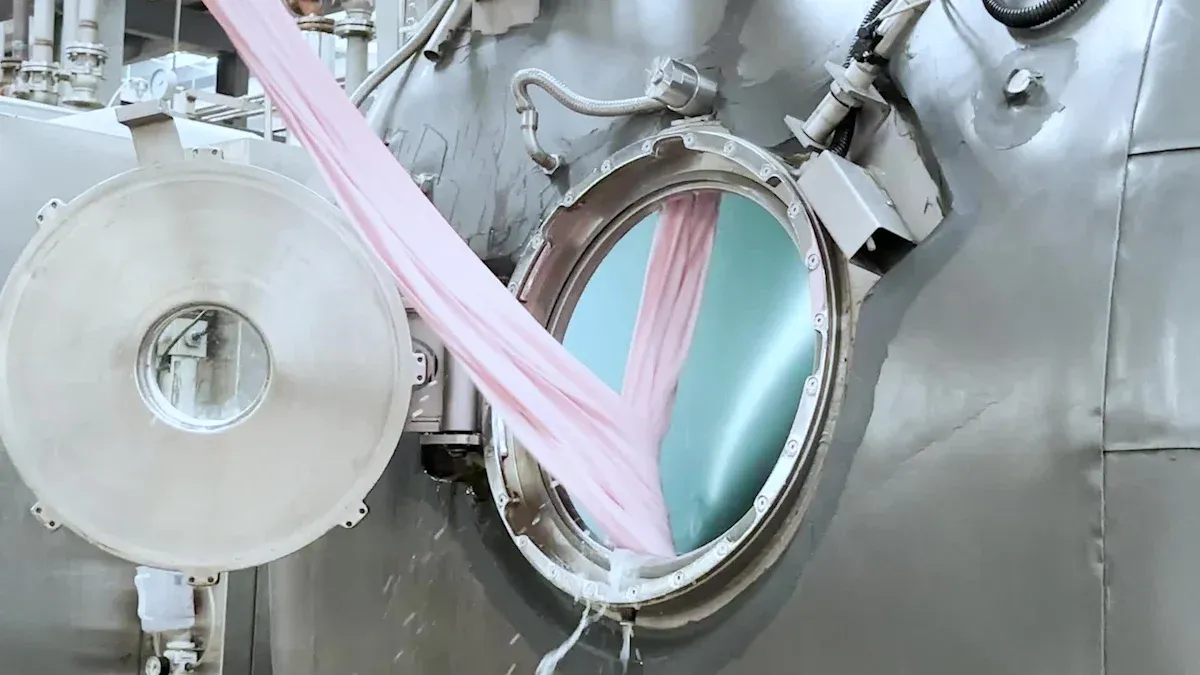
You can elevate your dyeing quality by mastering the operational nuances of an HTHP nylon yarn dyeing machine. Understanding its advantages, common problems, and key parameters will help you produce consistent and superior results.
Key Advantages of the HTHP Method
You gain significant efficiency by using the HTHP method. Modern machines are engineered with low bath ratios, meaning they use less water and energy than conventional equipment. This efficiency translates directly into major cost reductions.
An economic evaluation shows that HTHP systems can achieve approximately 47% savings in operational costs compared to traditional steam heating methods. This makes the technology both high-quality and cost-effective.
Common Dyeing Challenges and Solutions
You will likely encounter a few common challenges. One major issue is oligomer formation. These are by-products from polyester manufacturing that migrate to the yarn surface at high temperatures, causing powdery white deposits.
To prevent this, you can:
- Use suitable oligomer dispersing agents in your dye bath.
- Keep dyeing times as short as possible.
- Perform an alkaline reduction clearing after dyeing.
Another challenge is shade variation between batches. You can correct this by maintaining strict consistency. Always ensure batches have the same weight, use the same program procedures, and verify that water quality (pH, hardness) is identical for every run.
Controlling the Liquor Ratio
You must carefully control the liquor ratio, which is the ratio of dye liquor volume to yarn weight. A lower liquor ratio is generally better. It improves dye exhaustion and conserves water, chemicals, and energy. However, you need enough liquor flow for even dyeing.
The ideal ratio depends on the dyeing method:
| Dyeing Method | Typical Liquor Ratio | Key Impact |
|---|---|---|
| Package Dyeing | Lower | Increases production throughput |
| Hank Dyeing | High (e.g., 30:1) | Higher costs, but creates bulkiness |
Your goal is to find the optimal flow rate. This ensures level dyeing without causing excessive turbulence that could damage the yarn. Proper control of the liquor ratio in your HTHP nylon yarn dyeing machine is fundamental to balancing quality and efficiency.
Essential Maintenance and Safety Protocols
You must prioritize regular maintenance and strict safety measures to ensure your HTHP machine operates reliably and safely. Consistent upkeep prevents costly downtime and protects operators from the hazards of high pressure and temperature.
Routine Maintenance Checklist
You should perform daily checks to keep your machine in top condition. The main sealing ring is especially important. You need to ensure it provides a perfect seal to prevent air leaks.
A faulty seal can cause color differences between dye lots, waste heat energy, and create serious safety risks.
Your daily checklist should include these key tasks:
- Clean or replace the main circulation pump’s filter.
- Inspect and wipe down the filter housing seal.
- Flush the chemical dosing pump with clean water after its final use.
Preventative Maintenance Schedules
You need to schedule regular preventative maintenance to address wear and tear. Sensor calibration is a critical part of this schedule. Over time, sensors can lose accuracy due to aging and environmental factors, leading to incorrect temperature and pressure readings.
To calibrate a pressure sensor, you can compare its digital reading to a manual measurement. You then calculate the difference, or "offset," and enter this value into the machine's software. This simple adjustment corrects the sensor's readings, ensuring your dyeing parameters remain precise and repeatable.
Critical Safety Precautions
You are working with equipment that operates under extreme conditions. Understanding safety protocols is non-negotiable. Fortunately, modern HTHP machines have advanced safety features. 🛡️
These machines use sensors to monitor pressure in real-time. If the system detects a pressure leak or an over-pressure event, it triggers an automatic shutdown. The control system immediately stops the machine's operation within seconds. This rapid, reliable response is designed to prevent equipment damage and minimize risk to you and your team.
You master the HTHP process through precise control over every step. Your deep understanding of machine parameters and dye chemistry delivers consistent quality, boosting dye recovery and color uniformity. Diligent maintenance is non-negotiable. It ensures your machine's longevity, safety, and reliable dyeing outcomes for every batch. ⚙️
FAQ
What fibers can you dye with an HTHP machine?
You use HTHP machines for synthetic fibers. Polyester, nylon, and acrylic require high heat for proper dye penetration. This method ensures vibrant, lasting color on these specific materials.
Why is the liquor ratio so important?
You must control the liquor ratio for quality and cost. It directly impacts dye exhaustion, water usage, and energy consumption, making it a key parameter for efficient production.
Can you dye cotton using the HTHP method?
You should not dye cotton with this method. The process is too harsh for natural fibers. High temperatures can damage the cotton, which requires different dyeing conditions.