How Unflavored Gelatin Powder Works in Food
Unflavored gelatin powder acts as a pure, flavorless protein that transforms the texture of many foods. This ingredient forms a stable gel when dissolved in hot water and cooled. Many chefs and food manufacturers value its ability to thicken, stabilize, and enhance consistency without changing the original taste.
The Science Behind Unflavored Gelatin Powder
Protein Structure and Source
Unflavored gelatin powder consists of proteins derived mainly from animal collagen. Manufacturers extract this collagen from several sources:
- Pig skin (about 45% of global production)
- Bovine hides (around 30%)
- Bovine and porcine bones (23%)
- Fish and poultry by-products (emerging sources)
The molecular structure of gelatin sets it apart from other food proteins. Gelatin features a repeating sequence of amino acids, especially glycine, proline, and hydroxyproline. These amino acids form triple helices, which are three parallel polypeptide α-chains stabilized by hydrogen bonds. This unique structure gives gelatin its remarkable gelling ability.
| Feature | Gelatin Characteristics | Comparison to Other Proteins |
|---|---|---|
| Amino Acid Composition | High in glycine, proline, and hydroxyproline | Varies, often includes sulfur-containing amino acids |
| Molecular Structure | Repetition of (Gly-X-Y)n, with α, β, and γ chains | More organized structures in other proteins |
| Charge Distribution | Approximately 13% cationic, 12% anionic, 11% hydrophobic | Different ratios in other proteins |
The triple helix arrangement, rich in proline and hydroxyproline, distinguishes gelatin from other proteins that lack such a high degree of helical formation.
Gel Formation Process
The production of unflavored gelatin powder involves several precise steps. Each step ensures the final product maintains its purity and gelling properties.
- Choose collagen-rich materials, such as pig skins, bovine bones, or hides.
- Clean and pretreat the raw collagen through washing and chemical treatment.
- Hydrolyze and boil the collagen at controlled temperatures to extract gelatin.
- Remove fluids and contaminants by filtering and concentrating the gelatin solution.
- Ship and package the gelatin powder for commercial use.
During gel formation in food, the powder dissolves in hot water and then cools. As the solution cools, gelatin molecules form a network that traps water, creating a stable gel. The concentration of gelatin powder directly affects the firmness of the gel:
| Concentration of Gelatin (%) | Firmness of Gel | Gelling Temperature | Melting Temperature |
|---|---|---|---|
| 1.0 | Low | Below body temp | Below body temp |
| 5.0 | High | Above body temp | Above body temp |
A higher concentration produces a firmer gel that sets and melts at higher temperatures.
Interaction with Water and Heat
Water and heat play critical roles in activating unflavored gelatin powder. The process begins by blooming the powder in cold water, which allows the granules to absorb moisture and swell. This step prevents clumping and ensures even dissolution. After blooming, hot water—ideally around 170°F (or 50–60°C)—fully dissolves the gelatin. Excessive heat can damage the protein structure and prevent proper setting.
The interaction between gelatin and water is essential for gel formation. When gelatin absorbs water, the protein chains undergo structural changes. Heating denatures the collagen, making the gelatin soluble. As the solution cools, the chains form triple helix domains that stabilize the gel. This network traps water molecules, giving the gel its elasticity and stability.
Tip: Always bloom unflavored gelatin powder in cold water before adding hot liquid. This step ensures a smooth, lump-free gel.
Why Unflavored Gelatin Powder Is Used in Food
Enhancing Texture and Structure
Unflavored gelatin powder transforms the texture of many foods by creating a unique mouthfeel and structure. Chefs rely on this ingredient to deliver smooth, creamy, or chewy textures in a variety of desserts. For example, panna cotta becomes silky and luscious, while custards and flans gain a firm consistency that slices cleanly. Gummy candies achieve their signature chewiness through the use of gelatin.
| Dessert | Texture/Mouthfeel Improvement |
|---|---|
| Panna Cotta | Smooth and creamy |
| Custards and Flans | Firm and easy to slice |
| Gummy Candies | Chewy and satisfying |
Unflavored gelatin powder also stabilizes mixtures, preventing them from becoming runny. It creates a firm texture that holds its shape, making desserts easier to serve and enjoy. Many food manufacturers choose gelatin for its ability to extend the shelf life of products. For instance, Knox Unflavored Gelatin helps maintain freshness and prolongs the longevity of foods, which benefits both commercial and home kitchens.
Thickening and Stabilizing Properties
This ingredient acts as a reliable thickener and stabilizer in both sweet and savory recipes. When added to liquids, unflavored gelatin powder forms a gel network that traps water and other ingredients. This process results in a stable, elastic structure that resists separation. Foods containing gelatin maintain their intended consistency over time, even when stored for several days.
- Gelatin provides a smooth and silky consistency.
- It stabilizes mixtures, preventing them from being runny.
- It creates a firm texture that is easy to slice and serve.
Unflavored gelatin powder also improves the shelf life of many foods. By binding water and reducing the risk of spoilage, it helps preserve freshness and quality. This property makes gelatin a preferred choice for products that require extended storage or transportation.
Benefits Compared to Other Gelling Agents
Unflavored gelatin powder offers several advantages over plant-based gelling agents like agar-agar or pectin. The following table highlights key differences:
| Property | Gelatin | Pectin |
|---|---|---|
| Source | Animal-based (collagen) | Plant-based (fruits) |
| Setting Temperature | Melts above 35°C | Sets at room temperature |
| Gelling Requirements | Needs heat to dissolve | Needs sugar and acid/calcium |
| Dietary Restrictions | Not vegan/vegetarian | Vegan, vegetarian, halal, kosher |
| Texture Change | Melts at body temperature | Remains firm at room temperature |
Agar-agar, another common gelling agent, is much stronger than gelatin—about eight times more potent in its thickening capacity. However, gelatin melts at body temperature, giving foods a pleasant, melt-in-the-mouth sensation that plant-based alternatives cannot replicate.
Nutritionally, unflavored gelatin powder contains about 6 grams of protein per tablespoon and very few carbohydrates. It contains no fat and fits well into low-carb or grain-free diets. Some studies suggest that gelatin may reduce joint and bone pain, potentially increase brain function, and help reduce signs of skin aging.
| Nutritional Aspect | Gelatin | Agar-Agar/Pectin |
|---|---|---|
| Protein Content | ~6 grams per tablespoon | Varies, generally lower |
| Carbohydrates | Low | Higher |
| Fat | None | None |
| Vegan-Friendly | No | Yes |
| Dietary Uses | Low-carb, grain-free | Varies |
Note: While gelatin offers unique textural and nutritional benefits, it does not suit vegan or vegetarian diets. Plant-based alternatives like agar-agar or pectin provide options for those with dietary restrictions.
Common Uses of Unflavored Gelatin Powder
Classic Desserts and Sweets
Unflavored gelatin powder plays a vital role in many traditional desserts. Chefs use it to create the signature texture in panna cotta and marshmallows. When heated, gelatin dissolves in liquid and forms a gel as it cools. This process gives panna cotta its creamy, delicate wobble and marshmallows their light, springy bite. The gel-like consistency enhances mouthfeel and ensures these sweets hold their shape. Without gelatin, these desserts would lack the stability and sensory experience that make them favorites in many kitchens.
Savory Applications
Culinary professionals rely on unflavored gelatin powder to improve the texture and presentation of savory dishes. It appears in a variety of recipes:
- Pan sauces
- Stews
- Braises
- Sauces
- Casseroles
- Meatloaf
- Pâtés
- Terrines
Gelatin can also be used in pâtés and terrines, helping to create a smooth and firm texture. By using gelatin to bind the ingredients, the finished product will hold together nicely and slice cleanly.
For meat aspics and terrines, chefs often follow a step-by-step process: bloom gelatin in broth, heat until dissolved, combine with other liquids, and chill until set. This method produces a glossy, stable layer that encases meats and vegetables, enhancing both appearance and taste.
Improving Dairy and Non-Dairy Foods
Manufacturers and home cooks use unflavored gelatin powder to improve the consistency of yogurt and plant-based dairy alternatives. Gelatin acts as a thickener, providing a creamy texture and preventing separation. It activates at low temperatures, making it suitable for raw yogurt and non-dairy preparations. Mixing gelatin with a small amount of milk before adding it to the main batch ensures even distribution and prevents clumping. In frozen mousses, gelatin peptides maintain structure and inhibit ice crystal growth, resulting in a stable product during long-term storage.
Tips for Using Unflavored Gelatin Powder
Proper Blooming Techniques
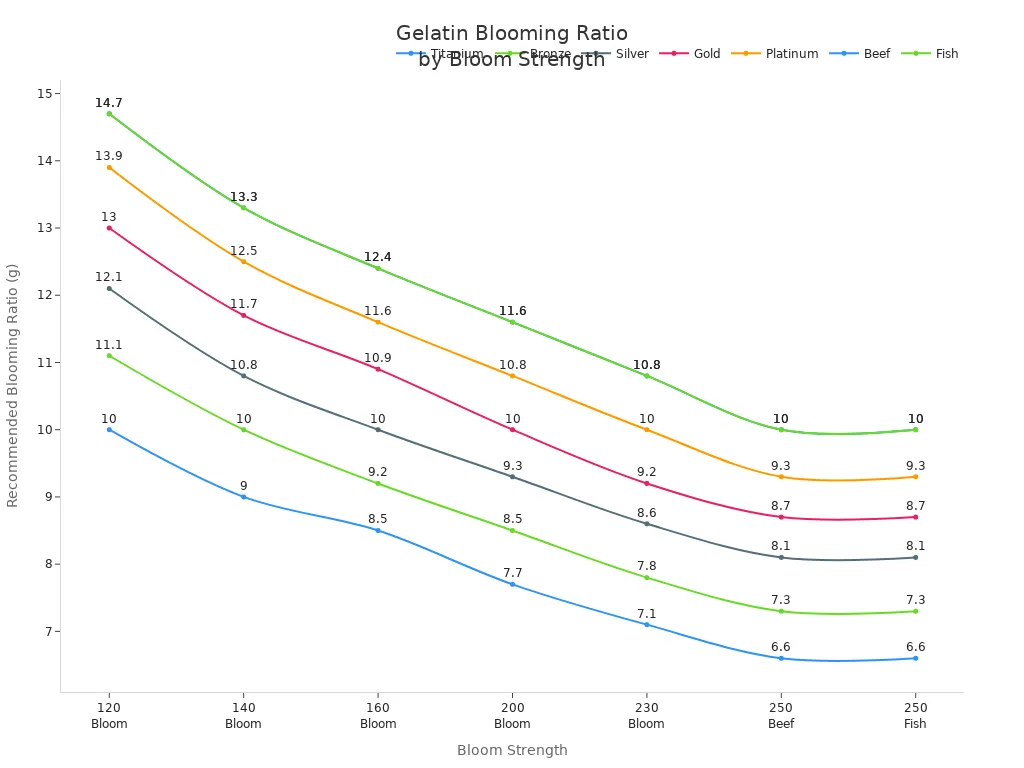
Chefs achieve the best results with unflavored gelatin powder by following precise blooming techniques. Blooming involves sprinkling the powder over cold water and allowing it to hydrate fully. This process prevents lumps and ensures a smooth final texture. Improper blooming can cause poor dissolution, resulting in an uneven texture that feels either too tough or too soft. The following table outlines recommended blooming ratios for different gelatin types and bloom strengths:
| Gelatin Type | 120 Bloom | 140 Bloom | 160 Bloom | 200 Bloom | 230 Bloom | 250 Bloom (Beef) | 250 Bloom (Fish) |
|---|---|---|---|---|---|---|---|
| Titanium | 10g | 9g | 8.5g | 7.7g | 7.1g | 6.6g | 6.6g |
| Bronze | 11.1g | 10g | 9.2g | 8.5g | 7.8g | 7.3g | 7.3g |
| Silver | 12.1g | 10.8g | 10g | 9.3g | 8.6g | 8.1g | 8.1g |
| Gold | 13.0g | 11.7g | 10.9g | 10g | 9.2g | 8.7g | 8.7g |
| Platinum | 13.9g | 12.5g | 11.6g | 10.8g | 10g | 9.3g | 9.3g |
| Beef | 14.7g | 13.3g | 12.4g | 11.6g | 10.8g | 10g | 10g |
| Fish | 14.7g | 13.3g | 12.4g | 11.6g | 10.8g | 10g | 10g |
Tip: Always allow the gelatin to bloom for 5–10 minutes before heating.
Mixing and Dissolving Methods
Cooks can avoid clumping by following these best practices:
- Measure the gelatin powder according to the recipe.
- Sprinkle it evenly over cold water and let it sit.
- Allow full hydration before reheating gently to dissolve.
They should never boil gelatin, as high temperatures weaken its structure. Gentle reheating in a double boiler or microwave works best. Uniform absorption during blooming prevents lumps and ensures a silky texture.
Adjusting for Recipe Variations
Recipes with acidic ingredients require special attention. Acid can weaken gelatin’s structure, so cooks should always dissolve gelatin completely before adding acids. They can use a pH meter or test strips to keep the mixture near neutral (pH 6–7). If the mixture is too acidic, adding a small amount of milk or coconut water helps balance the pH. Testing small batches allows for adjustments if the dessert turns out too loose. Adding acid only after blooming and dissolving preserves the integrity of the gel.
Note: Following these tips ensures consistent results with unflavored gelatin powder in any recipe.
Troubleshooting Unflavored Gelatin Powder in Recipes
Issues with Setting
Many cooks encounter problems when gelatin does not set as expected. Several factors can affect the final texture. Boiling gelatin destroys its gelling properties, so chefs must keep the temperature below boiling. Incomplete blooming prevents gelatin from melting properly. Proper hydration in cold water ensures full activation. The following table summarizes common issues and solutions:
| Issue | Solution |
|---|---|
| My gelatin isn’t setting | Ensure gelatin is not boiled, as boiling destroys its gelling properties. Keep it below boiling temperature! |
| My gelatin isn’t melting | Fully bloom the gelatin in cold water before using it to ensure proper hydration. |
| My gelatin has lumps | Properly hydrate the gelatin and mix it into a warm liquid to dissolve it smoothly. |
Tip: Always check the recipe’s temperature guidelines to avoid setting failures.
Preventing Lumps and Graininess
Lumps and graininess often result from poor technique. Uneven blooming can create clumps that do not dissolve. Overheating during dissolution breaks down gelatin fibers, leading to a gritty texture. Improper mixing, such as excessive stirring, introduces air bubbles and weakens the gel structure.
- Poor and uneven blooming can lead to clumps of gelatin.
- Overheating during the dissolution process can cause the disintegration of gelatin fibers, resulting in graininess.
- Improper mixing techniques, such as excessive stirring, can introduce air bubbles and break down the gelatin structure.
Chefs should bloom gelatin evenly, dissolve it gently, and mix with care to achieve a smooth result.
Working with Challenging Ingredients
Some ingredients make gelatin difficult to use. High acidity in citrus or pineapple can weaken the gel. Enzymes in fresh pineapple, kiwi, or papaya break down gelatin proteins, preventing setting. Chefs often cook these fruits first to deactivate enzymes. Alcohol and high-fat dairy can also interfere with gelling. Adjusting the amount of gelatin or pre-treating ingredients helps maintain the desired texture.
Note: Understanding ingredient interactions allows chefs to troubleshoot and adapt recipes for consistent results.
Unflavored gelatin powder forms stable gels that enhance food structure and texture. Chefs value its versatility for many reasons:
- It creates textures from soft to chewy.
- It stabilizes dairy, prevents separation, and extends shelf life.
- It improves both sweet and savory dishes while offering nutritional benefits.
FAQ
How does unflavored gelatin powder differ from flavored gelatin?
Unflavored gelatin powder contains only pure protein. Flavored gelatin includes sugar, artificial flavors, and colors. Chefs use unflavored gelatin for recipes that require neutral taste.
Can unflavored gelatin powder be used in cold recipes?
Yes. Chefs bloom and dissolve gelatin in hot liquid, then add it to cold mixtures. The mixture sets as it cools in the refrigerator.
Is unflavored gelatin powder suitable for vegetarians or vegans?
No. Unflavored gelatin powder comes from animal collagen. Vegetarians and vegans often choose agar-agar or pectin as alternatives.
See Also
Comparing Bovine Gelatin Powder With Fish And Pork Varieties
10 Creative Methods To Incorporate Bovine Gelatin In Cooking
The Production Process And Composition Of Edible Gelatin
Understanding The Ingredients And Production Of Bovine Gelatin
Reasons Why Bovine Gelatin Powder Is A Beneficial Supplement