How to Weld and Fabricate GR1 Titanium
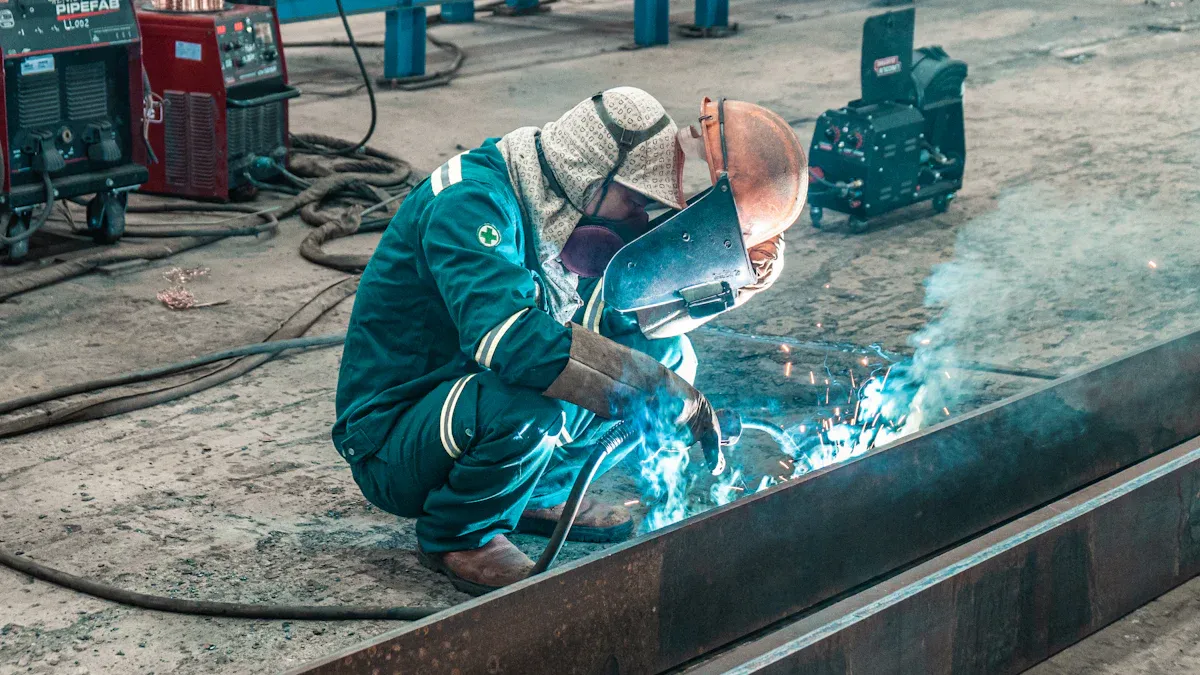
You can master welding and fabricating Pure titanium coil Sheet GR1. Success demands meticulous cleaning and complete inert gas shielding. You must use precise TIG welding techniques for strong, ductile welds.
Note: When fabricating Pure titanium coil Sheet GR1, you will adapt standard methods. This critical step prevents cracking and impurities in the final product.
Key Takeaways
- Cleanliness and gas shielding are very important for welding GR1 titanium. You must remove all dirt and use argon gas to protect the weld from air.
- Use TIG welding with the right tools and settings. This helps you control heat and avoid contamination for strong welds.
- Check the weld color after it cools. A shiny silver color means a good weld, but dark colors mean the weld is bad and needs to be fixed.
Preparation: From Sheet to Joint
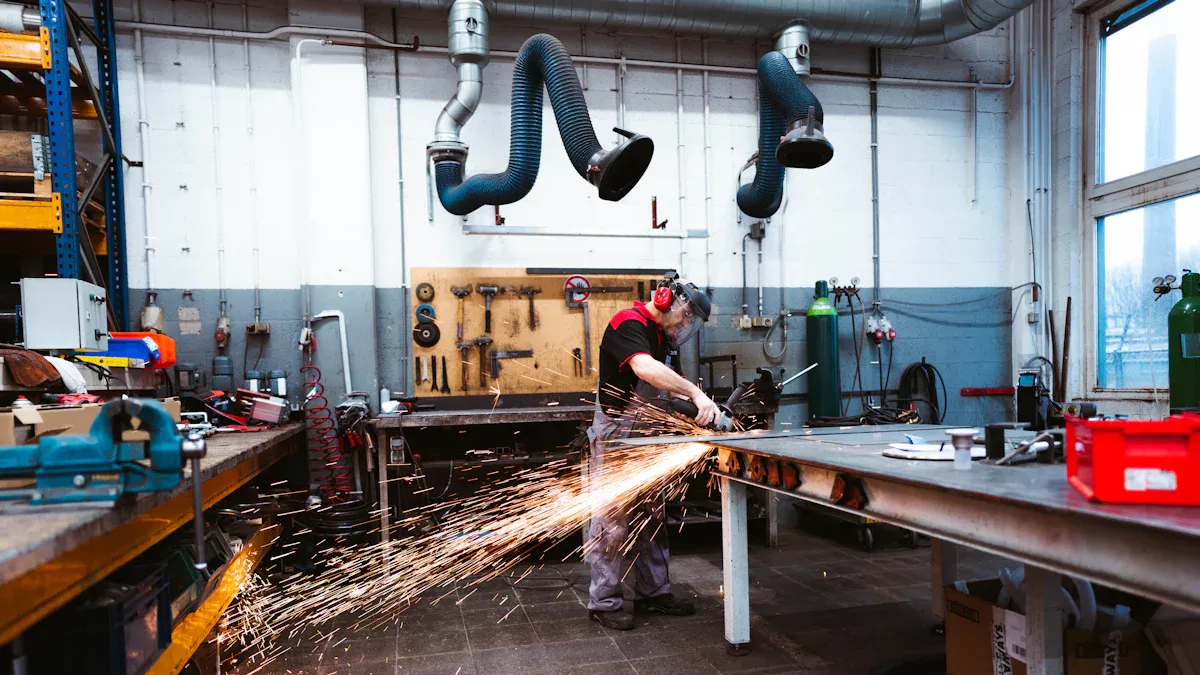
Proper preparation is the foundation of a successful titanium weld. You must handle every step with precision. This ensures your final product is free from defects.
Key Properties of GR1 Titanium
You need to understand GR1 titanium's unique characteristics. It is the most ductile of all titanium grades. This property allows for excellent formability. It also has exceptional corrosion resistance. A stable oxide layer forms on its surface, protecting it from harsh environments like saltwater far better than stainless steel. The mechanical properties of Pure titanium coil Sheet GR1 are key for fabrication.
| Property | Minimum Value |
|---|---|
| Tensile Strength | 240 MPa |
| Yield Strength | 138 MPa |
| Elongation | 24% |
Cutting and Forming Methods
You will use sharp tools and slow speeds when cutting GR1 titanium. This approach minimizes heat buildup and prevents material contamination. For forming, its high ductility is an advantage. You can shape it using standard press brakes, but remember to allow for more springback than you would with steel.
Surface Cleaning and Degreasing
Absolute cleanliness is non-negotiable. You must remove all oils, grease, and surface oxides before welding.
- Put on clean nitrile gloves to avoid transferring skin oils.
- Apply a non-chlorinated solvent like acetone or Methyl Ethyl Ketone (MEK) to a lint-free cloth.
- Thoroughly wipe the weld area and the filler rod.
- Let the solvent fully evaporate before you start welding.
Important: Never use chlorinated solvents. They can cause stress corrosion cracking and lead to weld failure under load.
Joint Fit-Up Best Practices
Your joint fit-up must be precise. Aim for a tight, uniform gap with no mismatch between the pieces. A clean, square-edge butt joint is ideal for thin sheets. A good fit-up reduces the amount of heat and filler metal needed. This minimizes the risk of distortion and contamination.
The TIG Welding Process for Pure titanium coil Sheet GR1
With your material prepared, you are ready to begin the welding process. TIG welding is the preferred method for titanium. It offers you precise control over heat and contamination. Success depends on the right equipment, complete gas shielding, and a steady hand.
Essential Equipment and Settings
You need specific equipment for a successful titanium weld. Your TIG welder should be a DC (Direct Current) machine set to electrode negative (DCEN). This setting directs most of the heat into the workpiece, not the tungsten.
For your tungsten electrode, you should choose a 2% thoriated type. You will find that 2% thoriated tungsten electrodes are highly effective for DC welding on titanium. They provide excellent electron output, which improves arc starting and stability. They also handle higher currents better than pure tungsten electrodes.
Pro Tip: Always use a dedicated grinder for your tungsten electrodes to prevent cross-contamination. Sharpen the tungsten to a fine point for a focused, stable arc.
Your setup should also include:
- A gas lens in your TIG torch to create a smooth, non-turbulent flow of shielding gas.
- A large ceramic cup (e.g., #12 or larger) to provide a wide, protective gas shield over the molten weld pool.
Shielding Gas and Purging
Titanium's reactivity at high temperatures makes shielding gas the most critical variable in the entire process. You must protect the molten weld pool from oxygen, nitrogen, and hydrogen in the atmosphere.
You will use 99.999% pure Argon for all shielding purposes. There are three areas you must shield:
- Primary Shielding: Gas flowing from the TIG torch cup.
- Secondary Shielding: A trailing shield that attaches to the torch and protects the weld as it cools.
- Back Purging: Gas supplied to the backside of the weld to protect it from the atmosphere.
For complex parts, you may need a purge chamber. These enclosures allow you to create a fully inert environment. A high-quality purge chamber ensures oxygen levels drop to as low as 10 parts per million (ppm).
Key features of a professional purge chamber often include:
- Glove ports for manipulating parts inside the chamber.
- An optically clear upper section for excellent welding vision.
- An entry lock to add or remove parts without losing the argon purge.
- A dedicated outlet for a Weld Purge Monitor to verify gas purity.
Welding Technique and Heat Control
Your welding technique must be deliberate and controlled. Maintain a consistent travel speed and a close arc length. Avoid any whipping or weaving motions, as this can disturb the gas shield and introduce contamination.
Pulsed TIG welding significantly improves your heat control when working with thin materials like Pure titanium coil Sheet GR1. The machine rapidly alternates between a high peak current and a low background current. This action gives you precise management of heat input. The high current creates fusion, while the low current lets the weld pool cool slightly. This cycle minimizes the risk of overheating and distortion. It also creates a smaller heat-affected zone (HAZ) for a stronger final weld.
Filler Metal Selection (ERTI-1/ERTI-2)
You must select a filler metal that matches the purity of your base material. For GR1 titanium, the ideal choice is ERTi-1. This filler wire has a similar chemical composition, ensuring the weld maintains the ductility and corrosion resistance of the parent metal. ERTi-2 is another option if you need slightly higher tensile strength, but it will reduce the overall ductility of the joint.
Warning: Never let the hot end of the filler rod leave the argon shielding gas envelope. If it touches the air while hot, it will become contaminated. You must snip off the contaminated end before continuing.
Post-Weld Color Inspection
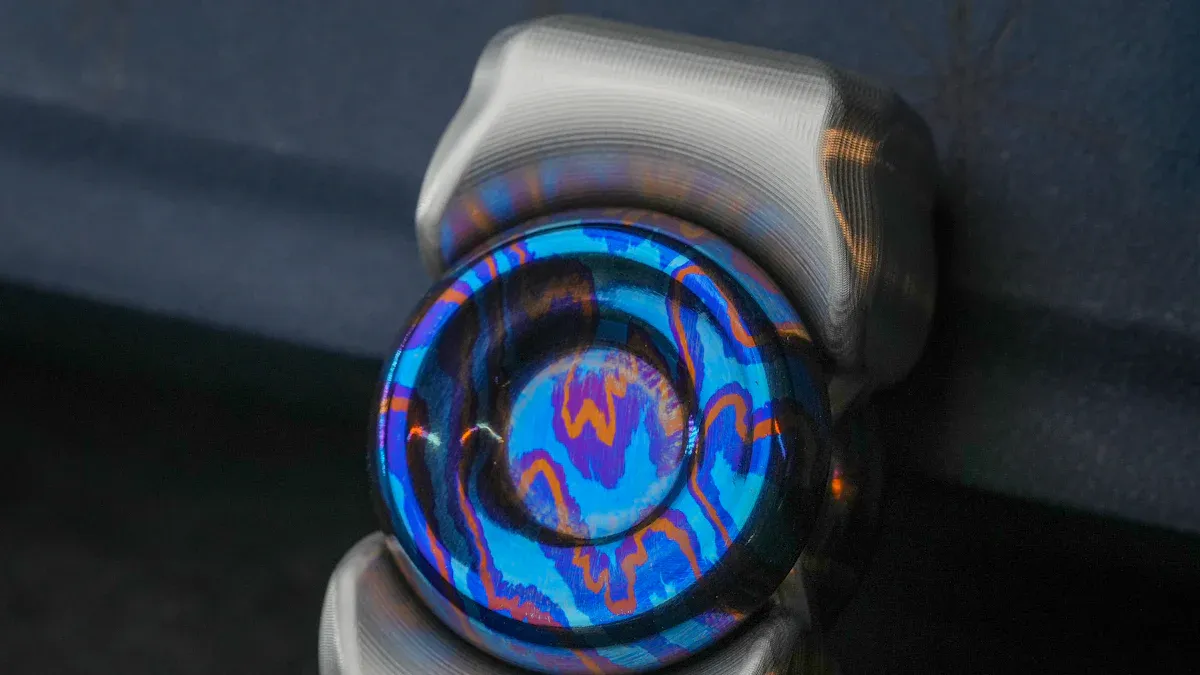
After the weld cools, its color tells you everything about its quality. The color is a direct indicator of the level of atmospheric contamination the weld was exposed to. A bright, shiny silver weld is the goal. It signifies a perfect, uncontaminated joint.
You can use this table to judge your weld quality:
| Weld Color | Inspection Result |
|---|---|
| Glossy Silver | ✅ Acceptable |
| Light Straw | ✅ Acceptable |
| Dark Straw | ✅ Acceptable |
| Purple | ⚠️ Potentially Acceptable |
| Blue | ❌ Rejectable |
| Gray | ❌ Rejectable |
| White (Powdery) | ❌ Rejectable |
A dark blue, gray, or white powdery color indicates severe contamination. This brittle layer, known as alpha case, compromises the weld's strength and must be completely removed.
If you find an unacceptable color, you must correct it.
- Completely remove the contaminated weld bead by grinding.
- Clean the joint area again as you did during initial preparation.
- Re-weld the area, ensuring you have improved your gas shielding to prevent a repeat failure.
Safety and Ventilation
Your safety is the top priority. TIG welding produces intense ultraviolet (UV) light, fumes, and gases. You must use proper personal protective equipment (PPE) at all times.
- Welding Helmet: An auto-darkening helmet with the correct shade rating.
- Safety Glasses: Worn under the helmet for protection.
- Gloves: Dry, clean TIG welding gloves.
- Clothing: A flame-resistant welding jacket and long pants.
- Respirator: An air-fed welding mask or respirator is highly recommended.
Ventilation is crucial. The welding process creates ozone, and the argon gas used for shielding can displace oxygen in your workspace.
| Hazard | Source | Health Effect |
|---|---|---|
| Ozone (O3) | Formed by the UV light from the welding arc. | Headaches, eye irritation, and fluid in the lungs. |
| Oxygen Deficiency | Argon gas displacing breathable air in confined spaces. | Dizziness, confusion, asphyxiation, and death. |
Always work in a well-ventilated area. Use a fume extraction system to remove harmful gases and particles directly at the source. Never weld Pure titanium coil Sheet GR1 in a confined space without a supplied-air respirator.
Your success with GR1 titanium hinges on cleanliness, shielding, and heat control. You must prepare meticulously; there are no shortcuts. Mastering these steps lets you create strong, corrosion-resistant fabrications for demanding applications like:
- Chemical processing reactors
- Seawater desalination plants
You can produce durable Pure titanium coil Sheet GR1 parts.
FAQ
Can you weld titanium without a purge?
No. You must purge the weld's backside with argon. Without a purge, the weld becomes contaminated and brittle. This guarantees weld failure under stress.
What happens if you use the wrong filler rod?
You create a weak, brittle joint. Using a filler like stainless steel causes the weld to crack and fail. You must use a matching titanium filler rod.
Can you just grind off a blue or gray weld color?
No. A blue or gray color signals deep contamination. You must completely grind out the entire weld bead. Then, you re-weld the joint with proper gas shielding.
See Also
Mastering Pass Partition Plate Welding: Expert Strategies for 2025
Unlocking Superior TIG Welding: Essential Facts About WT20 Electrodes
Optimizing Heat Exchange: Effective Steel Processing Guarantees Peak Performance
Auto Reinforcement: A Beginner's Guide to Frame Plate Kit Installation
Seamless Steel Pipe Production: Molybdenum Plug Evaluation for Enhanced Efficiency