5 Easy Steps to Your Manual Water Dispenser
Your new manual water dispenser provides fresh water instantly. You can get started quickly with just a few simple actions.
- 💧 Assemble the pump components first.
- 💧 Securely attach the pump to your water bottle.
- 💧 Press the top button to dispense water with ease.
Key Takeaways
- Assemble your pump parts and attach it to a water bottle. This creates a secure, leak-free setup for fresh water.
- Pump the button a few times to start the water flow. You can control how much water comes out by how fast you pump.
- Clean your pump regularly to keep your water tasting fresh. This also helps the pump work well for a long time.
Step 1: Unbox and Assemble Your Pump
Your first step is to get the pump ready for action. You will assemble the main components in just a few moments. This process is simple and requires no special tools.
Lay Out and Identify the Parts
Open the box and place all the contents on a clean, flat surface like a table or countertop. You should be able to identify a few key pieces. Typically, you will find:
- The main pump head (the part you press).
- Two or three straight suction tubes.
- A curved dispensing spout.
Quick Tip: Before you begin, quickly compare the parts you have with the list in your product manual. This ensures you have everything you need to get started.
Connect the Suction Tubes
Next, you will connect the suction tubes. These tubes push together to form one long pipe that will reach the bottom of your water bottle. You may not need to use all the tube sections. Just connect enough to match the height of your bottle. The tubes are designed from materials that ensure your water stays fresh.
- Plastic: A common choice that is lightweight and effective.
- Stainless Steel: A durable option that is highly resistant to corrosion.
These materials are chosen to prevent rust and keep your water tasting pure.
Attach the Dispensing Spout
Finally, you will attach the dispensing spout. This curved piece directs the water into your glass. It usually snaps or twists securely into an opening on the top or side of the pump head. Make sure you push it in firmly until it clicks or feels snug. A secure fit prevents any annoying leaks or drips when you dispense water. 💧
Step 2: Prepare Your Water Bottle
With your pump assembled, you now need to get your water bottle ready. This step ensures the pump fits correctly and creates a secure, airtight seal. A proper setup prevents leaks and helps the pump work efficiently.
Choose the Right Bottle Size
Your manual pump is designed for versatility. It works with the most common large water bottles, including 3-gallon and 5-gallon jugs. These bottles share a standard neck size, which allows your pump to fit securely on either one. The main difference you need to account for is the bottle's height. You already adjusted the suction tube length in Step 1 to match your bottle.
Most pumps are made to fit a standard opening. You can see the typical neck measurements for these bottles here:
| Bottle Size | Neck I.D. (in.) | Neck O.D. (in.) |
|---|---|---|
| 3 Gallon | 1.811 | 2.190 |
| 5 Gallon | 1.811 | 2.190 |
This standard design makes finding a compatible bottle simple.
Remove the Bottle Cap Completely
Next, you must prepare the bottle's opening. Take your full water bottle and remove the plastic cap from the top. You need to remove the entire cap assembly, not just the small sticker or tab in the center. Pull firmly on the cap's tab to peel it off completely. This action exposes the entire neck of the bottle.
Pro Tip: Removing the whole cap is crucial. It allows the pump's collar to create an airtight seal directly on the bottle's neck. Leaving parts of the cap on can cause air leaks, making it difficult to pump water. 💧
You should now have a clean, open bottleneck ready for the pump.
Step 3: Mount and Secure the Pump
You have an assembled pump and a prepared bottle. Now you will connect the two pieces. This step is important for creating a stable, leak-free setup. A secure mount allows the pump to build pressure efficiently.
Place the Pump on the Bottle Neck
First, you will position the pump on the bottle. Take your assembled pump and carefully guide the long suction tube down into the bottle's opening. Let the tube go all the way to the bottom. The main pump head should now rest on top of the bottle's neck. Make sure the pump sits level and is not tilted to one side. This ensures the pump is stable before you tighten it.
Tighten the Collar for an Airtight Seal
Next, you will secure the pump to create an airtight seal. Your pump has an adjustable collar, sometimes called a universal seal. This part is designed to create a tight fit on different bottle brands. You can tighten this collar by turning it clockwise by hand. Continue turning until it feels firm and the pump no longer wobbles. This action secures the pump stem inside the bottle neck.
Important Tip: A proper seal is essential for the pump to work correctly. It prevents air from escaping, which allows the pump to create the suction needed to draw water up. 💧
An airtight seal also stops water from leaking out around the neck.
- You may need to make minor adjustments to get the best seal.
- An improper fit can cause leaks, so ensure the collar is snug.
Your pump is now securely mounted and ready for the next step.
Step 4: Prime and Dispense Water
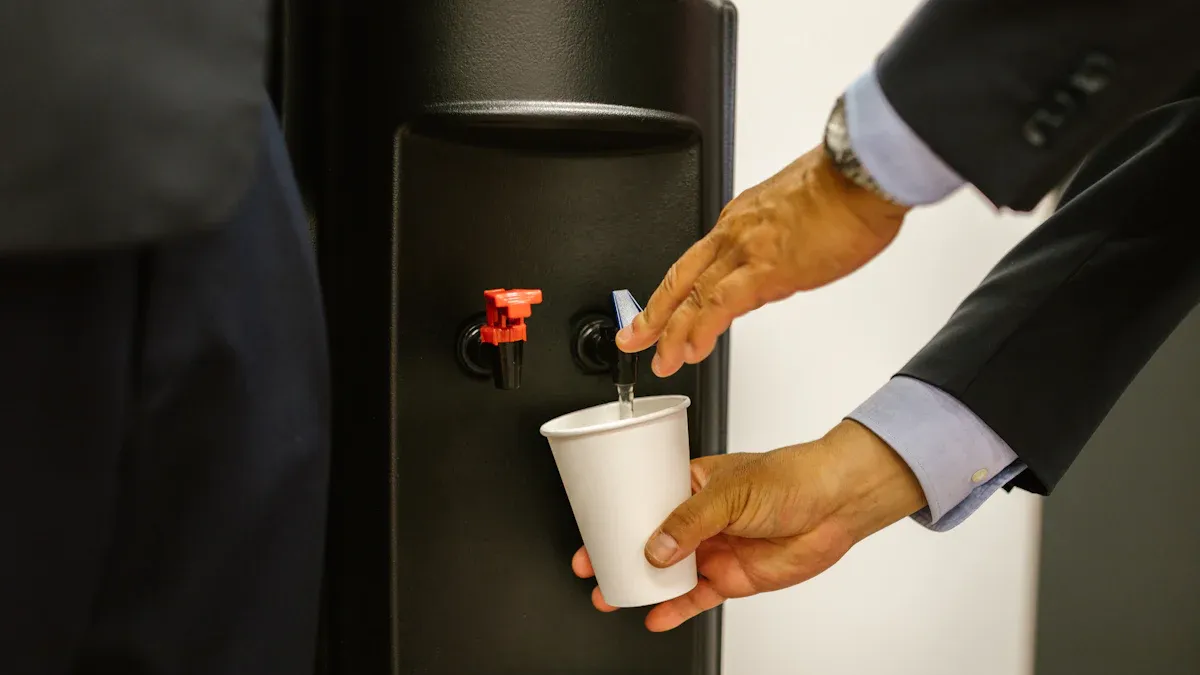
Your pump is now securely attached to the bottle. You are ready to get the water flowing. This step involves priming the pump to create suction and then dispensing water into your glass.
Start Pumping to Create Suction
First, you need to prime the pump. Place your hand on the large button on the pump head. Press it down firmly and then release it. You will need to do this several times. The first few pumps remove the air from the suction tube and create a vacuum. This vacuum is what pulls the water up from the bottom of the bottle. You may hear a gurgling sound as the air is replaced with water.
Quick Tip: Don't worry if water doesn't come out on the first or second press. This is normal. It usually takes between 3 to 5 pumps to get the water moving up the tube and out of the spout. 💧
Control the Water Flow
You can easily manage how much water you dispense. The speed and pressure of your pumps directly control the water flow.
- Use smooth, consistent presses for a steady stream of water.
- Press the pump faster to increase the flow.
- Use slower, partial presses when your glass is almost full.
This simple control helps you fill any cup or bottle without splashing or overflowing. You can stop the flow instantly by just stopping your pumping motion. Now you can enjoy fresh water anytime you want.
Step 5: Clean and Maintain Your Manual Water Dispenser
To keep your water tasting fresh and pure, you should clean your manual water dispenser regularly. Proper cleaning prevents the buildup of germs and ensures your pump works well for a long time. This process is simple and only takes a few minutes.
Disassemble the Pump for Cleaning
First, you need to take the pump apart. You cannot clean it properly when it is assembled. Taking it apart allows you to wash every surface that touches the water.
- Remove the pump from the water bottle.
- Carefully pull the dispensing spout out of the pump head.
- Separate the connected suction tubes into their individual pieces.
- Place all the parts on a clean towel.
Wash and Sanitize All Parts
Next, you will wash and sanitize all the components. Start by washing each part with warm, soapy water and rinsing it well. After washing, you need to sanitize the parts to remove any remaining germs.
Sanitizing Options:
- Boil: Place the disassembled parts in a pot of water. Bring the water to a boil and let the parts boil for 5 minutes.
- Dishwasher: If the parts are dishwasher-safe, you can place them in your dishwasher. Use a hot water cycle or a sanitize setting for the best results.
Air Dry Thoroughly Before Reassembly
Finally, you must dry every part completely. This step is important because it stops mold from growing inside the pump. Trapped moisture can lead to grime and mildew.
Place all the clean parts on a fresh dish towel or paper towel. Let them air dry. To speed up the process for the tubes, you can hang them vertically to let gravity help remove water.
Pro Tip: You can use a hairdryer on a cool setting to blow air through the tubes. Never use hot air, as it could damage the plastic. Make sure every piece is 100% dry before you put the pump back together. 💧
Troubleshooting Common Pump Issues
Even with a simple device, you might run into a small issue. You can solve most common problems quickly. Here are a few tips to get your pump working perfectly again.
Why Isn't Water Coming Out?
You press the pump, but no water appears. This is usually a suction problem. The pump needs to create a vacuum to pull water up. If it cannot, water will not flow.
- Check the Seal: An air leak is the most common cause. Air can enter the suction line if the collar is not tight enough. Make sure the pump's collar is screwed on firmly to create an airtight seal.
- Prime the Pump: Your pump needs priming. Press the top 3 to 5 times to remove air from the tube and start the water flow.
- Inspect the Tube: Ensure the suction tube reaches the water. If the water level is too low, the pump will just pull in air.
How to Fix Leaks or Drips
You may notice water leaking from the pump. Drips usually happen around the collar or the spout. A secure fit is the best way to prevent this.
A Secure Fit is Key: The most common reason for leaks is a loose connection. Vibrations from pumping can loosen the collar over time, breaking the airtight seal and allowing water to escape.
First, check that the dispensing spout is pushed in all the way. Next, re-tighten the main collar on the bottle's neck. Turn it clockwise until it feels snug and the pump no longer wobbles. This simple adjustment often stops leaks immediately.
What to Do if Pumping is Difficult
Pumping should feel smooth and easy. If you have to push very hard, something is likely blocking the water's path. You will need to check for an obstruction.
- Disassemble the pump completely.
- Inspect the long suction tubes. Look through them to see if any debris is stuck inside.
- Check the main pump head for any visible cracks or blockages that could restrict movement.
Cleaning out any clogs should make pumping easy again. A clear path allows water to flow freely from the bottle to your glass. 💧
Benefits of Using a Manual Pump
An excellent manual water dispenser offers more than just a simple way to get water. It provides several key benefits that make it a smart choice for many situations. You will find it is a practical and reliable tool for daily hydration.
Portability and Convenience
Your manual water dispenser is incredibly easy to move and use anywhere. Its lightweight design means you can take it from the kitchen to the patio for a barbecue. You can also bring it on camping trips or to outdoor events. This portability ensures you always have access to fresh water without needing a heavy or bulky cooler.
On-the-Go Hydration: Think of it as your personal water source for any location. It is perfect for temporary setups at construction sites or for providing water during a family picnic in the park.
No Electricity or Batteries Needed
One of the biggest advantages of a manual water dispenser is that it operates without power. You never have to worry about finding an outlet or replacing batteries. This makes it an essential tool in many situations.
- Emergency Scenarios: It provides a reliable water supply during power outages.
- Off-Grid Living: It is perfect for remote areas, cabins, or homes without grid access.
- Eco-Friendly Setups: You can reduce your carbon footprint by avoiding electricity consumption.
This simple, effective design guarantees you can get water anytime, day or night, regardless of your access to power.
Cost-Effective Hydration
Choosing a manual water dispenser is a great way to save money. The initial cost of the pump is very low compared to electric water coolers. You also avoid the ongoing expense of electricity needed to run a cooler. Buying water in large 3-gallon or 5-gallon jugs is often cheaper than buying individual bottles. This combination of a low-cost device and bulk water purchasing makes it a highly economical solution for your family's hydration needs. You get all the convenience without the high price tag.
You have now mastered your manual water dispenser. Enjoy the convenience of fresh, accessible water anywhere you go. Remember to clean your pump regularly. This simple habit is important because unusual tastes can indicate contamination. A clean pump ensures you always get the best-tasting water. 💧
FAQ
How often should I clean my pump?
You should clean your pump every two to four weeks. This simple habit prevents germ buildup. It also ensures your water always tastes fresh and pure. 💧
Will this pump fit any water bottle brand?
This pump fits most standard 3 and 5-gallon water jugs. The adjustable collar creates a tight seal on standard bottle necks, providing a nearly universal fit.
Can I use the pump for other drinks?
You should only use this pump for water. Other liquids like juice or soda can damage the internal parts and leave a sugary residue that attracts bacteria.