How to Pick a Countertop Water Dispenser Water Line You'll Love
Choosing a countertop water dispenser water line brings convenience and fresh water into your home. You need to consider several key factors. These include the filtration system, temperature options, and overall capacity. Also, think about installation needs and the unit's size. Matching these features to your household's needs is the secret to finding a dispenser you'll love.
Key Takeaways
- Choose a water dispenser with a good filter. It cleans your water. Check for NSF/ANSI certifications to make sure it removes bad stuff.
- Pick a dispenser with temperature options. You can get hot or cold water fast. This helps with drinks like coffee or tea.
- Measure your space before buying. Make sure the dispenser fits on your counter. Also, think about how easy it is to install and clean.
Key Features of Your Countertop Water Dispenser Water Line
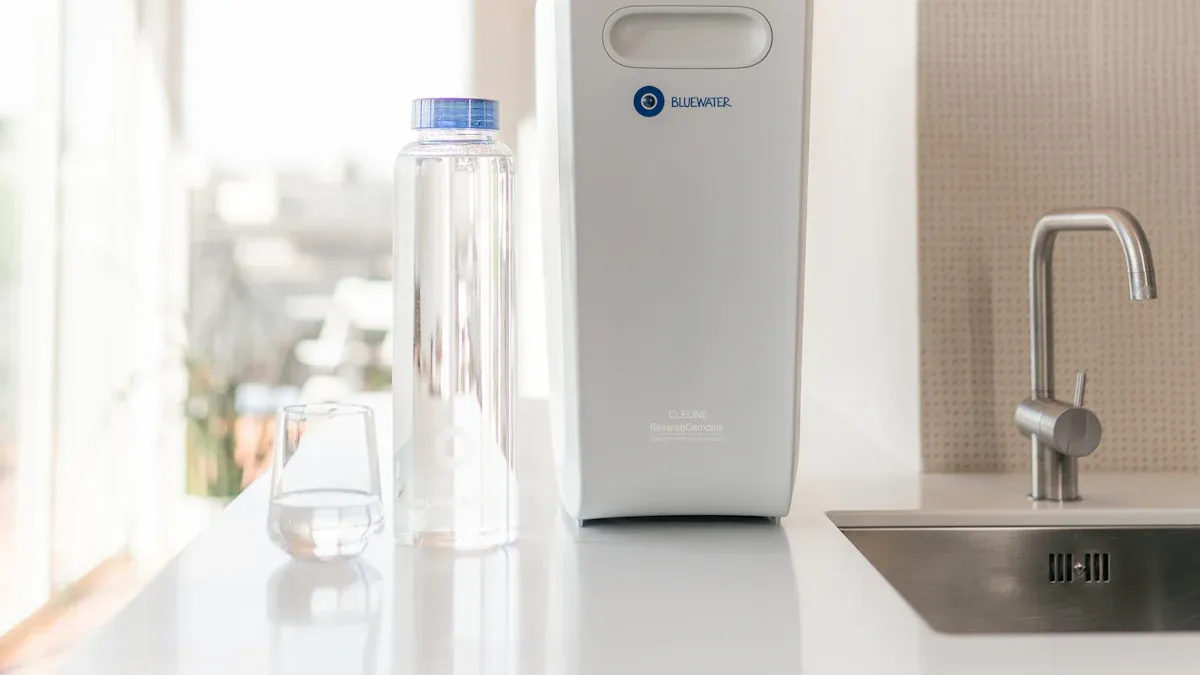
The best features make your life easier and your water taste better. You should focus on three main areas. These are the filtration system, temperature controls, and dispensing capacity. Let's explore what makes each one important for your home.
Filtration System and Water Purity
The primary job of a countertop water dispenser water line is to provide clean, pure water. The filtration system is the heart of the unit. Different models use various technologies to remove contaminants. You will want a system that targets the specific issues in your local water supply.
The EPA advises you to look for products certified under NSF/ANSI standards. These certifications ensure the filter reduces harmful substances. For example, NSF/ANSI 53 and NSF/ANSI 58 certifications are important for reducing contaminants like PFOA/PFOS. Many quality filters are certified to remove multiple impurities.
- NSF/ANSI 53: Reduces health-related contaminants like lead, cysts, and PFOA/PFOS.
- NSF/ANSI 42: Improves aesthetics by reducing chlorine, taste, and odor.
Filter lifespan and cost are also major factors. Some filters last longer than others. This directly impacts your long-term maintenance costs and effort.
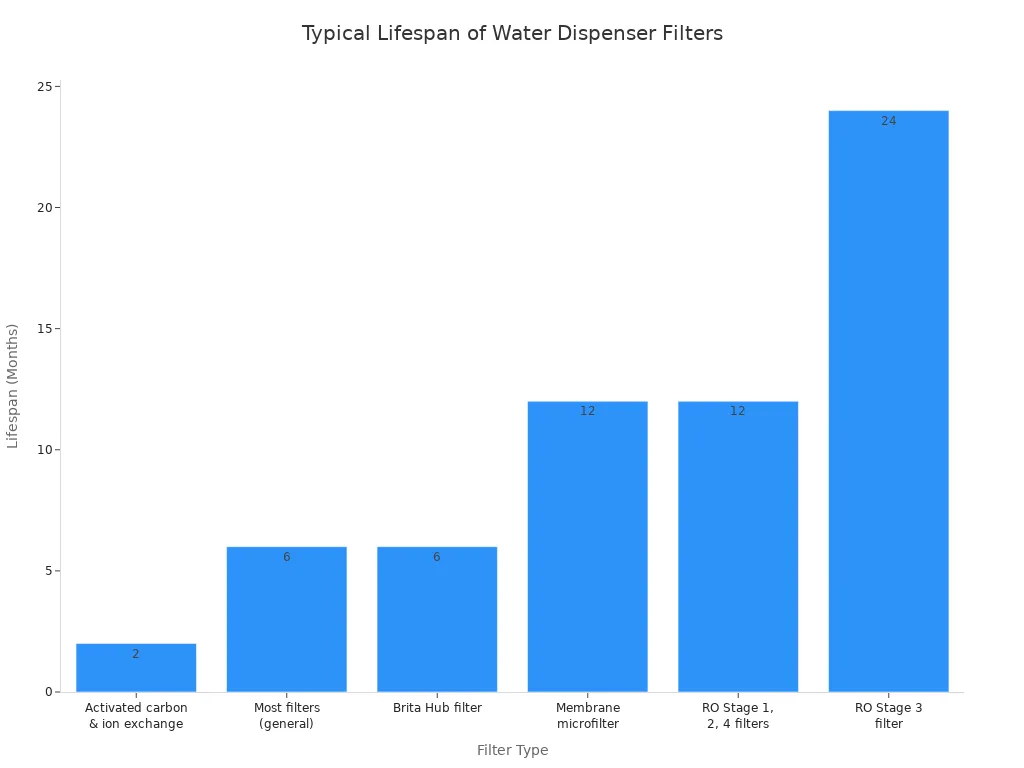
As the chart shows, lifespans vary greatly. An activated carbon filter might need replacement every two months. A reverse osmosis (RO) membrane can last up to two years. Always check the manufacturer's recommendation for your specific model.
| Filter Model | Lifespan |
|---|---|
| FPCA100 | Up to 12 months |
| MCD100HC | Up to 24 months |
Replacement filter costs can range from affordable to expensive. A basic carbon block filter set may cost around $35. A multi-stage reverse osmosis filter pack could be much more.
Tip: Look for subscription services for your filters. Many companies offer a small discount for automatic deliveries. For instance, a filter costing $35.99 might drop to $34.19 with a 6-month subscription. This saves you money and helps you remember to change the filter on time.
Temperature Options and Controls
A great dispenser offers more than just room-temperature water. It gives you hot and cold water on demand. This feature is perfect for making instant coffee, tea, or a refreshing cold drink. You should check the specific temperature ranges a unit offers.
- For coffee: 185°F is a great temperature for brewing.
- For tea: 205°F is ideal for a perfect cup.
Modern dispensers provide amazing control over water temperature. Many now include digital touchscreens and programmable presets. These advanced systems use precision thermostats to hold an exact temperature. Some even have intelligent features that learn your habits. They can automatically set the temperature for your morning coffee. You can find models with user profiles, voice control, and even smartphone apps for remote operation. These features give you total control and convenience.
Dispensing Capacity and Flow Rate
Capacity and flow rate determine how much water you can get and how fast you can get it. A countertop water dispenser water line connects directly to your plumbing. This gives you a virtually unlimited supply of water. You never have to worry about refilling a tank.
The flow rate from a direct line depends on your home's water pressure and the pipe's diameter. A larger pipe generally delivers water faster.
| Intake Pipe Gradient (% Slope) | 1/4" Pipe (Gallons/Day) | 3/8" Pipe (Gallons/Day) | 1/2" Pipe (Gallons/Day) |
|---|---|---|---|
| 1% | 123 | 358 | 762 |
| 2% | 179 | 520 | N/A |
| 3% | 223 | 648 | N/A |
While a direct connection is convenient, the flow to the dispenser itself is controlled. The internal system ensures you get a steady, manageable stream of water, not a high-pressure blast.
A direct water line provides a continuous source. The dispenser's internal pump or gravity-feed system then regulates the flow rate to your cup. This gives you the best of both worlds: an endless supply with a safe, controlled pour.
This setup ensures you have convenient access to water without overwhelming the unit's internal parts. It provides a reliable flow every time you fill your glass.
Practical Considerations for Installation and Use
Beyond features, you need to think about how a dispenser will fit into your daily life. This includes installation, maintenance, and how it looks in your kitchen. Getting these practical details right ensures you will be happy with your choice long-term.
Installation and Maintenance Needs
You can often install a countertop water dispenser water line yourself. Many people find the process manageable with the right tools. A DIY installation gives you control over the setup. You will need some basic tools to connect the unit to your water supply.
- Wrench and screwdrivers
- Drill with a 1/4" drill bit
- Tubing cutter and 1/4" tubing
- Fittings, like a tee fitting and stem elbow
- Safety gear, including gloves and eye protection
Tip: Always keep a bucket and towels nearby during installation. This helps you manage any spills and keep your workspace clean and dry.
Proper maintenance keeps your water tasting fresh and your dispenser running smoothly. You should clean and sanitize your unit regularly.
- Plan to clean your dispenser every three to six months.
- A good time to clean is when you replace the filters.
- Your usage level will affect how often you need to clean it.
Following a simple cleaning schedule prevents buildup and ensures water purity.
Dimensions and Countertop Fit
Your new dispenser needs to fit perfectly in your kitchen. You must measure your available space before you buy. Pay close attention to the unit's width, depth, and height. This ensures it will not feel cramped or out of place.
Some models are more compact than others. You can see how dimensions vary between different dispensers.
| Model | Width | Depth | Height |
|---|---|---|---|
| Champion 7 countertop dispenser | 14.62 inches | 22.38 inches | 17.62 inches |
| Elkay DSBSH130UVPC | 10.25 inches | 19.25 inches | 16.4375 inches |
You also need to account for proper ventilation. The dispenser's cooling system produces heat. It needs space for air to flow freely. A lack of airflow can cause the unit to overheat and reduce its efficiency. You should leave at least 8 inches of clearance around the dispenser from any walls.
Measuring your space is a simple but crucial step.
- Measure the height between your countertop and upper cabinets.
- Check the depth to ensure it does not stick out too far.
- If you are renovating, get the dispenser's technical files for your designer.
Design and Aesthetics
A water dispenser is a visible part of your kitchen. You want a design that complements your home's style. Modern dispensers offer sleek lines and modern finishes that fit well in contemporary spaces. You can find minimalist designs in colors like matte black or even vibrant yellow. These elegant models can become a stylish focal point.
The user interface also plays a big role in the overall design. Many new models are moving away from bulky buttons and levers. They now feature clean, smooth surfaces with integrated touch controls and LED displays. This gives them a futuristic and elegant look.
Touch screen models offer many advantages over traditional ones.
- Precise Control: You can select exact temperatures and programmable volumes.
- Smart Features: Many include filter life indicators, child locks, and energy-saving modes.
- Real-Time Info: Some screens show you the water's TDS levels or current temperature.
These advanced interfaces use intuitive icons and responsive touch panels, making them easy to use. The sleek, modern design of a touch screen dispenser can seamlessly blend with your kitchen's aesthetic.
Before you buy, run through this final checklist to confirm your choice.
- Filtration type
- Temperature needs
- Daily capacity
- Installation requirements
- Counter space measurements
A well-chosen countertop water dispenser water line provides long-term value. You get convenient, great-tasting water right from your tap and reduce plastic waste.
FAQ
How often should I change the filters?
You should follow the manufacturer's recommendation for your model. Filter life can range from two months to two years, depending on the filter type and your household's water usage.
Is professional installation necessary?
No, you can often install it yourself. Many units include DIY kits and clear instructions. You just need some basic tools and a little time to complete the setup.
What is the main benefit of a direct water line?
A direct water line gives you a continuous supply of fresh, filtered water. You never need to worry about refilling a heavy water jug or tank again. 💧