Your Step-by-Step Guide to Installing an Instant Hot Water Dispenser
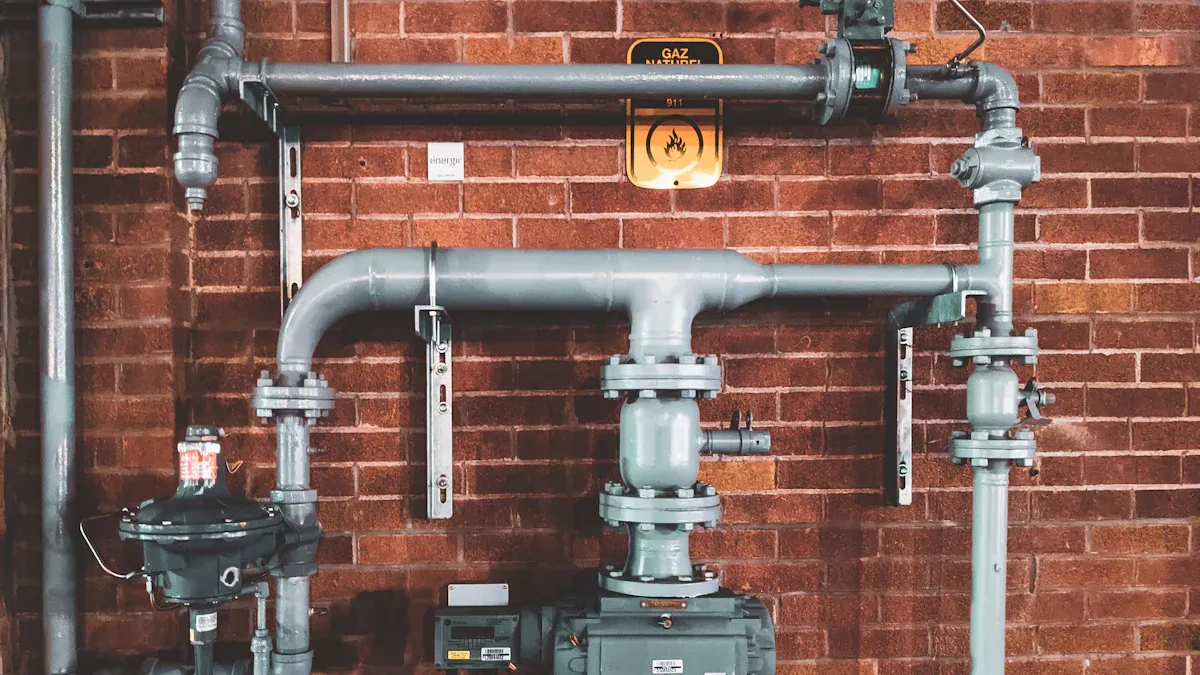
An instant hot water dispenser offers incredible convenience, making tasks like preparing tea, coffee, or oatmeal faster than ever. This guide will walk you through the installation process, transforming your kitchen workflow. The popularity of these units is surging. Urban adoption has increased by 34% in recent years, with residential users making up 76% of all installations.
Before you begin, gather a few essential tools. You will need an adjustable wrench, a basin wrench, a drill, and a screwdriver.
Safety First! ⚠️ Always prioritize safety. Turn off the cold water supply valve under your sink. Next, shut off the power to the garbage disposal outlet at your circuit breaker.
Finally, clear everything out from the cabinet under your sink. This gives you plenty of room to work comfortably and safely.
Key Takeaways
- Always turn off water and power before you start. This keeps you safe.
- Follow all steps to connect water lines. Check for leaks before you plug in the unit.
- Fill the tank with water before turning on power. This protects the heating part.
What's in the Box? Unpacking Your Dispenser Kit
Opening the box is an exciting first step. You should carefully lay out all the parts on a towel or blanket to prevent scratches and keep small pieces from rolling away. Compare everything you see with the parts list in your instruction manual. This simple check ensures you have everything needed before you start.
Identifying the Main Components
Your kit has a few key parts that work together. You will see a small water tank, the dispenser faucet, and various tubes. Understanding each component's job will make the installation process much clearer. The main parts of your new instant hot water dispenser perform specific functions.
| Component | Function |
|---|---|
| Water Tank | This insulated tank stores and heats the water. It is usually made of stainless steel. |
| Heating Element | An electric coil inside the tank heats the water to your desired temperature. |
| Thermostat | This device monitors the water temperature and tells the heating element when to turn on or off. |
| Dispenser Faucet | The spigot you will install on your sink to get near-boiling water on demand. |
Checking for All Fittings and Tubing
Next, you need to identify all the small connection pieces. These fittings and tubes are critical for a secure, leak-free installation. Your kit should contain a complete set of parts to connect the faucet and tank to your home's cold water line.
Pro Tip: 🧐 Use small bowls or a sectioned tray to organize your nuts, ferrules (small metal rings), and other fittings. This keeps them from getting lost under the sink.
Check your parts list for these items:
- A cold water T-fitting to tap into your water supply.
- Several lengths of tubing, often color-coded or different sizes (e.g., a blue tube, a clear tube).
- Quick-connect fittings for easy, push-in connections.
- Compression fittings, which include brass nuts and ferrules for a tight seal.
Step 1: Mount the Dispenser Faucet

With your kit unpacked, you are ready to install the faucet. This is the part of the dispenser you will see and use every day.
Choose the Faucet Location
You need to decide where the faucet will go. Most people place it near the main sink faucet for convenience. Many sinks have an extra pre-drilled hole, often covered or used for a soap dispenser. You can use this spot.
Plumbing standards often place hot water on the left. This design helps prevent accidental burns, as over 85% of users are right-handed and use the cold tap more often. Placing your instant hot dispenser to the left of your main faucet follows this safety logic.
Drill a New Hole (If Necessary)
Your sink may not have a spare hole. In this case, you will need to drill one. Check your dispenser's manual for the exact hole size. Most faucets require a standard hole between 1.25 and 1 3/8 inches in diameter.
Drilling Tip ⚙️ Use a hole saw designed for your countertop material (e.g., stainless steel, granite). Measure carefully before you begin drilling to ensure proper placement.
Secure the Faucet to the Sink Deck
Now you can mount the faucet. Follow these steps for a sturdy, leak-free fit:
- Clean the sink surface around the hole to remove any dirt or grime.
- Apply a thin bead of plumber's putty or silicone caulk under the faucet's base. This creates a watertight seal.
- Insert the faucet into the hole.
- From under the sink, slide the washer and thread the mounting nut onto the faucet shank.
- Tighten the nut. A basin wrench is the best tool for this job, as it helps you tighten the nut securely in a tight space. Be careful not to overtighten, which can damage the sink or faucet.
Step 2: Install the Hot Water Tank
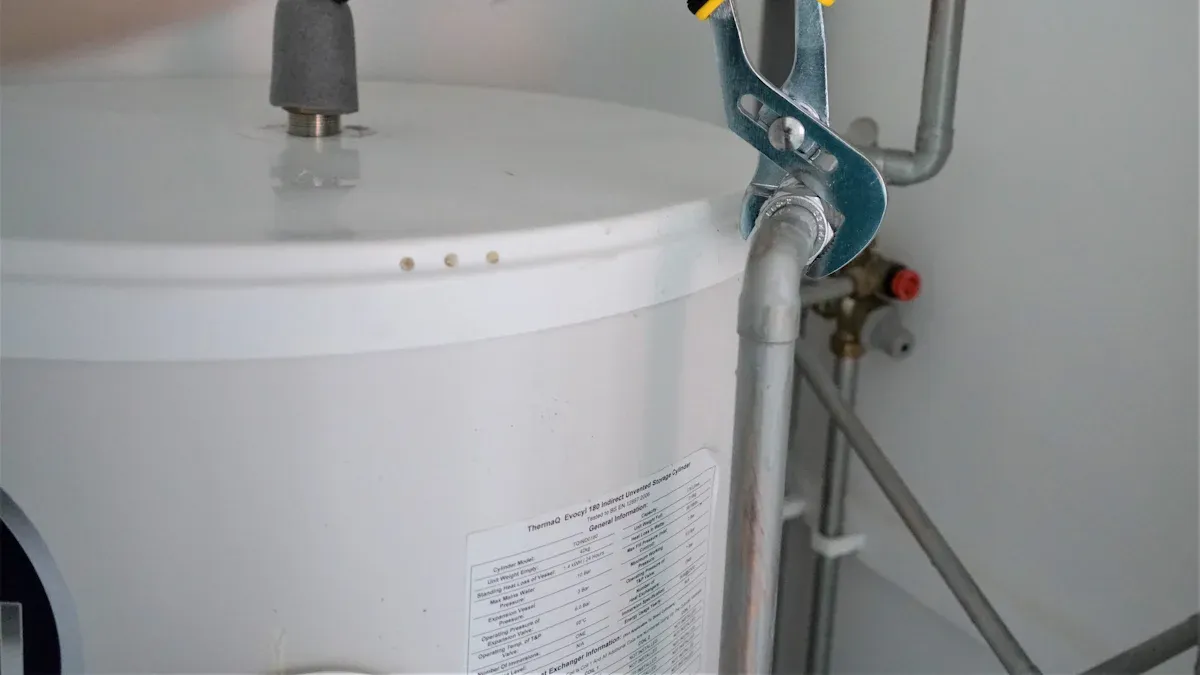
With the faucet in place, your next task is to install the heating tank. This unit will live under your sink, so finding the right spot is key.
Select a Mounting Spot
You need to choose a location for the tank inside your under-sink cabinet. The ideal spot is on the back or side wall, high enough off the cabinet floor to avoid any potential water damage.
Consider these points for placement:
- Proximity: Keep the tank close to the faucet and the cold water supply line. This minimizes the length of tubing you will need.
- Accessibility: Ensure you can easily reach the tank's temperature dial and connections.
- Ventilation: Leave a few inches of clearance around the tank for air to circulate. This prevents overheating.
Install the Mounting Bracket
Most kits provide a bracket to hang the tank. For the strongest installation, you should locate a wall stud behind the cabinet and attach the bracket there. Using the correct screws is essential for a secure mount that can support the tank's weight when full.
Important Safety Note: ⚠️ Never use only drywall anchors to mount a cabinet or a heavy appliance like this tank. They do not provide enough support and can fail over time.
The right fastener depends on your cabinet's material. Use this table as a guide.
| Fastener Type | Best Use Case |
|---|---|
| Cabinet Screws (2-1/2") | Securing the bracket directly into a wall stud. |
| Wood Screws (1-1/4") | Attaching to solid wood cabinet walls or face frames. |
| Coarse-Thread Screws | Mounting to particle board (always pre-drill a pilot hole). |
Hang the Tank Securely
Once the bracket is firmly attached to the wall, you can hang the tank. Lift the unit and carefully slide it down onto the mounting bracket until it locks into place. Give it a gentle tug to confirm it is stable and secure. Your tank is now ready for the water line connections.
Step 3: Connect the Water Lines
This is the plumbing part of the project. You will connect all the components to create a path for water to flow from your supply line, into the tank, and out of the new faucet. Take your time and make sure every connection is secure.
Attach Tubing from the Faucet to the Tank
First, you will connect the faucet you installed to the hot water tank you just hung. Your kit likely includes clear or colored tubing for this purpose.
- Prepare the Tube: Find the clear tube and two hose clamps. Slide one hose clamp over one end of the tube.
- Connect to Tank: Push this end of the tube onto the center outlet on top of the tank. Use pliers to squeeze the hose clamp open and slide it over the connection point. Release the clamp to secure the tube.
- Connect to Faucet: Slide the second hose clamp over the other end of the clear tube. Attach this end to the faucet's hose adapter. Secure it with the clamp just like you did on the tank.
Pro Tip: 💡 Make sure the tube runs smoothly from the tank to the faucet. You want to avoid any sharp bends or kinks, as this can block water flow.
Install the T-Fitting on the Cold Water Line
Next, you need to tap into your home's cold water supply. You will use a special T-fitting to split the water stream, sending one line to your main faucet and a new line to your hot water dispenser.
- Confirm Water is Off: Double-check that the cold water supply valve under the sink is fully closed.
- Disconnect the Hose: Use an adjustable wrench to disconnect the flexible hose that runs to your main kitchen faucet from the supply valve. Have a small towel ready to catch any drips.
- Install the T-Fitting: Screw the new T-fitting directly onto the cold water supply valve. Hand-tighten it first, then give it a gentle quarter-turn with a wrench.
- Reconnect the Faucet: Attach the main faucet's flexible hose to the top outlet of the new T-fitting.
Your kit may include one of several types of fittings to accomplish this.
| Fitting Type | How It Works |
|---|---|
| Quick Tee Adapter | Screws directly onto your existing valve. The simplest option. |
| 3-Way Stop Valve | Replaces your old valve entirely. It has two separate knobs. |
| Dual Handle Valve | Also replaces your old valve. It has two handles to control flow to each line. |
Connect the Supply Line to the Tank Inlet
Now you will run a new water line from the T-fitting to the hot water tank. Many kits include a water filter, which you should install along this line.
- Attach Supply Tube to T-Fitting: Connect your 1/4-inch supply tubing (often blue) to the open port on the T-fitting. If you have a compression fitting, slide the nut and a small plastic sleeve (ferrule) onto the tube before inserting it and tightening the nut.
- Mount the Filter: If your kit has a filter, screw its mounting bracket to the cabinet wall in a convenient spot between the T-fitting and the tank.
- Connect to Filter: Run the blue tube from the T-fitting to the "inlet" side of the filter. Most modern kits use quick-connect fittings. To use them, you just push the tube in firmly until it clicks or stops.
- Connect Filter to Tank: Attach a separate piece of tubing (often yellow) from the "outlet" side of the filter to the inlet connection on the hot water tank. This inlet is usually at the rear of the tank's top side. Secure it using the quick-connect fitting.
Check Your Connections! 🧐 Give each tube a gentle tug after you push it into a quick-connect fitting. This ensures it is seated properly and will not leak.
With all the lines connected, you are ready for the final checks.
Step 4: Final Checks and Powering Up Your Instant Hot Water Dispenser
You have reached the final and most rewarding stage of the installation. These last checks ensure your new appliance works safely and correctly. You will turn on the water, clear the air from the system, and power up your unit for the first time.
Turn On the Water and Check for Leaks
This step requires your full attention. A small leak now can cause big problems later. You need to inspect every connection you made.
- Place a dry paper towel under each connection point. This makes spotting even the smallest drip much easier.
- Go to the cold water supply valve under your sink.
- Turn the valve handle very slowly, just a quarter turn. You should hear water start to fill the lines.
- Pause and listen for any hissing sounds. Look closely at the paper towels for any signs of moisture.
Leak Checkpoint! 🧐 Carefully inspect these three key areas for drips:
- The new T-fitting on your cold water supply line.
- The connections going into and out of the water filter.
- The tube connections on top of the hot water tank.
If everything is dry, you can open the water valve the rest of the way. Perform one final visual check on all connections.
Purge Air from the Tank and Lines
You must remove all the air from the tank and water lines before you turn on the power. Powering the unit with air inside will burn out the heating element instantly.
Critical Safety Warning! ⚠️ Do not plug in the unit yet. You must run water through the system first. This action fills the tank completely and protects the internal heating element from damage.
Follow these simple steps to purge the air:
- Hold a cup or pitcher under the new dispenser faucet.
- Press the faucet handle to run the water.
- At first, the water may sputter and spit. This is normal. It is the air being pushed out of the system.
- Keep the water running until you see a smooth, steady stream. This may take one to two minutes. This confirms the tank of your instant hot water dispenser is full.
Plug In the Unit and Power On
With the tank full of water, you can now safely provide electricity.
Your instant hot water dispenser needs a standard electrical outlet. Most modern kitchens have a GFCI (Ground Fault Circuit Interrupter) outlet under the sink for the garbage disposal. You should use this for added safety.
- Plug the tank's power cord firmly into the wall outlet.
- Go to your home's circuit breaker panel.
- Flip the breaker for the garbage disposal outlet back to the "ON" position.
- You may see an indicator light on the tank turn on. This light shows the unit has power and is starting to heat the water.
Set Your Desired Water Temperature
The final step is to choose your preferred water temperature. Most units have an adjustment dial or panel on the front of the tank.
The default temperature setting is often 140°F (60°C). However, the ideal temperature for most uses is around 120°F (49°C). This temperature is still very hot for tea and coffee but is safer and more energy-efficient. Many modern tankless heaters and point-of-use devices feature a simple LED panel. This allows you to make precise, degree-by-degree changes instead of using a less accurate dial control.
It will take about 10-15 minutes for the water to reach your set temperature for the first time. Refer to your owner's manual for specific heating times and adjustment instructions.
Common Installation Mistakes and How to Avoid Them
You can avoid common problems by paying attention to a few key details. A successful installation means you get to enjoy your new appliance without any trouble.
Overtightening Connections
You might think tighter is better, but overtightening fittings can cause damage. Cranking down too hard on a connection can crack the fitting or strip the threads, leading to leaks. You should aim for a snug fit, not a forced one.
How to Get It Just Right ✅ Use the 'Turns Past Hand-Tight' method for a perfect seal.
- Tighten the fitting by hand until it stops.
- Use a wrench to turn it an additional 1 to 1.5 turns.
- Apply smooth, steady force to prevent damage.
Forgetting to Purge Air Before Powering On
This is the most critical mistake to avoid. The heating element inside your instant hot water dispenser must be fully surrounded by water to work correctly. If you power on the unit while air pockets are still inside the tank, the element will overheat and burn out almost instantly. This happens because the element has no water to transfer its heat into, causing rapid failure. Always run water through the faucet for a few minutes until you get a steady stream before plugging in the unit.
Incorrectly Sized Sink Hole
Your new faucet needs to fit perfectly in the sink hole. If the hole is too small, the faucet will not go in. If it is too large, the faucet will be unstable and difficult to seal. Before you begin, you should measure the hole. For the most precise measurement, use a digital caliper. This tool will give you an exact diameter, ensuring you can confirm the fit or drill the correct size hole from the start.
You can now enjoy the ultimate luxury for tea drinkers with near-boiling water on demand.
First 24 Hours: 🧐 Quickly check all connections to ensure they remain dry.
Refer to your user manual for maintenance like descaling to keep your instant hot water dispenser running smoothly for years.
FAQ
Why does my dispenser make a gurgling sound?
The sound is normal. It means the tank is heating water. You will hear it occasionally as the unit maintains the set temperature.
What if the water is not hot enough?
You can adjust the temperature. Find the dial on the front of the tank. Turn it clockwise for hotter water. Allow 15 minutes for the change.
How often should I clean the unit?
You should descale your unit every 6 to 12 months. This removes mineral buildup. Your user manual provides specific instructions for your model.