How to Identify the Right Wastewater Treatment Equipment for Your Needs
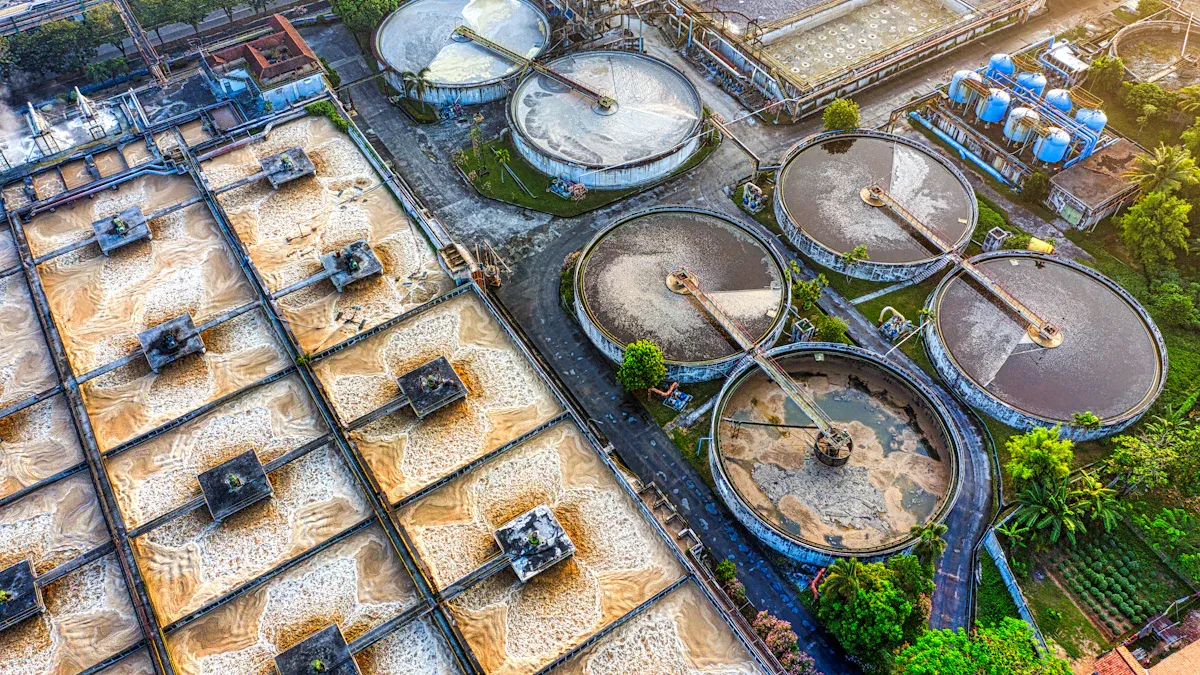
You need to know your wastewater characteristics and local regulations before choosing wastewater treatment equipment. The type and volume of wastewater, along with the contaminants, affect your decision. Site conditions also play a role. A clear process helps you select the best solution for your needs.
Key Takeaways
- Understand your wastewater type and characteristics. Different industries produce unique wastewater streams that require specific treatment solutions.
- Measure the volume and flow rate of your wastewater. This information helps you select the right size and type of treatment equipment.
- Identify the main contaminants in your wastewater. Knowing what pollutants are present guides you in choosing effective treatment technologies.
Key Factors for Selecting Wastewater Treatment Equipment
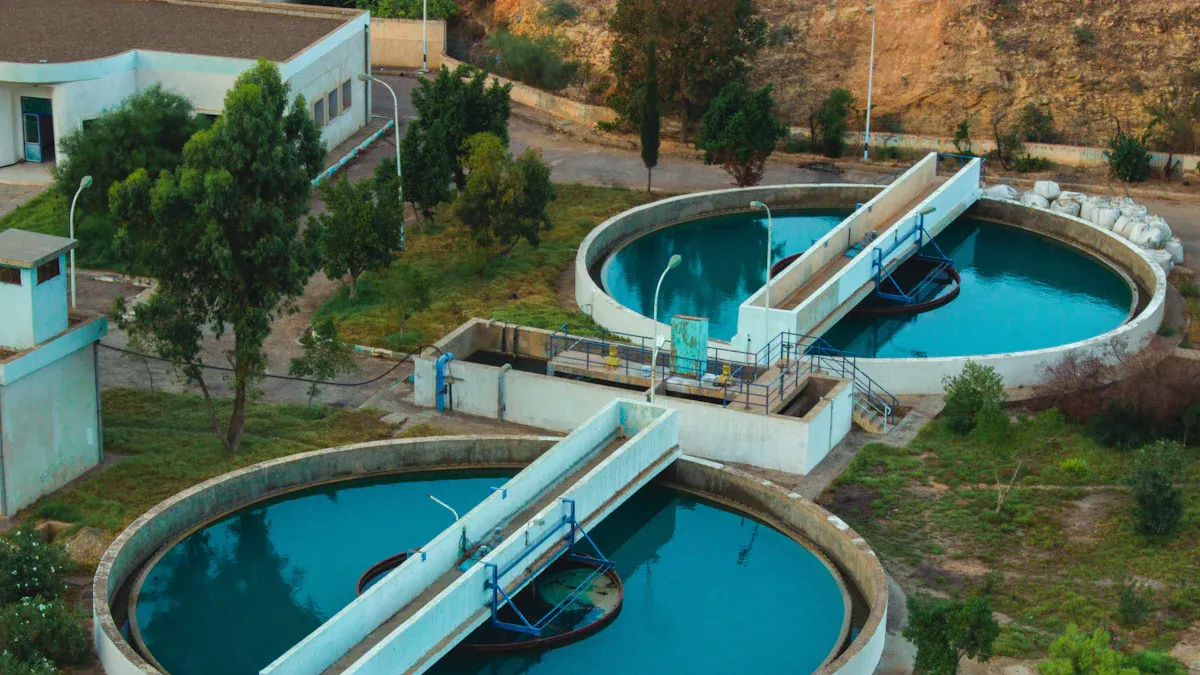
Wastewater Type and Characteristics
You need to know the type of wastewater your facility produces. Different industries create unique wastewater streams. For example:
- Textile services generate water with oil, grease, heavy metals, and volatile organic compounds.
- Chemical plants discharge ammonia, phenols, and oils.
- Mining operations produce tailings with water and fine rock.
- Iron and steel factories release ammonia, cyanide, and organic compounds.
- Shale gas drilling creates hazardous water with salts and chemicals.
- Power stations add metals like lead and mercury.
Each industry needs specific wastewater treatment equipment to handle these challenges.
Volume and Flow Rate
You must measure how much wastewater your site produces. The flow rate affects the size and type of equipment you need. Common measurement techniques include:
| Measurement Technique | Description |
|---|---|
| Flow Meters | Used for both influent and effluent measurement |
| Weirs | Measure flow by depth in open channels |
| Flumes | Used in open channels for flow measurement |
| Magnetic Flow Meters | Suitable for closed pipes, use magnetic fields |
| Ultrasonic Sensors | Use sound waves in closed pipes |
Contaminants and Pollutants
You should identify the main pollutants in your wastewater. These often include oils, grease, heavy metals, organic matter, solvents, salts, nutrients, and pathogens. Knowing what is present helps you choose the right wastewater treatment equipment.
Regulatory Requirements
You must follow local and national rules for wastewater discharge. Limits often apply to pH, fats, oils, grease, and hydrogen sulfide. For example:
| Pollutant Type | Maximum Limit | Minimum Limit |
|---|---|---|
| pH | 12.0 | 5.0 (instantaneous), 5.5 (daily) |
| Nonpolar FOG | 100 mg/L | N/A |
| Hydrogen Sulfide | 15.0 ppmv | N/A |
| Soluble Sulfide | N/A | 0.1 mg/L |
Site Conditions and Constraints
You need to consider your site’s space, climate, and location. Limited space may require compact systems. Climate changes can affect how equipment works. Zoning rules may restrict where you place your treatment system. If your site is near homes, you may need equipment that reduces odors and noise.
Tip: Always plan for future expansion and changing weather patterns when selecting wastewater treatment equipment.
Step-by-Step Guide to Identifying the Right Wastewater Treatment Equipment
Assess Your Wastewater and Site Needs
Start by gathering detailed information about your wastewater and your site. You need to know what is in your water and how much you produce each day. Use these common tools and methods to analyze your wastewater:
- Physicochemical tests such as BOD (Biochemical Oxygen Demand), COD (Chemical Oxygen Demand), and TOC (Total Organic Carbon)
- Chromatographic techniques like size exclusion chromatography and high-performance liquid chromatography
- Microbiological analyses to check for bacteria and other organisms
You can collect 24-hour time-weighted composite samples using autosamplers. Process these samples with extraction replicates. Transport them to the lab on ice and store them at very low temperatures. Data analysis software helps you sort, filter, and visualize your results. This step gives you a clear picture of your wastewater characteristics and helps you decide what type of wastewater treatment equipment you need.
Research and Shortlist Equipment Options
Once you know your needs, start researching available equipment. Look for systems that match your flow rate, contaminant levels, and site conditions. Review manufacturers’ specifications and compare key features. For example, you might find a model like the Morui MR-DTRO-20TD, which handles high COD levels and offers modular design for different flow rates. The table below shows how you can compare equipment:
| Model | Key Features | Performance Metrics |
|---|---|---|
| Morui MR-DTRO-20TD | Handles high COD, modular, stainless steel, automated cleaning | Power: 16kW/hour, real-time monitoring, quick membrane replacement |
Shortlisting helps you focus on the most suitable wastewater treatment equipment for your facility.
Compare Technologies: Pros and Cons
You should compare the main technologies side by side. Each system has strengths and weaknesses. For example, membrane bioreactors (MBR) and activated sludge systems are both popular choices. Here is a quick comparison:
| Feature | MBR | Activated Sludge Systems |
|---|---|---|
| Treatment Efficiency | Higher quality output | Standard quality output |
| System Footprint | Compact | Requires larger area |
| Operational Complexity | Less manual intervention | Regular monitoring needed |
| Cost Implications | Higher initial cost, potential lower operational costs | Lower initial cost, potential higher operational costs |
| Energy Consumption | Higher | Lower |
MBR systems give you high-quality water and save space. They also let you control the process more easily. However, they cost more at first and use more energy. Activated sludge systems cost less to install but need more space and regular checks. Think about your site’s needs and your budget before making a choice.
Evaluate Costs and Maintenance Needs
Check both the upfront and ongoing costs of each system. Installation and maintenance costs can vary a lot between primary, secondary, and tertiary treatment systems. Here are some typical costs:
- Preliminary treatment: average total cost is about 0.024 €/m³
- Tertiary treatment: average total cost is about 0.132 €/m³
- Capital costs for preliminary treatment: about 0.013 €/m³
- Capital costs for tertiary treatment: about 0.054 €/m³
- Operation and maintenance (O&M) costs for preliminary treatment: about 0.011 €/m³
- O&M costs for tertiary treatment: about 0.077 €/m³
- O&M costs make up more than half of total costs in tertiary systems
Mechanical systems often need more maintenance. You may face issues like machine overload or breakdown. These systems require regular checks by qualified service providers. You should plan for tasks such as cleaning filters, checking air pumps, and maintaining disinfection units. Biological systems may need less frequent but still regular attention. Always include these costs in your decision.
Tip: Maintenance is just as important as installation. Regular care keeps your wastewater treatment equipment running smoothly and helps you avoid costly repairs.
Consult with Experts or Suppliers
Talk to experts or trusted suppliers before making your final decision. Look for consultants who have strong technical skills, a good track record, and the ability to handle changes in your wastewater needs. Here are some qualifications to consider:
- Competency – Does the provider have the right expertise?
- Resources – Can they manage byproducts cost-effectively?
- Reliability – Do they have a history of dependable service?
- Environmental – Will they handle contaminants responsibly?
- Future-Proof – Can they adapt as your needs change?
Expert advice helps you weigh all the options and choose the best wastewater treatment equipment for your site. Group decision-making and expert input ensure you consider both technical and practical factors. This approach leads to a solution that meets your needs now and in the future.
Common Types of Wastewater Treatment Equipment
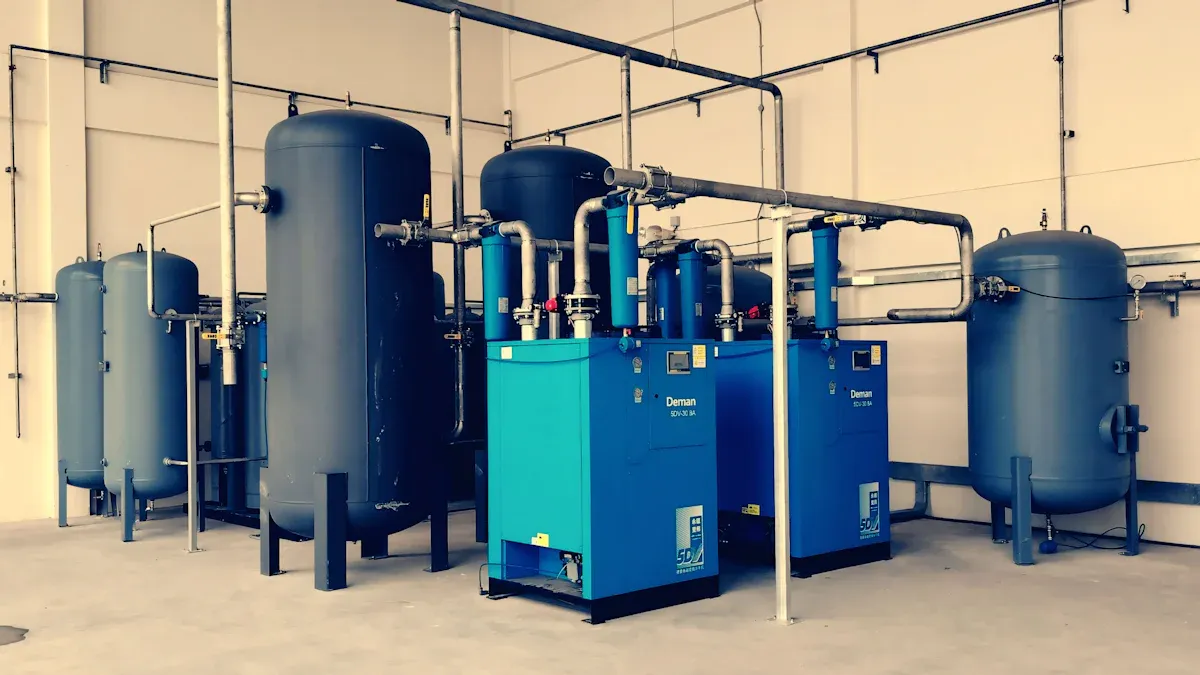
Primary Treatment Systems (Screens, Grit Removal)
You start with primary treatment systems to remove solids from wastewater. Screens catch large debris like sticks and plastics. Grit chambers trap smaller particles such as sand and gravel. Sedimentation tanks let heavier solids settle at the bottom, forming sludge. Mechanical devices like primary clarifiers and rotating belt filters use gravity and filtration to separate solids. You can see how well these systems work in the chart below.
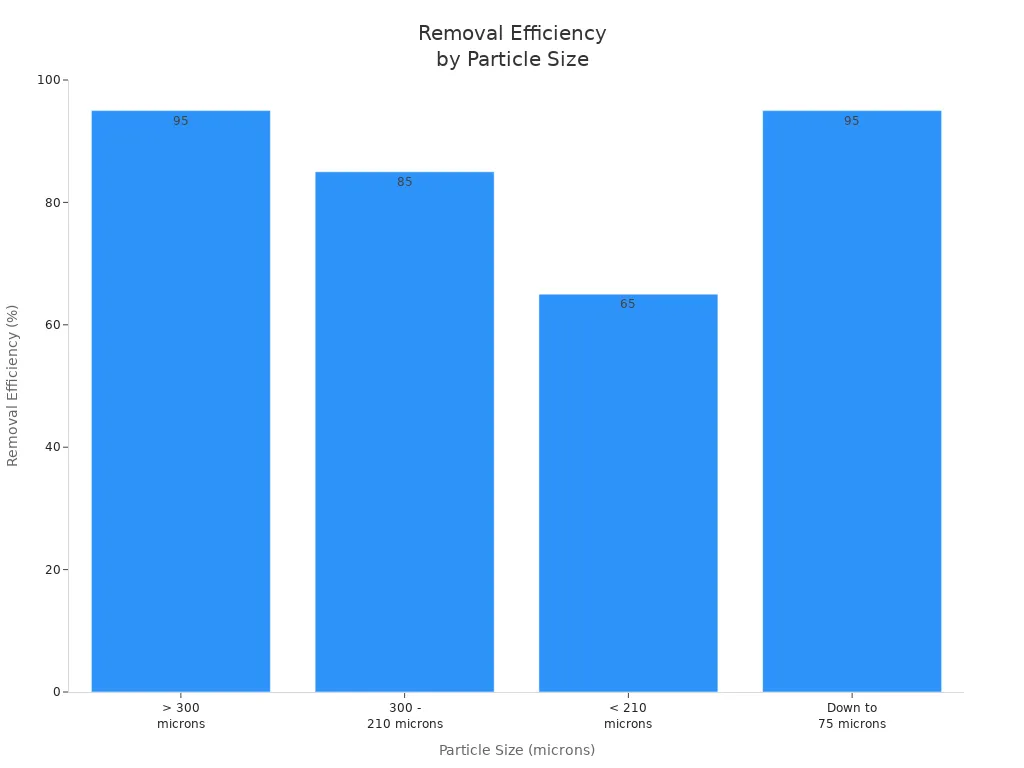
Proper screening can remove 50-70% of suspended solids. Removal efficiency depends on particle size, with larger particles being easier to capture.
Secondary Treatment Systems (Activated Sludge, Biofilters)
Secondary treatment systems break down organic matter and pollutants. You use activated sludge systems or biofilters for this step. Both can remove more than 95% of chemicals like butanone and toluene. Activated sludge systems need a steady supply of wastewater to keep bacteria working. Biofilters use natural or artificial media to support bacteria that clean the water. You must manage energy use and chemical costs, which can be high. If you do not maintain these systems, you risk poor water quality and higher expenses.
| System Type | Pollutant Removal Efficiency | Notes |
|---|---|---|
| Biofilter | > 95% for butanone and toluene | High removal efficiency regardless of EBRT. |
| Activated Sludge | > 95% for butanone and toluene | Maintained large bacterial diversity; continuous wastewater supply needed for efficiency. |
Tip: Community awareness helps keep these systems running well. Poor management can lead to health risks.
Tertiary and Advanced Treatment (Membrane Filtration, UV Disinfection)
Tertiary treatment systems improve water quality even more. You use advanced technologies like ultrafiltration, reverse osmosis, and UV disinfection. These systems can remove up to 99.9% of contaminants, including bacteria and viruses. Tertiary treatment is important when you need to meet strict discharge limits or reuse water safely.
- Tertiary treatment removes trace contaminants and pathogens.
- Advanced systems help you achieve the highest water quality.
Sludge Handling and Dewatering Equipment
After treating wastewater, you must handle and dewater sludge. Common methods include centrifuge dewatering, belt filter presses, filter presses, screw presses, and geotextile bags. Centrifuges spin sludge to separate water from solids. Belt filter presses squeeze out water using rollers. Filter presses use pressure for high dryness. Screw presses push sludge through a shaft to remove water. Geotextile bags offer a simple way to drain water and keep solids. Good sludge dewatering reduces transport and disposal costs, which can make up 40-60% of your plant’s expenses.
Improving sludge dewatering boosts plant efficiency and lowers costs. Choosing the right wastewater treatment equipment for sludge management is essential.
You can choose the right wastewater treatment equipment by following these steps:
- Check your water’s characteristics.
- Set your treatment goals.
- Pick the best process and equipment.
- Review costs and design.
- Ask experts for help when needed.
Avoid mistakes like skipping maintenance or not planning for growth.
FAQ
What is the most important factor when choosing wastewater treatment equipment?
You should focus on your wastewater’s type and contaminants. This helps you pick equipment that meets your needs and follows local rules.
How often should you maintain your wastewater treatment system?
You should check your system every week. Clean filters and inspect pumps often. Regular care keeps your equipment working well.
Can you upgrade your treatment system later?
Yes, you can add new parts or change equipment as your needs grow. Plan for future changes when you design your system.
See Also
The Benefits of Using Self-Priming Water Pumps Today
Essential Industrial Checkweighers for Food Processing Facilities
Five Effective Applications for Rotary Vane Vacuum Pumps
Key Industrial Vacuum Cleaners for Every Business Environment
Innovations in Heat Exchanger Manufacturing Boost Industrial Efficiency