The secret to finding the best water dispenser brand revealed.
An excellent water dispenser provides more than just convenience. It guarantees the safety and purity of your drinking water. Finding the best water dispenser brand means looking for proven quality. The most important factor is a brand's commitment to water safety. This commitment is often shown through official certifications.
Note: As of 2024, 2.1 billion people globally still lack access to safely managed drinking water. This highlights the importance of reliable water purification in every home.
Your tap water can contain various unwanted substances. These include:
- Lead, often from old pipes
- Chlorine
- Pesticides
- Microplastics
A top-tier brand will use effective filtration to remove these contaminants. Certifications like NSF/ANSI confirm that a dispenser meets strict public health standards, ensuring your water is clean and safe to drink.
Key Takeaways
- Look for water dispensers with safety certifications like NSF/ANSI. Make sure they are also BPA-free to keep your water safe.
- Check the water dispenser's filter system. It should remove bad things like lead and chlorine from your water.
- Choose a water dispenser that works well and lasts a long time. It should have good temperature control and a strong warranty.
Non-Negotiable Quality Markers of the Best Water Dispenser Brand
When you search for a water dispenser, you will see many brands making bold claims. The best water dispenser brand proves its quality with verifiable facts. You can look for specific markers to separate top-tier products from the rest. These markers are not just suggestions; they are essential for guaranteeing your water is safe and the product is reliable.
Verify Key Safety Certifications
Certifications are your proof that a dispenser meets rigorous health and safety standards. Think of them as a report card from an independent expert. The most respected certifications come from organizations like NSF International and the Water Quality Association (WQA).
- NSF/ANSI Standards: A product certified to NSF/ANSI standards has been tested to remove specific contaminants. For example, the Elkay brand offers many models that meet these strict guidelines.
- Their filters are NSF-certified to reduce lead, chlorine, and particulates.
- Their dispensers are also certified to NSF/ANSI 372, confirming they are lead-free.
You can verify a brand's claims yourself. The Water Quality Association (WQA) is another trusted third-party organization that tests and certifies water treatment products.
How to Verify WQA Certification 🕵️
- Look for the WQA Gold Seal on the product packaging or literature. This seal shows the product passed tests based on industry standards.
- Visit the WQA website. You can use their "Find Certified Products" tool to search for a specific brand or model.
Confirm BPA-Free Materials
Many water dispensers use plastic components. You must ensure these plastics are free from Bisphenol A (BPA). BPA is an industrial chemical that can seep into water, especially when exposed to temperature changes. It is a known endocrine disruptor, meaning it can interfere with your body's hormones.
Exposure to BPA is linked to serious health risks. Pregnant women, infants, and young children are the most vulnerable to its effects. Potential health problems include:
- Cancers
- Impaired immune function
- Early puberty and infertility
- Diabetes and obesity
- Growth and developmental disruption
Many governments around the world recognize these dangers. They have taken action to ban or restrict BPA in products that contact food and water.
| Region/Country | Regulation/Action | Scope |
|---|---|---|
| European Union | Ban on BPA in baby bottles and sippy cups | Infant products |
| France | Ban on BPA in all food containers | All food packaging |
| Belgium | Ban on BPA in food contact materials | Materials for children under three |
| US (Proposed) | No Toxics in Food Packaging Act | Ban BPA in all food packaging |
A top brand will use safe, BPA-free materials for all parts that touch your water. Look for dispensers made with high-quality alternatives like:
- Stainless Steel: Durable, lightweight, and excellent at maintaining water purity.
- Glass: Preserves the pure taste of water but can be heavy and fragile.
- Ceramic: Naturally keeps water cool and fresh.
Analyze Filtration System Quality
The filter is the heart of your water dispenser. The quality of the filtration system directly determines the quality of your drinking water. The best water dispenser brand will offer advanced filtration technology designed to remove a wide range of contaminants. There are three main types of systems you will encounter.
- Carbon Block Filters: These are great for improving water taste and odor. They effectively remove chlorine, pesticides, and even microplastics. They are cost-effective and keep healthy minerals in the water.
- Reverse Osmosis (RO): This method uses a fine membrane to remove up to 99% of dissolved solids, including heavy metals like lead. However, RO systems can be more expensive and may also strip away beneficial minerals.
- UV Purification: This system uses ultraviolet light to neutralize 99.99% of bacteria, viruses, and other microorganisms. UV does not remove physical or chemical contaminants, so it is often paired with another filter type.
Tip: The most effective systems often combine methods. A dispenser with both a carbon filter and a UV purification stage offers comprehensive protection against chemical and microbial threats.
For specific concerns, look for filters certified to remove them:
- Lead: Choose a system certified to NSF-53.
- Chlorine: Look for a certification to NSF-42.
- Microplastics: The most effective systems use membrane filtration (MF) combined with activated carbon. A filter with a small pore size (0.2 µm) is superior for capturing tiny plastic fragments.
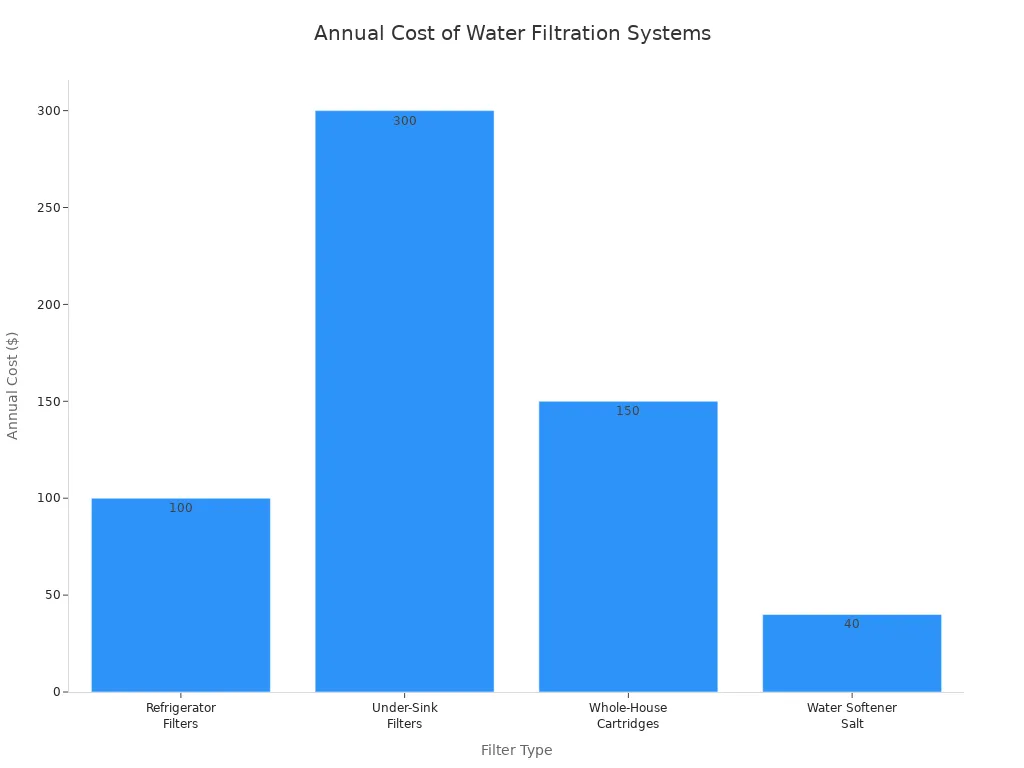
Finally, consider the long-term cost of filter replacements. This can vary significantly between different systems.
| Filter Type | Replacements/Year | Average Annual Cost |
|---|---|---|
| Refrigerator Filters | 2 | $100 |
| Under-Sink Filters | 1 | $300 |
| Whole-House Cartridges | 1-2 | $100-$200 |
| Water Softener Salt | 4-6 bags | $20-$60 |
Analyzing these quality markers helps you look past marketing and focus on what truly matters: safety, material quality, and filtration effectiveness.
Evaluating Performance and Long-Term Reliability
A great water dispenser works well every day. You should look beyond certifications to see how a unit performs. The best water dispenser brand builds products that are reliable and easy to use for years.
Assess Temperature Control and Consistency
You expect hot water for your tea and cold water for refreshment. A quality dispenser delivers these temperatures consistently. Check the product specifications for the exact temperature ranges. Hot water should be between 176°F and 203°F. Cold water should be below 50°F. Read user reviews to see if the dispenser maintains these temperatures even with frequent use.
Check for Essential Convenience Features
Convenience features make your daily life easier. Look for a child safety lock on the hot water tap to prevent accidents. Another useful feature is the dispensing speed, or flow rate. A slow dispenser can be frustrating.
| Model | Flow Rate (ml/sec) | Time to fill 8.5 fl. oz. glass |
|---|---|---|
| Avalon A5 | 33 ml/sec | ~7.5 seconds |
| Avalon A4 | 34 ml/sec | ~7.3 seconds |
| Frigidaire EFWC519 | Slower than button models | Varies |
Investigate Warranty and Customer Support
A strong warranty shows a brand's confidence in its product. Most reputable brands offer a standard warranty period.
- Many hot/cold water dispensers come with a 12-month warranty covering manufacturer errors.
- Some brands, like Brio, may offer an extended 1-year warranty option.
Good customer support is also vital. You want a company that is easy to contact if you have a problem.
Judge Build Quality and Durability
The materials used in a dispenser affect its lifespan. Internal tanks are especially important. Stainless steel tanks are very durable and resist corrosion. They do not affect the water's taste. Plastic tanks, often made from polyethylene or PTFE, are lighter and less expensive. You must ensure any plastic is high-quality and food-grade to avoid chemical leaching.
Your checklist for choosing the best water dispenser brand is simple. You should confirm these key points:
- NSF/ANSI certification and BPA-free parts
- Effective filtration and consistent temperatures
- A solid warranty with responsive service
Use this guide to confidently select a dispenser. You can guarantee safety, quality, and reliability for your home or office.
FAQ
How often should I replace my water dispenser filter?
You should replace most filters every six months. Always check the manufacturer's guide for your specific model. This practice ensures optimal performance and safe, clean water for you.
Can I use tap water in a bottled water dispenser?
You should not use tap water in a dispenser made for bottles. These units typically lack filtration systems. Using unfiltered tap water may expose you to various contaminants.
How do I clean my water dispenser?
You should clean your dispenser every three to six months.
- First, create a simple cleaning solution with vinegar and water.
- Then, follow the brand's specific instructions for a safe, thorough cleaning.