How Do I Properly Clean and Maintain My Water Dispenser?

An uncleaned drinking water dispenser can become a breeding ground for harmful bacteria. You should plan to deep clean your dispenser every 3 to 6 months. This simple habit ensures your water remains safe and tastes fresh. The two most effective and safest cleaning methods use either a distilled white vinegar solution or an unscented bleach solution.
Did You Know? A study found that nearly 19% of water dispensers had total and fecal coliform bacteria levels exceeding drinking water standards. Regular cleaning is critical to prevent this.
Key Takeaways
- Clean your water dispenser every 3 to 6 months. This stops germs from growing and keeps your water safe and fresh.
- Use either a vinegar solution or a bleach solution to clean your dispenser. Always rinse it well to remove all cleaning liquid.
- Do simple tasks like wiping the outside and cleaning the drip tray every week. This keeps your dispenser working well and lasting longer.
What You'll Need for Cleaning

Gathering your supplies beforehand makes the cleaning process quick and easy. You likely have most of these items at home already. You will need to select one cleaning agent and collect a few basic tools.
Cleaning Agents (Choose One)
You have two excellent options for sanitizing your drinking water dispenser. Both are effective at killing bacteria and mold. Choose the one you prefer.
- Distilled White Vinegar: A natural and non-toxic choice. You will create a solution of one part vinegar to three parts water. For example, use one cup of vinegar for every three cups of water.
- Unscented Household Bleach: A powerful disinfectant. You will make a solution of one tablespoon of bleach for every gallon of water.
Important Tip: Always use unscented bleach. Scented varieties contain additives that are not safe for consumption and can leave a lingering taste in your water lines.
Essential Tools
These tools will help you scrub, rinse, and dry your dispenser components effectively.
- Clean bucket or large bowl for mixing your solution
- Sponge or soft cloth (non-abrasive)
- Long-handled bottle brush for cleaning inside the reservoir
- Clean, lint-free towels for drying
- Rubber gloves to protect your hands
How to Clean Your Drinking Water Dispenser: A Step-by-Step Guide
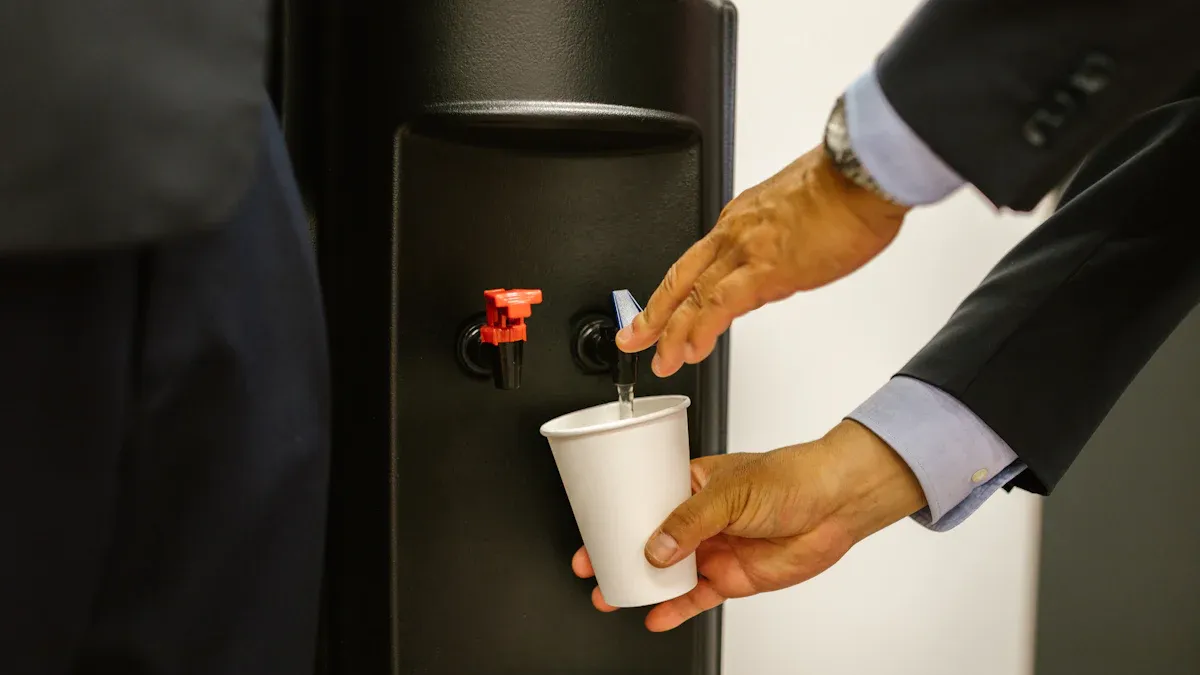
This guide breaks down the cleaning process into three simple phases. Following these steps will sanitize your appliance and ensure your water is pure and refreshing. The entire process should take about 30 minutes, plus soaking time.
Phase 1: Preparation
First, you need to prepare your dispenser for a deep clean. Safety is the top priority during this step.
- Power Down Safely. You must disconnect the appliance from electricity before you begin.
Safety First! ⚡
- Always power down and unplug electrical devices before cleaning to eliminate any risk of electric shock.
- Ensure all cables are disconnected from their power sources to prevent any accidental activation.
- Remove the Water Bottle. Lift the empty or partially used water bottle off the top of the unit. For bottom-loading models, open the cabinet and remove the bottle.
- Drain the Reservoir. Place a bucket under the spigots. Drain any remaining water from both the hot and cold taps until they run dry.
- Disassemble Removable Parts. Take out any parts you can easily remove. These often include the drip tray, the water guard (the ring the bottle sits on), and the baffle inside the reservoir.
Phase 2: Cleaning with Your Chosen Solution
Now you will use your vinegar or bleach solution to sanitize the inside of your drinking water dispenser. Put on your rubber gloves to protect your hands.
- Clean the Reservoir. Pour your prepared cleaning solution into the dispenser's interior reservoir. Let the solution sit for at least 10 minutes to dissolve mineral deposits and kill germs. Use your long-handled brush to scrub the inner walls of the reservoir. Pay special attention to any corners or nooks.
- Wash Removable Parts. While the solution soaks, wash the drip tray, water guard, and baffle. Use warm water and mild dish soap to clean these items thoroughly.
- Scrub the Spouts. Germs often collect on the spouts and taps. Use a small brush dipped in your cleaning solution to scrub inside and around these openings.
- Wipe the Exterior. Use a soft cloth dampened with soapy water to wipe down the entire exterior. Clean high-touch surfaces like the dispensing buttons and handles. For top-load dispensers, carefully wipe the smart seat where the bottle connects.
Phase 3: Rinsing and Final Steps
Rinsing is the most important step for removing any leftover cleaning solution. You do not want your water to taste like vinegar or bleach.
- Drain the Cleaning Solution. Drain the entire cleaning solution from the reservoir through the spigots into your bucket.
- Rinse Thoroughly. Fill the reservoir with clean, fresh water. Drain this water completely through the spigots. You should repeat this rinsing process 2 to 3 times. This ensures you flush out all traces of the cleaning solution.
- Dry and Reassemble. Wipe the dispenser and all removable components with a clean, lint-free towel. Place the dry baffle, water guard, and drip tray back into their positions.
- Finish Up. You can now load a fresh water bottle onto the dispenser. Plug the unit back into the wall. Dispense a cup of water from each tap to ensure the lines are full and ready to use.
How to Maintain Your Dispenser Between Cleanings
Regular maintenance keeps your drinking water dispenser hygienic and running efficiently. These simple weekly and monthly tasks prevent buildup and extend the life of your appliance.
Signs Your Dispenser Needs an Immediate Clean ⚠️ If you notice any of these issues, perform a deep clean right away:
- Cloudy or bad-tasting water
- Slow water flow from the spigots
- Visible slime or green algae inside the reservoir
- Unusual noises during operation
Wipe Down the Exterior Weekly
You should sanitize the outside of your dispenser once a week to remove germs from high-touch areas.
- Use a food-safe sanitizing wipe or a soft cloth with soapy water to clean the main unit.
- Use a fresh wipe for the taps and dispensing buttons, as these areas collect the most bacteria.
- This quick wipe-down helps maintain a clean appearance and reduces the spread of germs.
Empty and Clean the Drip Tray
The drip tray catches spills and can quickly grow mold if neglected. Clean it weekly or whenever you see standing water.
- Remove the tray and empty its contents into a sink.
- Apply a disinfecting cleaner or distilled white vinegar.
- Wipe all surfaces of the tray until it is completely clean and dry before putting it back.
For non-removable trays, you can use a long-bristle brush to scrub away any scum that has formed inside.
Clean the Condenser Coils
Dust on condenser coils makes your dispenser work harder to cool the water. You should clean these coils every 3 to 6 months.
- Unplug the unit from the wall. This is the most important safety step.
- Locate the coils on the back of the dispenser and remove any protective panels.
- Use a soft brush or a vacuum cleaner with a brush attachment to gently remove all dust and debris.
You can guarantee safe, great-tasting water by following this simple 30-minute cleaning process every 3 to 6 months. This regular care keeps your drinking water dispenser hygienic. It also prevents small issues from becoming costly problems, which extends the life of your appliance.
A Final Tip Consistent maintenance is the key to longevity. Simple, regular actions protect your investment and ensure every glass of water is pure and refreshing.
FAQ
Can I use cleaners other than vinegar or bleach?
We do not recommend other cleaners. Vinegar and bleach are the safest, most effective options. They kill germs without leaving harmful residues behind when you rinse the dispenser properly.
What if my water tastes bad after cleaning?
A lingering taste means you need more rinsing. Fill and drain the reservoir with fresh water several more times. This action will flush out any remaining cleaning solution.
How do I clean a bottom-loading water dispenser?
You follow the same steps for the reservoir. You also need to clean the pump probe and hose. Wipe them with your cleaning solution and rinse them thoroughly.