The Complete Guide to Selecting Roller Blind Materials
Choosing your roller blinds fabric starts with one key decision.
How much light do you want to let into your room? 🤔
Your needs for privacy, room function, and personal style will guide your answer. This helps you determine if a blackout, light-filtering, or sheer material is best for you. This guide simplifies the process. It helps you find the perfect fabric that balances practical use with your home's aesthetic.
Key Takeaways
- Choose roller blind fabric based on how much light you want. Blackout fabrics block all light. Light-filtering fabrics let some light in. Sheer fabrics reduce glare but keep your view.
- Match the fabric to your room's needs. Use moisture-resistant fabrics like PVC for kitchens and bathrooms. Pick durable fabrics like polyester blends for busy areas. Thermal fabrics save energy by insulating windows.
- Consider color, texture, and pattern for style. Light colors make rooms feel bigger. Textures and patterns add depth. Order samples to see how fabrics look in your home before buying.
Choosing Your ROLLER BLINDS FABRIC by Light Control
The first step in selecting your ROLLER BLINDS FABRIC is deciding on light control. Your choice will fall into one of three main categories. Each one offers a different level of brightness and privacy for your space.
Blackout Fabrics for Complete Darkness
You should choose a blackout fabric when you need to block as much light as possible. These materials create a pitch-dark environment, perfect for getting a good night's sleep or enjoying a movie without any glare.
Blackout blinds are highly versatile. You can use them in many rooms throughout your home.
- Bedrooms: They ensure peaceful sleep by blocking streetlights and early morning sun. 😴
- Home Theaters: You can achieve total darkness for the best viewing experience.
- Living Rooms: These blinds reduce screen glare on your TV. You can pair them with sheer curtains for a flexible lighting setup.
- Home Offices: A blackout ROLLER BLINDS FABRIC helps you minimize distractions and provides privacy during video calls.
Beyond just blocking light, these fabrics offer other major benefits. They are very effective at blocking 99% of harmful UV rays. This protection helps prevent your furniture, artwork, and flooring from fading over time. Blackout blinds also provide excellent thermal insulation. They reflect heat in the summer and keep warmth inside during the winter. This efficiency can lower your cooling and heating costs by 10-20%.
Pro Tip: Blackout fabrics are the ultimate solution for anyone who needs total light and privacy control. They are ideal for light-sensitive sleepers and media rooms.
Light-Filtering Fabrics for Diffused Natural Light
Light-filtering fabrics offer a beautiful balance between privacy and natural light. They act as a soft barrier between your room and the harsh sun. The material gently diffuses sunlight, filling your space with a pleasant, soft glow instead of intense glare.
These fabrics are a great choice for many areas in your home.
- You can use them in rooms where you want privacy but not complete darkness.
- They work well in spaces where you need to reduce glare on TV or computer screens.
- They protect your furniture from UV damage without making the room feel dark.
- You can create a comfortable and inviting atmosphere in any room with soft, diffused light.
Light-filtering fabrics give you the best of both worlds. You get to enjoy the brightness of natural daylight while maintaining your privacy.
During the day, people outside cannot see in. At night, when your lights are on, shadows or movements might be visible from the outside. This makes them a sleek and functional window treatment for common living areas.
Sheer and Solar Fabrics for Glare Reduction
You might want to reduce glare and block UV rays but still keep your beautiful view. Sheer and solar fabrics are the perfect solution for this. These materials work like sunglasses for your windows. 🕶️
The effectiveness of a sheer or solar fabric is measured by its "openness percentage." This number tells you how much light can pass through the weave of the material. A lower percentage means the weave is tighter, blocking more light and offering less of a view.
| Openness | Light Blocked | Key Characteristic |
|---|---|---|
| 1-2% | 98-99% | Maximum glare and UV control, but the view is limited. |
| 3-5% | 95-97% | The "sweet spot." Good view out with excellent glare reduction. |
| 10%+ | 90% or less | Excellent view out, but offers less heat and glare control. |
Choosing the right openness depends on the room. An office with many computer screens benefits from a 1% to 3% openness to reduce eye strain. For general living spaces like living rooms and kitchens, a 3% to 5% openness is often the sweet spot. It provides a great balance of glare reduction while preserving your view of the outdoors.
Remember: With sheer and solar fabrics, there is a trade-off. A clearer view means less glare and heat control. A tighter weave offers more protection but a more limited view.
Matching Fabric to Your Room's Demands
Once you decide on light control, the next step is to match the fabric to your room's specific needs. Some rooms have unique challenges, like moisture or heavy foot traffic. Choosing a material designed for these conditions ensures your blinds look great and last for years.
Moisture-Resistant Fabrics for Kitchens and Bathrooms
Kitchens and bathrooms expose window treatments to steam, splashes, and humidity. Standard fabrics can absorb this moisture, leading to mold, mildew, and warping. You need a material that can handle these tough environments. PVC and vinyl fabrics are excellent choices for these spaces.
These materials offer several key advantages:
- Moisture-Resistant: They repel water instead of absorbing it. 💧
- Simple to Clean: You can easily wipe away splashes, grease, and grime.
- Durable: They are built to withstand daily exposure to humid conditions.
- Offer Complete Blackout and Privacy: Many are available in blackout options for total privacy.
I like them for the ease of cleaning and the look! They do not collect the dust and grime that blinds do. These shades are of exceptional quality and they look absolutely fabulous in all of my rooms!
Keeping these blinds clean is simple. Follow these steps to handle grease and grime:
- Regular Dusting: Start with regular dusting to remove any loose particles.
- Create a Cleaning Solution: Mix warm water with a tablespoon of white vinegar or mild dish soap. Vinegar is great for cutting through cooking residue.
- Wipe Down the Blinds: Use a barely damp cloth to wipe the fabric. Work carefully to avoid bending the material.
- Dry Immediately: Use a dry microfiber cloth to remove any remaining water. This prevents spots and protects the lifting mechanisms.
- Use Your Fan: Use your kitchen or bathroom exhaust fan when cooking or showering. This simple action reduces the amount of grease and moisture that lands on your blinds.
If you want the look of wood without the risk of warping, you can also consider Faux Wood Blinds. For a modern look, Metal Blinds made from aluminum are another lightweight and durable option for humid rooms.
You can also find eco-friendly options for your home. Look for materials that are:
- PVC-free & 100% recyclable
- Fungus and bacteria resistant
- Free from harmful chemicals and toxins
Durable Fabrics for High-Traffic Areas
Some areas of your home see more action than others. Think about your kitchen, your kids' playroom, or a busy hallway. In these high-traffic areas, blinds are more likely to be touched, bumped, or operated frequently. You need a ROLLER BLINDS FABRIC that is strong enough to handle the daily wear and tear.
The most durable fabrics are often blends of strong materials. Compositions that include polyester, vinyl, and fiberglass are engineered for performance and longevity.
| Composition | Application |
|---|---|
| 33.6% fiberglass / 59.6% vinyl / 6.8% polyester | Engineered for harsh climates and suitable for wide roller shades in both homes and businesses. |
| 42% fiberglass / 58% vinyl | Designed for performance and used in heavy-duty roller shade systems. |
Polyester is a popular choice because it resists stretching and abrasion. A polycotton blend (polyester and cotton) offers even more strength. PVC and vinyl are also top contenders for durability, especially because they are so easy to clean.
Manufacturers put these fabrics through rigorous testing to ensure they last. These tests assess the fabric's ability to resist:
- Mechanical stress from repeated rolling
- UV degradation from sunlight
- Color fading over time
- Cracking or becoming brittle
- Damage from moisture exposure
These quality checks ensure your blinds will operate smoothly and maintain their appearance for years, even with constant use.
Thermal Fabrics for Energy Efficiency
Did you know your windows can be a major source of energy loss? Thermal fabrics help solve this problem. They have a special backing that reflects heat, keeping your home warmer in the winter and cooler in the summer. This extra insulation can help lower your heating and cooling bills. 💰
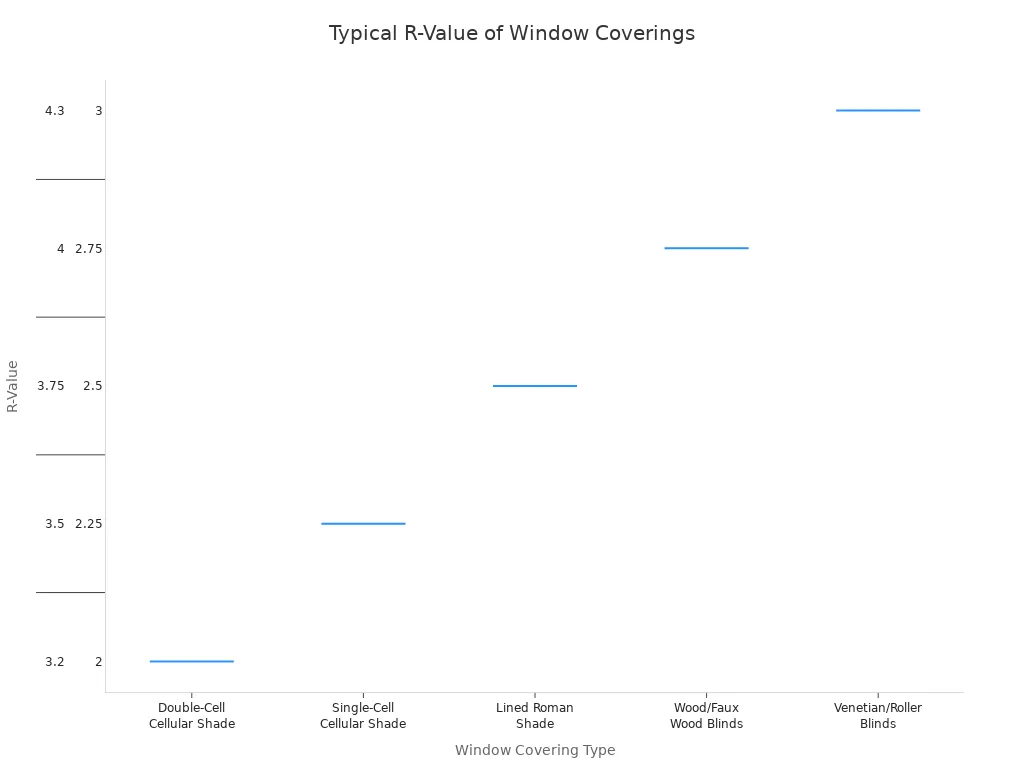
The effectiveness of a thermal fabric is measured by its "R-value." A higher R-value means better insulation. Standard roller blinds have a low R-value, but specially designed thermal fabrics significantly improve performance. For example, a blackout thermal fabric can offer an R-value between 1.3 and 1.8, providing much better insulation than a standard, non-thermal material.
This table shows how the R-value of a typical thermal roller blind compares to other window treatments.
| Window Covering Type | Typical R-Value (Approx.) |
|---|---|
| Double-Cell Cellular Shade | R-3.2 - R-4.3 |
| Single-Cell Cellular Shade | R-2.0 - R-3.0 |
| Lined Roman Shade | R-1.5 - R-2.5 |
| Wood/Faux Wood Blinds | R-1.0 - R-2.0 |
| Thermal Roller Blinds | R-1.0 - R-1.8 |
While cellular shades offer the highest insulation, a good thermal roller blind provides a noticeable improvement in energy efficiency. It gives you a sleek, modern look while helping you save money.
By choosing a thermal fabric, you add an invisible layer of insulation to your windows. This makes your room more comfortable year-round and contributes to a more energy-efficient home.
Finalizing Your Choice with Style and Texture
You have considered light control and your room's practical needs. Now it is time for the fun part: choosing a style. The color, texture, and pattern of your ROLLER BLINDS FABRIC will bring your room's design together.
How Color Affects Light and Space
The color of your blinds has a big impact on your room's atmosphere. Your choice can make a space feel larger or cozier and even influence your mood.
Light-colored blinds are a great choice for making a room feel bigger and brighter.
- Colors like white, cream, and soft beige reflect sunlight. This creates an airy feeling that visually enlarges the space.
- They help you achieve a clean, modern look.
- Pairing them with light-colored walls creates a smooth visual flow, enhancing the sense of spaciousness.
Different colors can also create a specific mood. You can use color to make a room feel more relaxing or energetic.
- Blues and Greens: These colors promote calmness and are ideal for bedrooms and living rooms.
- Yellows and Oranges: These shades are uplifting and can boost energy in kitchens or creative spaces.
Using Texture and Pattern to Complement Decor
Texture and pattern add depth and personality to your windows. A fabric with a subtle texture, like a linen-look or a woven jacquard, can add a layer of sophistication. It provides visual interest without overwhelming the space.
You can also use a patterned blind as a focal point. A bold floral or geometric design can act like a piece of art, especially in a room with neutral furniture and walls. This is an easy way to introduce personality and tie your decor together. These designs work well with many styles, including popular mid-century and industrial chic trends.
The Importance of Ordering Fabric Samples
You should never choose a fabric from a picture on a screen. Ordering samples is the most important final step. This allows you to see and feel the material in your own home before you commit.
Pro Tip: When your samples arrive, hold them up to your window. Check them in the morning, in the afternoon, and at night with the lights on. The color and texture can look very different as the natural light changes throughout the day.
When you evaluate a sample, check a few key things:
- Light Control: See exactly how much light it lets through. Is it truly blackout or does it provide a soft glow?
- Color Accuracy: Confirm the color works with your wall paint, furniture, and flooring.
- Texture: Feel the material to make sure you like its quality and finish.
This simple step ensures there are no surprises and that you will be happy with your new blinds for years to come.
Selecting the right roller blind material is a balance. You must weigh function against style. Your fabric choice determines the blind's performance in light control, privacy, and energy efficiency.
Start by defining your needs for each room. Consider the room's function, your desired opacity, and maintenance requirements. This helps you narrow your options effectively.
Remember, the final step is crucial. Always order fabric samples. This ensures you love how the material looks and feels in your space before you make your final decision. ✅
FAQ
What is the best roller blind material for privacy?
You should choose a blackout fabric for 100% privacy day and night. Light-filtering fabrics offer excellent privacy during the day but may show shadows at night when your lights are on. Sheer fabrics provide the least privacy.
Can I clean my roller blinds?
Yes, you can clean most roller blinds. PVC and vinyl fabrics are the easiest to clean; you can simply wipe them with a damp cloth. For other materials, you should check the manufacturer's care instructions for the best cleaning method.
Are blackout and thermal fabrics the same thing?
No, they serve different primary functions.
- Blackout fabrics block light.
- Thermal fabrics insulate your windows.
Many fabrics offer both benefits. You can find thermal blackout blinds that block light and help save on energy costs. This gives you the best of both worlds.
How do I choose between a 3% and 5% solar fabric?
Your choice depends on your priority. You should choose a 3% openness fabric for maximum glare reduction, which is great for offices or TV rooms. A 5% openness fabric offers a clearer view of the outdoors while still controlling glare.