How to Automate Your Food Packaging for Peak Efficiency
An automated food packing machine boosts production speed. It also cuts operational costs. This technology ensures consistent product quality. Success requires a strategic plan. Companies must first analyze their current processes to find inefficiencies. They then invest in scalable automation solutions for their specific needs. Finally, businesses empower their teams with new skills. This training helps them manage and optimize the technology for long-term growth.
Assess Your Current Packaging Process
A company must first understand its current operations. This foundational analysis reveals where automation can deliver the greatest impact. A thorough assessment prevents costly mistakes. It ensures the new technology solves the right problems.
Pinpoint Production Bottlenecks
Managers should identify the slowest points in their packaging line. These bottlenecks limit overall output. Direct observation is a powerful tool. Teams can walk the production floor to see where products pile up or where workers wait for tasks.
Pro Tip: Engage your frontline operators. They possess firsthand knowledge of daily workflow interruptions and can offer invaluable insights into recurring slowdowns.
Common bottlenecks often include:
- Manual product weighing and filling
- Hand-applying labels or seals
- Manual case packing and palletizing
Analyze Key Performance Metrics
Data provides a clear picture of operational performance. Companies must track Key Performance Metrics (KPIs) to quantify inefficiencies. These metrics establish a baseline. The business can later use this baseline to measure the success of its automation project.
| Metric | What It Measures | Why It Matters |
|---|---|---|
| Throughput | Units packaged per hour/day | Indicates overall production speed |
| OEE | Overall Equipment Effectiveness | Shows how well equipment is utilized |
| Error Rate | Percentage of incorrect packages | Measures quality and product waste |
Define Your Automation Goals
Clear goals guide the entire automation project. The company uses its bottleneck analysis and KPI data to set specific objectives. These goals should directly address the identified weaknesses. They transform a general desire for improvement into a concrete action plan.
Well-defined goals might include:
- Increase packaging throughput by 30% within six months.
- Reduce product giveaway by 50% through automated weighing.
- Achieve 99.5% packaging accuracy with a vision inspection system.
Setting these targets helps a business select the right technology. It also provides a clear benchmark for calculating the return on investment.
Select the Right Food Packing Machine and Technology
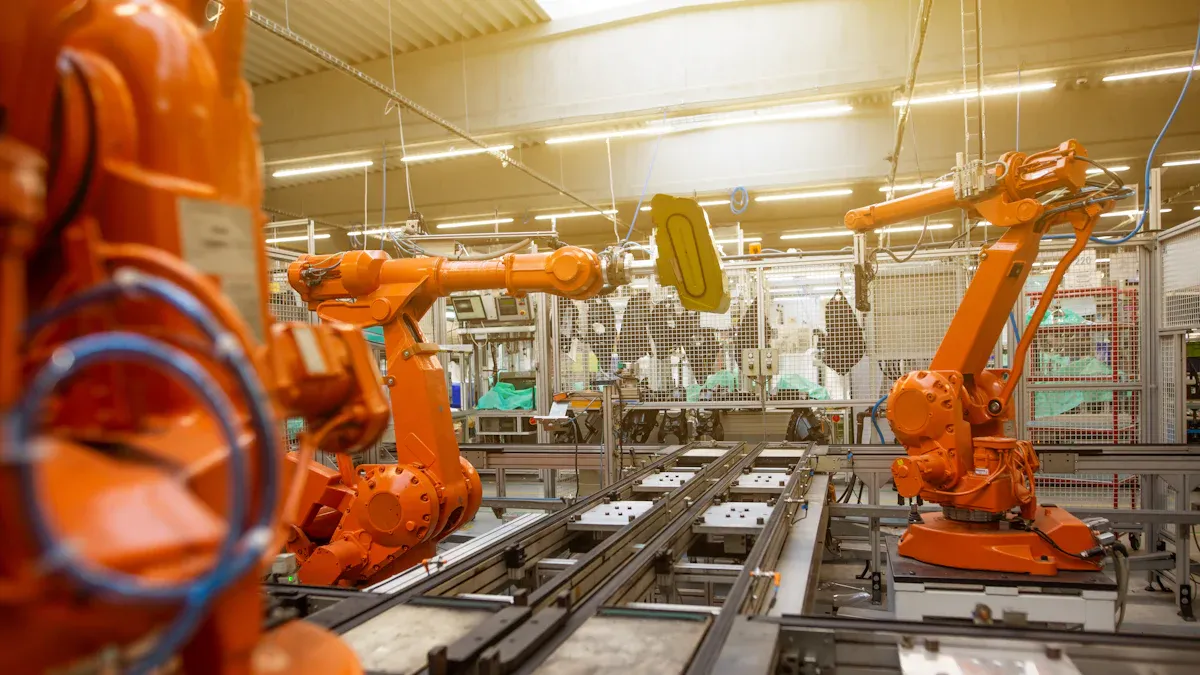
Choosing the right equipment is the most critical step after a company assesses its needs. The market offers a vast array of automation solutions. A business must match the technology to its specific products, production volume, and automation goals. This ensures a successful and profitable investment.
Explore Robotic Packing and Palletizing
Robots perform repetitive tasks with incredible speed and precision. They are ideal for the physically demanding jobs of packing and palletizing. Robotic systems reduce labor costs and minimize the risk of workplace injuries. They also handle products gently, which is crucial for fragile items like baked goods or fresh produce.
Companies can choose from several types of robots:
- Delta Robots: These spider-like robots excel at high-speed pick-and-place tasks. They are perfect for loading small, lightweight products into primary packaging.
- Articulated Robots: These robots mimic a human arm. They offer greater flexibility and can handle heavier payloads, making them suitable for case packing and pallet building.
- Collaborative Robots (Cobots): Cobots work safely alongside human employees. They can assist with tasks like box erecting or quality inspection without requiring large safety cages.
A modern food packing machine often incorporates robotics to achieve peak efficiency.
Understand Form-Fill-Seal (FFS) Systems
Form-Fill-Seal (FFS) machines offer a powerful, all-in-one packaging solution. An FFS system creates the package, fills it with the product, and seals it in one continuous motion. This integrated process saves floor space and boosts throughput significantly. This type of food packing machine is very common in the industry.
There are two main categories of FFS technology:
- Vertical Form-Fill-Seal (VFFS): These machines are ideal for loose products like snacks, coffee, powders, and grains. The machine forms a tube from a flat roll of film, fills it from above, and then seals it.
- Horizontal Form-Fill-Seal (HFFS): These systems are better for single, solid items like candy bars, cookies, or medical devices. The product moves horizontally along a conveyor before the machine wraps and seals it.
Expert Tip: The choice of packaging film is just as important as the machine itself. A company should work with its supplier to select a film that runs efficiently on its chosen food packing machine and protects product integrity.
Integrate Automated Conveyors and Motion Control
Automated conveyors are the arteries of a packaging line. They transport products smoothly between different stages, from filling to case packing and palletizing. An inefficient conveyor system can cause jams, product damage, and costly downtime. It can negate the benefits of an otherwise advanced food packing machine.
Modern conveyors use sophisticated motion control technology. This ensures products are spaced correctly and move at the optimal speed. Smart sensors detect product presence and can start or stop sections of the conveyor to prevent backups.
| Conveyor Type | Best Use Case | Key Benefit |
|---|---|---|
| Belt Conveyor | Transporting small or irregularly shaped items | Smooth, continuous surface |
| Roller Conveyor | Moving boxes, cases, and totes | Low friction and high durability |
| Modular Plastic Belt | Handling raw foods or navigating curves | Easy to clean and highly flexible |
Proper integration of conveyors connects individual machines into a single, cohesive, and highly efficient automated system.
Implement Smart Sensors and Vision Systems
Smart sensors and vision systems act as the eyes and nerves of an automated packaging line. They provide the real-time data needed for machines to make intelligent decisions. This technology elevates a standard food packing machine into a smart, self-monitoring system. It drastically reduces errors and improves overall product quality.
Sensors detect the presence, position, and orientation of products and packaging materials. They ensure every step of the process happens at the right time. For example, a photoelectric sensor can confirm a box is in place before a robot attempts to fill it. This simple check prevents product spills and equipment damage. Modern IO-Link sensors also provide diagnostic data. They can predict potential failures before they cause downtime.
Vision systems offer a more advanced level of quality control. They use high-resolution cameras and powerful software to inspect products at high speeds. This technology surpasses the capabilities of human inspection.
Key applications for vision systems include:
- Label Verification: The system confirms the correct label is applied and is straight, legible, and scannable.
- Seal Integrity: It inspects package seals for any defects, such as wrinkles or contamination, that could compromise product freshness.
- Fill Level Checks: The system ensures each container is filled to the correct volume, reducing product giveaway.
- Code Reading: It reads barcodes, QR codes, and date codes to guarantee traceability and accuracy.
Pro Tip: A company should integrate vision inspection immediately after a critical process. For instance, placing a camera after a food packing machine seals a bag allows for instant detection of faulty seals, minimizing waste.
Implementing these systems provides a layer of intelligence. It allows the entire line to adapt to minor variations. A well-integrated vision system can even provide feedback to an upstream food packing machine, helping it adjust its own settings for better performance. This creates a closed-loop control system that continuously optimizes for quality and efficiency.
Implement and Optimize Your Automated Line
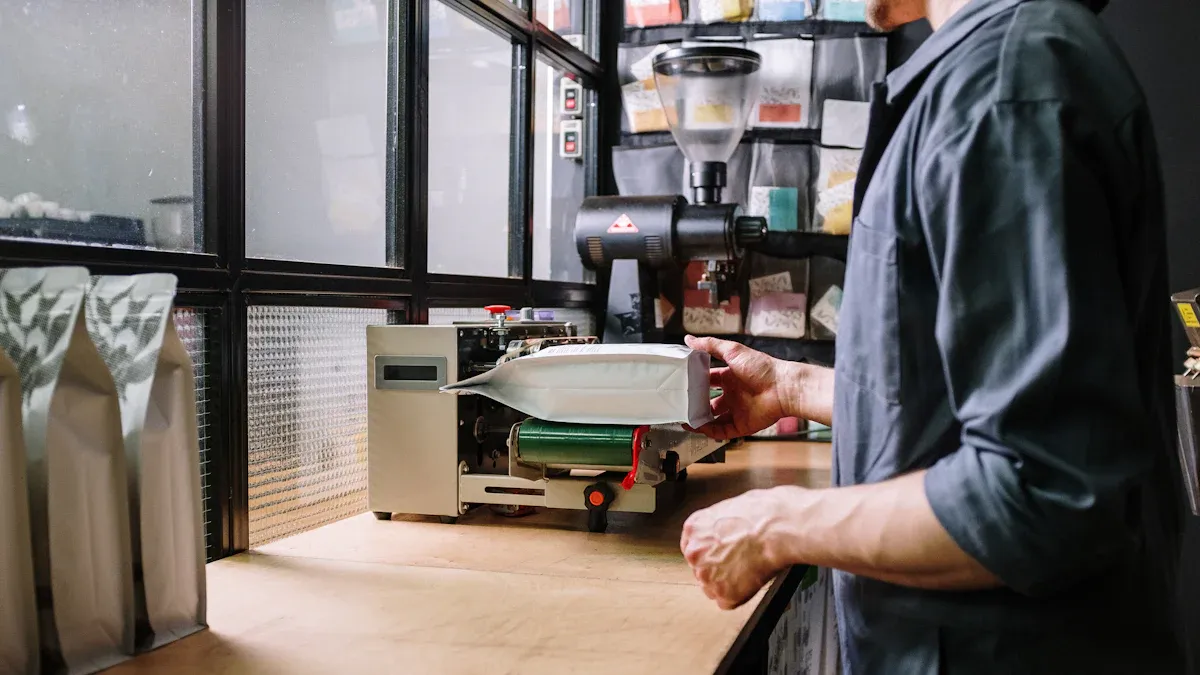
A company moves from planning to action in the implementation phase. This stage involves installing the new equipment and making it work efficiently. Careful execution is essential for a smooth transition. It ensures the automated line delivers on its promised benefits without causing major disruptions to production. Optimization is an ongoing process that fine-tunes the system for maximum performance.
Choose Scalable and Modular Solutions
A business should invest in technology that can adapt to future needs. Scalable and modular systems provide this crucial flexibility. They prevent a company from being locked into a solution that quickly becomes outdated.
- Scalability refers to a system's ability to handle increased production volume. A scalable food packing machine might allow for a speed upgrade or the addition of a second packing head to double its output.
- Modularity means the system is built from independent, interchangeable components. A company can add, remove, or upgrade individual modules without replacing the entire line. For example, a business could swap a manual inspection station for an automated vision system later.
This approach offers several key advantages:
- Phased Investment: A company can start with automating the most critical bottleneck. It can add other modules later as the budget allows.
- Future-Proofing: The line can adapt to new products, packaging formats, or regulations with minimal disruption.
- Reduced Downtime: A faulty module can be quickly swapped out, minimizing repair time and keeping production running.
Plan for Seamless System Integration
An automated packaging line is more than a collection of individual machines. It is a single, cohesive system. Seamless integration ensures all components—from the filler to the palletizer—communicate and work together flawlessly. Poor integration creates new bottlenecks and undermines the entire investment.
Integration Partner: A company should consider hiring a system integrator. These experts specialize in making equipment from different manufacturers work together. They manage the technical details of communication protocols and physical connections, ensuring a unified and efficient line.
Key considerations for successful integration include:
- Communication Protocols: All machines must "speak the same language" (e.g., EtherNet/IP, PROFINET) to share data and coordinate actions.
- Physical Layout: The line must be designed to optimize product flow, minimize travel distance, and provide safe access for operators and maintenance staff.
- Data Management: A central control system should collect performance data from every machine. This provides a complete overview of line efficiency and helps identify areas for improvement.
Calculate Your Return on Investment (ROI)
Automation is a significant capital expenditure. A business must justify the cost by calculating its potential Return on Investment (ROI). ROI measures the profitability of an investment. It compares the financial gains from automation to the initial cost of the project. A positive ROI proves the project is a sound financial decision.
The calculation involves two main parts: the total investment cost and the annual financial gains.
ROI (%) = (Annual Financial Gain - Annual Cost of Investment) / Annual Cost of Investment * 100
A company can break down the costs and gains to build a clear financial picture.
| Financial Component | Examples |
|---|---|
| Total Investment Costs | Equipment purchase, installation fees, engineering, site modifications, initial training |
| Annual Financial Gains | Reduced labor costs, increased throughput, lower product waste, fewer workplace injuries, improved product quality |
Calculating ROI provides a clear, data-driven case for the automation project. It helps secure budget approval from stakeholders. It also sets a financial benchmark to measure the project's success after implementation.
Develop a Staff Training Program
Technology is only as effective as the people who operate it. A comprehensive staff training program is essential for a successful automation launch. It empowers employees with the confidence and skills needed to manage the new equipment. Proper training reduces operator errors, minimizes downtime, and fosters a culture of ownership.
A company should tailor its training to different roles within the team. Operators, maintenance technicians, and supervisors all have unique needs.
A successful training program includes several key elements:
- Machine Operation: Employees learn the correct startup, shutdown, and changeover procedures for each food packing machine.
- Safety Protocols: Training covers all safety features, emergency stops, and lockout/tagout procedures to ensure a safe working environment.
- Basic Troubleshooting: Operators learn to identify and resolve common alerts and minor stoppages, reducing reliance on maintenance staff.
- Software Interface: Staff members practice navigating the Human-Machine Interface (HMI) to monitor performance and adjust settings.
- Quality Control Checks: Team members understand how to use new inspection systems and what to do if a quality issue is detected.
Pro Tip: A business should partner with its equipment vendor to develop the training curriculum. Vendor technicians possess deep knowledge of the machinery and can provide expert, hands-on instruction for the team.
Reallocate Your Workforce to Higher-Value Roles
Automation does not eliminate the need for human workers. It changes the nature of their work. Companies can reallocate their workforce from repetitive, physically demanding tasks to more strategic, higher-value roles. This shift leverages unique human skills like critical thinking, problem-solving, and process improvement. It also leads to greater job satisfaction and employee engagement.
Instead of manually packing boxes, an employee might now oversee an entire automated line. They monitor performance data, anticipate maintenance needs, and look for opportunities to optimize workflow. This transition transforms the employee from a manual laborer into a skilled system operator.
The table below shows how roles can evolve with automation.
| Old Manual Task | New Higher-Value Role |
|---|---|
| Hand-filling bags | Monitoring fill accuracy on an HMI |
| Manually stacking cases | Performing quality checks on pallet patterns |
| Applying labels by hand | Managing the vision system for label inspection |
| Repetitive lifting | Analyzing production data to identify trends |
This strategic reallocation of labor is a core benefit of automation. It allows a company to build a smarter, more skilled, and more adaptable workforce. This positions the business for sustained growth and innovation.
Embracing food packaging automation is a strategic investment in a company's future. This move drives efficiency and boosts competitiveness. A business can achieve peak operational performance by following a clear path:
- Systematically assessing its needs.
- Selecting the right technology.
- Training its team effectively.
This transformation reduces costs and improves product quality. It ultimately positions the business for sustainable, long-term growth in a demanding market.
FAQ
What is the first step to automate a packaging line?
A company should first assess its current process. It must identify production bottlenecks and analyze performance data. This analysis helps define clear automation goals. It ensures the investment solves the right problems for maximum impact.
Can small businesses afford packaging automation?
Yes. Many scalable and modular solutions exist. A small business can start by automating a single critical task, like sealing or labeling. This phased approach makes the initial investment more manageable. It also allows for future expansion.
Will automation replace all packaging workers?
Automation typically reallocates workers, not replaces them. Employees move from repetitive manual labor to higher-value roles. They might oversee equipment, manage quality control, or analyze production data. This shift creates a more skilled and engaged workforce.
How much does a food packing machine cost?
The cost varies widely. It depends on the machine's type, speed, and features. A simple sealer may cost a few thousand dollars. A fully integrated robotic line can cost hundreds of thousands. A company should request quotes for its specific needs.
See Also
Boosting Pharma Efficiency: Modern Capsule Decapsulation Machines Revolutionize Production
2025 Carton Lines: Essential Trending Folder Gluer Features for Optimal Performance
Unveiling 2025 Plate Pack Benefits: A Comprehensive Advantage and Cost Analysis
Food Plant Essentials: Top Three Industrial Checkweighers for Quality Control
2025 Capsule Checkweighers: Key Considerations for Informed Buyer Decisions