How Do Sewage Wastewater Treatment Plants Clean Water
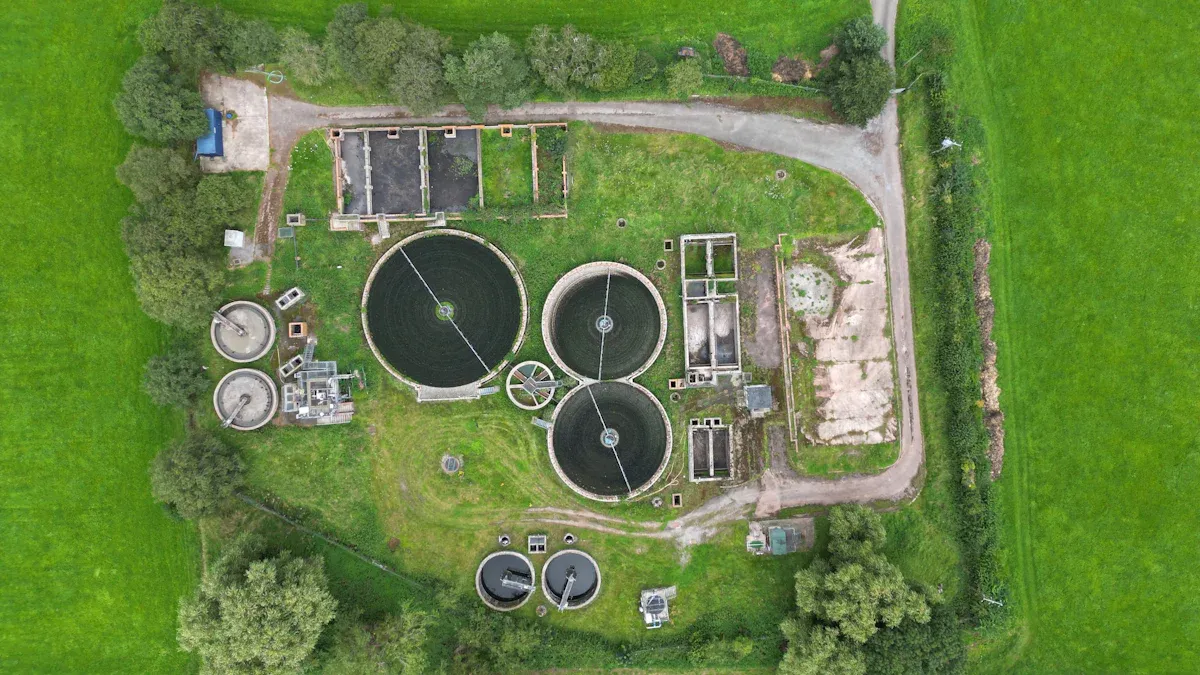
You rely on clean water every day. A sewage waste water treatment plant uses physical, biological, and chemical steps to remove harmful substances from water.
- About 52% of global wastewater gets treated before release.
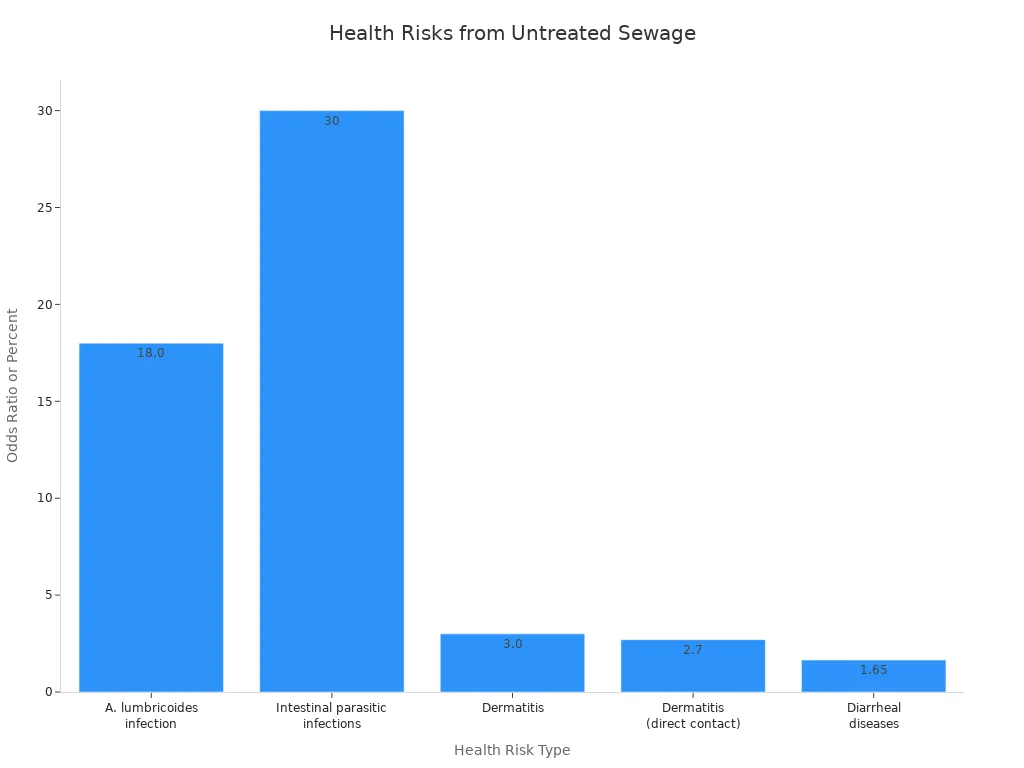
Untreated sewage can cause serious health problems, shown below:
| Health Risk Type | Odds Ratio (OR) | Population Description |
|---|---|---|
| A. lumbricoides infection | 18.0 | Children aged < 5 years |
| Intestinal parasitic infections | 30% | Adults exposed to wastewater |
| Dermatitis | 3.0 | Farmers using wastewater for irrigation |
| Dermatitis (direct contact) | 2.7 | Farmers with direct contact |
| Diarrheal diseases | 1.65 | Agricultural workers and family members |
Key Takeaways
- Sewage wastewater treatment plants use physical, biological, and chemical methods to clean water, ensuring it is safe for the environment and public health.
- The treatment process includes several stages: preliminary treatment removes large debris, primary treatment settles solids, secondary treatment uses bacteria to break down organic matter, and tertiary treatment disinfects the water.
- Proper management of treated water and leftover sludge is crucial. Reusing treated water helps conserve resources and protect the environment.
How Sewage Waste Water Treatment Plant Receives Wastewater
Collection from Homes and Businesses
You help start the journey of wastewater every time you wash your hands, flush the toilet, or run the dishwasher. Wastewater comes from many places in your community. Here are some main sources:
- Water from households
- Water from businesses and services
- Water from factories and industries
- Rainwater runoff from streets and farms
- Leakage from old or broken pipes
- Water from septic systems
In a large city, the collection system can move about 37 million gallons of wastewater to the treatment plant every day. This huge amount shows how much water you and your neighbors use and send down the drain.
Note: Urban areas have bigger and more advanced treatment plants because more people live there. Rural areas often have smaller or less developed systems, which can make clean water harder to find.
Transport through Sewer Systems
After you send wastewater down the drain, it travels through a network of pipes called sewer systems. These systems carry the water to the sewage waste water treatment plant. There are different types of sewer systems:
| Type of Sewer System | Description |
|---|---|
| Sanitary Sewer Systems | Carry wastewater from homes and businesses to treatment plants for cleaning. |
| Stormwater Sewer Systems | Move rainwater directly to rivers or lakes, usually without treatment. |
| Combined Systems | Mix both wastewater and stormwater, but can overflow during heavy rain. |
The type of sewer system in your area affects how quickly and safely wastewater reaches the treatment plant. In cities, you often find advanced systems, while rural areas may rely on simpler or even natural methods.
Main Stages in a Sewage Waste Water Treatment Plant
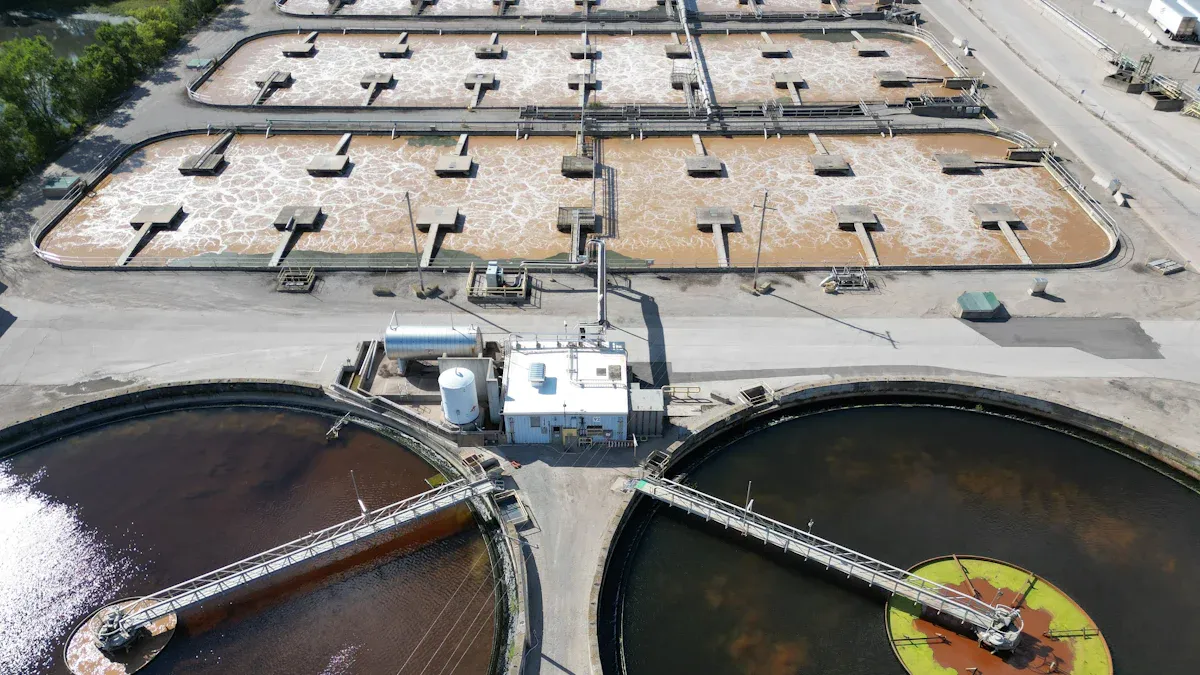
A sewage waste water treatment plant uses several steps to clean water before it returns to nature or gets reused. Each stage removes different types of contaminants. You can see how each part works below.
Preliminary Treatment – Removing Large Debris
When wastewater first arrives at the plant, it contains many large objects. You might find rags, sticks, plastics, and even stones. These items can block pipes and damage equipment. The plant uses special tools to catch and remove these solids.
- Bar screens trap large debris like rags and plastics.
- Coarse screens act as the first barrier, stopping big objects.
- Fine screens catch smaller particles that slip through the coarse screens.
Other equipment, such as rotary drums and step screens, help clean the water further. Some plants use manual screens, while others rely on machines for bigger jobs. Bar screens work best when their spacing matches the size of debris. Comminution breaks down solid waste, making it easier to handle. These steps protect the rest of the system and keep everything running smoothly.
Preliminary treatment is crucial. It keeps the sewage waste water treatment plant efficient and prevents costly repairs.
Primary Treatment – Settling Out Solids in Clarifiers
After removing large debris, the water moves to primary treatment. Here, you see clarifiers at work. Clarifiers are large tanks where water sits still. Heavy solids sink to the bottom, while lighter materials float to the top.
- Clarifiers separate solids from wastewater using sedimentation.
- This process removes about 50–70% of suspended solids.
- The design of clarifiers helps prevent damage to equipment downstream.
You notice that primary treatment also reduces the biological oxygen demand (BOD) by 25–40%. This means the water has fewer pollutants that use up oxygen. The table below shows how much each stage removes:
| Stage | Contaminant Removal Percentage |
|---|---|
| Primary Treatment | 50–70% of suspended solids |
| 25–40% of biological oxygen demand (BOD) | |
| Secondary Treatment | Higher than primary, varies by process |
| Tertiary Treatment | Removes nutrients and remaining contaminants |
Secondary Treatment – Breaking Down Organic Matter with Bacteria
Next, the water enters secondary treatment. Here, bacteria play a key role. These tiny organisms eat and break down organic matter in the water. You see them form clumps called flocs or biofilms. These clumps settle out, leaving cleaner water behind.
Bacteria digest soluble materials and turn them into biomass. This process reduces pollutants and helps create sludge that can be removed. Secondary treatment lowers the BOD by 50–95%. You get water that is much safer for the environment.
Tip: Bacteria are nature’s helpers. They clean water by turning harmful substances into harmless ones.
Tertiary Treatment – Final Cleaning and Disinfection
The last step is tertiary treatment. This stage gives the water a final polish. You find advanced methods here, such as:
| Method | Description | Advantages | Disadvantages |
|---|---|---|---|
| Chlorination | Uses chlorine to kill germs | Low cost, effective | Can create harmful byproducts |
| Ultraviolet (UV) | Uses UV light to destroy pathogens | No chemicals, works on many germs | Needs clean water, regular lamp maintenance |
| Ozone | Uses ozone gas for disinfection | Strong, works on many pathogens | Needs special equipment, higher cost |
| Sodium Hypochlorite | Liquid chlorine for disinfection | Easy to use, effective | Can harm aquatic life, creates byproducts |
Tertiary treatment removes leftover nutrients, pathogens, and chemical contaminants. You get water that meets strict safety standards. This step is vital before releasing water back into rivers or using it for irrigation.
Note: Tertiary treatment makes sure the water is safe for people and the environment. New innovations, such as ozonation and advanced UV systems, help plants meet higher standards.
A sewage waste water treatment plant faces challenges like population growth, climate change, and the need for better technology. Regulations require plants to keep improving and protect water resources. Innovations such as wet air oxidation, photocatalysis, and smart UV control help plants stay efficient and safe.
After Treatment at the Sewage Waste Water Treatment Plant
Releasing Cleaned Water Safely
You might wonder what happens to water after it leaves the sewage waste water treatment plant. Before release, cleaned water must meet strict standards set by the EPA and state agencies. These rules protect rivers, lakes, and oceans from pollution. Plants follow the Clean Water Act and must comply with the Secondary Treatment Regulation. Industrial facilities also have special effluent guidelines.
- EPA and state agencies set wastewater standards.
- Plants must meet the Secondary Treatment Regulation.
- Effluent guidelines apply to industrial wastewater.
Most treated water flows back into natural water bodies, but some gets reused for irrigation or industrial processes. The table below shows how much water is reused compared to released untreated:
| Category | Percentage |
|---|---|
| Wastewater reused | 11% |
| Wastewater released untreated | 48% |
Tip: Reusing treated water helps save resources and protects the environment.
Handling and Disposing of Leftover Sludge
After cleaning the water, you still have leftover sludge. This sludge contains solids and organic matter removed during treatment. Plants use several methods to handle and dispose of sludge safely. Some methods help recycle nutrients, while others focus on safe disposal.
| Method | Description |
|---|---|
| Composting | Uses aerobic digestion, often in small or mid-sized plants. |
| Anaerobic digestion | Common in large plants; breaks down sludge without oxygen. |
| Pre-thickening | Removes water from sludge using machines like belt filter presses. |
| Incineration | Burns dewatered sludge for disposal. |
| Landfill disposal | Transports sludge to landfills. |
| Agricultural soil amendment | Adds treated sludge to soil to improve quality. |
| Land application | Spreads sludge on land for treatment and groundwater recharge. |
| Irrigation | Uses treated sludge for watering crops. |
| Surface disposal | Places sludge on land surfaces for disposal. |
You help protect the environment when you support proper sludge management. Safe disposal keeps harmful substances out of soil and water.
You see each stage in a sewage wastewater treatment plant play a key role in making water safe:
| Stage | Contribution to Water Safety |
|---|---|
| Primary | Removes large solids and grit |
| Secondary | Reduces organic matter |
| Tertiary | Enhances quality with nutrient removal and disinfection |
| Quaternary | Removes micropollutants for safe reuse or discharge |
- Treated water helps protect public health and the environment. You support safer agriculture and cleaner rivers.
- Most plants serve small communities, keeping neighborhoods clean and healthy.
Raising awareness inspires action and helps everyone understand the value of clean water.
FAQ
What happens if you flush something that should not go down the drain?
You risk clogging pipes and damaging equipment. Treatment plants remove large items, but you help by only flushing toilet paper and waste.
Can you drink water after it leaves a sewage wastewater treatment plant?
You should not drink treated wastewater directly. Plants clean water for safe release or reuse, but extra steps are needed for drinking water.
Why do treatment plants use bacteria?
Bacteria break down harmful substances in wastewater. You benefit because bacteria help clean water naturally and make it safer for the environment.
See Also
Essential Insights on Semi-welded Plate Heat Exchangers for 2025
Innovations in Heat Exchanger Manufacturing Boost Industrial Efficiency
Unexpected Techniques for Effectively Troubleshooting Sulfur Recovery Catalysts
The Role of Plate Air Preheaters in Enhancing Efficiency
Strategies to Reduce Environmental Impact Using Plate Heat Exchangers