How Laser Welded Plate Technology Is Shaping the Future
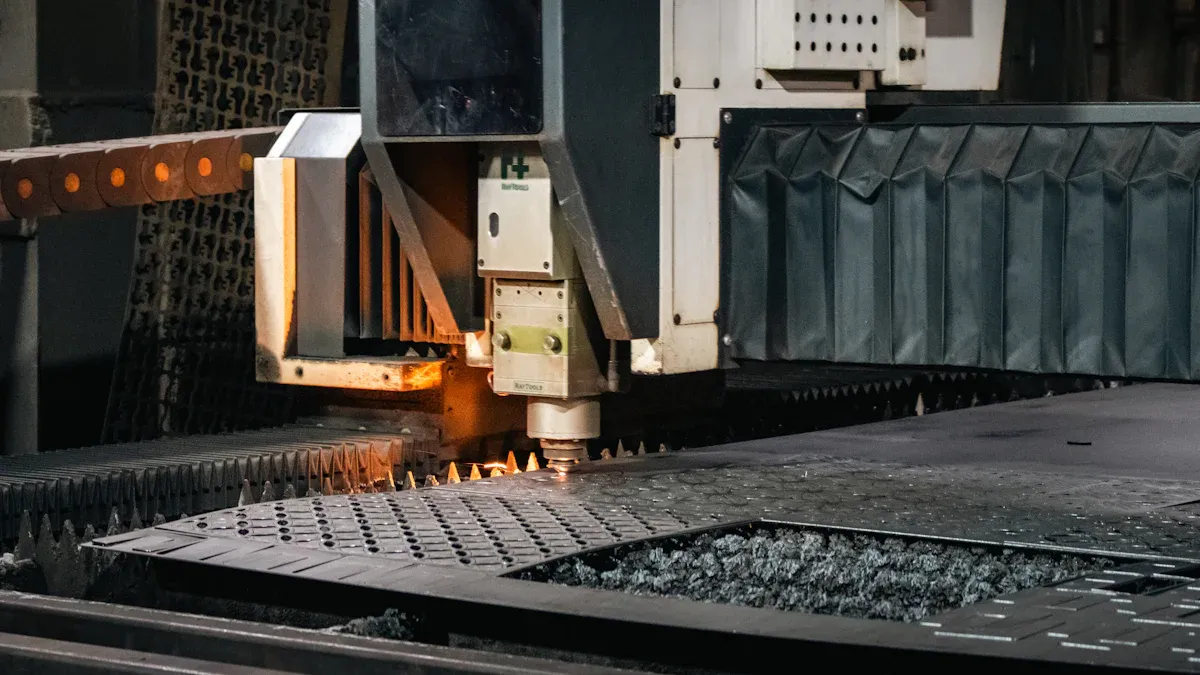
Laser welded plate technology uses a focused laser beam to create precise, durable bonds between metal plates. This method boosts efficiency and reduces costs in manufacturing. The table below shows key impacts:
Operational Savings Aspect | Details / Metrics |
|---|---|
Manufacturing Cost Reduction | |
Production Time Reduction | 20% faster |
Labor and Maintenance Savings | Savings cover initial cost within 5 years |
Energy Efficiency | Lower energy use |
Maintenance Requirements | Fewer breakdowns |
Shanghai Plate Heat Exchanger leads innovation with the Wide Gap Welded Plate Heat Exchanger, setting new standards for reliability and performance.
Laser Welded Plate Technology Overview
Laser Welding Principles
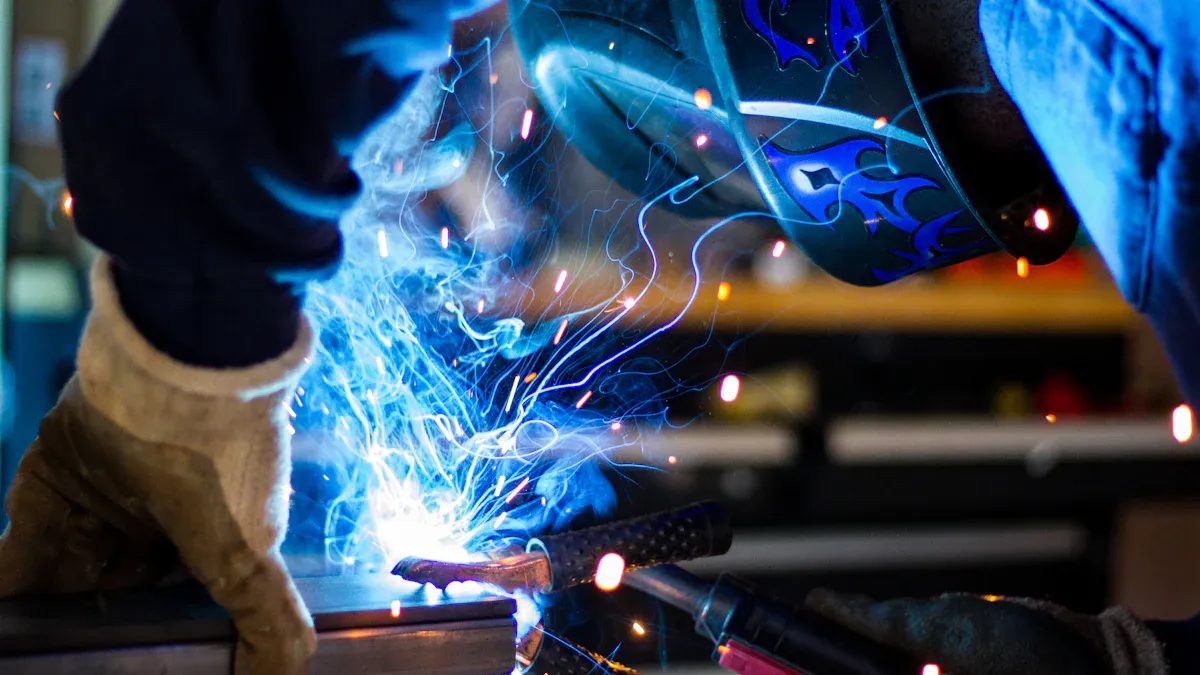
Laser welded plate technology relies on the laser welding process to join metal plates with high accuracy. A focused laser beam delivers intense energy to a small area, melting and fusing the plate surfaces together. This method stands apart from traditional welding because it uses less heat and achieves deeper penetration. The laser welding system operates at high speed, which increases productivity and reduces energy consumption.
Key principles of laser welding include:
High energy density: The focused laser beam concentrates power, allowing for fast and deep welds with minimal energy loss.
Low heat input: The laser welding process creates a small heat-affected zone, which limits distortion and preserves the plate’s properties.
Pinpoint precision: The laser welding system can produce intricate welds in tight spaces, making it ideal for complex plate designs.
High speed: Laser welding applications complete tasks much faster than conventional methods.
Several types of lasers are used in plate construction. Fiber lasers offer high efficiency and excellent beam quality, making them the industry standard for most laser welded plate projects. Disk lasers provide similar benefits, delivering high power and good beam quality. Nd:YAG lasers excel in spot welding and micro-welding, while CO₂ lasers work well for non-metals and thick metals. Diode lasers are compact and energy-efficient, suitable for conduction mode welding.
Industry leaders like Shanghai Plate Heat Exchanger, heattransfer, and the Wide Gap Welded Plate Heat Exchanger have advanced the use of laser welding systems. Their innovations set new benchmarks for reliability and performance in laser welded plate technology.
Tip: Laser welded plate technology reduces thermal distortion and improves weld quality, making it a preferred choice for high-precision manufacturing.
Plate Construction and Materials
The construction of a laser welded plate depends on the choice of material and the design of the plate itself. Manufacturers select materials that offer durability, corrosion resistance, and optimal thermal performance. The laser welding system ensures that each plate receives a clean, strong weld, which is essential for demanding industrial environments.
Common materials used in laser welded plate construction include:
Material Type | Key Properties |
|---|---|
Excellent weldability, low risk of cracking, uniform heat distribution, minimizes warping. | |
Stainless Steel | Corrosion resistance, high toughness, favorable laser absorption, precise and clean welds. |
Dual-Phase Steel (DP Steel) | High strength-to-weight ratio, good flexibility, balance between strength and flexibility. |
High-Strength Low-Alloy Steel | Greater strength without excessive weight, low carbon content to avoid cracking. |
Galvanized Steel | Excellent corrosion resistance, requires specific techniques to manage zinc vaporization. |
Tool Steel | High durability and wear resistance, but challenges due to high hardness and brittleness. |
The choice of plate material affects the durability and performance of laser welded plate heat exchangers. Stainless steel provides high thermal conductivity, strength, and excellent corrosion resistance. Copper offers very high thermal conductivity and good corrosion resistance, while aluminum delivers moderate thermal conductivity and lower strength.
Laser welded plate construction benefits from the following advantages:
Advantage | Description |
|---|---|
Exceptional Speed & Productivity | Laser welding systems work up to four times faster than traditional TIG welding. |
Superior Precision & Control | The focused laser beam creates minute and complex welds. |
Low Heat & Distortion | Minimal heat input preserves the plate’s integrity. |
Automation-Friendly | Laser welding systems integrate easily with robotics for high-volume production. |
Excellent Aesthetics | Clean, narrow seams often require no finishing. |
Shanghai Plate Heat Exchanger and heattransfer continue to push the boundaries of laser welded plate technology. Their products, such as the Wide Gap Welded Plate Heat Exchanger, use advanced plate geometry and high-quality materials to deliver reliable performance. These innovations support industries that demand efficient, durable, and sustainable solutions.
Laser welded plate technology stands at the forefront of modern manufacturing. The combination of advanced laser welding systems, high-performance materials, and innovative plate designs ensures that industries can meet the challenges of today and tomorrow.
Applications and Benefits of Laser Welded Exchangers
Laser Welded Pillow Plate Heat Exchangers
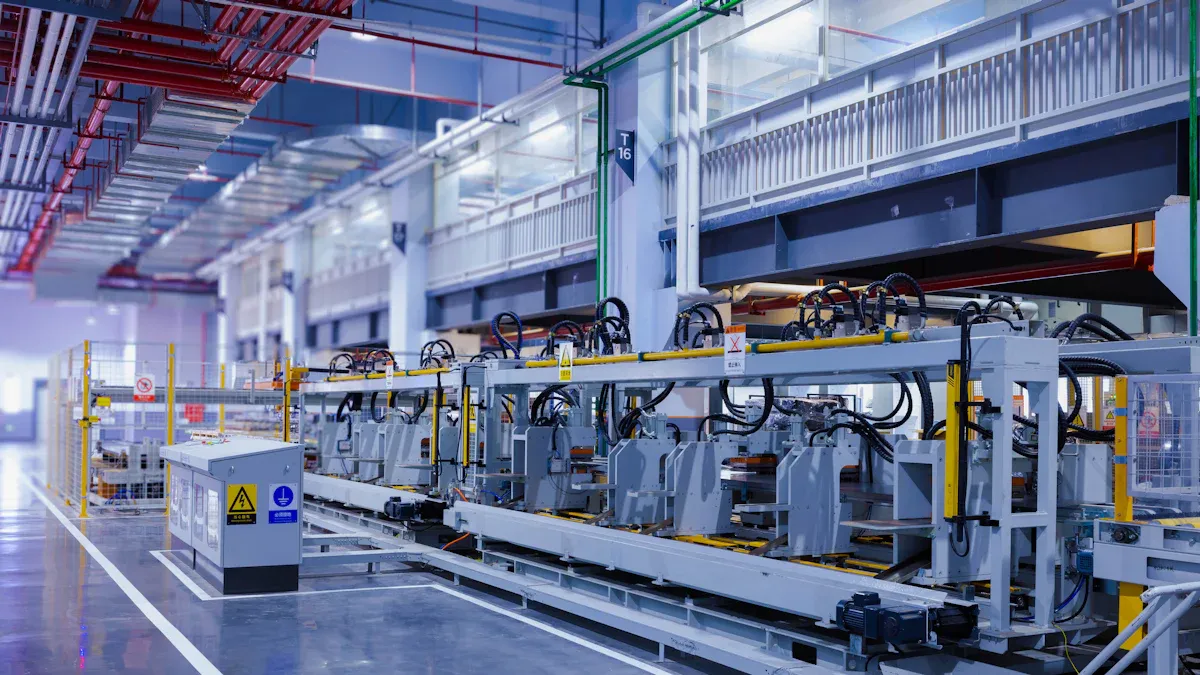
Laser welded pillow plate heat exchangers use advanced laser beam welding to join plate surfaces, creating a pillow plate structure. This design increases efficiency and reliability. These exchangers can be up to 37% more efficient than traditional models. The laser welding process forms strong, precise welds, keeping the plates flat and smooth. The pillow plate structure improves fluid dynamics, which speeds up heat transfer. These exchangers handle operational pressures over 100 MPa and temperatures up to 800 °C. The channels inside the exchangers allow for the flow of challenging fluids, including those with particles or high viscosity.
Enhanced efficiency (up to 37% higher)
Strong, precise welds from laser beam welding
Reliable operation at high temperatures and pressures
Channels designed for difficult fluids
Feature | Laser Welded Pillow Plate Heat Exchangers | Traditional Heat Exchangers |
|---|---|---|
Maintenance Costs | Higher | |
Production Cycle | Shorter | Longer |
Durability | Enhanced | Standard |
Downtime Costs | Minimized | Significant |
Industrial Uses and Innovations
Industries such as metallurgy, chemical processing, and EV battery cooling rely on laser welded pillow plate heat exchangers. These exchangers appear in domestic hot water heating, HVAC, food and beverage, oil and gas, power generation, marine, wastewater, pharmaceutical, and biotech. Performance metrics include heat transfer efficiency and working efficiency. The Wide Gap Welded Plate Heat Exchanger from Shanghai Plate Heat Exchanger and heattransfer features extra-wide channels, optimized plate patterns, and flexible, serviceable designs. These innovations prevent clogging, extend service life, and allow easy cleaning. The channels and plate materials support corrosive and particle-laden fluids.
Future Trends in Exchangers
The market for laser welded pillow plate heat exchangers will grow as laser beam welding and high-precision welding improve. New laser source technologies and AI integration will enable predictive maintenance and real-time monitoring. Regulatory standards push for compact, energy-efficient exchangers. These advancements help industries save energy, reduce costs, and support sustainability goals. The future of exchangers will focus on better laser welding, smarter monitoring, and more durable plate and channel designs.
Laser welded plate technology drives the future of industrial heat exchange. Advanced exchangers like those from Shanghai Plate Heat Exchanger deliver high efficiency, durability, and compact design. Industries benefit from intelligent welding systems, sector-specific solutions, and robust construction. The table below highlights key advantages for operators:
Feature | Benefit |
|---|---|
Reliable in demanding environments | |
Space-Saving Design | Fits in limited spaces |
Minimal Maintenance | Reduces downtime and costs |
FAQ
What makes laser welded plate heat exchangers more efficient?
Laser welded plate heat exchangers use precise welds. This design improves heat transfer and reduces energy loss. Brands like heattransfer and Shanghai Plate Heat Exchanger lead these innovations.
Can the Wide Gap Welded Plate Heat Exchanger handle fluids with particles?
Yes. The wide gap channels allow fluids with high viscosity or solid particles to flow smoothly. This prevents clogging and ensures reliable operation.
How does the openable design help with maintenance?
The openable design gives easy access to the heat transfer channels. Operators can clean or inspect the unit quickly using mechanical, chemical, or ultrasonic methods.