The amazing sewage treatment happening under your lawn
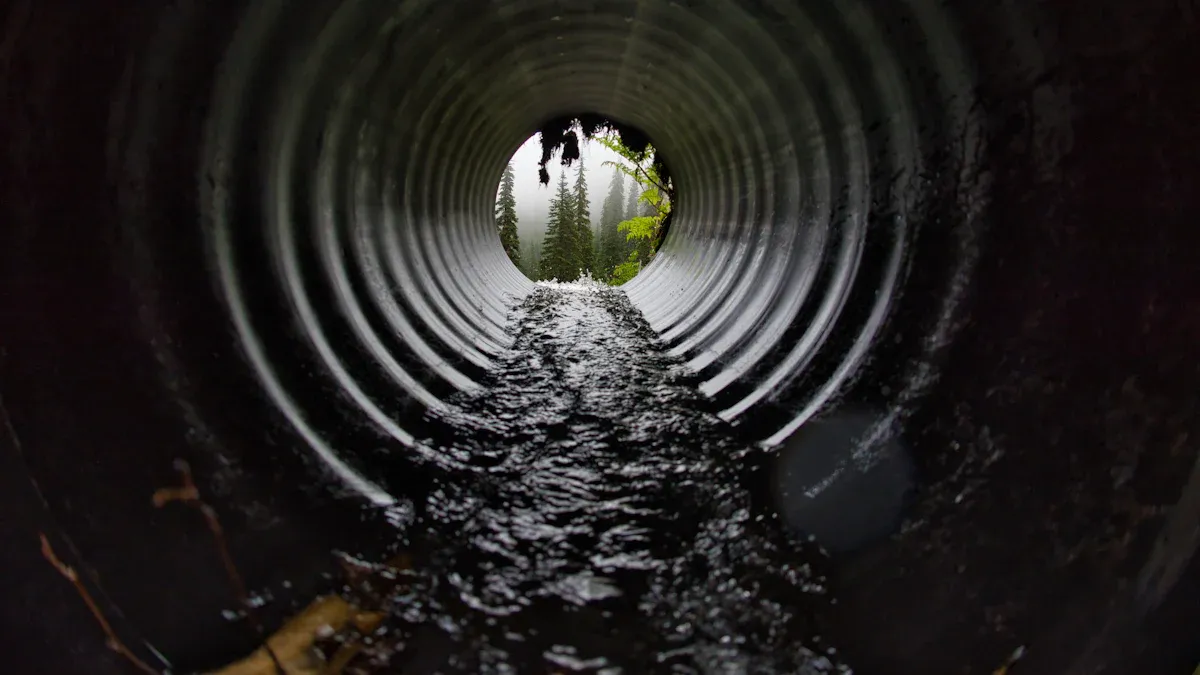
You have a personal wastewater plant right under your lawn. Like more than one in five U.S. households, you rely on a septic system for sewage treatment. This underground system processes all the water from your bathrooms, kitchen, and laundry. It uses a tank to separate waste and the soil to clean the water.
Key Takeaways
- A septic system cleans your home's wastewater using a tank to separate waste and soil to filter the water.
- Bacteria in the septic tank break down solid waste, and the drainfield uses soil and microbes to purify the water.
- Regular pumping of your septic tank and avoiding harmful chemicals protect your system and keep it working well.
The Septic Tank: Where Sewage Treatment Begins
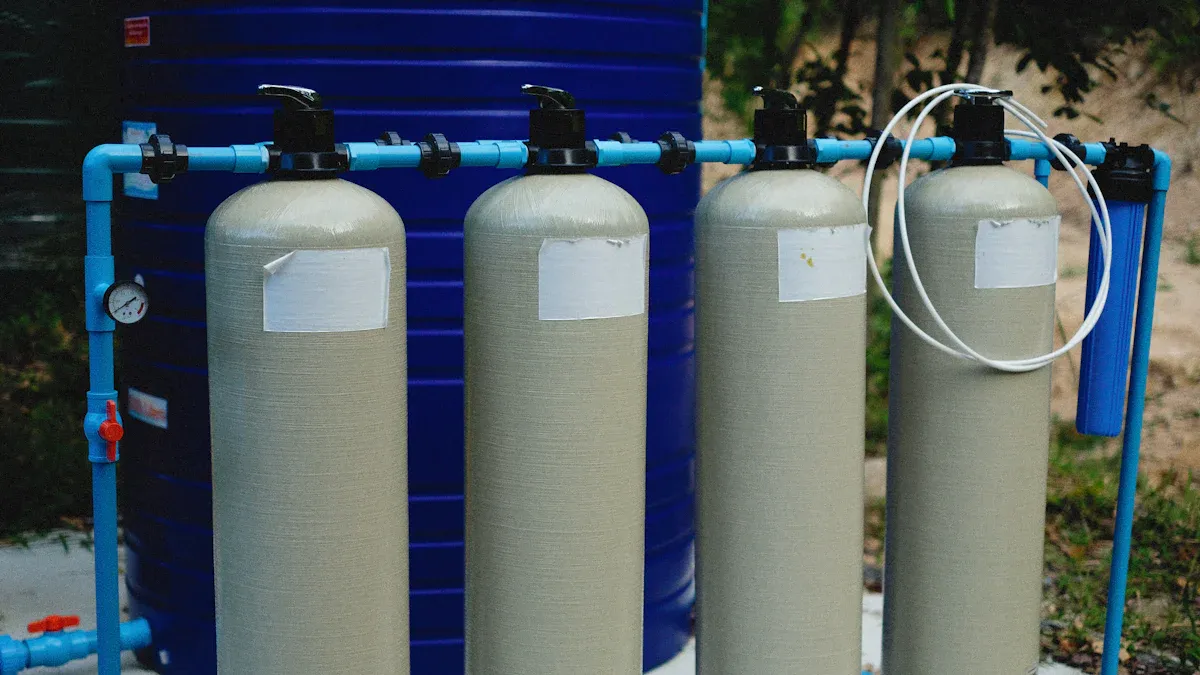
Your septic tank is the first stop in your home's private sewage treatment process. This buried, watertight container acts as a holding and separation chamber. It is one of two primary components of your system, working together with the drainfield to clean your wastewater. The tank’s main job is to hold wastewater long enough for solids and liquids to separate.
What Happens When You Flush?
Every time you flush a toilet, run the dishwasher, or take a shower, you send wastewater into the septic tank. This water carries everything that goes down your drains. You send different types of waste to the tank, including:
- Blackwater: Water from toilets that contains human waste.
- Greywater: Water from showers, sinks, and laundry.
- Brownwater: Toilet water that does not contain fecal matter.
The volume of water entering your tank adds up quickly. Modern appliances and fixtures are more efficient, but your daily usage is still significant.
| Fixture/Appliance | Typical Flow Rate/Volume |
|---|---|
| Toilet (new homes) | 1.2 gallons per flush |
| Shower (10 minutes) | 25 gallons |
| Bath | 50 gallons per bath |
| Bathroom Sink | 1 gallon per minute (gpm) |
This constant flow of water pushes the contents of the tank along the treatment path.
How Does Waste Separate in the Tank?
Wastewater enters the tank and slows down. This quiet environment allows gravity to separate the contents into three distinct layers.
- The Scum Layer: Lighter materials float to the top. This layer consists of fats, oils, and grease from your kitchen and soaps.
- The Effluent Layer: This is the middle layer of partially clarified liquid wastewater. It sits between the scum and sludge.
- The Sludge Layer: Heavier solid waste and food particles sink to the bottom. This forms a dense layer of sludge.
These layers build up over time. The rate of accumulation depends on your household size and habits. This separation is a critical first step in the sewage treatment journey.
What is the Role of Bacteria?
Your septic tank is a living ecosystem filled with billions of microscopic workers. Anaerobic bacteria, which thrive without oxygen, live primarily in the sludge layer. These bacteria are essential for breaking down the organic solids that settle at the bottom. The process works in several stages:
- Bacteria begin breaking down complex materials like proteins and fats.
- They convert these materials into simpler forms, such as fatty acids.
- This breakdown produces gases like methane and carbon dioxide.
- This entire process reduces the volume of solid waste in the tank.
These bacteria are vital to your system's health. You must protect them from harmful substances.
Protect Your System! 🛡️ Certain household products can kill the beneficial bacteria in your tank. Avoid sending large quantities of bleach, antibacterial soaps, drain cleaners, paints, or pesticides down your drains. These chemicals disrupt the natural decomposition process and can lead to system clogs and failures.
The Drainfield: Nature's Final Filter
The partially treated water, or effluent, is now ready to leave the septic tank. It flows to the second major component of your system: the drainfield. This is where the real magic of natural filtration happens. Your lawn hides a sophisticated network designed to use soil and microbes to purify the water before it returns to the environment.
How Does Water Leave the Tank?
Liquid wastewater does not simply spill out of your septic tank. It exits through a protected outlet designed to keep solids from escaping. An outlet baffle, a T-shaped pipe fitting, acts as a gatekeeper. Its job is crucial for protecting the drainfield.
The outlet baffle performs several key functions:
- It directs the flow of effluent out of the tank.
- It ensures the water comes from the clear middle layer.
- It stops the top scum layer from floating into the outlet pipe.
- It prevents sludge from being stirred up and leaving the tank.
Many modern systems also include an effluent filter within the outlet baffle. This filter provides an extra layer of protection, trapping fine particles that could clog your drainfield. From the outlet, the water flows through a solid pipe, often to a distribution box. This box helps spread the water evenly among the several trenches that make up your drainfield.
Keep the Flow Slow and Steady! 💧 Your system works best when it has time to do its job. Conserving water prevents the tank from being overwhelmed. Heavy water use can push solids into the drainfield before they settle. Regular tank pumping (every 3-5 years) is also vital. It removes the built-up sludge and scum, preventing clogs and ensuring only liquid reaches the drainfield.
What is a Drainfield?
Your drainfield is a large, underground area on your property. It is also known as a leach field or absorption bed. It consists of a series of trenches containing perforated pipes and gravel. These trenches receive the effluent from your septic tank and allow it to slowly seep into the soil.
A conventional drainfield is carefully constructed.
- Trenches: A series of long, shallow trenches are dug parallel to each other.
- Aggregate: The bottom of each trench is filled with a layer of gravel or crushed stone.
- Pipes: Perforated pipes are laid on top of the gravel. Effluent flows through these pipes and trickles out through the holes.
- Cover: A special fabric (geotextile) is placed over the gravel. This fabric lets water and air pass through but stops dirt and sand from clogging the system.
- Soil: The trenches are finally covered with soil and topped with grass.
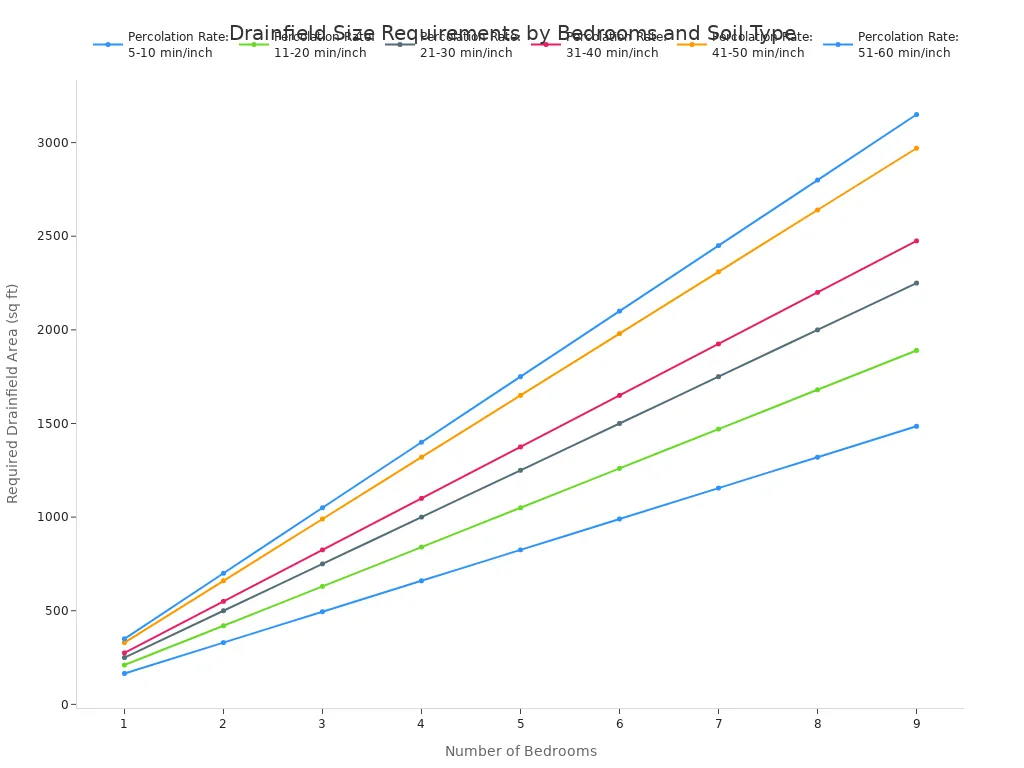
The size of your drainfield depends on your household size and your soil's absorption rate (percolation rate). A home with more bedrooms needs a larger drainfield. Soil that absorbs water slowly also requires a larger area.
| Number of Bedrooms | Soil with Fast Absorption (5-10 min/inch) | Soil with Slow Absorption (41-50 min/inch) |
|---|---|---|
| 3 Bedrooms | 495 sq ft | 990 sq ft |
| 4 Bedrooms | 660 sq ft | 1,320 sq ft |
| 5 Bedrooms | 825 sq ft | 1,650 sq ft |
Some properties have challenges like poor soil or limited space. In these cases, alternative systems provide effective sewage treatment.
| System Type | How It Works | Best For |
|---|---|---|
| Mound System | An elevated sand mound treats water before it enters the ground. | Poor soil, high water table. |
| Aerobic Unit (ATU) | Uses oxygen to treat water more intensely. | Limited space, sensitive areas. |
| Drip Irrigation | A network of tubing slowly releases water into the soil. | Shallow soil, sloped lots. |
How Does the Soil Clean the Water?
The soil in your drainfield is much more than just dirt. It is a living, breathing filter that completes the final stage of sewage treatment. As effluent seeps from the trenches, two powerful processes work to purify it.
First, a slimy layer called a biomat forms on the bottom and sides of the trenches. This layer is a bustling community of microorganisms that feed on the organic waste in the effluent.
The biomat is the heart of your drainfield's treatment process. It acts as a fine filter, trapping and digesting viruses and pathogens. Without a healthy biomat, your system would fail to protect the groundwater from contamination.
Second, the soil itself provides physical and biological filtration.
- Filtration: As water trickles through layers of gravel and soil, particles are physically trapped.
- Adsorption: Viruses and bacteria stick to the surfaces of soil and clay particles, removing them from the water.
- Microbial Action: The soil contains a vast population of helpful microbes. These organisms, including protozoa, actively consume harmful bacteria and pathogens. This natural competition and consumption purifies the water as it moves deeper into the ground, eventually returning clean water to the groundwater system.
Your septic system provides efficient sewage treatment right in your yard. You now know its simple journey: waste separates, liquid flows, and soil filters. Understanding this process helps you protect it. You can prevent most failures by pumping the tank every 3-5 years and protecting the drainfield's biomat.
FAQ
How often should I pump my septic tank?
You should pump your tank every 3 to 5 years. The exact timing depends on your household size and water usage. Regular pumping prevents solids from clogging your drainfield.
What should I never flush down the toilet?
Never flush anything besides human waste and toilet paper. Avoid flushing wipes, grease, feminine hygiene products, and chemicals. These items can clog your system and harm its bacteria. 🚽
Can I plant trees over my drainfield?
No, you should not plant trees or large shrubs over your drainfield. Their roots can grow into the pipes, causing blockages and expensive damage to this vital part of your system.
See Also
Advanced Materials Transforming the Future of Heat Exchanger Technology
Eco-Friendly Plate Heat Exchangers: Reducing Environmental Impact Significantly
Versatile Nozzle Applications: From Gardening to Advanced Bioprinting Solutions
Unexpected Strategies for Effective Sulfur Recovery Catalyst Troubleshooting
Innovations in Heat Exchanger Manufacturing Boosting Industrial Efficiency