How Is Edible Gelatin Produced and What Is It Made Of
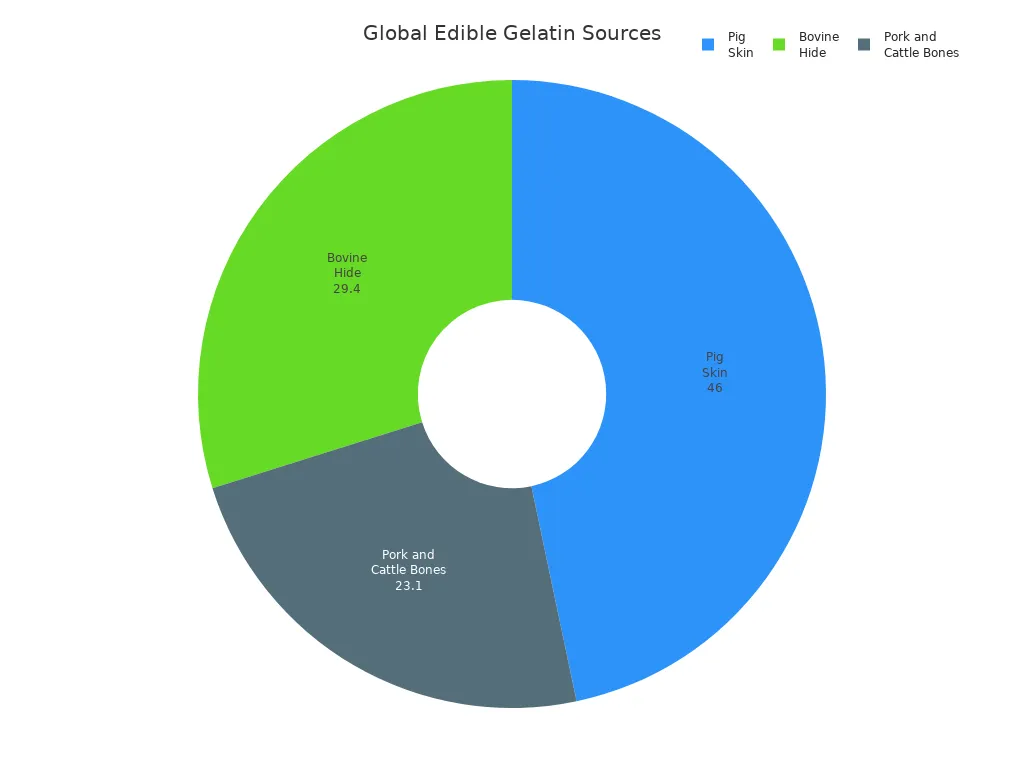
You consume edible gelatin in many foods without realizing its animal origins. Manufacturers extract this protein from animal parts, mainly pig skin, bovine hide, and bones. The chart below shows the global breakdown of edible gelatin sources:
What Is Edible Gelatin Made Of?
Animal Sources of Edible Gelatin
You encounter edible gelatin in many foods, but you may not realize its animal origins. Manufacturers rely on several animal sources to produce this protein. The most common sources include:
- Pig skin
- Cattle bones and hides
- Fish skins (an emerging alternative)
Pig skin contributes the largest share to global edible gelatin production, followed by bovine hides and bones. Fish gelatin has gained popularity, especially among consumers who avoid mammalian products for religious or dietary reasons. You see this shift in markets where halal or kosher certification matters.
Note: The demand for halal and kosher products has encouraged companies to develop certified gelatin and plant-based alternatives. You benefit from greater choices if you follow specific dietary restrictions.
Types of Animals Commonly Used
You find that the types of animals used for edible gelatin vary by region and consumer preference. In the United States, Europe, and Asia, manufacturers typically use:
- Pig skin
- Bovine hides
- Fish skins
The choice of animal source depends on factors such as religious guidelines and desired product properties. The table below highlights how these sources compare:
| Animal Source | Halal Status | Key Properties |
|---|---|---|
| Cows | Permissible | Strong gel strength, versatile for many applications |
| Fish | Universally permissible | No need for ritual slaughter, ideal for strict halal |
| Pigs | Forbidden | Not applicable for halal gelatin production |
You notice that porcine gelatin is strictly forbidden for Muslims and Jews. Bovine gelatin is acceptable if cows are slaughtered according to halal methods. Fish gelatin is generally accepted as halal and kosher, making it suitable for a wider audience.
Key Components in Edible Gelatin
You may wonder what makes edible gelatin unique compared to other proteins. The answer lies in its amino acid composition. Gelatin comes from collagen, which contains high levels of glycine, proline, and hydroxyproline. These amino acids give gelatin its ability to form gels and support cell adherence.
| Amino Acid | Percentage (%) |
|---|---|
| Glycine (Gly) | 26–34 |
| Proline (Pro) | 10–18 |
| Hydroxyproline (Hyp) | 7–15 |
| Alanine (Ala) | 8–11 |
| Arginine (Arg) | 8–9 |
| Aspartic Acid (Asp) | 6–7 |
| Glutamic Acid (Glu) | 10–12 |
You see that gelatin’s amino acid profile differs from other protein sources. The high glycine content makes edible gelatin valuable for food, pharmaceutical, and cosmetic applications. You benefit from its unique properties when you use products that require thickening, gelling, or stabilizing.
How Edible Gelatin Is Produced

Collection and Preparation of Raw Materials
You start with animal parts such as bones, skins, and hides, which come from slaughterhouses. These raw materials undergo strict inspection to ensure safety and quality. Quality control teams test for diseases like Anthrax and select only materials from disease-controlled environments. The process includes:
- Sourcing bones and skins from certified suppliers.
- Inspecting and testing incoming materials for contaminants.
- Chopping the parts into smaller pieces for easier processing.
- Curing the pieces in vats of lime or acid for several days to remove minerals and bacteria.
| Quality Control Measure | Description |
|---|---|
| Disease Testing | Screening for Anthrax and other pathogens |
| HACCP Implementation | Comprehensive hazard analysis and critical control points system |
| Supplier Selection | Only sourcing from disease-controlled and high-quality environments |
| Material Inspection | Visual and laboratory inspection of animal parts |
Note: You help reduce waste by supporting edible gelatin production, as it uses by-products from the meat industry that would otherwise be discarded.
Extraction and Processing of Collagen
Once you prepare the raw materials, you move to the extraction phase. This step focuses on breaking down collagen, the main protein in animal connective tissue, into gelatin. The process involves several key steps:
- Wash the chopped bones or skins to remove dirt and contaminants.
- Soak the pieces in lime or acid for several days to help release collagen.
- Neutralize the treated material to a neutral pH.
- Boil the material in large extractors at temperatures between 55°C and 75°C. Lower temperatures produce stronger gels, while higher temperatures yield softer gelatin.
- Filter the resulting liquid to remove any remaining solids.
You may see variations in the extraction process, such as using enzymes or ultrasound to improve yield and quality. The industry often uses chemical hydrolysis and salt solubilization to further break down the collagen.
The extraction process not only produces edible gelatin but also supports sustainability. By using animal by-products, you help reduce environmental waste and support the creation of other products like pet food, biodiesel, and fertilizers.
Purification and Drying Steps
After extraction, you must purify the gelatin solution to ensure it is safe for consumption. The purification process includes:
- Filtration to remove fine particles and bacteria.
- Sterilization to eliminate harmful microorganisms.
- Deionization to remove unwanted minerals and salts.
Scientific studies confirm that these steps significantly reduce the risk of disease transmission, making edible gelatin safe for you to consume. The final step involves drying the purified gelatin. Manufacturers use several drying methods:
- Spray-drying: Preserves protein structure and improves emulsifying properties.
- Freeze-drying: Maintains the native structure but requires more energy.
- Vacuum drying: Alters protein properties and is used for specific applications.
- Infrared drying: Offers low energy consumption.
You find that spray-drying is the most common method, as it balances efficiency and product quality.
Even with strict purification, some heat-resistant bacteria may survive. However, the risk remains very low due to the extreme conditions used during production.
Forms and Uses of Edible Gelatin
Once dried, edible gelatin appears in several forms, including powder, granules, and sheets. You can use it in a wide range of applications:
| Application Type | Description |
|---|---|
| Gelling Agent | Improves texture in candies, desserts, and canned meats. |
| Stabilizer | Prevents ice crystal formation in ice cream and dairy products. |
| Foaming Agent | Creates stable foams in marshmallows and whipped toppings. |
| Clarification | Removes impurities in fruit juices and beverages. |
| Capsules | Used in pharmaceutical capsules and health supplements. |
You benefit from edible gelatin’s versatility in both food and pharmaceutical products. Its unique properties make it essential for creating smooth textures, stable foams, and clear beverages. You also find edible gelatin in health products, where it serves as a key ingredient in capsules and supplements.
Many consumers value edible gelatin for its natural origin and positive environmental impact. Surveys show that up to 88% of people prioritize natural ingredients, and most recognize the sustainability benefits of using upcycled animal by-products.
You rely on edible gelatin for its unique gelling properties, sourced from animal collagen like pig skin and cow bones.
- Manufacturers inspect, cut, and treat raw materials before boiling and purifying them.
- Plant-based alternatives such as agar agar and pectin offer options for vegan diets.
| Type | Main Ingredient | Suitability |
|---|---|---|
| Edible gelatin | Animal collagen | Not vegan/vegetarian |
| Plant-based | Seaweed, fruit extracts | Vegan/vegetarian |
FAQ
What foods contain edible gelatin?
You find edible gelatin in gummy candies, marshmallows, yogurt, and some desserts.
Tip: Always check ingredient labels if you follow a vegetarian or vegan diet.
Is edible gelatin safe for people with allergies?
You can safely consume edible gelatin unless you have a specific allergy to animal proteins.
- Always consult your doctor before trying new foods.
Can you use edible gelatin in hot dishes?
You add edible gelatin to hot dishes, but high temperatures may weaken its gelling ability.
| Temperature | Gel Strength |
|-------------|-------------|
| Low | Strong |
| High | Weak |