Your Guide to How Built-in Sparkling Water Taps Work
A built in sparkling water dispenser transforms your home's tap water. The system takes your filtered water, chills it, and then injects it with carbon dioxide (CO2) gas. This happens instantly, delivering perfectly carbonated water right from the faucet and reducing bottle waste.
- Yearly sparkling water consumption generates roughly 500 million single-use bottles.
- Many of these bottles are not recycled.
Key Takeaways
- A built-in sparkling water tap changes tap water into fizzy water. It filters, chills, and adds CO2 gas. This gives you instant sparkling water.
- The system has four main steps. It cleans the water, makes it cold, adds bubbles, and then pours it. This process makes fresh, bubbly water.
- Using a built-in tap helps the environment. It stops the use of plastic bottles. It also lowers transportation pollution.
From Tap to Sparkle: The Step-by-Step Process
A built in sparkling water dispenser seems like magic, but it follows a simple and efficient four-step process. The system transforms your ordinary tap water into crisp, bubbly refreshment right before your eyes. Let's break down exactly how it works.
Step 1: Filtration for a Pure Taste
The journey begins with purification. Your home's tap water first flows through a specialized filter. This step is crucial because it removes impurities that can affect the water's taste and quality. Unfiltered water often contains elements that you do not want in your drink.
- Chlorine can give water a chemical taste.
- Sediment and rust can make it look cloudy.
- Dissolved minerals can create "earthy notes" or a flat mouthfeel.
Filtering these out ensures your sparkling water starts with a clean, crisp base. Different filters target different contaminants.
| Filtration Method | Removes |
|---|---|
| Activated Carbon | Chlorine, VOCs, pesticides, microplastics |
| Reverse Osmosis | TDS, lead, fluoride, bacteria, viruses |
Pro Tip: A good filtration system stabilizes your water quality. This means every glass of sparkling water you pour will have the same refreshing and consistent taste.
Step 2: Chilling for Better Bubbles
Next, the system chills the filtered water. Temperature plays a huge role in carbonation. Cold water absorbs and holds onto carbon dioxide (CO2) much more effectively than room-temperature water.
The internal chiller in the under-counter unit cools the water to the perfect temperature for making bubbles. For maximum CO2 absorption, the ideal water temperature is between 39-41°F (3.9-5°C). This ensures the CO2 dissolves completely, giving you a fizzier and longer-lasting sparkle in your glass.
Step 3: Carbonation with CO2
This is where the fizz happens. The chilled, pure water enters a carbonator tank. Here, the system injects pressurized CO2 gas from the canister into the water. This creates a simple chemical reaction.
- Carbon dioxide (CO2) dissolves in the water.
- A small amount of the dissolved CO2 reacts with water to form carbonic acid (H2CO3).
- This weak acid is what gives sparkling water its signature tangy taste.
- The acid then separates into tiny ions, which helps create the bubbles you see and feel.
Many systems allow you to control the level of fizz. You can often choose your preferred amount of carbonation, from a light sparkle to an extra bubbly finish. For example, some models let you select the bubble intensity with a few simple presses.
Step 4: Instant Dispensing
The final step is the pour. The water is now filtered, chilled, and fully carbonated. It sits ready in the under-counter unit. When you press the lever or button on your faucet, the sparkling water is instantly dispensed into your glass.
Advanced systems use technologies like built-in refrigeration coils that cool water on demand. This means you do not have to wait. The entire process happens in an instant, giving you perfectly chilled and carbonated water whenever you want it.
The Core Components of a Built in Sparkling Water Dispenser
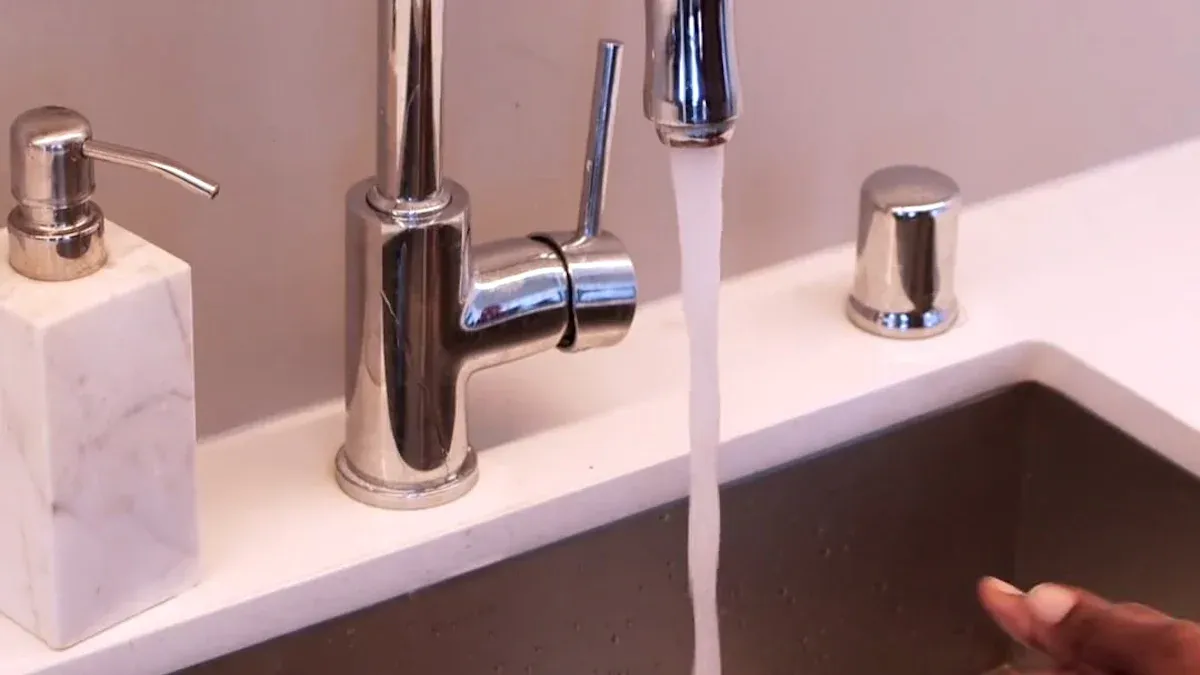
A built in sparkling water dispenser is a system of several key parts working together. These components fit neatly under your sink and on your countertop. Understanding each part helps you see how the magic of on-demand sparkling water happens.
The Under-Counter Unit: Chiller and Carbonator
Think of the under-counter unit as the engine of your system. This box houses the two most important mechanisms: the chiller and the carbonator. It does the heavy lifting of transforming your tap water.
First, the unit chills the water using a sealed refrigeration system, much like a compact refrigerator. This process creates some heat, so the unit needs proper ventilation to work well. Without good airflow, the heat can warm up the water entering the chiller, resulting in less-than-icy output.
Second, this is where carbonation occurs. The chilled water mixes with CO2 gas inside a durable tank. Manufacturers build these units to last, often using high-quality materials.
| Material | Key Properties | Common Use in Chiller/Carbonator |
|---|---|---|
| Stainless Steel | High corrosion resistance, hygienic | Water tanks, stands, and internal piping |
| Copper | Excellent thermal conductivity | Heat exchangers and cooling coils |
| Galvanized Steel | Strong, cost-effective corrosion protection | Structural supports and casing |
Before you install one, you need to make sure you have enough space. Most units are designed to fit inside a standard kitchen cabinet.
- Your cabinet should have an interior clearance of at least: 18” W × 22” D × 22” H.
- The unit requires a minimum 2” toe kick overhang for proper ventilation.
- These dimensions typically accommodate the unit and a CO2 tank up to 10 lbs.
The CO2 Canister: The Source of the Fizz
The CO2 canister is the component that puts the "sparkle" in your sparkling water. This is a pressurized tank filled with food-grade carbon dioxide gas. It connects directly to the under-counter carbonator unit. When you activate the tap, the system injects a set amount of this CO2 into the chilled water.
A common question is how long a canister lasts. An average '60L' CO2 canister can produce about 60 liters of sparkling water. However, the actual amount you get can vary.
- The term '60L' refers to the estimated volume of beverage it can create, not the volume of gas.
- Your personal carbonation preference matters. More fizz uses more CO2 per liter.
- The size of your bottles or glasses also plays a role.
For moderate carbonation, you can expect a 60L canister to make roughly 120 to 150 one-liter servings.
The Water Filter Cartridge
The water filter is the system's gatekeeper. It ensures every glass of sparkling water starts with a pure, clean taste. The filter cartridge attaches to your water line before the water enters the chiller and carbonator. Its job is to remove unwanted impurities from your tap water.
These systems use advanced filtration technologies to get the job done.
- Activated Carbon is a popular choice. It uses adsorption to grab onto things like chlorine and other compounds that cause bad tastes and odors.
- Membrane Filters provide a physical barrier to stop sediment and other microscopic particles, ensuring your water is crystal clear.
You will need to replace the filter cartridge periodically to maintain water quality. The lifespan depends on the filter type and your water usage.
Pro Tip: Always look for filters with official certifications. This is your guarantee that the filter does what it claims. Key certifications to look for are NSF/ANSI 53, which covers health-related contaminants, and NSF/ANSI 58 for reverse osmosis systems.
The Countertop Faucet
The faucet is the part of the built in sparkling water dispenser you will see and use every day. It is more than just a tap; it is the control center for your water. These faucets are specially designed with separate internal lines to deliver chilled, sparkling, or even hot water without mixing them.
Many modern systems offer multi-function faucets that can deliver:
- Instant hot water
- Chilled still water
- Sparkling water
These all-in-one solutions combine a designer faucet with the under-counter chiller, a heating tank, a filter, and the CO2 tank. You can choose a faucet that matches your kitchen's aesthetic. They come in a wide range of styles and finishes.
- Available Styles: Contemporary Round, Traditional, Contemporary Square
- Available Finishes: Chrome, Matte Black, Stainless, Champagne Bronze
This allows you to integrate the convenience of sparkling water seamlessly into your kitchen design.
Installation and Maintenance Essentials
Keeping your built in sparkling water dispenser running smoothly involves some basic installation knowledge and routine upkeep. Understanding these essentials helps you enjoy fresh, fizzy water without interruption.
What Does Installation Involve?
You can install the system yourself or hire a professional. Professional services often bundle the unit and installation, with prices starting around $3,549. A DIY installation requires some specific tools, like an adjustable wrench and screwdrivers. Your cabinet needs a few key things for the system to work correctly.
- A nearby water connection for the supply line.
- A dedicated 15A power outlet for the chiller unit.
- Enough space for proper airflow to prevent overheating.
- Easy access for future maintenance.
Replacing the CO2 Canister
You will need to replace the CO2 canister when the fizz runs out. This process is straightforward and safe if you follow the steps.
- Turn the valve on the empty tank clockwise to shut off the gas.
- Use a CO2 wrench to loosen the nut connecting the regulator. You may hear a quick hiss of gas.
- Remove the old tank and secure the new, full one.
- Hand-tighten the nut onto the new tank, then use the wrench for a final turn.
- Slowly turn the tank's valve counter-clockwise to restore the CO2 supply.
Changing the Water Filter
You should change the water filter regularly to ensure a pure taste. You will know it is time for a change if you notice a decrease in water pressure or an unpleasant metallic taste. Some systems even have an indicator light that turns red. To replace it, you first turn off the water supply. Then, you unscrew the filter housing, swap the old cartridge with a new one, and reattach the housing.
After replacing the filter, turn the water back on slowly. Let the faucet run for five minutes to flush the new filter and check for any leaks.
You now see how a built-in tap uses filtration, chilling, and CO₂ injection to create sparkling water instantly. This system offers a convenient and sustainable choice over buying bottled water. You help the environment in several key ways:
- You eliminate single-use plastic bottles and cans.
- You reduce waste with refillable CO₂ cylinders.
- You cut transportation emissions since the water comes from your tap.
FAQ
Can I adjust the fizziness of the water?
Yes, you can control the carbonation. Many systems let you choose your preferred fizz level, from a light sparkle to an extra bubbly finish.
How much does a built-in system cost?
The total cost varies. A complete system with professional installation starts around $3,549. The final price depends on the model and features you choose.
Is the sparkling water as fizzy as bottled water?
Absolutely. You can set the carbonation to match or even exceed the fizz level of most store-bought sparkling waters for a perfectly bubbly drink.