How Halal Bovine Gelatin Ensures Purity
Purity in bovine halal gelatin starts with sourcing from permissible animals and halal-certified facilities.
- Cross-contamination with haram substances poses the greatest risk.
- Facilities use dedicated equipment and strict segregation protocols.
- Only cows slaughtered according to Islamic law qualify.
These measures ensure a clean and permissible product.
Sourcing and Preparing Bovine Halal Gelatin Materials
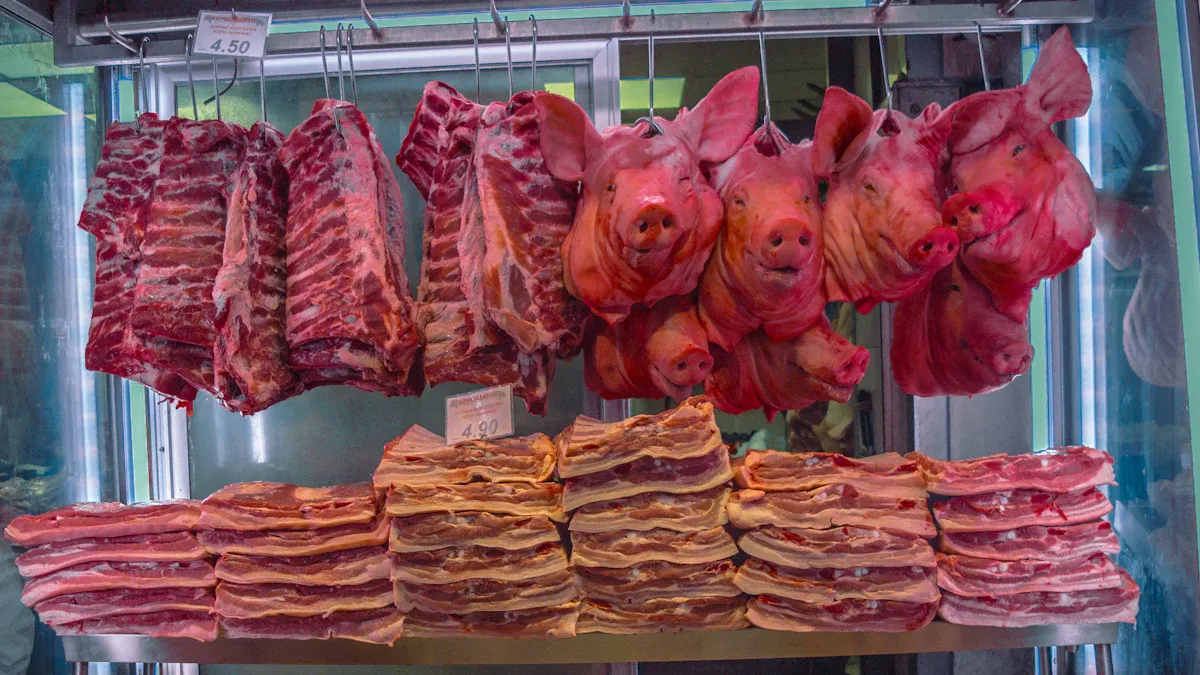
Selecting Halal-Certified Cattle
Producers of bovine halal gelatin prioritize cattle that meet strict halal requirements. They source animals from suppliers with recognized halal certifications and robust quality management systems. These suppliers must disclose the origin of each animal and demonstrate compliance with Islamic slaughter methods.
- Traceability remains essential throughout the supply chain. Producers track the source, slaughter method, and handling procedures for every batch.
- Clear labeling and certification by approved authorities enhance consumer confidence in the final product.
- Halal-certified cattle receive a plant-based diet, avoiding animal by-products, which supports both purity and ethical standards.
Halal Slaughter and Documentation
Halal slaughter, known as the Zabiha method, ensures humane treatment and adherence to Islamic law. Each animal undergoes verification by an approved authority before processing.
- Documentation at every stage guarantees transparency and traceability.
- Producers maintain records of slaughter, handling, and transport to prevent any ambiguity regarding the halal status of the materials.
- Regular performance testing and client reviews further support quality assurance for bovine halal gelatin.
Cleaning and Handling of Bones and Hides
Strict cleaning protocols protect the purity of bovine halal gelatin. Facilities identify Halal Critical Control Points (HCCP) to manage contamination risks.
- Cleaning validation documents that all procedures meet halal requirements.
- Shared facilities must use dedicated equipment and follow halal cleansing procedures to avoid cross-contamination with non-halal substances.
- The manufacturing process excludes non-halal materials at every stage, ensuring the integrity of the final gelatin.
Production Steps That Ensure Purity in Bovine Halal Gelatin
Pretreatment and Halal-Specific Cleaning
Producers begin the process by preparing raw materials through specialized pretreatment steps. These steps ensure the removal of contaminants and prepare the collagen for extraction. The choice between acid and alkaline processes depends on the type of raw material. The following table outlines the main pretreatment methods unique to halal gelatin production:
| Process Type | Raw Material Used | Treatment Duration | Purpose |
|---|---|---|---|
| Acid Process | Halal cattle skin | 24 hours | Conditioning and cleaning for gelatin extraction |
| Alkaline Process | Ossein or bovine hide | Several weeks | Gentle transformation of collagen structure for extraction |
Facilities use only halal-compliant cleaning agents. They avoid any cross-contamination with non-halal substances. Staff document each cleaning step to maintain traceability and transparency.
Extraction Methods for Maintaining Purity
Extraction transforms the pretreated collagen into gelatin. Halal-certified facilities select methods that preserve purity and comply with Islamic guidelines. The table below summarizes the main extraction methods used in halal bovine gelatin production:
| Extraction Method | Description | Halal Compliance | Advantages |
|---|---|---|---|
| Traditional Methods | Acid and alkaline hydrolyses resulting in type A and B gelatins | Yes | Established methods but time-consuming (24h to weeks) |
| Ohmic Heating | Innovative method using electrical resistance to heat the medium | Yes | Faster extraction, better preservation of properties, improved yields |
| Ultrasound | Uses sound waves to enhance extraction efficiency | Yes | Reduces extraction time and increases yield |
| Microwave | Utilizes microwave energy for rapid heating and extraction | Yes | Quick extraction process, energy-efficient |
| High-Pressure Processing | Applies high pressure to enhance extraction yields | Yes | Increases yield and reduces extraction time |
| Subcritical Water Extraction | Uses water at high temperatures and pressures for extraction | Yes | Environmentally friendly and efficient |
| Steam Explosion | Involves rapid steam generation to disrupt cell structures | Yes | Enhances extraction efficiency and reduces processing time |
Halal facilities avoid enzymes or chemicals from non-halal sources. They monitor each batch to ensure compliance and maintain the integrity of bovine halal gelatin.
Purification and Removal of Impurities
Purification removes unwanted substances and ensures the final product meets halal standards. The process includes several critical steps, as shown in the table below:
| Purification Technique | Description | Halal Critical Point |
|---|---|---|
| Cleaning and Preparation | Wash and clean the hides to remove dirt, fat, and impurities. | Use halal-compliant cleaning agents and ensure no cross-contamination with non-halal materials. |
| Soaking in Acid or Alkali Solution | Soak the hides in acid or alkali solution to break down collagen fibers. | Ensure chemicals used are halal-suitable and avoid using enzymes or chemicals from non-halal sources. |
| Filtration and Purification | Filter the gelatin solution to remove impurities and particles. | Use halal-compliant filtration methods and avoid filters or additives from non-halal sources. |
Facilities use only approved agents and materials. They verify that no non-halal substances enter the process at any stage.
Concentration, Drying, and Preventing Contamination
After purification, the gelatin solution undergoes concentration and drying. These steps remove excess water and stabilize the product. Facilities use closed systems to prevent airborne contaminants from entering the product. Staff monitor temperature and humidity to maintain optimal drying conditions. They also implement strict protocols to prevent cross-contamination with non-halal materials.
Tip: Closed-system drying and careful environmental controls help maintain the purity of bovine halal gelatin throughout production.
Final Processing, Quality Testing, and Packaging
Final processing includes grinding, sieving, and blending the dried gelatin. Facilities conduct rigorous quality testing before packaging. The following table highlights essential quality testing procedures:
| Aspect | Description |
|---|---|
| Raw Materials Verification | Auditors check that raw materials match the approved halal list and ensure no forbidden substances are present. |
| GMP Factors Assessment | Evaluation of temperature controls, personal hygiene of staff, and calibration of equipment. |
Facilities also follow these best practices:
- Regular cleaning and disinfection of production areas to prevent microbial growth.
- Training for employees on hygiene procedures, including handwashing and protective clothing.
- Conducting microbiological tests for total aerobic plate count, yeast and mold count, and specific pathogens like Salmonella and E. coli.
Packaging uses high-quality, food-grade materials that resist moisture and oxygen. The process includes:
- Use of high-quality, food-grade packaging materials resistant to moisture and oxygen.
- Sealing capsules in containers to protect from moisture, light, and air.
- Providing detailed storage instructions to customers for maintaining product quality.
Each package receives a halal certification label. This label assures consumers that the bovine halal gelatin inside meets the highest standards of purity and safety.
Bovine halal gelatin production relies on strict sanitation, documentation, and supplier cooperation to maintain purity. Manufacturers address challenges such as sourcing and certification by following global halal standards. The table below highlights key requirements for maintaining halal integrity throughout the process:
| Requirement Type | Description |
|---|---|
| Sanitation Standards | Maintain strict procedures to prevent contamination from haram products. |
| Documentation | Track materials and certifications across the supply chain. |
| Supplier Cooperation | Ensure suppliers disclose changes affecting halal status. |
FAQ
What makes bovine gelatin halal?
Halal bovine gelatin comes from cattle slaughtered according to Islamic law. Producers use halal-certified facilities and avoid cross-contamination with non-halal substances.
How do manufacturers prevent contamination during production?
Manufacturers use dedicated equipment, strict cleaning protocols, and closed systems. They monitor each step to ensure no non-halal materials enter the process.
Can consumers trust halal certification labels?
Halal certification labels come from recognized authorities. These labels guarantee that the gelatin meets strict halal standards and remains pure throughout production.
See Also
Comparing Bovine Gelatin Powder With Fish And Pork Varieties
Understanding The Composition And Production Of Bovine Gelatin
Key Indicators Of High-Quality Bovine Gelatin Powder To Recognize
Why Bovine Gelatin Powder Is An Effective Health Booster
10 Creative Methods To Incorporate Bovine Gelatin Into Meals