5 ways a wheat seeds optical sorter boosts your farm
Global wheat production faces challenges. Projections for 2023/24 show a decrease, tightening exportable supplies to an 11-year low. This market pressure makes every bushel count. A wheat seeds optical sorter is a strategic tool for modern farms. It significantly increases seed quality. It also maximizes crop yield and reduces waste. This technology lowers labor costs and enhances overall farm profitability.
1. Achieve Superior Seed Purity
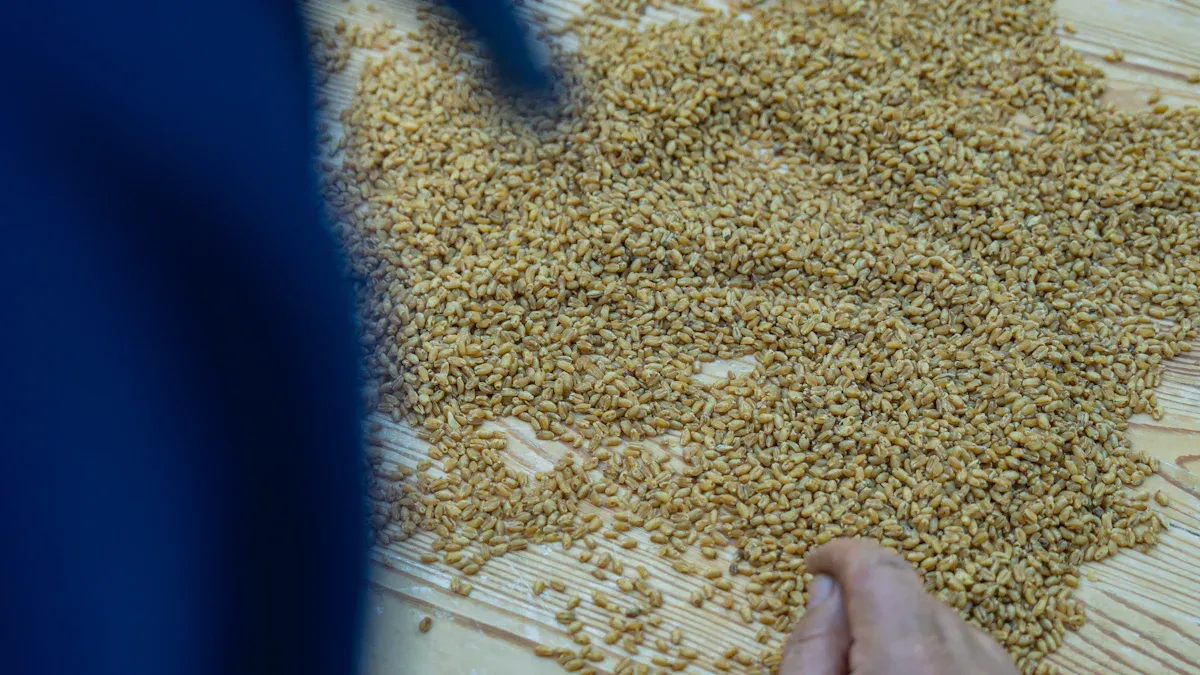
Seed purity is the foundation of a successful harvest. It directly influences germination rates, crop health, and final grain quality. A wheat seeds optical sorter uses advanced technology to achieve a level of purity that traditional cleaning methods cannot match. This equipment analyzes each seed, ensuring only the highest quality kernels make it into the seed bag. Modern sorters can achieve up to 99.8% sorting accuracy, a critical factor for meeting strict international quality and health standards.
Eliminate Defective Seeds
An optical sorter meticulously inspects every kernel for imperfections. Its high-resolution cameras and multi-spectrum lighting detect subtle flaws that are invisible to the naked eye. This precision allows the machine to identify and eject a wide range of defective seeds, safeguarding the quality of the entire batch. Common defects removed include:
- Broken, shriveled, or misshapen grains
- Seeds with discoloration or spot defects
- Kernels contaminated with mycotoxins like DON (deoxynivalenol)
- Diseased items that could compromise the crop
Remove Foreign Contaminants
A clean seed lot is free from all unwanted materials. Foreign contaminants compete with wheat for resources, introduce disease, and can disqualify a harvest from premium markets. The wheat seeds optical sorter excels at identifying and removing these materials with remarkable precision, detecting differences in color, size, and shape down to 0.04 mm.
This technology effectively removes a vast array of foreign matter. It targets everything from other cereal grains like barley and rye to noxious weed seeds, stones, ergot, and even animal droppings. Removing these contaminants ensures the final seed product is pure and safe.
2. Maximize Crop Yield and Uniformity
A strong start in the field translates directly to a bountiful harvest. Maximizing yield begins with planting seeds that promise consistent growth. An optical sorter is instrumental in creating a seed lot that fosters a uniform, healthy, and high-yielding crop.
Ensure Uniform Seed Vigor
Seed vigor is a critical trait for successful crop establishment. Vigorous seeds germinate quickly and grow synchronously. This uniformity is essential for maximizing the genetic yield potential of the crop.
When emergence is uneven, late-emerging plants struggle. They compete with larger, earlier plants for sunlight, water, and nutrients. This competition often results in smaller plants with reduced grain production, ultimately lowering the farm's overall harvestable yield.
An optical sorter enhances crop uniformity by selecting only the most robust seeds. It removes weak, shriveled, and damaged kernels that would otherwise lead to delayed or failed germination. This process ensures that the plants emerge together, grow at a consistent rate, and reach maturity simultaneously for an efficient and maximized harvest.
Prevent Disease Spread
Seed-borne diseases pose a significant threat to wheat production. Pathogens can devastate a crop, reduce yields, and contaminate the final grain with harmful mycotoxins. A wheat seeds optical sorter acts as a frontline defense against these threats. Common diseases it helps control include:
- Fusarium Head Blight (FHB)
- Common Bunt (Stinking Smut)
- Ergot
- Loose Smut
These diseases can lead to crop rejection at the elevator. For instance, ergot has extremely low tolerance thresholds due to health risks, while FHB contamination is often measured by deoxynivalenol (DON) levels, which are strictly regulated. High-resolution cameras in the sorter identify infected kernels, such as Fusarium-damaged kernels or bunt balls, and precisely eject them. This targeted removal stops the disease from spreading in the field and ensures the harvested grain is safe and marketable.
3. Reduce Seed Loss with a Wheat Seeds Optical Sorter
Traditional cleaning equipment can be inefficient, often discarding valuable, healthy seeds along with contaminants. This results in a direct loss of potential revenue. A wheat seeds optical sorter addresses this problem by preserving good kernels that would otherwise be lost, ensuring farms get the most out of their raw product.
Attain Unmatched Sorting Accuracy
The sorter’s ability to minimize loss stems from its incredible accuracy. Advanced optical systems using a combination of camera technologies (RGB, NIR, SWIR) provide the highest level of visibility. This allows the machine to differentiate between good seeds and foreign materials, even when they are the same color. Furthermore, integrated AI technology learns and adapts in real-time. It makes intelligent sorting decisions that optimize consistency and dramatically reduce false rejects, ensuring healthy seeds are not mistakenly discarded.
Optimize the Cleaning Process
Beyond advanced cameras, the mechanical process is fine-tuned to prevent the loss of good grain. The system uses several key technologies to achieve this:
- State-of-the-art Ejectors: Custom-designed ejectors operate with high precision, targeting only the unwanted particle for removal and leaving nearby good seeds untouched.
- Adjustable Positioning: Features like the RISE-UP system allow the ejector bank to be positioned closer to the product stream, reducing errors caused by falling seeds.
- Automatic Air Regulation: The sorter automatically adjusts air pressure for the specific product, using just enough force to remove defects without blowing away valuable kernels.
By minimizing the rejection of good kernels, the sorter maximizes the recovery of usable seed from the raw input. This directly translates to less waste and higher returns for the farm.
4. Lower Labor Costs and Boost Throughput
Efficiency is a key driver of farm profitability. An optical sorter directly improves operational efficiency by automating tedious tasks and processing seed at an exceptional rate. This combination reduces overhead costs while increasing the farm's capacity to handle larger volumes.
Automate Manual Sorting
Manual sorting is a labor-intensive, costly, and inconsistent process. Human inspectors are prone to fatigue and error, which can compromise seed quality. Automation eliminates these challenges and frees up valuable human resources for more critical farm operations. An optical sorter:
- Operates 24/7 without breaks or a decline in performance.
- Delivers objective and consistent sorting results.
- Reduces the need for seasonal or temporary labor for sorting tasks.
- Allows staff to focus on higher-value activities like equipment maintenance and logistics.
Process Higher Volumes Faster
Time is a critical resource, especially during the busy planting and selling seasons. Optical sorters process wheat seeds at speeds that manual methods cannot match. For instance, a single machine like the 6AS-204 model can handle 3-6 tons per hour. Capacities vary significantly across models, allowing farms to choose a machine that fits their specific operational scale.
| Throughput (T/H) |
|---|
| 0.08-1.2 |
| 0.5-1.4 |
| 1.5-5.0 |
| 3.0-8.0 |
| 5.0-12.0 |
| 6.0-16.0 |
| 8.0-20.0 |
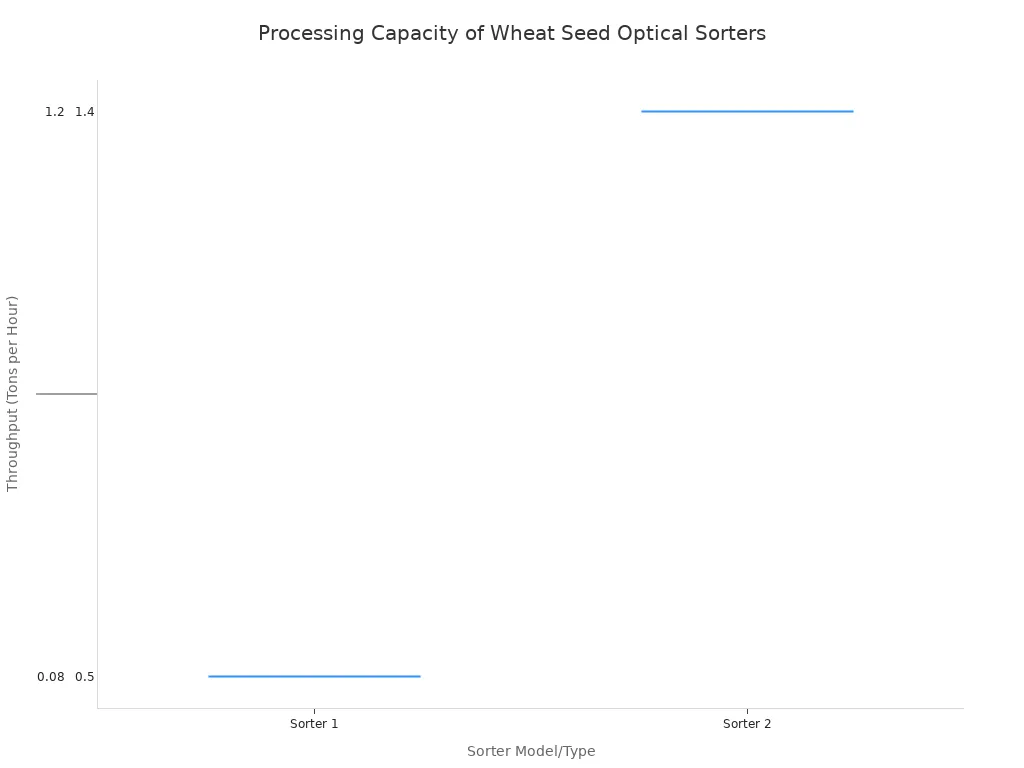
This high-speed processing enables farms to prepare seed lots faster, meet tight delivery schedules, and capitalize on market opportunities more effectively. The ability to quickly process large volumes translates directly into higher revenue potential.
5. Enhance Market Value and Profitability
Investing in advanced sorting technology directly translates to a stronger bottom line. A farm enhances its market position and boosts profitability by delivering a superior product. This technology empowers producers to move from being price-takers to commanding premium prices for their high-quality grain.
Produce Premium-Grade Seed
An optical sorter enables farms to consistently meet the stringent requirements for top-tier seed grades. This precision allows producers to target premium markets that offer higher prices for certified quality. For example, meeting the U.S. No. 1 wheat standard requires adhering to strict maximum limits for defects. An optical sorter helps achieve this by ensuring the seed lot stays within critical thresholds:
- Foreign material: Maximum 0.4%
- Damaged kernels: Maximum 2.0%
- Shrunken and broken kernels: Maximum 3.0%
- Stones: Maximum 0.1%
By systematically removing these imperfections, farms can confidently label and sell their seed as premium-grade, unlocking significant revenue opportunities.
Improve Final Grain Quality
The benefits of superior seed extend to the final harvested grain. A clean, uniform crop produces a final product with minimal dockage and foreign material. This quality is critical at the point of sale. Buyers often impose price deductions or may even reject entire loads that fail to meet quality standards. Using a wheat seeds optical sorter helps farms avoid these costly penalties.
A cleaner grain load prevents lost premiums and reduces the risk of rejection. It also eliminates indirect costs associated with reprocessing, extra transport, or spoilage in storage. Ultimately, delivering a higher-grade product strengthens the entire supply chain, building trust and ensuring better returns for the producer.
A wheat seeds optical sorter delivers five key advantages, from superior seed purity to greater profitability. Farms see a rapid return on this equipment; the Bashaw Seed Cleaning Co-op paid off its machine in under two years due to high demand.
Adopting this technology is a strategic investment. It secures a more productive and profitable future for any modern farm operation.
FAQ
How does the sorter handle different wheat varieties?
The sorter uses adjustable software profiles. Operators easily switch settings to optimize sorting for different wheat varieties, ensuring high accuracy for each specific grain type.
What is the typical return on investment (ROI)?
The return on investment is typically rapid. Farms often recoup the cost in under two years through higher yields, premium prices, and reduced labor expenses.
Can an optical sorter process other grains?
Yes, many models are versatile. With simple software adjustments, these machines can effectively sort other grains like barley, oats, rye, and various pulses, increasing their utility.
See Also
Essential Industrial Checkweighers: Top 3 for Modern Food Production Facilities
Unveiling Five Optimal Applications for Single Stage Rotary Vane Pumps
Key Capsule Checkweighers for Buyers to Evaluate in the Year 2025
Capsule Sorters: Crucial for Effective Defect Elimination and Quality Control
Exploring Innovative Folder Gluer Features Dominating 2025 Carton Production Lines