How Sewage Is Treated A Look Inside a Treatment Plant
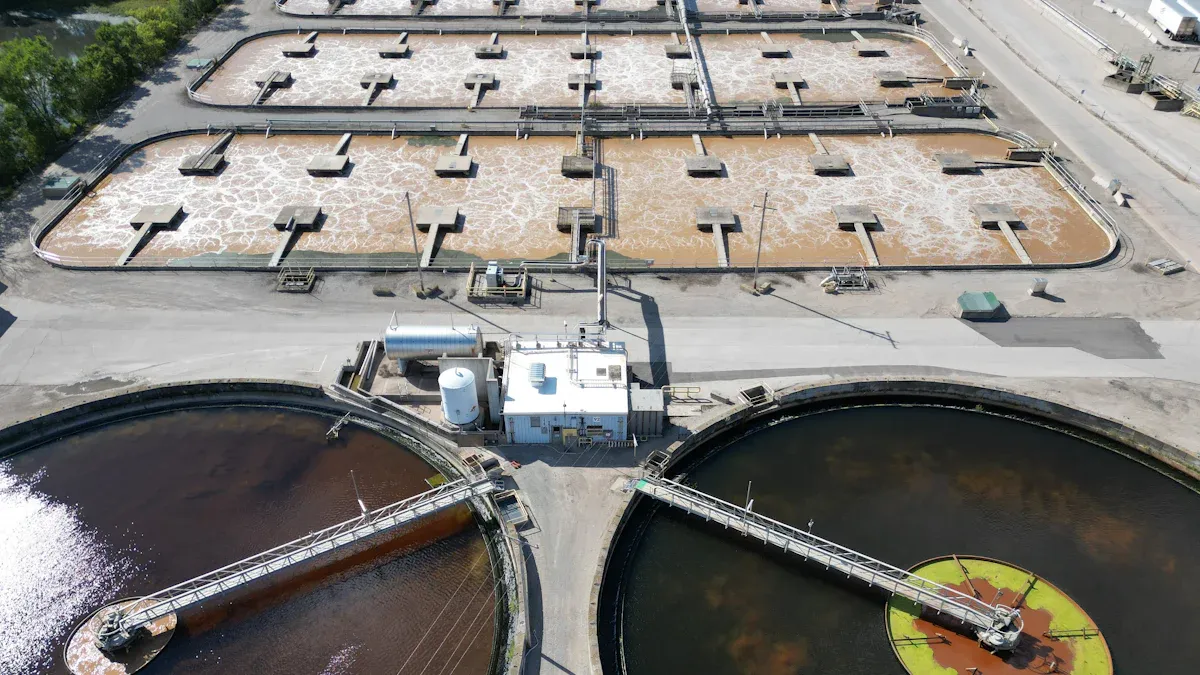
A sewage treatment plant transforms raw sewage from homes and businesses into clean water, called effluent. This process removes pollutants like nitrogen, phosphorus, and harmful bacteria using physical and biological steps. The goal is producing water safe for release, though globally only about 56% of wastewater is safely treated.
Key Takeaways
- Sewage treatment plants clean dirty water from homes and businesses. They use physical and biological steps to remove bad things.
- The cleaning process has several stages. It starts by removing large items, then uses tiny living things to eat pollution, and finally disinfects the water.
- After treatment, the water is safe to go back into rivers and lakes. The solid waste is also used again, sometimes as fertilizer or for energy.
From Raw Sewage to Primary Effluent: Removing Solids
The journey from your drain to a clean river begins with removing the big stuff. This initial phase, known as primary treatment, uses physical processes to separate solid materials from the wastewater. It is a crucial first step inside the sewage treatment plant. This stage prepares the water for the more complex biological cleaning that follows.
Step 1: Preliminary Screening
Wastewater first arrives at the plant carrying more than just water. It contains large objects that can damage pumps and clog pipes. The first line of defense is preliminary screening. The water flows through large bar screens, which act like giant strainers.
These screens catch a surprising variety of items that should not have been flushed or put down the drain. Common objects removed include:
- Rags and wipes
- Plastics and paper
- Wood and sanitary items
- Clothing and other large debris
The design of these screens is very important. Factors like the size of the openings and the use of automated cleaning mechanisms ensure the system works efficiently. After passing through the bar screens, the water flows into a grit chamber. This special tank slows the water down just enough for heavy inorganic materials to settle.
Did You Know? Modern grit chambers are highly effective. They can remove up to 95% of heavy particles like sand, gravel, and coffee grounds that are larger than 0.2mm. This protects downstream equipment from excessive wear and tear.
Step 2: Primary Clarification
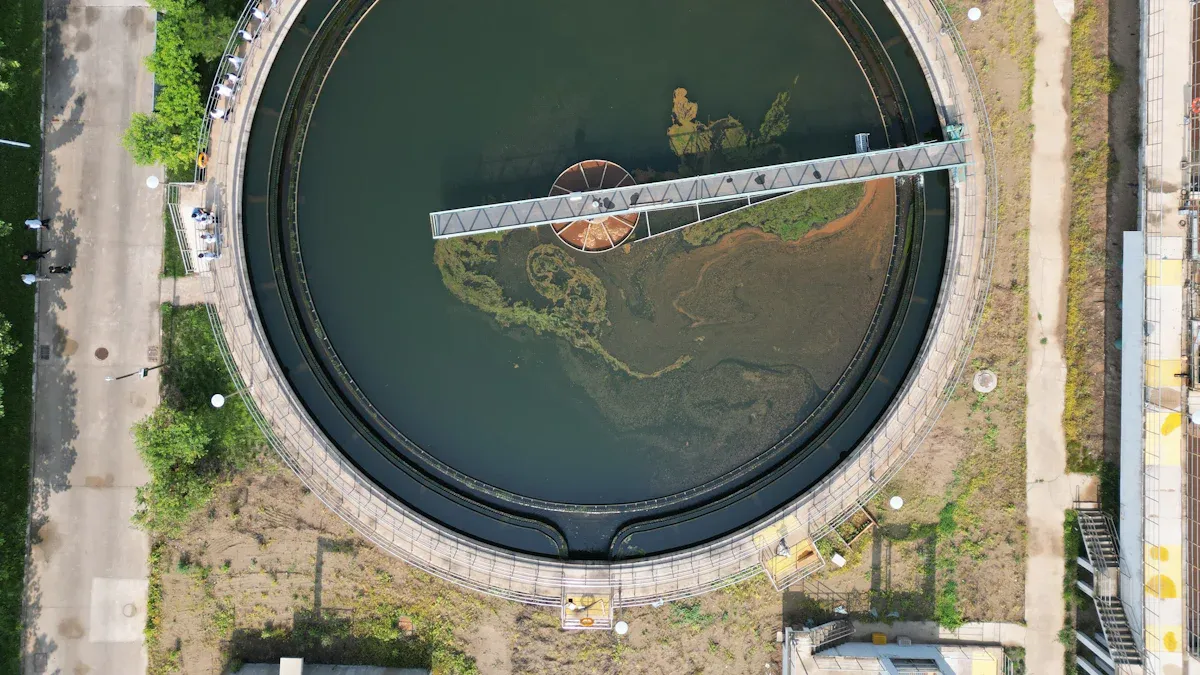
After screening, the wastewater enters large, circular tanks called primary clarifiers. Here, the water sits very still for about one to two hours. This quiet period allows gravity to work its magic. Heavier organic solids sink to the bottom of the tank. Lighter materials like grease and oil float to the top.
This simple settling process is remarkably effective. A typical primary clarifier at a sewage treatment plant can remove:
- 50% to 70% of the total suspended solids (TSS).
- 25% to 40% of the biochemical oxygen demand (BOD), which is a measure of organic pollution.
Mechanical scrapers, or rakes, slowly move along the bottom of the tank. They collect the settled solids into a hopper. This thick, raw material is called primary sludge. It is pumped away for separate treatment. At the same time, skimmers remove the floating grease and oil from the surface. The partially cleaned water, now called primary effluent, is ready for the next stage of treatment.
The Role of a Sewage Treatment Plant: Biological and Final Cleaning
After primary treatment removes the large solids, the wastewater still contains dissolved organic pollutants and tiny suspended particles. The next phase, secondary treatment, uses natural biological processes to clean the water on a microscopic level. This stage is the heart of the cleaning process at a sewage treatment plant.
Step 3: Secondary Biological Treatment
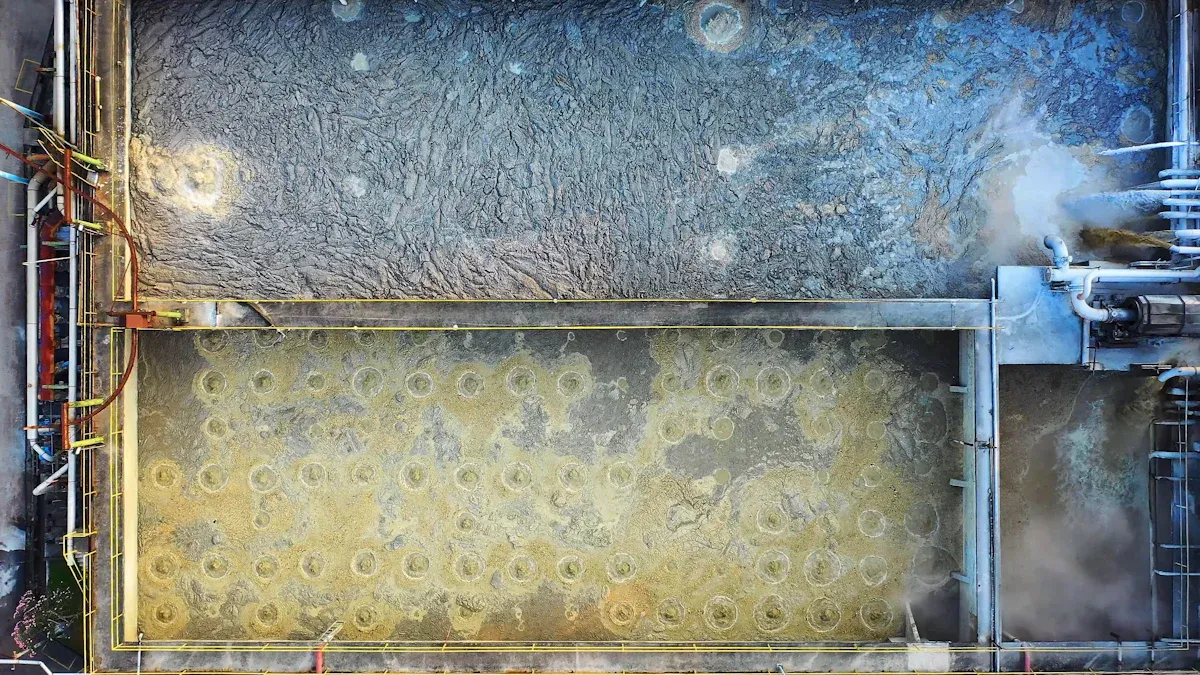
The primary effluent flows into large aeration tanks, marking the beginning of secondary treatment. This step is all about using living microorganisms to do the dirty work. The goal is to remove the dissolved organic matter that the physical screening and settling could not. This biological process is incredibly effective, with a target to remove an average of 99% of organic pollutants (measured as BOD).
The most common method is the activated sludge process. This process cultivates a thriving ecosystem of helpful microorganisms.
- Bacteria: These are the primary workers. Aerobic bacteria consume organic nutrients in the wastewater.
- Protozoa: These larger organisms feed on the bacteria and other suspended particles, helping to clarify the water.
- Fungi and other microbes: Fungi and other tiny life forms also play a role in breaking down waste.
To keep these microorganisms healthy and active, the aeration tanks are constantly supplied with oxygen. Large blowers pump air through the tanks, which serves two purposes:
- Provides Oxygen: The microorganisms need oxygen for aerobic respiration, the process they use to break down pollutants into harmless substances like carbon dioxide and water.
- Ensures Mixing: The bubbling air keeps the microorganisms (the activated sludge) suspended and mixed with the wastewater, ensuring they come into contact with their food source.
Did you know? An alternative to activated sludge is a trickling filter. In this system, wastewater trickles over a bed of media like rocks or plastic, where a layer of microorganisms, called a biofilm, grows. This method often uses less energy.
Here is a quick comparison of the two main secondary treatment methods:
| Feature | Activated Sludge | Trickling Filter |
|---|---|---|
| Microorganism State | Suspended in wastewater | Attached to fixed media (biofilm) |
| Aeration Method | Mechanical blowers and mixers | Natural air ventilation |
| Energy Use | High energy for pumps and blowers | Lower energy, mainly for pumping |
| Operational Cost | More expensive to operate | More cost-effective |
Once the microorganisms have consumed the pollutants, the water moves to the final cleaning steps.
Step 4: Final Clarification and Disinfection
The mixture of water and microorganisms flows from the aeration tanks into another set of settling tanks, called secondary clarifiers. Just like in the primary clarifiers, the water is held still. This allows the clumps of activated sludge to settle to the bottom. A portion of this sludge, rich with active microorganisms, is returned to the aeration tanks to maintain the microbial population. The rest is removed for separate treatment.
The clear water that flows from the top of these clarifiers is now very clean, but it may still contain harmful bacteria and viruses. The final step before discharge is disinfection, which neutralizes these remaining pathogens. A modern sewage treatment plant typically uses one of two main methods.
1. Ultraviolet (UV) Disinfection ☀️ This is a physical process that uses no chemicals. The treated water flows through channels lined with special lamps that emit ultraviolet (UV-C) light.
- How it works: The UV-C light, specifically at a wavelength of 254 nanometers, penetrates the cell walls of microorganisms. It damages their DNA and RNA, which stops them from being able to reproduce and cause disease.
- Effectiveness: UV is highly effective but requires clear water. Any suspended particles can act like tiny shields, protecting microbes from the light. This is why the clarification steps are so important.
2. Chlorination 💧 This is a chemical method where chlorine is added to the water. Chlorine is a powerful disinfectant that kills disease-causing organisms.
- Dechlorination: A major drawback of chlorine is that it can be toxic to fish and other aquatic life. Before the water is released into a river or lake, the residual chlorine must be removed. This process is called dechlorination.
- How it works: Chemicals like sulfur dioxide are added to the water to neutralize the chlorine and its toxic byproducts. This ensures the final effluent is safe for the environment.
After disinfection, the treated water, now called final effluent, is clean and safe. It can be returned to the natural water cycle, rejoining a local river, lake, or ocean.
After the final stage, the treated water is clean and safe for discharge back into the environment. This complex process effectively turns a public health hazard into a resource that supports local ecosystems. The solid waste, or sludge, is also repurposed through methods like anaerobic digestion, which produces biogas for renewable energy.
FAQ
What happens to the solid waste?
The solid waste, called sludge, is treated separately. It can become a nutrient-rich fertilizer called biosolids. Some plants also use it to create biogas for renewable energy.
Does a sewage treatment plant smell bad? 👃
Modern plants work hard to control odors. They use special systems to capture and clean foul air. This helps minimize smells for workers and the surrounding community.
Can you drink the treated water?
No, the final effluent is not for drinking. It is clean enough for rivers and lakes. Making it drinkable would require additional, advanced purification steps.