What Is Optical Sorting for Macaroni Production?
A macaroni optical sorter is an automated quality control system. It uses high-speed cameras and sensors to inspect every piece of pasta on a production line. This technology identifies and removes macaroni with defects. It also ejects any foreign materials. This process guarantees the final product is safe, consistent, and high-quality.
| Metric | Details |
|---|---|
| Market Value in 2023 | USD 48.5 Billion |
| Projected Market Value by 2030 | USD 92.6 Billion |
| CAGR (2025-2030) | 6.8% |
Note: The growing pasta market underscores the need for advanced quality control to meet consumer expectations and maintain brand integrity.
How a Macaroni Optical Sorter Works Step-by-Step
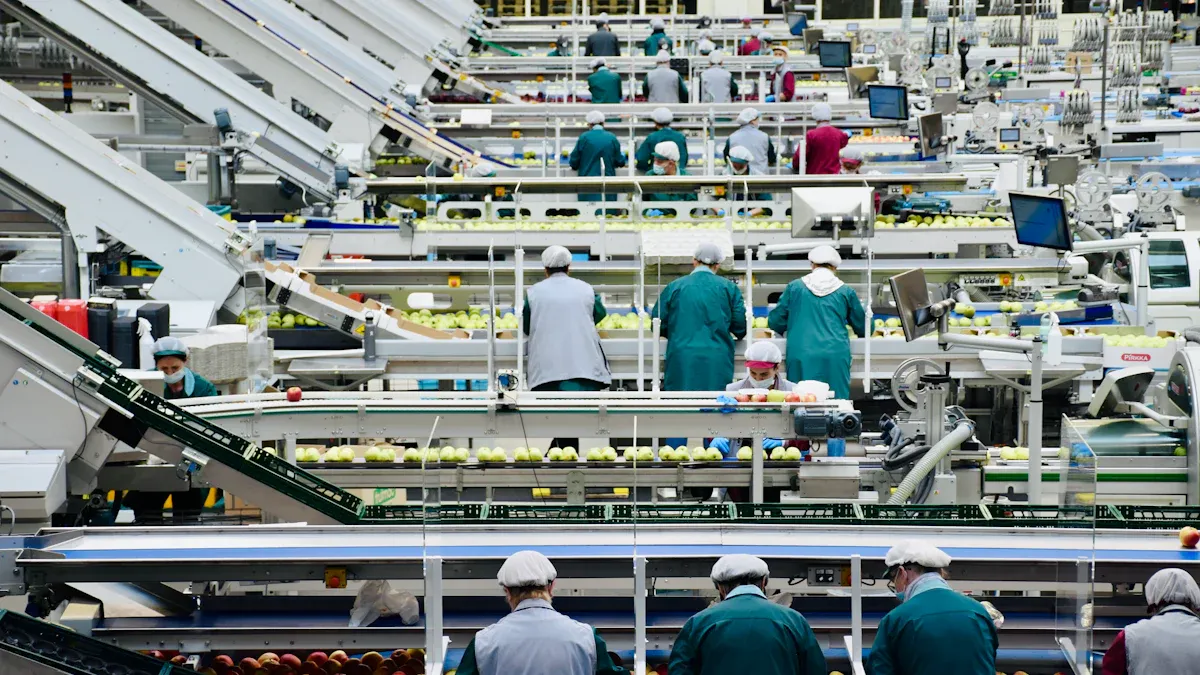
A macaroni optical sorter executes a precise, high-speed quality control process. This automated system ensures every piece of pasta meets exact specifications before packaging. The entire operation unfolds in four distinct, sequential stages.
Step 1: Feeding and Stabilization
The process begins with feeding the macaroni into the sorter. A vibratory feeder evenly distributes the pasta onto a conveyor belt or a sloped chute. This step is crucial. It separates the individual pieces of macaroni. This separation prevents clumps and ensures each piece can be inspected individually. The pasta accelerates as it travels, creating a stable and uniform stream as it moves toward the inspection zone.
Step 2: High-Resolution Inspection
Next, the stabilized stream of macaroni passes through an inspection zone. This area is equipped with high-resolution cameras and specialized sensors. The cameras capture detailed images of every single piece from multiple angles. Advanced lighting, often LED, illuminates the pasta to highlight subtle color variations, cracks, or imperfections. Some systems also use multispectral or hyperspectral cameras. These cameras can detect defects invisible to the human eye by analyzing the material's unique spectral signature.
Industry Leaders Leading manufacturers like Bühler (Switzerland) and TOMRA (Norway) are at the forefront of this technology. Bühler, for instance, provides specialized optical sorters for various food items, including pasta and the ingredients used in soups, under its Consumer Foods segment.
Step 3: Real-Time Image Processing
The captured images are instantly sent to the system's central processing unit. Powerful software analyzes these images in real time. It compares each piece of macaroni against pre-defined quality parameters set by the manufacturer. These parameters include acceptable color, shape, size, and texture. The software identifies any item that deviates from these standards. This could be a discolored piece, a broken elbow, or a foreign object. The entire analysis happens in milliseconds.
Step 4: Precise Ejection
The final step is the removal of defective items. When the software identifies an unwanted piece, it signals an automated ejection mechanism. The macaroni optical sorter uses high-speed air jets to precisely target and remove the defective product. These jets deliver a quick puff of compressed air. The air knocks the single rejected item off its path and into a separate rejection bin. Some systems may use small mechanical arms for this task. This precise ejection ensures minimal loss of good product while effectively purifying the production line.
What Defects and Contaminants Are Removed?
Optical sorters are precision instruments. They identify and remove a wide range of imperfections that could compromise product quality and safety. The technology targets three primary categories of defects: color and composition flaws, shape and size irregularities, and foreign material contamination.
Color and Composition Defects
The ideal macaroni boasts a uniform, rich amber-yellow color. Any deviation from this standard can signal an issue with the ingredients or the production process. Optical sorters excel at detecting these subtle variations. The system compares each piece of pasta against a pre-set color profile and ejects any non-conforming items.
Common color and composition defects include:
- Dark Specks: These small black or brown spots often originate from impurities in the durum wheat semolina. Causes include heat-damaged kernels, blackpoint fungus, or tiny bran fragments that were not properly sifted during milling.
- White Spots: These indicate incomplete hydration. Coarse semolina particles that did not fully absorb water during the mixing phase appear as noticeable white specks in the final product.
- Color Fading: Pasta can lose its vibrant yellow hue due to pigment degradation. This can happen when enzymes like lipoxygenase are active in the flour. Contamination from other ingredients, such as soy, can also cause light bleaching in the dough.
Shape and Size Irregularities
Consistency in shape and size is a key quality marker for macaroni. Consumers expect every piece to be a perfect elbow, uniform in length and thickness. A macaroni optical sorter uses advanced imaging to enforce this uniformity. It removes broken, cracked, or misshapen pieces from the production line.
Operators program the sorter with acceptable dimensions for length, width, and curvature. The system’s profile technology analyzes the silhouette of each piece. It identifies and ejects items that are too large, too small, or malformed. This ensures the final package contains only perfectly shaped macaroni.
A critical shape defect is "checking," or cracking.
Improper drying causes checking. The pasta surface hardens too quickly, trapping moisture inside. This internal moisture later moves toward the dry surface, creating stress that causes the pasta to crack. These cracks can appear soon after production or much later, causing the macaroni to shatter when cooked.
Foreign Material Contamination
Protecting consumers from foreign materials is the most critical function of optical sorting. These contaminants can enter the production line from raw ingredients or the processing environment. The sorter’s multispectral cameras are highly effective at spotting materials with different colors and textures than the pasta itself.
The system can identify and eject a vast array of foreign objects, safeguarding brand reputation and preventing potential consumer harm.
| Contaminant Type | Examples |
|---|---|
| Agricultural | Unwanted seeds, insect fragments, straw, wood splinters |
| Mineral | Small stones, glass shards, dirt clumps |
| Man-Made | Plastic pieces, rubber fragments, metal shavings |
By removing these defects and contaminants with incredible speed and accuracy, optical sorting technology serves as a final gatekeeper. It ensures that only the highest quality macaroni reaches the consumer.
Why Is Optical Sorting Essential for Modern Macaroni Production?
Optical sorting technology provides indispensable advantages for pasta manufacturers. It enhances safety, quality, and efficiency while supporting sustainability goals. This makes it a cornerstone of modern, competitive macaroni production.
Enhancing Product Safety
A primary function of optical sorting is safeguarding consumers. The system meticulously scans for and ejects dangerous foreign materials like glass, plastic, or small stones before packaging. This automated vigilance protects consumers from harm, prevents costly product recalls, and secures the manufacturer's brand integrity.
Improving Overall Product Quality
Consistent quality builds consumer trust. Optical sorters use full-color cameras and intelligent algorithms to enforce uniformity. Operators program acceptable parameters for color and size, and the system removes any piece that deviates. This process ensures every box of macaroni meets the high standards consumers expect, which directly strengthens brand reputation and loyalty in a competitive market.
Increasing Production Efficiency
Automation dramatically boosts operational output. A modern macaroni optical sorter can process between 2,000 and 10,000 kilograms of pasta per hour, a rate impossible to match with manual inspection. This high throughput increases production capacity. It also reduces labor costs by automating the quality control process, freeing up employees for higher-value roles.
Reducing Product Waste
Smart Sorting, Smart Savings Precise ejection systems are key to minimizing the rejection of good pasta. This efficiency reduces raw material waste, leading to significant cost savings for the manufacturer.
This technology also supports sustainability. By ensuring only defective items are removed, optical sorters reduce overall food waste early in the production line. This practice is not only cost-effective but also aligns with environmental goals for more sustainable food manufacturing.
Optical sorting is a critical technology in modern food production. It ensures macaroni is safe, uniform, and of high quality. The system automatically inspects and ejects imperfect items, providing a reliable solution for manufacturers to uphold brand reputation and deliver a superior product to consumers.
“Cimbria has breathed new life into this tradition by integrating their technological expertise into an ancient and well-established process,” says Dr. Francesco Divella.
Advancements in AI and machine learning will continue to enhance these systems, making sorting even smarter.
FAQ
How fast can an optical sorter process macaroni?
A modern optical sorter processes 2,000 to 10,000 kilograms of macaroni per hour. This high-speed capability significantly boosts production capacity, far exceeding any manual inspection rates.
Can the sorter be adjusted for different pasta shapes?
Yes. Operators program the system with specific size and shape parameters for different pasta types. The software then uses these settings to ensure accurate sorting and quality control.
Is optical sorting cost-effective for smaller producers?
The initial investment is significant. However, the technology reduces product waste and labor costs. This provides a strong long-term return on investment for manufacturers of all sizes.
See Also
Capsule Sorters: Essential Technology for Flawless Product Quality and Defect Elimination
Essential Industrial Checkweighers: The Top 3 for Every Modern Food Facility
Automated Virus Sampling Tube Assembly Lines: A Smart Investment for Your Operations?
Boosting Pharma Efficiency: Modern Capsule Decapsulation Machines Revolutionize Production Processes
Future-Proofing Carton Lines: Trending Folder Gluer Innovations for 2025 and Beyond