Enhancing Fusilli Purity and Safety Through Optical Sorting
An optical sorter is a crucial tool in modern food processing. It enhances fusilli quality and safety. This technology uses advanced cameras and sensors to scan each piece of pasta. It identifies and ejects defects and foreign materials with high precision. This automated process ensures the final product is uniform in color and shape. It also guarantees the pasta is free from contaminants. By integrating this technology, producers meet stringent quality standards. They also enhance consumer trust.
The global pasta market was valued at approximately USD 48.5 billion in 2023. Projections show it reaching around USD 92.6 billion by 2030. This growth highlights the need for advanced quality control. A fusilli optical sorter helps manufacturers meet this rising demand. It ensures every batch of fusilli meets the highest standards for both appearance and safety. This commitment to quality is essential for maintaining brand reputation in a competitive market.
How a Fusilli Optical Sorter Boosts Product Quality
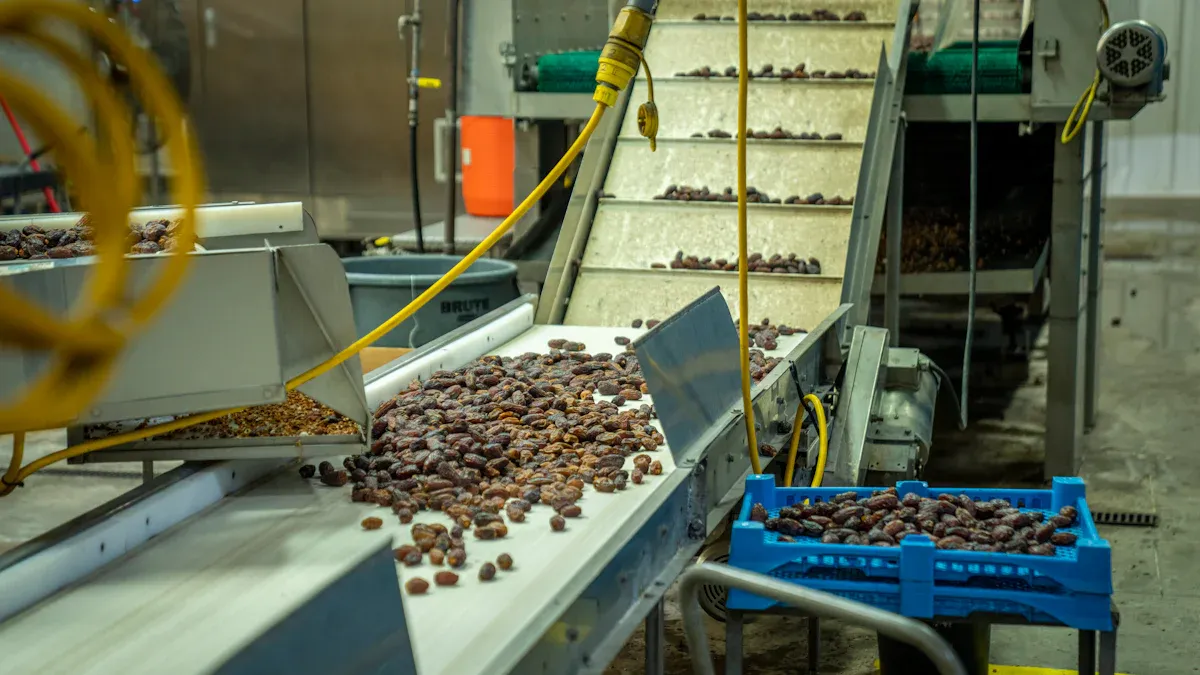
A fusilli optical sorter significantly elevates the final product's quality by focusing on its visual and structural attributes. This technology provides a level of precision and consistency that manual inspection cannot match. It ensures every piece of fusilli meets the brand's high standards for appearance, creating a premium product that appeals to consumers. The machine's ability to analyze and sort based on color, shape, and form is fundamental to achieving this superior quality.
Ensuring Color Uniformity
Consistent color is a primary indicator of quality for fusilli pasta. Consumers expect a uniform, appealing golden hue. An optical sorter achieves this by using advanced imaging systems to detect and remove discolored pieces.
- High-Resolution Cameras: Custom full-color RGB cameras scan each piece of fusilli, identifying even minor shade differences. These systems are ideal for applications with multiple colors or subtle variations.
- Advanced Defect Detection: The technology effectively spots speck defects, mold, and insect damage that alter the pasta's color.
- AI-Powered Analysis: Advanced AI inspection suites learn the ideal product characteristics. They can detect subtle color differences that are imperceptible to the human eye, ensuring only perfectly colored fusilli passes inspection.
Note: High-configuration cameras with colorful sensors and high pixel counts enhance the recognition of subtle chromatic aberration. This improves the true color representation of the materials, leading to more accurate sorting decisions.
Maintaining Shape and Size Integrity
The iconic spiral shape of fusilli is essential to its identity and cooking performance. Broken, malformed, or incorrectly sized pieces detract from the consumer experience. A fusilli optical sorter uses sophisticated technology to maintain strict control over the product's physical form. The system integrates size and shape sorting technology, distinguishing acceptable products from rejects with remarkable accuracy. Proprietary software algorithms enhance these sorting capabilities, allowing the machine to identify and eject pieces that do not conform to the predefined standards for length, width, and curvature. This ensures the final package contains only perfectly formed fusilli.
Eliminating Clumps and Doubles
Clumps and doubles are common production defects that compromise quality. They cook unevenly and create an undesirable texture. These issues often arise during the initial production stages.
| Cause of Clumping | Description |
|---|---|
| Starch Gelatinization | When pasta enters hot water, starches on its surface gelatinize and act like glue, sticking noodles together. |
| Improper Hydration | Powdered ingredients can form a barrier upon contact with liquid, preventing the inner core from hydrating and causing clumps. |
| Lack of Lubrication | Insufficient water flow and agitation during processing fail to lubricate noodle surfaces, allowing them to bind. |
An optical sorter easily identifies these defects. Its shape-recognition software flags any piece that deviates from the standard single-fusilli profile. The machine's high-speed ejectors then precisely remove the clumps and doubles from the production line. This automated process guarantees that the final product is free-flowing and consists of individual, perfectly separated spirals. The fusilli optical sorter is therefore an indispensable tool for upholding product integrity.
Critical Enhancements to Fusilli Safety

Beyond improving the visual appeal of fusilli, an optical sorter plays an indispensable role in bolstering food safety. This technology acts as a vigilant guardian on the production line. It identifies and removes a wide range of hazards that could compromise consumer health. A commitment to safety is paramount for brand integrity and regulatory compliance. The sorter provides an automated, highly reliable solution for protecting the final product from contamination.
Removing Foreign Material Contamination
Foreign materials pose a significant physical hazard in any food product. Contaminants like glass, plastic, wood, metal, or even insects can accidentally enter the production stream. A fusilli optical sorter effectively mitigates this risk. Its high-resolution cameras scan every item, detecting materials that differ in color, size, or shape from standard fusilli. When the system identifies a foreign object, it instantly activates high-speed air jets to eject the contaminant from the product flow. This process removes dangerous materials with a precision and speed that manual inspection cannot achieve, ensuring the final fusilli is safe to eat. 🛡️
Preventing Allergen Cross-Contamination
Allergen management is a critical component of modern food safety. Accidental cross-contact can have severe health consequences for sensitive consumers. Optical sorters help manufacturers adhere to strict regulations, such as those outlined by the U.S. Food and Drug Administration (FDA).
The FDA's Current Good Manufacturing Practice (CGMP) requirements mandate specific controls to prevent allergen cross-contact. Processors must:
- Identify and properly store raw materials and rework containing food allergens to prevent mix-ups.
- Conduct all manufacturing and packing operations in a way that minimizes the potential for allergen cross-contact.
- Manage work-in-process to protect against contamination from allergenic substances.
- Use and maintain equipment, containers, and utensils to guard against allergen cross-contact.
- Implement effective measures to protect finished food from contamination during handling, storage, and transport.
An optical sorter directly supports these goals. For example, if a different type of pasta containing an allergen (like egg or whole wheat) accidentally mixes into a standard semolina fusilli batch, the sorter can detect the subtle color and textural variations. It then removes the errant pieces, preventing a potentially dangerous undeclared allergen from reaching the consumer.
Detecting Same-Color Contaminants with InGaAs
Some of the most challenging contaminants are those that share the same color as the fusilli itself. A standard RGB camera may not be able to distinguish a piece of light-colored plastic or a foreign grain from a perfect piece of pasta. This is where advanced sensor technology becomes essential.
Indium Gallium Arsenide (InGaAs) cameras provide a powerful solution. These specialized sensors operate beyond the visible light spectrum, detecting light in the shortwave infrared (SWIR) range. This unique capability allows the sorter to identify materials based on their chemical composition rather than just their color.
- Invisible Spectrum Detection: InGaAs technology visualizes spectral information in the 900 nm to 1700 nm wavelength range, which is invisible to the human eye and standard cameras.
- Material Composition Analysis: Different materials absorb and reflect infrared light differently. An InGaAs camera can spot a piece of plastic or a different type of grain because its unique molecular structure creates a distinct signature in the SWIR spectrum.
- Enhanced Safety: This technology is crucial for identifying hidden defects and foreign materials that would otherwise go undetected, significantly enhancing the overall safety and purity of the fusilli.
By equipping a sorter with InGaAs sensors, manufacturers can confidently remove same-color foreign bodies, ensuring the final product is free from even the most difficult-to-detect contaminants.
A fusilli optical sorter automates defect removal with precision that manual inspection cannot replicate. This technology is a direct investment in brand reputation and food safety assurance. It ensures producers deliver the highest quality product.
- It provides strategic differentiation in competitive markets.
- It builds consumer trust and loyalty.
- It helps meet rising demand for contaminant-free foods.
FAQ
How fast can a fusilli optical sorter operate?
A sorter processes several tons of fusilli per hour. The exact rate depends on the machine model and specific product characteristics, ensuring high-throughput production for manufacturers.
Can the sorter handle pasta shapes other than fusilli?
Yes. Operators adjust the machine's software to recognize different pasta shapes and sizes. This versatility allows processors to use one sorter for multiple product lines.
Does the sorting process damage the fusilli?
No. The system uses precise air jets to eject defective pieces. This gentle, non-contact method ensures that the accepted fusilli remains intact and undamaged.
See Also
Capsule Sorters: Essential Technology for Effective Defect Elimination and Quality Control
Leading Precoating Materials Revolutionizing Filtration System Performance by 2025
Comparing EHEDG Guidelines and 3A SSI Standards for Optimal Hygienic Design
Exploring the Operational Principles of Advanced Sterile Filter Devices
Modern Capsule Decapsulation Machines: Boosting Pharmaceutical Efficiency and Productivity