What Is a Spice Color Sorter and How Does It Work?
An automated spice color sorter, like a fennel seeds sorting machine, uses high-resolution cameras and air jets. It inspects and removes impurities or defective items from a stream of spices. The machine scans each particle. It precisely ejects any that do not match pre-set quality standards. This process ensures a pure and uniform final product.
How a Spice Color Sorter Works Step-by-Step
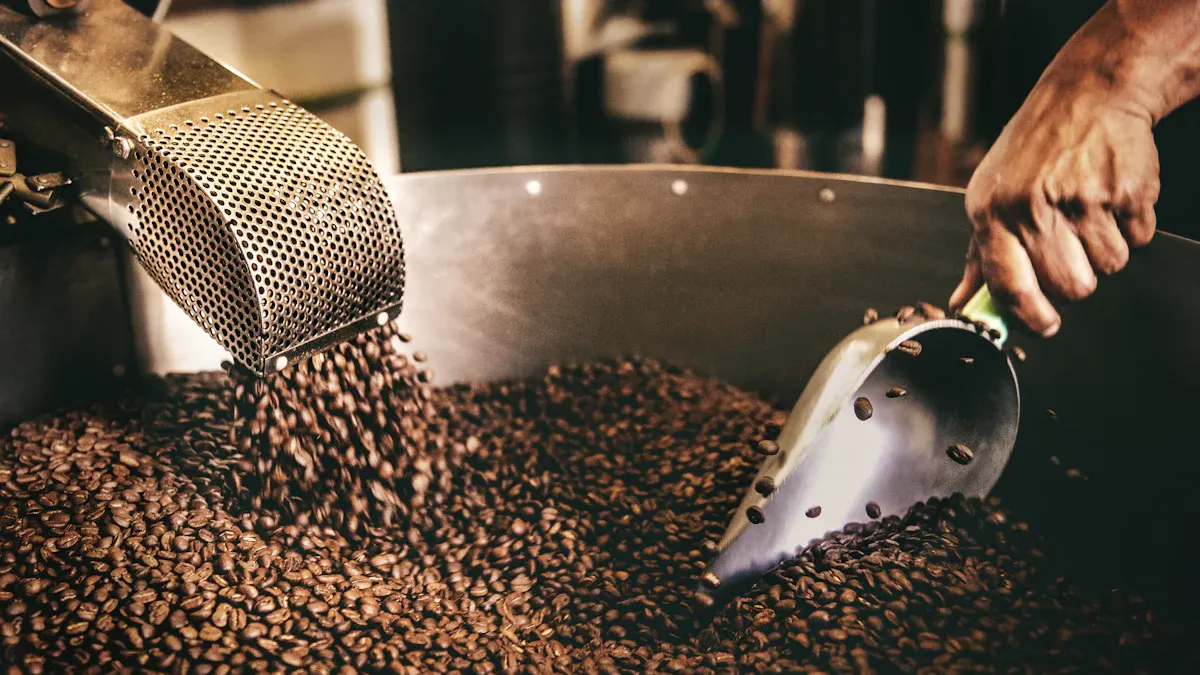
A spice color sorter transforms a raw, mixed batch of spices into a pure, high-quality product through a precise, five-step automated process. Each stage plays a critical role in achieving exceptional sorting accuracy and efficiency.
Step 1: Feeding and Vibration
The process begins when bulk spices are loaded into the machine's infeed hopper. From the hopper, a vibratory feeding system takes control. This system gently spreads the spices onto specialized channels or chutes. The vibration ensures the spices flow in a uniform, single layer, preventing clumps and overlaps. This separation is essential because it allows the machine to inspect each particle individually in the next stage.
The processing capacity of these machines varies significantly based on their size and configuration. A single-chute sorter may handle around 500 kg per hour, while large, multi-chute industrial systems can process up to 20,000 kg per hour.
| Machine Type | Minimum Capacity (Kg/hr) | Maximum Capacity (Kg/hr) |
|---|---|---|
| General Spice Sorter | 100 | 10,000 |
| Single-Chute Sorter | 500 | - |
| Multi-Chute Sorter (12 Chutes) | - | 20,000 |
| Onion Sorting Machine | 1,000 | 2,000 |
Step 2: High-Resolution Camera Inspection
As the spices slide down the chutes in a steady stream, they pass through an inspection zone. Here, high-resolution, full-color cameras scan each particle from multiple angles. These cameras often feature resolutions of 1080p or higher and capture images at frame rates exceeding 30 frames per second, ensuring no defect goes unnoticed even at high speeds.
Advanced Sensor Technology While standard RGB cameras identify defects based on visible color and shape, advanced sorters use a wider range of sensors.
- Hyperspectral & InGaAs Cameras: These sensors see beyond the visible spectrum into the near-infrared (NIR) and short-wave infrared (SWIR) regions. They identify materials based on their unique chemical composition or "fingerprint," allowing them to detect contaminants like wood, plastic, or glass that may have the same color as the spice.
- Laser & X-ray Systems: Some machines integrate lasers for sorting by structural characteristics or X-ray technology to find dense foreign materials like metal fragments or stones.
Step 3: Image Processing and Decision-Making
The images captured by the cameras are sent to the machine's central processing unit—its "brain." This unit runs sophisticated image processing algorithms to analyze each particle in milliseconds. The system compares the particle's color, shape, size, and textural properties against pre-set quality standards defined by the operator.
Modern sorters leverage artificial intelligence (AI) and deep learning to enhance this step. An AI-powered fennel seeds sorting machine, for example, can:
- Learn and adapt to new or unusual types of defects without manual reprogramming.
- Identify subtle imperfections like small spots, wormholes, and wrinkled skin that traditional models might miss.
- Continuously improve its sorting accuracy through machine learning, often achieving precision rates above 99.9%.
This intelligent analysis allows the machine to make an instant "accept" or "reject" decision for every single particle.
Step 4: Precise Ejection
When the processing unit identifies a defective particle, it sends a signal to the ejection system. This system consists of a bank of tiny, high-speed pneumatic air jets, or ejectors. The control system calculates the exact trajectory and timing of the falling defect. At the precise moment, the corresponding ejector fires a short, sharp burst of compressed air.
This "sniper" ejection method accurately targets and diverts the unwanted item into a reject chute. The action is incredibly fast, occurring in milliseconds, and so precise that it removes the defect without disturbing the surrounding stream of good-quality spices.
Step 5: Collection of Sorted Spices
The final step is the separation and collection of the two streams. The accepted spices, having passed the inspection, continue their free-fall trajectory into a "good product" hopper or onto a conveyor for packaging. The rejected materials—including discolored spices, foreign objects, and other defects—are collected in a separate "reject" hopper. This clean separation guarantees that only spices meeting the highest quality standards make it to the final product.
What a Fennel Seeds Sorting Machine Identifies and Removes
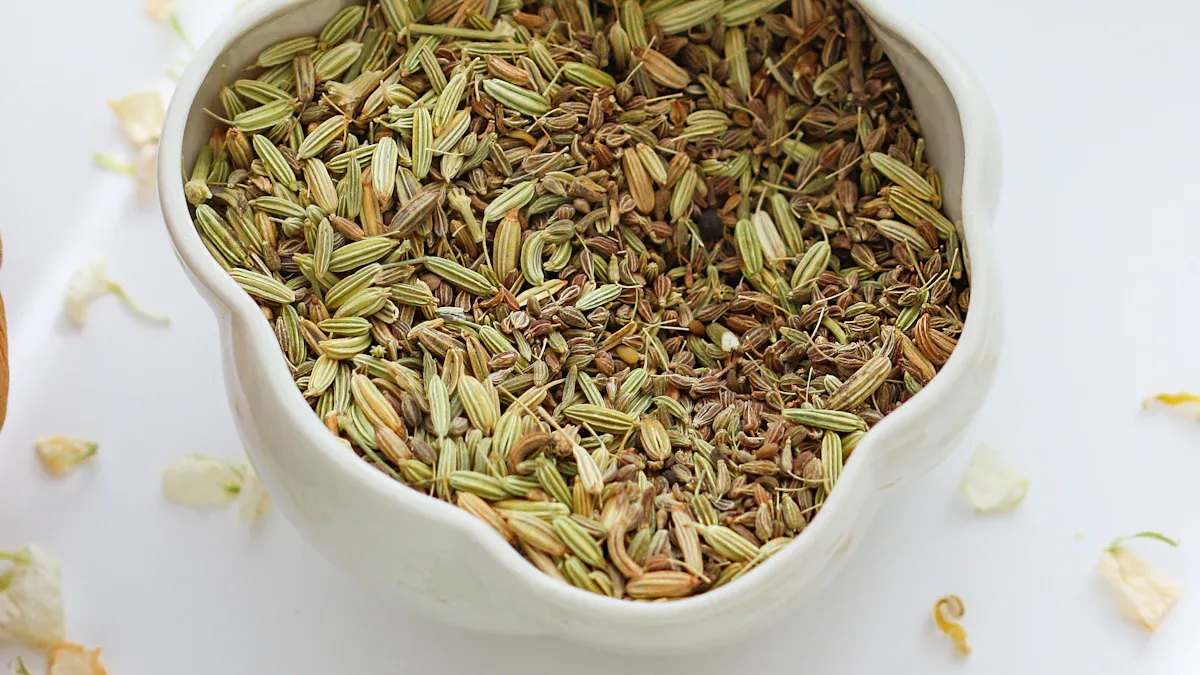
A modern fennel seeds sorting machine integrates color, shape, and size selection to purify raw product with remarkable precision. It excels at identifying and removing a wide range of imperfections that compromise quality.
Unwanted Foreign Materials
The primary function of the sorter is to eliminate contaminants. Optical sensors identify and eject impurities, even those with a similar size and density to the fennel seeds. This includes common field debris like tiny stones, twigs, and stems. The machine also effectively removes cross-contaminant seeds, such as cumin or dill, ensuring the final product is pure fennel.
Color and Discoloration Defects
Color is a key indicator of fennel seed quality. The machine targets and removes seeds that deviate from the ideal greenish-brown hue.
Fresh, high-quality fennel seeds have a vibrant greenish tint. Seeds that are dull brown are typically older, while a grey discoloration can signify aging past 12 months.
An advanced fennel seeds sorting machine uses deep learning technology. It overcomes the challenge of spotting micro color differences, small disease spots, and wrinkled skin that traditional methods often miss. This ensures a uniform and visually appealing final batch.
Irregular Shapes and Sizes
Product consistency requires uniform size and shape. The machine removes seeds that do not meet predefined parameters. High-quality fennel seeds are typically oblong and 4-10 mm long. The sorter ejects broken fragments and undersized seeds, which are often designated for grinding. This process allows producers to categorize their product into distinct grades:
- Extra Bold: The largest, premium-quality seeds.
- Bold: Larger than average seeds.
- Standard: Average-sized seeds for the general market.
This precise sorting by size and shape guarantees that only whole, properly formed seeds make it into the premium product stream.
A spice color sorter uses advanced imaging and pneumatic ejection to purify spices automatically. This technology enhances product safety and consistency, making it essential for meeting modern quality standards. A fennel seeds sorting machine represents a long-term investment, upgrading product value and acting as 'recall insurance' against contaminants.
FAQ
Can a color sorter handle different types of spices?
Yes. Operators can configure the machine's settings for various spices. It adapts to different colors, shapes, and sizes, making it a versatile tool for the industry. 🌶️
How accurate is a spice color sorter?
Modern spice sorters achieve exceptional accuracy, often exceeding 99.9%. AI-powered systems continuously learn and improve their ability to detect even the most subtle defects.
What is the main benefit of using a spice sorter?
The primary benefit is enhanced product quality. The machine ensures purity, safety, and uniformity. This helps producers meet strict industry standards and increase the final product's value.
See Also
Capsule Sorters: Essential Devices for Flawless Pharmaceutical Product Defect Removal
Tablet Sampling Machines: A Comprehensive Guide for Laboratory Equipment Selection
Pharmaceutical Checkweighers: Unveiling Their Crucial Functions and Key Attributes
Sterile Filter Devices: Demystifying Their Functionality and Operational Principles
Industrial Checkweighers: The Three Essential Models for Food Plant Efficiency