The Key Role of Water Treatment in Modern Hotel Management

You need hotel water treatment to protect guest health and keep your hotel running smoothly. Unsafe water can cause outbreaks and violations.
- Hotels linked to 157 outbreaks, with 60% having a confirmed infectious cause.
- 13,532 pool inspections found serious violations threatening public health.
| Hotel Name | Location | Violations Count | Type of Violations |
|---|---|---|---|
| Quality Inn | Ottawa | More than triple | Water safety violations, pool and spa issues |
Clean water helps you meet health rules, build trust, and control costs.
Key Takeaways
- Prioritize water treatment to protect guest health and prevent outbreaks. Regular testing and maintenance can catch issues early.
- Investing in high-quality water systems enhances guest satisfaction. Clean water improves showers, pools, and beverages, leading to better reviews.
- Implement sustainable practices to reduce water use and costs. Low-flow fixtures and greywater reuse can significantly lower expenses and environmental impact.
Hotel Water Treatment: Areas of Impact
Drinking Water and Food Preparation
You need safe water for drinking and food preparation in your hotel. Contaminated water can spread diseases and cause food poisoning. Poor water quality can also damage kitchen equipment and leave mineral deposits on surfaces. These problems can lead to guest complaints and negative reviews.
| Risk Type | Description |
|---|---|
| Health Risks | Contaminated water can spread diseases to guests and staff. |
| Food Poisoning | Unsafe water can lead to food poisoning in guests. |
| Equipment Damage | Impurities can damage appliances, plumbing, and other equipment. |
| Aesthetic Issues | Hard water can cause mineral deposits on fixtures and surfaces, leading to unsightly appearances. |
| Guest Satisfaction | Poor water quality can lead to guest dissatisfaction and negative reviews. |
Waterborne illnesses have caused many outbreaks in hotels, sometimes forcing hotels to close and causing a drop in visitors. You can prevent these risks by using hotel water treatment systems and training your staff to follow food safety standards.
Guest Amenities and Room Comfort
You want your guests to feel comfortable and enjoy their stay. High-quality water improves showers, baths, and in-room beverages. Water softening systems remove minerals that cause scale and make water feel harsh. Disinfection systems keep pools and spas safe and clean. Reverse osmosis systems provide pure water for drinking and coffee.
- High-quality water makes your hotel feel clean and luxurious.
- Guests enjoy fresh water for drinking, coffee, or tea.
- Some hotels offer filtered, chilled, or sparkling water, letting guests choose their preference.
Laundry, Housekeeping, and Recreational Facilities
You rely on clean water for laundry, housekeeping, and recreational areas like pools. Hard water can leave residues on linens and reduce the effectiveness of cleaning agents. Poor water quality can damage laundry machines and pool equipment, leading to higher costs.
| Consequence | Description |
|---|---|
| Reduced Effectiveness of Cleaning Agents | High-mineral water can leave residues on sheets and towels, diminishing the cleaning agents' efficiency. |
| Health Risks | Improper water treatment can lead to health issues such as skin, eye, and respiratory infections from pathogens like Legionella. |
| Equipment Damage | Poor water quality can lead to damage to laundry and pool equipment, increasing maintenance costs. |
Proper hotel water treatment helps you keep linens soft, reduce chemical use, and extend the life of your equipment. You can save money and improve guest satisfaction by investing in water quality.
Hotel Water Treatment: Challenges and Benefits
Common Water Issues and Their Consequences
You face many water quality problems in hotels. Hard water, microbial contamination, and chemical pollutants are the most common. Hard water contains high levels of calcium and magnesium. These minerals cause scale buildup in pipes and water heaters. Microbial contamination happens when bacteria or viruses enter water supplies, often through old pipes. Chemical pollutants can enter water and need regular testing.
- Hard water leads to stains on laundry and bathroom fixtures.
- Guests may notice unpleasant smells from chlorine or iron.
- Mineral buildup can damage plumbing and reduce water flow.
- Microbial contamination can cause health problems for guests and staff.
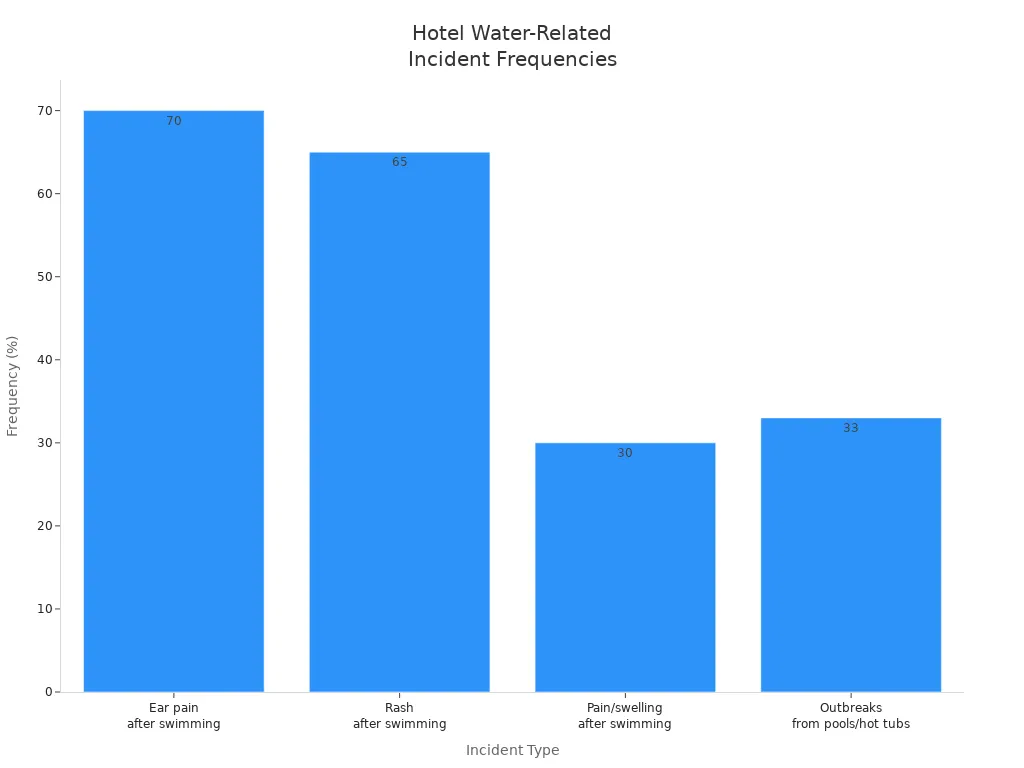
You may see guests complain about stains, bad tastes, or rashes after swimming. The table below shows how often guests report water-related incidents in hotels.
| Incident Type | Frequency (%) | Notes |
|---|---|---|
| Guests reporting ear pain | 70% | After swimming in the affected hotel pool. |
| Guests reporting rash | 65% | Linked to the same pool incident. |
| Guests reporting pain/swelling | 30% | Affected hands and feet after swimming. |
| Outbreaks from hotel pools/hot tubs | 33% | A third of treated recreational water-associated outbreaks are from these sources. |
| Typical outbreak period | January-April | Noted as the peak time for Pseudomonas aeruginosa outbreaks. |
If you ignore these problems, you risk negative reviews and damage to your hotel's reputation. Waterborne illnesses can spread quickly, leading to legal issues and even hotel closures. You may also face higher insurance premiums after water damage claims.
Tip: Regular water testing and maintenance help you catch problems early and protect your guests.
Advantages for Guest Experience and Cost Management
You improve guest satisfaction by investing in hotel water treatment. Clean water makes showers, pools, and laundry more pleasant. Guests notice when water feels soft and tastes fresh. They leave better reviews and return for future stays.
You also save money with proper water treatment. On-site wastewater recycling reduces water use and lowers bills. Advanced systems cut energy costs and minimize repairs. A 5-star hotel reduced utility expenses by 20-25% by combining energy and water savings. Smart irrigation and rainwater harvesting help you conserve water and reduce costs.
- Preventive water treatment lowers maintenance costs and downtime.
- Efficient systems keep your hotel running smoothly during busy times.
- Good water quality extends the life of equipment and reduces energy use.
You see rapid returns on investment when you upgrade your water systems. You spend less on repairs and replacements. You also avoid costly fines and legal problems from water-related incidents.
Sustainability, Compliance, and Best Practices
You help the environment by using sustainable hotel water treatment practices. Hotels can cut water use by up to 50% with better management. You install low-flow showerheads, faucets, and toilets to save water. Linen and towel reuse programs reduce laundry and save energy. Energy-efficient machines and smart irrigation systems also help.
- Dual-flush toilets and smart irrigation optimize water use.
- Monitoring water consumption helps you find leaks and fix them fast.
- Treating and reusing greywater for landscaping or cleaning reduces your impact.
You must follow health and safety regulations to protect guests and staff. Local health departments inspect hotels and enforce standards. You need proper documentation, such as water treatment logs and disinfection records, for inspections. Staff training is key. You teach your team about risks like Legionella bacteria and how to monitor water quality.
Note: Scheduled maintenance for lift stations, grease traps, and lint interceptors keeps your systems compliant and sustainable.
Leading hotel chains set clear water goals and work with suppliers to find new solutions. Marriott, Hilton, and Wyndham have reduced water use intensity by over 24%. They use smart technologies and share data to support sustainability. Hyatt aims to improve efficiency, especially in drought-prone areas, as part of their 2030 goals.
You face challenges when upgrading water systems. Compliance with standards is crucial. Failing to meet regulations can lead to fines or closure. Water costs are rising, making savings more important. Reverse osmosis systems need regular maintenance and can be expensive to install and operate.
You succeed by following best practices:
- Schedule regular maintenance for all water systems.
- Use professional waste management services.
- Educate staff about water safety and sustainability.
Hotel water treatment helps you protect guests, save money, and support the environment. You build a strong reputation and ensure long-term success.
You protect your guests, staff, and assets when you prioritize hotel water treatment.
- Water softening systems help prevent scale and extend the life of plumbing and appliances.
- Treated water reduces repairs and boosts efficiency.
Smart water management improves your reputation, saves money, and supports long-term success.
FAQ
What is the most common water problem in hotels?
Hard water is the most common issue. You see stains on sinks, spots on glasses, and scale in pipes.
How often should you test hotel water quality?
You should test water at least once every three months. High-use areas like pools need more frequent checks.
Why does water treatment matter for guest satisfaction?
Clean water makes showers, pools, and drinks better. You give guests a safe, comfortable stay. Happy guests leave good reviews.
See Also
Top Industry Experts Unite for 3-A SSI Hygienic Design Summit
Comparing EHEDG Guidelines With 3A SSI Hygienic Design Standards
Ways to Reduce Environmental Impact Using Plate Heat Exchangers
Enhancing Energy Efficiency in Industry Through Condensate Coolers