Hot Peel vs Cold Peel Which DTF Film Wins in 2025?
In 2025, Hot Peel is the definitive top choice for the vast majority of users. 🚀
Major advancements give this dtf film a clear advantage. It offers superior production speed, an exceptional final texture, and cutting-edge adhesive technology. These developments establish hot peel as the winning choice for efficiency and quality.
Speed and Efficiency: Hot Peel's Unbeatable Advantage
In high-volume apparel production, time directly translates to profit. Hot peel film provides a decisive edge by eliminating the single greatest bottleneck in the DTF process: waiting. This immediate efficiency is where hot peel truly outshines its counterpart.
The Immediate Peel of Hot Peel
Hot peel film allows operators to peel the transfer sheet away almost instantly after the heat press cycle completes. This workflow revolutionizes production speed. Businesses can complete large orders at a remarkable pace. For example, producing 100 shirts with hot peel can save over 105 minutes compared to using a cold peel alternative. This massive time reduction allows shops to increase their output and profitability without adding more equipment or staff.
Pro Tip: The ability to peel immediately not only speeds up the process but also allows for a quicker quality check, enabling operators to move to the next garment with confidence.
The Cooldown Delay of Cold Peel
Cold peel dtf film requires a mandatory cooling period. The transfer must return to room temperature before the film can be removed. This delay introduces significant downtime into the production line.
The typical cold peel process involves several time-consuming steps:
- Press the transfer onto the garment.
- Remove the garment from the heat press.
- Wait for the transfer to cool completely, which often takes 30 seconds to two minutes.
- Peel the film carefully.
Rushing this cooling stage is not an option. Peeling the film prematurely can cause the design to break or result in "ghosting," a faint residue around the transfer. This required patience makes cold peel inherently less efficient for businesses focused on rapid turnaround.
Final Feel and Finish: The Quality Consumers Demand

Beyond speed, the final texture of a print is a critical factor for customer satisfaction. In 2025, consumer preferences lean heavily toward soft, integrated graphics that feel like part of the fabric. This is where modern hot peel technology truly excels.
Hot Peel's Modern Soft-Hand Feel
Hot peel films deliver a remarkably soft and flexible finish. The adhesive and ink layer melts seamlessly into the garment's fibers during the immediate peel process. This creates a "soft-hand" feel, meaning the design is barely noticeable to the touch. The result is a premium, retail-quality garment that breathes well and moves with the fabric. This lightweight finish is what today's consumers expect from high-end apparel, making hot peel the superior choice for creating comfortable, desirable products.
Key Insight: The soft-hand feel of hot peel transfers significantly enhances the perceived value of the final garment, allowing businesses to command higher prices.
Cold Peel's Traditional Matte Finish
Cold peel dtf film produces a distinctively different result. It leaves a thicker, more pronounced layer on top of the fabric, creating a classic matte finish. While this texture is durable, it can feel heavier and less breathable compared to hot peel. This traditional finish has its place, particularly for specific aesthetics or materials. For instance, the matte look remains popular for certain applications.
- It is often preferred for fashion and casual wear where a bold, non-glossy graphic is desired.
- It pairs well with natural fabrics like cotton to achieve a classic, soft appearance.
However, for the majority of modern apparel, this thicker feel is becoming less desirable as consumers increasingly prioritize comfort and a lightweight feel.
Durability and Washability in 2025
A common concern for any apparel decorator is how well a print holds up after repeated washing. Historically, cold peel held the advantage in durability. However, technological leaps in 2025 have leveled the playing field, making hot peel a formidable contender in longevity.
Hot Peel Durability: Myth vs. Reality
An outdated myth suggests that hot peel transfers are less durable. The reality in 2025 is that advanced formulations have completely changed the game. Modern hot peel dtf film now offers exceptional resistance to cracking, peeling, and fading, rivaling its cold peel counterpart. These improvements come from specific chemical innovations.
- Polymer Crosslinking: During the heat press, advanced polymers permanently bond the ink and adhesive to the fabric fibers. This creates outstanding wash-fastness.
- Hybrid Binders: New binders blend acrylic and polyurethane. This combination provides both flexibility and strength, so prints remain soft without cracking.
- Stretchable Inks: Inks reinforced with elastic polymers allow designs to stretch with activewear and other flexible garments, preventing damage from movement.
These enhancements ensure hot peel prints are suitable for high-wear applications like sportswear.
Cold Peel's Consistent Reliability
Cold peel has built its reputation on consistent and reliable durability. Its thicker application creates a robust transfer that bonds securely to the garment. This established reliability remains one of its core strengths.
With proper application using professional equipment, high-quality cold peel transfers can easily endure 40 to 60+ home wash cycles without significant wear.
This performance makes it a trusted option for workwear or items expected to undergo frequent, harsh laundering. While no longer the undisputed champion of durability, cold peel’s track record provides a dependable benchmark for quality and longevity in the industry.
Why Hot Peel is the Best All-Around DTF Film
Hot peel film emerges as the superior all-around choice in 2025 by delivering an unmatched combination of speed, quality, and profitability. It empowers businesses to scale production efficiently while creating the premium garments that modern consumers demand. This balance makes it the definitive solution for a competitive market.
Maximizing Profit with Faster Turnaround
In the custom apparel industry, production speed is directly tied to revenue. Hot peel technology is a secret weapon for high-volume projects because it systematically removes costly delays. The instant peel process eliminates the "cool-down bottleneck" of cold peel methods. This single change can double or even triple a shop's daily production output without adding new equipment.
This efficiency translates into tangible results:
- Quick Application: Operators save critical time by removing the cooling period.
- Ideal for Bulk Printing: The continuous workflow is perfect for large-scale production runs.
- High-Volume Orders: Businesses can confidently accept and deliver large orders with tight deadlines.
A skilled operator using a single heat press can produce over 100 shirts per hour with hot peel. This capability is essential for fulfilling rush orders and capitalizing on event-based sales opportunities.
This lightning-fast workflow means businesses finish jobs faster, allowing them to take on more orders and increase profit. A custom apparel shop can process an order in the morning and have it ready for delivery that same afternoon. Such rapid service significantly enhances customer satisfaction, leading to repeat business and powerful word-of-mouth referrals. Less downtime equals fewer labor hours and higher profit margins, making hot peel the clear choice for a healthy bottom line.
Achieving Premium Garment Quality
Faster production does not come at the expense of quality. In 2025, hot peel technology delivers a finish that meets and often exceeds the standards of other premium decoration methods. Its signature soft-hand feel integrates the design into the fabric, creating a lightweight and breathable garment that commands a higher price point.
To fully appreciate its standing, a comparison with Direct-to-Garment (DTG) printing is useful. While DTG is known for its soft feel on cotton, hot peel offers greater versatility and vibrancy across a wider range of materials.
| Feature | Hot Peel DTF Printing | DTG Printing |
|---|---|---|
| Print Feel | Vibrant, smooth, thin, and elastic. Bonds to the fabric. | Soft, breathable, and feels like part of the fabric. |
| Versatility | Highly versatile; works on cotton, polyester, blends, dark, and light fabrics. | Primarily best for 100% cotton; requires pre-treatment for darks. |
| Color Vibrancy | Excellent vibrancy on all fabric colors due to a white ink base. | Colors are most vibrant on light garments; can look muted on darks. |
| Durability | Known for excellent longevity and resistance to cracking or peeling. | Durable but can fade slightly over time with repeated washing. |
| Cost-Effectiveness | Cost-effective for both small and large production runs. | Can be expensive for small runs due to setup and pre-treatment. |
| Best Use Cases | Ideal for complex designs, photos, and a wide variety of fabric types. | Best for photorealistic designs on 100% cotton garments. |
The comparison shows that hot peel dtf film provides a powerful combination of features. It delivers the sharp, full-color, and durable prints customers expect from a premium product. Its ability to work flawlessly on diverse fabrics—from cotton tees to polyester activewear—makes it the most adaptable and valuable tool for any modern apparel decorator.
When to Still Consider Cold Peel Film
While hot peel dominates the market, cold peel film remains an indispensable tool for specific applications. Its unique properties provide superior results in situations where precision, fabric sensitivity, or a forgiving process is the top priority. For certain niche jobs, cold peel is not just an alternative—it is the better choice.
Niche Use: Ultra-Fine, Detailed Designs
Cold peel film excels at rendering designs with extreme detail. The complete cooling process allows the adhesive to fully set and harden, creating a strong bond with the fabric before peeling. This stability is crucial for transferring delicate elements without distortion. Operators can confidently produce complex graphics that might otherwise fail with a hot peel.
Cold peel is the go-to solution for:
- Intricate lines and small text
- Complex patterns with sharp edges
- Rough texture fabrics like canvas and flannelette
- Specialty materials such as tarpaulin or coated cloth
Niche Use: Specific Heat-Sensitive Fabrics
Certain synthetic materials are prone to damage from the high heat and immediate tension of a hot peel. Fabrics like treated nylon or some delicate polyesters can scorch or show press marks. Cold peel offers a gentler alternative. The cooling period allows the fabric to rest and return to a stable temperature before the film is removed, significantly reducing the risk of heat-related damage.
Niche Use: A Forgiving Option for Beginners
Newcomers to DTF printing often struggle with getting the timing and technique just right. Rushing the process is a common mistake that leads to cracked or incomplete transfers. Cold peel film introduces a mandatory waiting period, which acts as a natural safeguard.
This required pause forces a more deliberate workflow, helping beginners avoid the common error of peeling the film too soon.
The slower, methodical nature of the cold peel process makes it more forgiving. It gives operators a wider margin for error, ensuring a successful transfer even if their heat press settings are not perfectly dialed in. This reliability makes it an excellent choice for training or for shops just starting their DTF journey.
Top DTF Film Brands to Watch in 2025
Navigating the DTF film market requires knowing the key players. In 2025, several brands stand out for their innovation, reliability, and performance. These companies are shaping the future of apparel decoration.
Industry Leaders: STS, Kodak, and ColorMax
Industry giants like STS, Kodak, and ColorMax continue to lead the market with cutting-edge technology. These brands focus heavily on performance and are increasingly prioritizing eco-friendly solutions. Their 2025 offerings balance speed, quality, and sustainability. The table below highlights their latest innovations.
| Film Name | Key Eco Features | Performance Highlights | Ideal Use Case |
|---|---|---|---|
| STS EcoTransfer Pro | Biodegradable PLA blend, low-VOC | Fast curing, smooth peel | Quick turnaround jobs |
| Kodak GreenFilm 2026 | REACH-compliant, fully recyclable | Excellent opacity on dark fabrics | Dark garment transfers |
| ColorMax SustainaSheet | Water-soluble backing, budget-friendly | Reliable print quality | Cost-sensitive projects |
Other Noteworthy Options: FilmKing and ProTransfer
Beyond the top-tier leaders, other brands offer specialized solutions for different market segments. FilmKing and ProTransfer provide excellent value for specific applications, from high-gloss finishes to budget-friendly bulk orders.
-
FilmKing UltraGloss DTF:
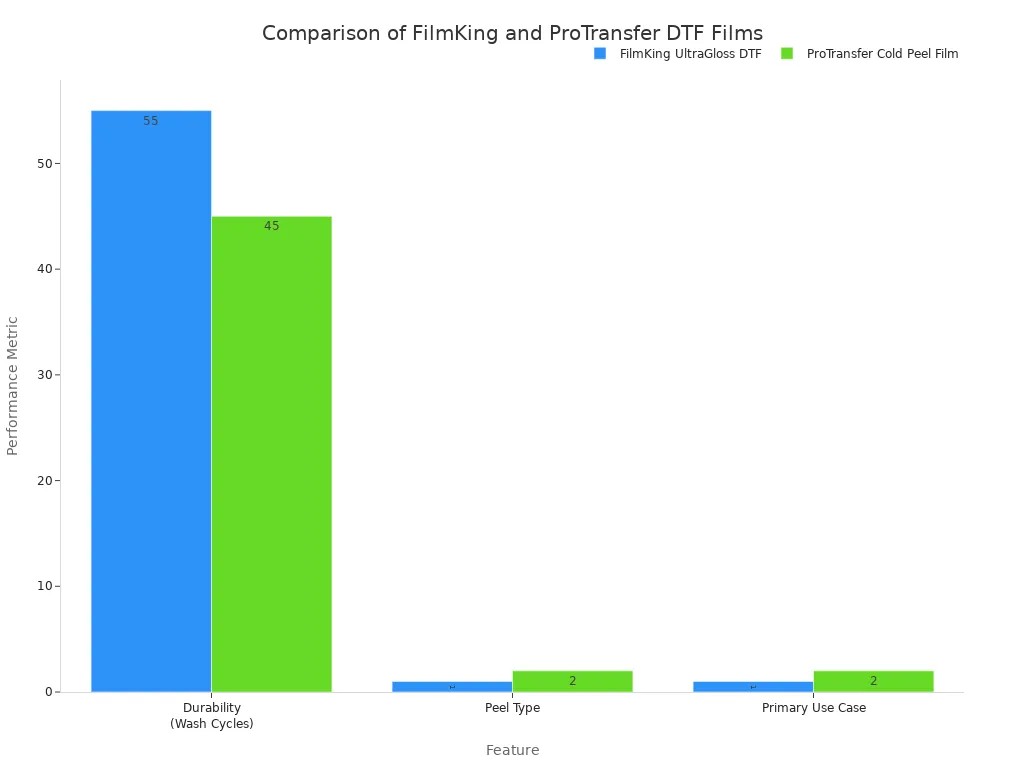
- Primary Features: This hot peel film offers sharp prints with high-definition detail and a glossy finish. It provides excellent wash resistance (55+ cycles) and good stretch resistance.
- Target Markets: It is best for intricate logos, event merchandise, and corporate branding where visual impact is a priority.
-
ProTransfer Cold Peel Film:
- Primary Features: This cost-effective cold peel film balances good print clarity with reliable adhesion lasting 40-50 washes. It produces a soft, comfortable print finish.
- Target Markets: It is ideal for large production runs, promotional items, and bulk orders where cost efficiency is the main goal.
This chart visually compares the durability and primary features of both films.
Hot peel film is the clear winner for most DTF printing needs in 2025. Its superior speed, feel, and performance make it the top choice.
Businesses should embrace hot peel for faster production, a softer finish, and durability that now rivals cold peel.
To stay competitive, companies must invest in high-quality hot peel films. This positions them to capitalize on future industry growth and trends.
- The DTF market is projected to reach $14.81 billion by 2032.
- Green technologies and on-demand fashion are gaining popularity.
- Automation will become vital for improving efficiency.
FAQ
Is hot peel or cold peel better for beginners?
Cold peel film is more forgiving for beginners. Its required cooling time prevents common peeling errors. This ensures a more reliable transfer while a person learns the process.
What is the main difference in the final feel?
Hot peel creates a soft, lightweight finish integrated into the fabric. Cold peel leaves a slightly thicker, more traditional matte layer on top of the garment.
Has hot peel durability improved in 2025?
Yes, modern hot peel films offer excellent durability. Advanced polymers and binders now provide wash resistance and flexibility that rivals traditional cold peel films for most applications.
See Also
Leading Precoat Solutions for Advanced Filtration Systems in the Coming Year
Shell and Plate Heat Exchangers: A Performance Comparison for 2025
Analyzing Plate Pack Benefits and Cost-Effectiveness for the Year 2025
Key Folder Gluer Innovations Shaping Carton Production Lines in 2025
Boosting Pharma Efficiency with Advanced Capsule Decapsulation Machine Technology