The Ultimate Guide to Home Water Reuse Systems for 2026
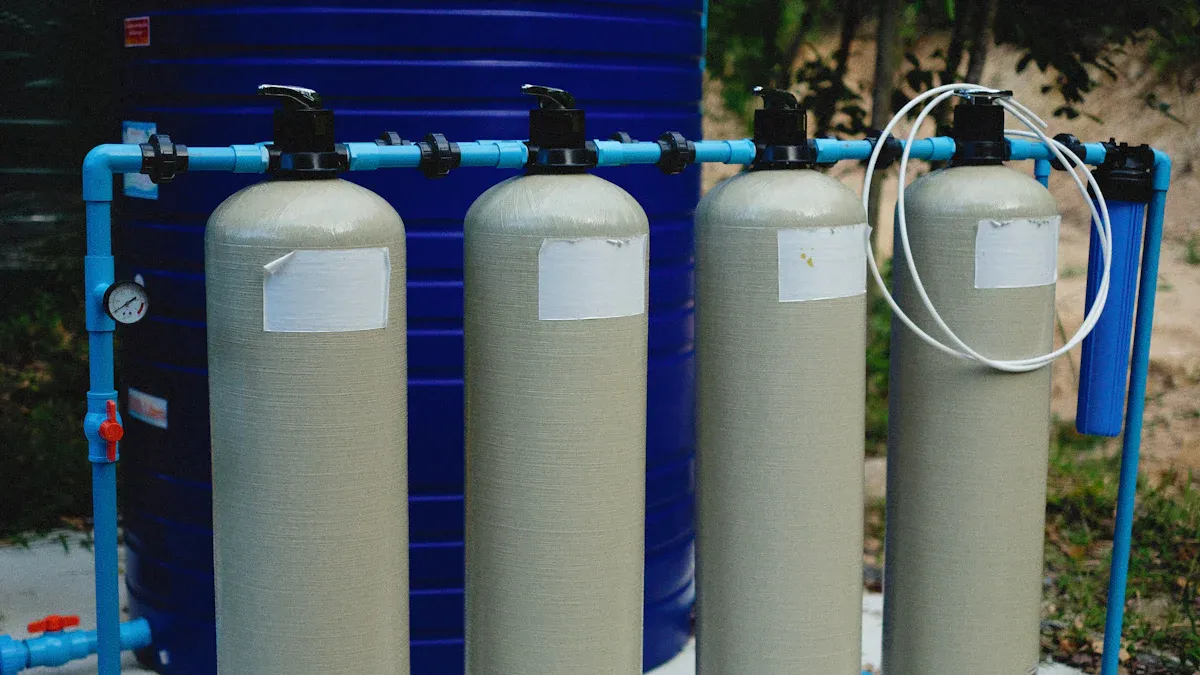
You can cut your water bill by up to 50%. Much of your household wastewater is greywater from showers and sinks, a valuable resource. In fact, this gently used water can make up about 69% of your home's total water consumption.
Adopting simple water waste solutions turns this used water into a tool for your garden and home, reducing your environmental footprint. 💧
Key Takeaways
- You can save water and money by reusing water from your home. Simple ways include collecting shower water or kitchen water for plants.
- Installing systems like rain barrels or laundry-to-landscape systems helps you save even more water. These systems can lower your water bills and help the environment.
- Always check local rules before installing advanced water reuse systems. This ensures you follow all guidelines and use water safely.
Simple & Immediate Water Waste Solutions
You can start saving water today without installing complex equipment. Many simple and effective water waste solutions use resources you already have. These habits are easy to adopt. They make an immediate impact on your water bill and your environmental footprint. Let's explore some of the best water waste solutions you can implement right away.
The Shower Bucket Trick
This is one of the easiest water waste solutions to try. You simply place a bucket in your shower. It will catch the water while you wait for it to heat up. This collected water is a valuable resource for your home and garden.
Pro Tip: Let the collected shower water sit overnight. This allows minerals from the water to settle at the bottom. The next day, you can use the clearer water for your plants. Just remember to discard the last inch or two of water in the bucket.
Most common shampoos and conditioners will not harm your plants because they are heavily diluted. However, you should choose your products carefully for the best results.
- Plant-Safe Soaps: Opt for natural, plant-based products. Liquid soaps are better than bar soaps because they have fewer salts. Brands like Dr. Bronner's or Everyday Shea are excellent choices.
- Ingredients to Avoid: Do not use water that contains harsh chemicals. This includes boron, high salt concentrations, or chlorine bleach. If you use powdered detergents, hair dye, or strong drain cleaners, divert that water away from your plants.
Reusing Kitchen & Cooking Water
Your kitchen is another great source for water reuse. Instead of letting the tap run, you can use a basin to wash fruits and vegetables. This simple change provides one of the most effective water waste solutions for your daily routine. You can then use that water for your garden.
Cooking water often contains valuable nutrients that your plants will love.
| Type of Cooking Water | Benefit for Plants |
|---|---|
| Boiled Egg Water | Rich in calcium, which strengthens plant cell walls. |
| Vegetable Water | Full of nutrients from boiling items like potatoes or carrots. |
| Pasta/Rice Water | Contains starches that can encourage healthy soil bacteria. |
Always let the water cool down to room temperature before you pour it on your plants. Also, make sure you have not added salt to the water, as salt can harm plant life.
Collecting AC & Dehumidifier Condensate
Did you know your air conditioner produces water? A central AC unit can generate between 5 and 20 gallons of water every day during hot, humid weather. This condensate is essentially distilled water, making it a fantastic resource. This is one of the most overlooked water waste solutions.
This water is demineralized, but it is not safe to drink. It may contain trace metals or microorganisms from the AC unit's coils. For this reason, you should avoid using it on any edible plants in your garden.
However, it is perfect for many other uses:
- Watering ornamental plants, especially those sensitive to chlorine like spider plants and dracaenas.
- Flushing toilets.
- Washing your car or windows.
- Filling your steam iron.
You can easily collect this water by placing a bucket under the exterior drain line. This simple setup provides a steady supply of free water for various household chores.
Installing Home Water Reuse Systems
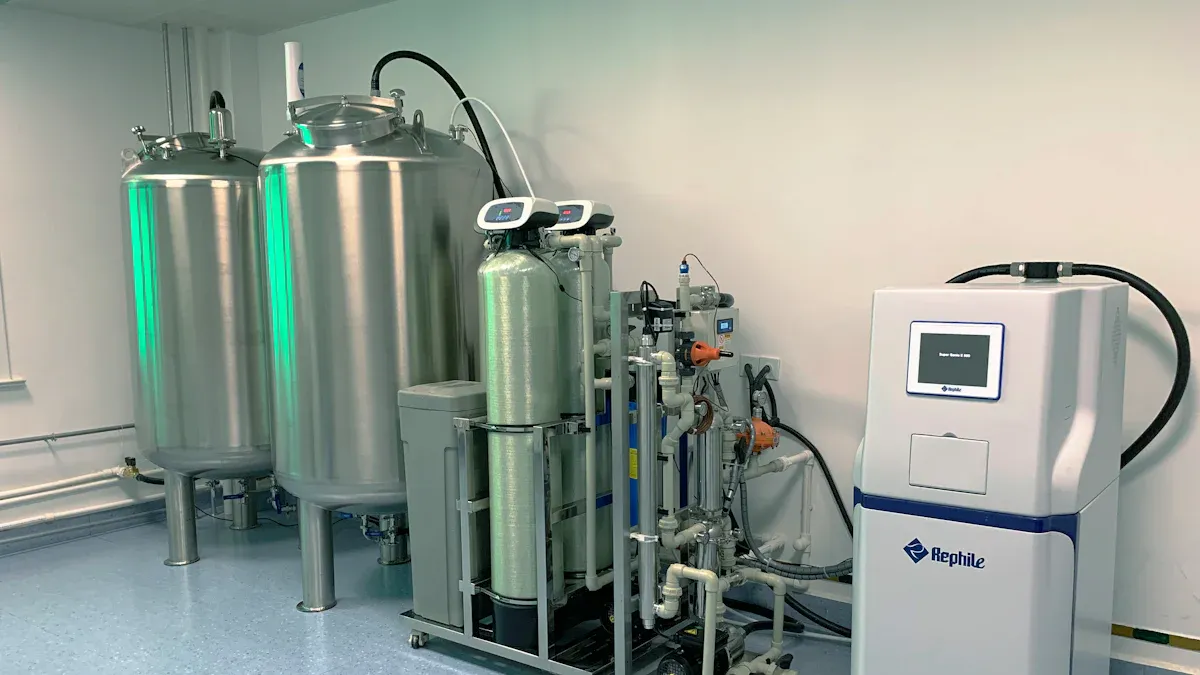
Ready to move beyond simple collection methods? Installing a dedicated system can dramatically increase your water savings and automate the reuse process. These systems represent a smart investment. You can often see a return on your investment within 3 to 7 years, especially since water and sewer rates have risen faster than inflation for two decades.
Installing these systems offers many financial benefits:
- Lower Water Bills: You will use significantly less fresh water.
- Reduced Sewage Fees: You will send less water to the sewer.
- Potential Rebates: You may qualify for conservation incentives from your local utility.
- Water Security: You gain a reliable water source during shortages.
Setting Up Rain Barrels
Rain barrels are a simple and effective way to harvest rainwater from your roof. A single inch of rain on a 1,000-square-foot roof can yield 625 gallons of water. In a place like Oregon with 42 inches of average annual rainfall, that roof could collect over 26,000 gallons a year. You can use a rain catchment calculator online to estimate your home's potential.
Installing a rain barrel is a great weekend project. Most systems use a diverter that you connect to your downspout.
Simple Installation Steps:
- Drill a hole in your downspout using a hole saw. The hole should be level with the inlet on your rain barrel.
- Insert the diverter into the hole. Secure it to the downspout with the included screws.
- Attach the fill hose to the diverter. Then, connect the other end to your rain barrel.
Maintenance is Key: Proper care prevents algae and mosquitoes. You should keep all openings covered with a fine 1/16" mesh screen. If your barrel is light-colored, paint it a dark color to block sunlight and stop algae growth. Regularly drain the barrel and scrub the inside with soapy water to remove any mosquito eggs.
Laundry-to-Landscape Greywater Systems
A laundry-to-landscape system is one of the most popular water waste solutions. It redirects water from your washing machine directly to your garden. This system is simple, affordable, and often does not require a permit. For example, California has allowed permit-free installation of these systems since 2009, as long as you follow specific rules.
You can build a DIY system for about $150 to $300. The core component is a three-way valve that lets you switch the water flow between the sewer and your landscape.
Important Rules to Follow:
- Your system must have an easy way to direct water back to the sewer, like a labeled 3-way valve.
- The greywater must not pool on the surface or run off your property.
- You must discharge the water under a 2-inch cover of mulch or rock.
- Never use water from washing diapers or hazardous chemicals.
Choosing the right detergent is crucial for your plants' health. Avoid products with high salt levels, boron, or chlorine bleach. Liquid detergents are generally better than powders.
| Plant-Safe Detergents | Why They Work |
|---|---|
| Oasis Laundry Detergent | Formulated specifically for greywater irrigation. |
| ECOS Liquid Detergent | Plant-based and biodegradable with low salt. |
| Earth Breeze Laundry Sheets | Plastic-free with a low-salt formula. |
Advanced Greywater Systems
Advanced systems take water reuse to the next level. They collect water from showers, sinks, and laundry, then filter it for more uses, including drip irrigation and even toilet flushing. These systems require a larger upfront investment but offer the greatest water savings.
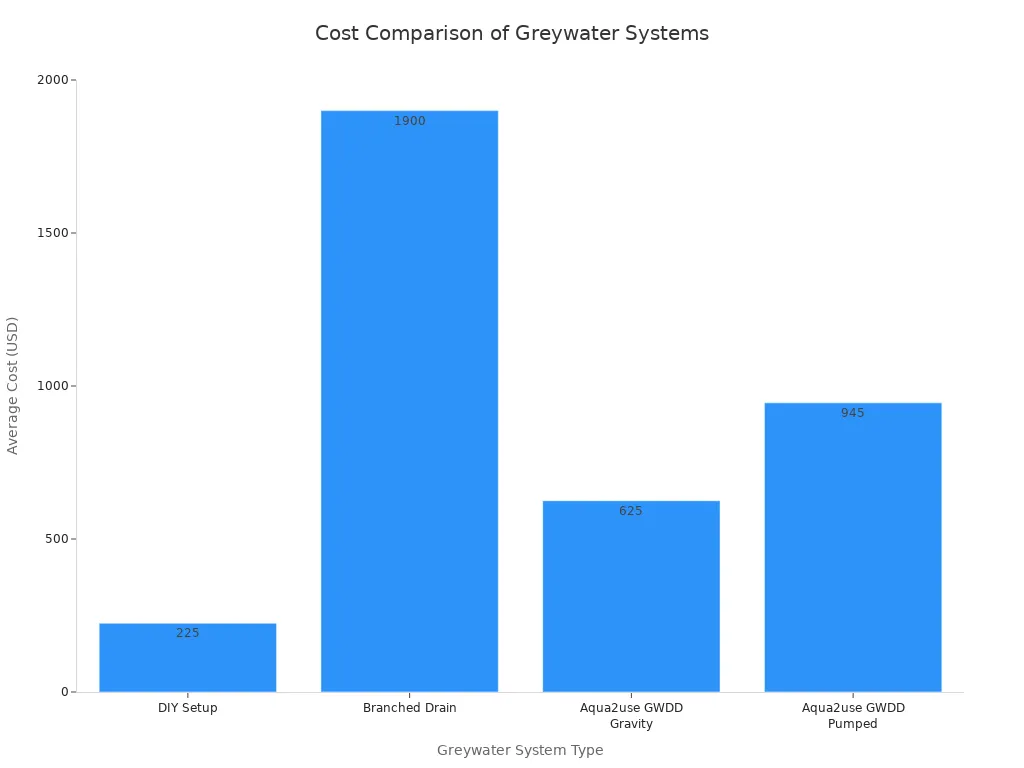
Different systems come with different features and costs. A professionally installed branched drain system can cost up to $3,000, while a pre-packaged unit with a pump might be around $950.
Systems like the Aqua2use GWDD come with features that make them powerful and easy to use:
- 4-stage filtration to remove hair, lint, and other debris.
- Built-in overflow protection that sends excess water to the sewer.
- A submersible pump (in some models) to send water uphill or to a drip irrigation system.
Maintenance for these systems is surprisingly simple. You typically just need to rinse the filters with a hose every 4 to 6 months. More complex systems, especially those used for toilet flushing, may require monthly filter cleaning and professional annual servicing.
State and local codes for these advanced water waste solutions vary widely. Many states allow greywater for subsurface irrigation, but rules for toilet flushing are less common.
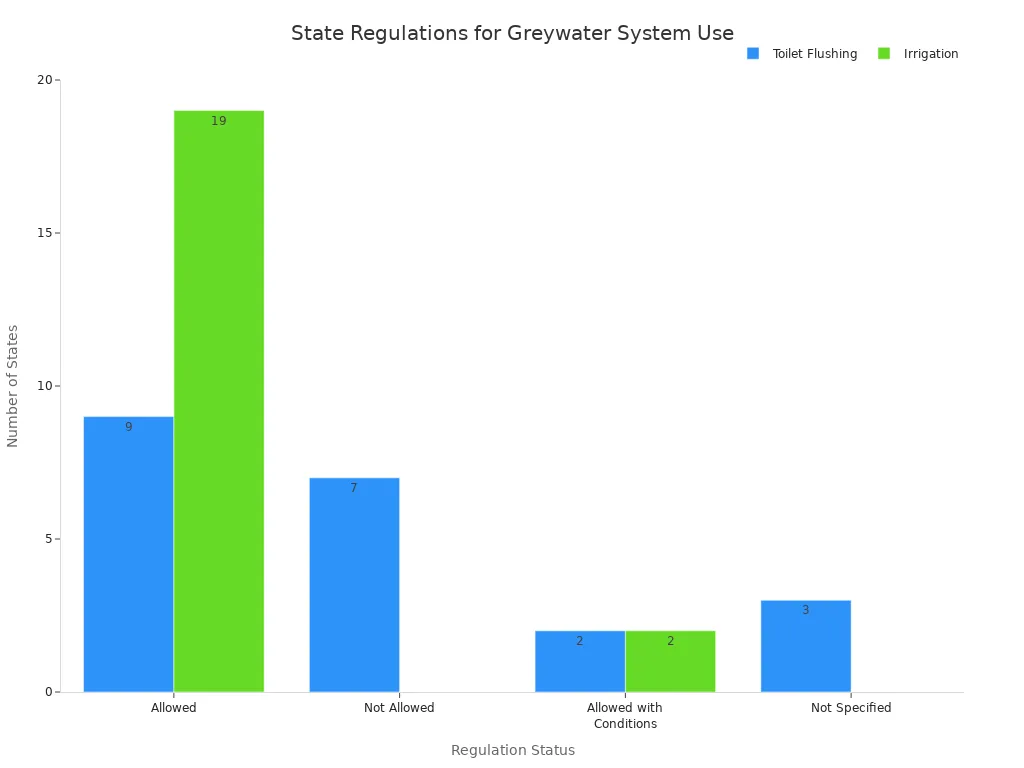
Check Local Rules: Always consult your local building department before installing an advanced system. They can provide information on permit requirements and approved uses in your area.
You can adopt one of the most impactful eco-friendly habits by reusing water. You can start with a simple method like the shower bucket to see an immediate difference. Embracing these systems helps secure a sustainable water future, but you must manage them responsibly.
A primary environmental concern is the potential for antibiotic residues and resistance genes to spread through water and soil ecosystems.
- Reclaimed water can carry antibiotic residues that select for resistant bacteria.
- These bacteria can transfer resistance genes to other microorganisms.
- This creates a risk of new microbial threats emerging in the environment.
FAQ
Is it safe to use greywater on my vegetable garden?
You should avoid using greywater on edible plants. It may contain contaminants from soaps or coils. Use this water for ornamental plants, your lawn, or for flushing toilets. 🥕
How much can I really save with a water reuse system?
Your savings depend on your system and local water rates. Many households reduce their water bills by 30-50%. You also save on sewage fees for a bigger impact.
Do I need a permit for a greywater system?
It depends on your system and location. Simple laundry-to-landscape systems often do not need one.
Always check with your local building department before you start any installation.