Water Wheels to Hydro Turbines A Short History
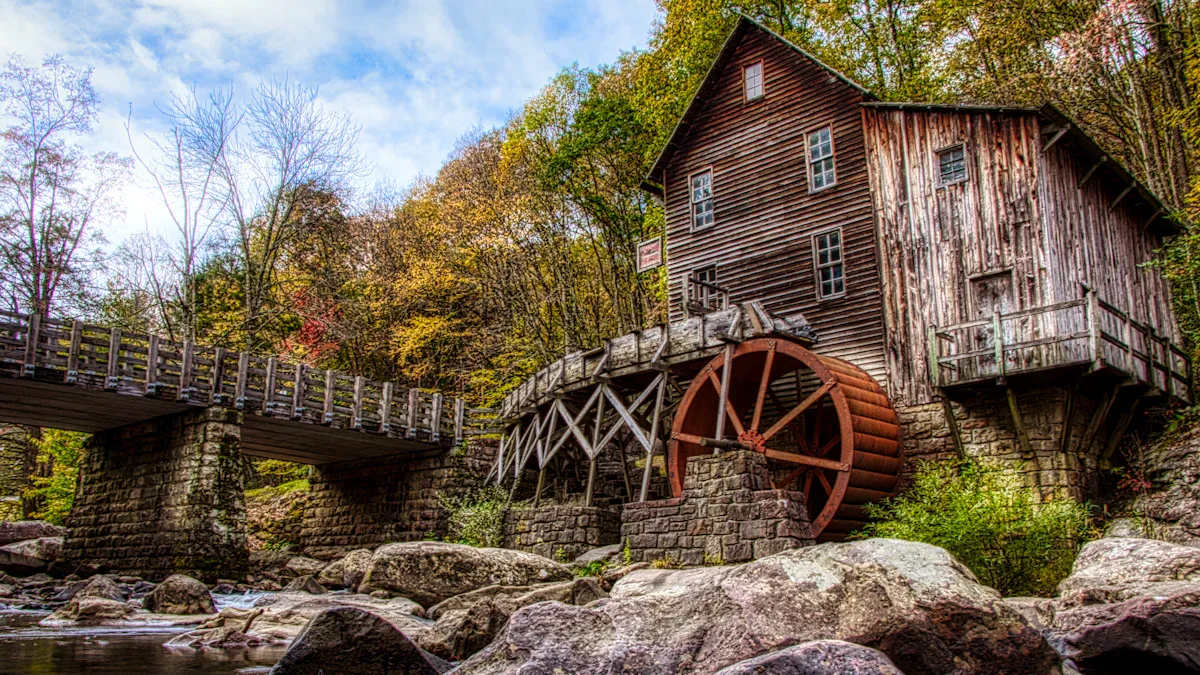
Ancient civilizations first harnessed water's power for mechanical work. The Industrial Revolution introduced efficient turbines, unlocking immense power. Inventors later paired turbines with the hydroelectric generator, birthing renewable electricity. Today, this technology provides about 15% of global electricity and even scales down to a hydroelectric generator micro hydropower plants water turbine for home.
Key Takeaways
- People first used water wheels for simple tasks. Later, turbines made water power much stronger.
- The Industrial Revolution brought new turbine designs. These designs made power generation more efficient.
- Connecting turbines to generators created electricity. This changed how homes and businesses got power.
The Evolution from Wheels to Turbines
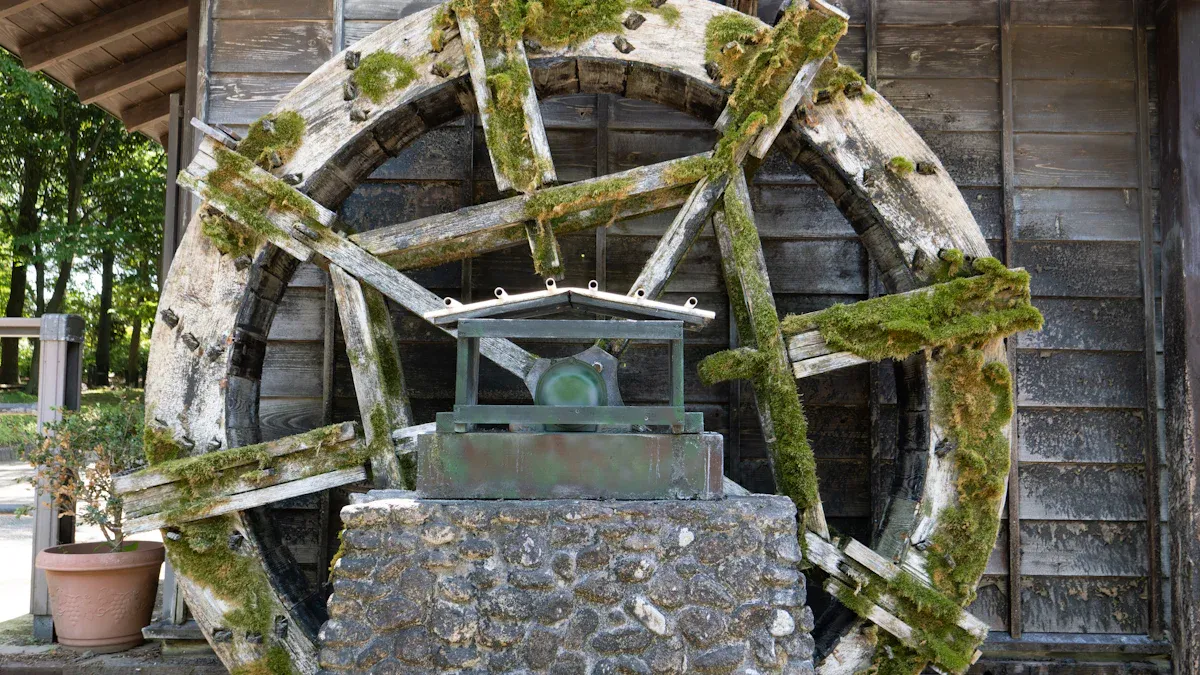
The journey from simple wheels to powerful turbines marks a major leap in human ingenuity. Early civilizations used water's force for basic mechanical jobs. The Industrial Revolution later applied scientific thought to this process. This application created highly efficient machines that transformed energy production.
Ancient Water Wheels for Mechanical Work
Ancient societies first saw the potential in flowing water. The Greeks and Romans were pioneers. They designed water wheels to perform difficult labor, most notably grinding grain. Their designs varied in complexity and purpose. The Romans, in particular, advanced the technology significantly after adopting early Greek ideas.
| Civilization | Design Type | Description |
|---|---|---|
| Greek | Horizontal Water Wheel (Norse Mill) | A grindstone sat on a vertical shaft. Paddles at the bottom dipped into a swift stream to turn the stone. |
| Roman | Vertical Water Wheels (Overshot, etc.) | A vertical wheel turned a horizontal shaft. Gears then transferred power to millstones. The engineer Vitruvius described these designs. |
These early machines were not just for making flour. Their power was adapted for many different tasks. This innovation reduced the need for human and animal labor across the Roman Empire and beyond. Some of their applications included:
- Powering sawmills for cutting timber
- Hulling grain
- Operating bellows for iron smelting
- Driving pumps to move water
Did You Know? The Romans developed two distinct types of water-powered devices. The Noria was a water lift, while the Vitruvian mill was for grinding.
The table below shows how these two machines differed in their construction and primary use.
| Feature | Noria (Water Lift) | Vitruvian Water Mill (Hydraletae) |
|---|---|---|
| Construction | Buckets on the wheel's rim collected water. The stream's current turned the wheel, lifting water to the top. | A toothed drum-wheel on the axis engaged with a larger horizontal gear. This gear system turned the millstones. |
| Application | Primarily for lifting water for irrigation or aqueducts. | Primarily for grinding grain into flour. |
The Industrial Revolution's Turbine Breakthroughs
The Industrial Revolution demanded more power than traditional water wheels could supply. Engineers and scientists began studying water's energy more closely. They discovered new principles to capture its power with far greater efficiency. This shift in thinking moved technology from simply pushing a wheel to actively extracting energy from water's motion.
A core idea guided this new era of design.
To maximize power, water should enter a machine without shock and leave without velocity.
This principle, from scientists like de Borda and Carnot, became the theoretical goal. Turbines achieved this by creating motion of the water relative to the machine's blades. Unlike a water wheel that is simply pushed along, a turbine's curved blades force the water to change direction. This process extracts both the water's weight and its kinetic energy, dramatically increasing power output. French engineer Jean-Victor Poncelet applied this concept by adding curved vanes to an undershot wheel. This design allowed the water to expend all its energy on the blade, nearly doubling the machine's efficiency.
Key Inventors and Their Innovations
The theoretical breakthroughs of the Industrial Revolution paved the way for brilliant inventors. They built the first true water turbines. These machines were compact, powerful, and set the stage for the modern hydroelectric generator.
Benoît Fourneyron built one of the first modern water turbines in 1827. His six-horsepower machine was an outward-flow turbine. Water entered the center and was guided through curved stationary blades. It then flowed outward, pushing against the curved blades of a spinning rotor. This design was remarkably effective, achieving an efficiency of around 80%.
James B. Francis, an American engineer, took the next major step in the 1840s. He applied rigorous scientific testing and created mathematical methods to perfect turbine design. Francis developed an inward-flow reaction turbine. His design was more stable and even more efficient, reaching efficiencies up to 90%. The Francis turbine remains one of the most widely used turbine designs in the world today.
Lester Allan Pelton addressed a different kind of challenge in the 1870s. In the American West, mining operations needed power from mountain streams. These water sources often had high pressure but low flow. Pelton invented an "impulse" turbine to solve this problem. His Pelton wheel used high-velocity jets of water directed at a series of split buckets on a wheel. This design efficiently captured the water's kinetic energy and was perfect for the high-head, low-flow conditions found in mountainous terrain.
The Dawn of Hydroelectricity
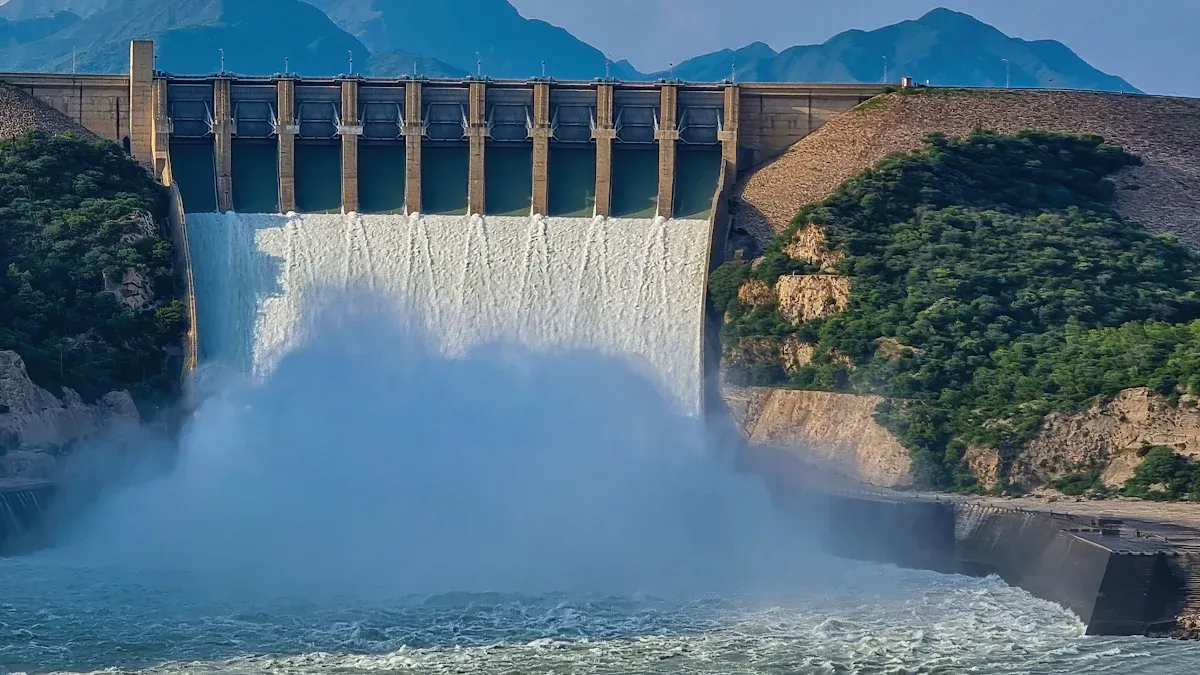
The invention of the water turbine created immense mechanical power. The next great leap was converting that power into electricity. This fusion of water's force and electrical science marked the beginning of a new energy era, forever changing how we light our cities and run our industries.
Pairing Turbines with the Hydroelectric Generator
The late 19th century buzzed with electrical innovation. Inventors realized they could connect the spinning shaft of a water turbine to a dynamo, a machine that generates electricity. This simple but revolutionary idea promised a continuous source of power. A businessman named H. J. Rogers put this theory into practice in Appleton, Wisconsin. In 1882, he connected an Edison dynamo to a waterwheel on the Fox River. This setup successfully produced electricity. It was the first time a hydroelectric generator powered both a home and local businesses, lighting his house and two nearby paper mills.
The First Commercial Hydroelectric Plants
The success in Appleton quickly led to the world's first commercial hydroelectric plants. These early stations proved that water could be a reliable and profitable source of electricity for the public.
- Location: Appleton, Wisconsin, on the Fox River.
- Operation Date: September 30, 1882.
- Significance: It was the first hydro-electric central station to serve private and commercial customers in North America.
The Vulcan Street Plant was the first of its kind. Its initial purpose was to provide power for the businesses of its founder, H.J. Rogers. He wanted to use the Fox River to power his paper mills and reduce his reliance on other energy sources.
The Vulcan Street Plant began operation on September 30, 1882. It is recognized as 'the first Edison hydroelectric central station to serve a system of private and commercial customers in North America.'
While the Vulcan Street Plant was a groundbreaking first step, the Adams Power Plant at Niagara Falls, completed in 1895, demonstrated hydropower's massive potential. This project was a monumental achievement in engineering.
- It was the first large-scale U.S. hydroelectric plant.
- It used Nikola Tesla’s alternating current (AC) system for long-distance power transmission.
- Its success led to the widespread adoption of electricity for factories and cities.
- It helped launch new industries, like aluminum refining.
- It powered new urban technologies, including electric streetcars.
The Niagara Falls plant, with its powerful hydroelectric generator systems, truly kicked off the age of electricity and inspired similar projects worldwide.
20th-Century Expansion and Modern Turbines
The 20th century saw an explosion in hydropower development. Governments recognized its strategic importance for economic growth and national security. This led to the construction of enormous dams and the refinement of turbine technology.
Government policies were a major driver of this expansion. In the United States, the New Deal programs of the 1930s funded many large-scale dam projects. Federal agencies like the Tennessee Valley Authority and the Army Corps of Engineers built massive dams such as the Hoover, Grand Coulee, and Bonneville. These projects provided jobs, controlled floods, and generated huge amounts of electricity. This new power became essential for industrial production during World War II. Some of the key projects from this era include:
- Grand Coulee Dam: Built on the Columbia River between 1933 and 1942.
- Bonneville Dam: Also constructed on the Columbia River during the 1930s.
- Shasta Dam: A major dam in northern California.
- Anderson Ranch Dam: Completed in 1951, it was once the world's highest embankment dam.
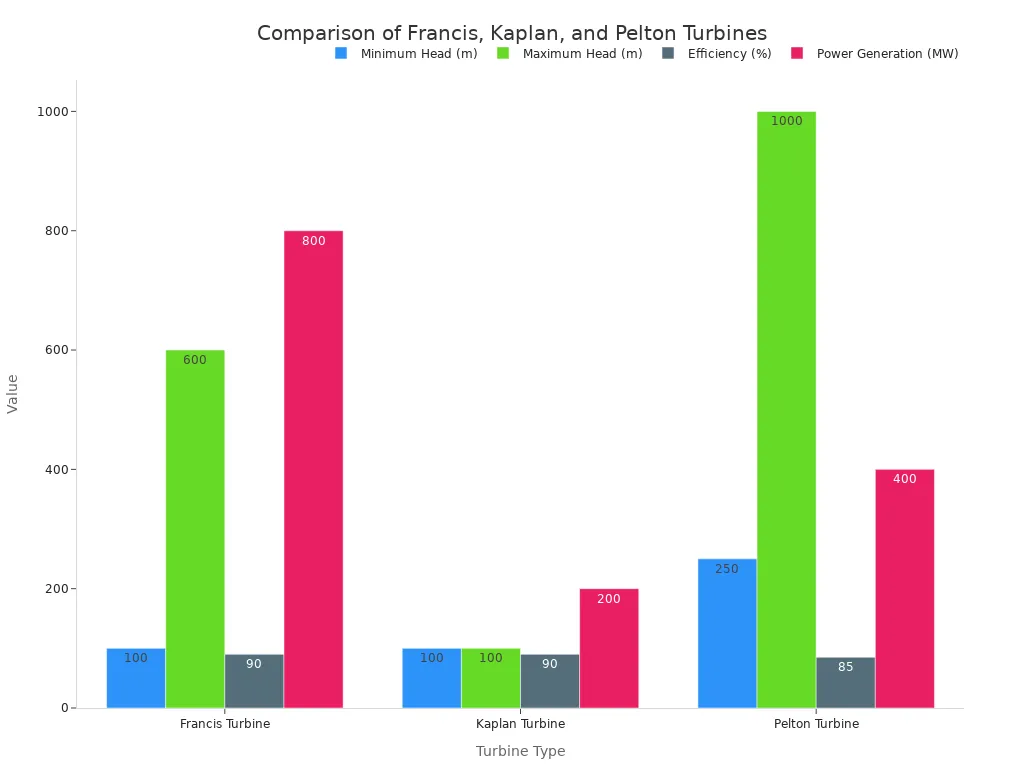
Today, modern dams use highly specialized turbines. The choice of turbine depends on the water pressure (head) and flow rate at a specific site. The three main types are the Francis, Kaplan, and Pelton turbines.
| Feature | Francis Turbine | Kaplan Turbine | Pelton Turbine |
|---|---|---|---|
| Type | Reaction (Mixed-flow) | Reaction (Axial-flow) | Impulse |
| Head Condition | Medium to High (100-600m) | Low (around 100m) | High (250-1000m) |
| Flow Rate | Medium | High | Low |
| Power Generation | Around 800 MW | 5-200 MW | Around 400 MW |
| Runner Vanes | Not adjustable | Adjustable | N/A (buckets) |
Engineers continue to improve the efficiency of the hydroelectric generator. Modern upgrades help plants meet changing energy demands and operate more effectively.
- Variable speed drives allow turbines to adjust to river flow, increasing efficiency.
- Mechanical upgrades to energy-efficient motors can achieve over 97% efficiency.
- IIoT sensors monitor turbine health, allowing for quick maintenance and extending the machine's life.
These innovations show that the journey of hydropower, from simple wheels to smart turbines, is still evolving. 💡
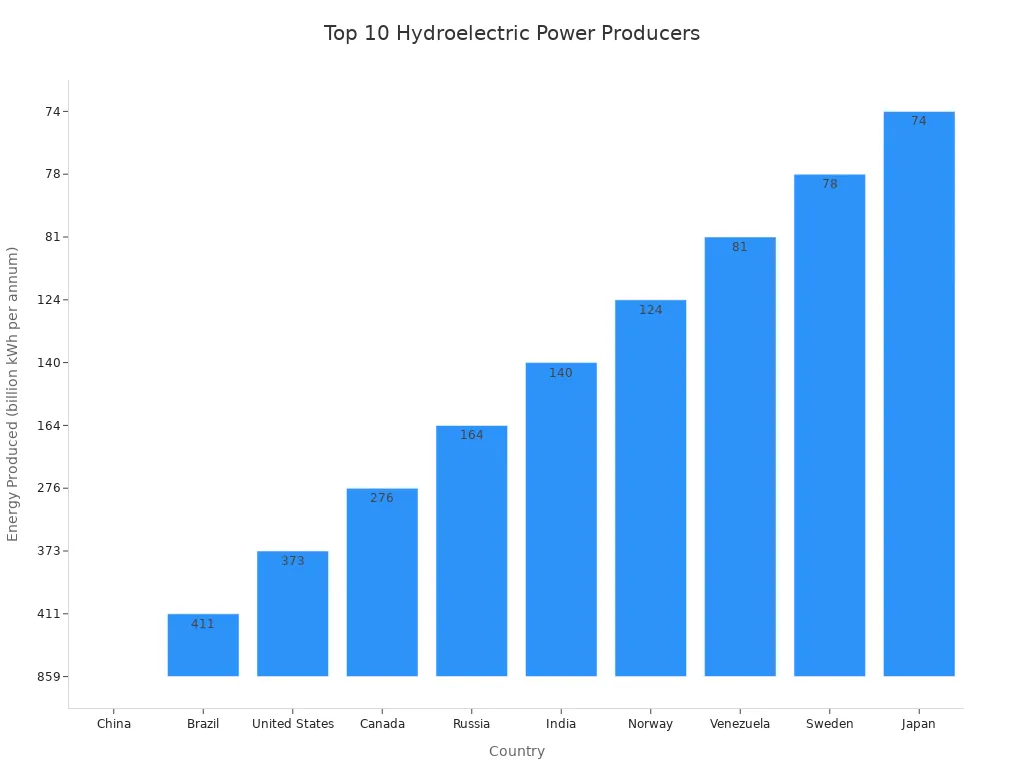
The history of hydropower is a story of human ingenuity. People transformed simple water wheels into powerful turbines during the Industrial Revolution. This journey established hydropower as a cornerstone of clean energy, demonstrating our ability to harness nature for progress. 💡 Today, several nations lead the world in hydroelectric generation.
FAQ
How is a turbine different from a water wheel?
Water wheels use water's weight to push blades. Turbines use curved blades to capture energy from water's pressure and speed. This design makes turbines much more efficient. ⚙️
Who first used a turbine for electricity?
H.J. Rogers connected a waterwheel to a dynamo in 1882. This hydroelectric generator powered his home and two paper mills in Appleton, Wisconsin.
Why do modern dams use different turbines?
Engineers choose a turbine based on the site's water pressure and flow. Each type, like Francis or Pelton, works best under specific conditions for maximum efficiency.
See Also
Optimizing Your Water System: The Self-Priming Pump Advantage
Innovative Materials: Transforming the Future of Heat Exchanger Manufacturing
Advancements in Heat Exchanger Production Boosting Industrial Efficiency
Essential Guide: Selecting the Right Power Transformer for Beginners