Halal and Kosher Gelatin Key Differences and Practical Uses
You see halal and kosher gelatin in many foods and medicines. Demand for halal gelatin grows in Southeast Asia, the Middle East, and Africa.
- Halal gelatin makes up 18% of global gelatin applications.
- Many people trust products with religious certification.
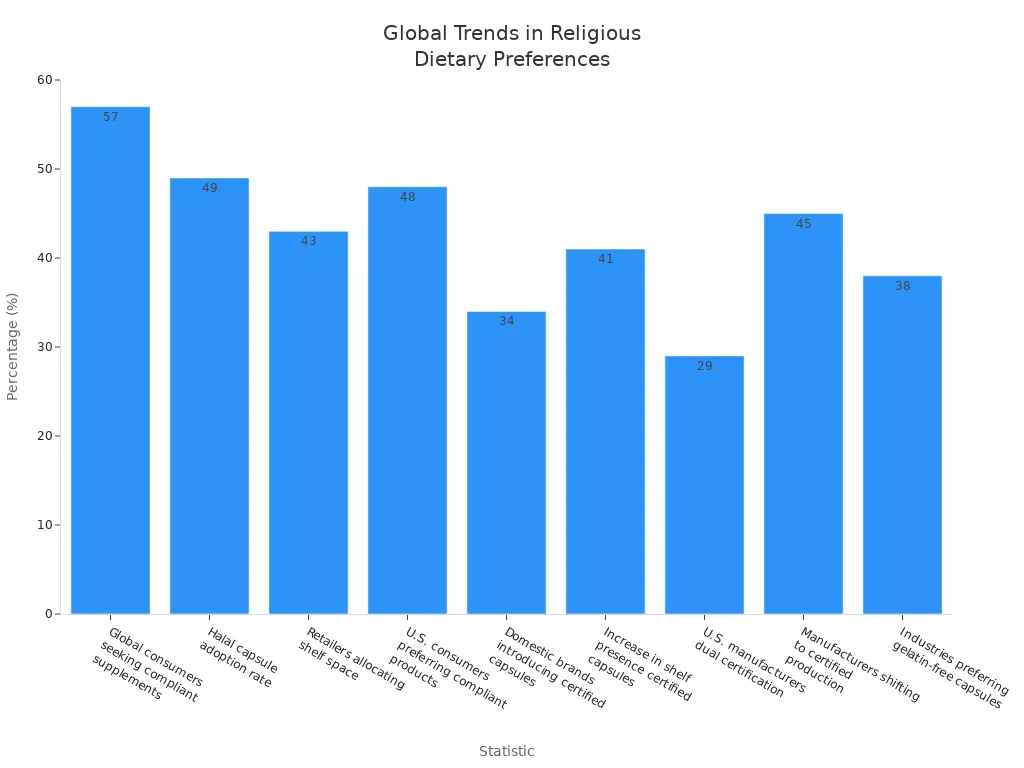
| Statistic | Value |
|---|---|
| Percentage of global consumers seeking religiously compliant health supplements | 57% |
| Adoption rate of halal-compliant capsules among supplement producers | 49% higher than traditional gelatin capsules |
| Retailers allocating shelf space to certified products | 43% |
You notice that even pharmaceutical companies use bovine gelatin halal to meet religious standards.
Key Takeaways
- Halal and kosher gelatin come from different sources and must meet specific religious guidelines. Always check for certification to ensure compliance with your dietary needs.
- Both halal and kosher gelatin avoid pork, but the slaughter methods and certification processes differ. Understanding these differences helps you make informed choices.
- The demand for halal gelatin is growing, especially in Southeast Asia and the Middle East. This trend leads to more product options and better quality for consumers.
Sources and Production Methods
Halal Gelatin Sources
You might wonder where halal gelatin comes from. Halal gelatin must follow strict Islamic guidelines. The most common sources include:
- Cattle bones and hides
- Buffalo hides
- Fish skins
- Chicken
You will not find pigskin in halal gelatin because Islamic law prohibits pork. In fact, about 42.5% of global gelatin comes from pigskin, but halal gelatin uses only animals slaughtered according to halal methods. The principal raw materials for halal gelatin are cattle bones and hides. When you see products labeled as bovine gelatin halal, you know they come from cows or buffaloes that meet these religious standards.
Tip: Always check for halal certification on the label to ensure the gelatin meets your dietary needs.
Kosher Gelatin Sources
Kosher gelatin also follows strict rules, but these come from Jewish law. In the United States and Europe, you will find that kosher gelatin usually comes from:
- Bovine hides and bones
- Fish skins
Jewish dietary laws do not allow pork, so kosher gelatin never uses pigskin. Animal products from unspecified or non-kosher sources cannot be used. Kosher gelatin must come from animals slaughtered according to kosher law. You should know that kosher gelatin is not automatically halal. You must verify that there is no cross-contamination with non-halal ingredients if you need both certifications.
Production Process Differences
The production process for halal and kosher gelatin looks similar at first, but key differences exist. Both require animals to be slaughtered according to their respective religious laws. However, the certification process and equipment standards differ.
Here is a table that shows how religious authorities verify compliance:
| Requirement | Description |
|---|---|
| Ingredient Compliance | All ingredients must be kosher- or halal-compliant. |
| Equipment Cleanliness | All tools and machinery must have no trace of non-kosher or non-halal items. |
| Gelatin Source | Only gelatin from approved animals, slaughtered by religious law, is used. |
| Slaughter Method | Animals must be slaughtered in a single cut, following religious rules. |
| Prohibition of Pork | No pork or pork derivatives allowed. |
You will see that halal and kosher gelatin both avoid pork, but the rules for slaughter and certification differ. For example, bovine gelatin halal must come from cows slaughtered by a Muslim following halal procedures. Kosher gelatin must come from animals slaughtered by a trained Jewish person, using kosher methods.
Sourcing animal products for both halal and kosher gelatin also affects the environment. Animal farming uses land, water, and energy. As you learn more about these products, you may notice a growing demand for ethically sourced and sustainable gelatin. Companies that use eco-friendly practices help reduce their impact on the planet.
Bovine Gelatin Halal and Kosher Considerations
Bovine Gelatin Halal Standards
You may see many products labeled as bovine gelatin halal. This label means the gelatin meets strict Islamic requirements. If you want to ensure your food or medicine is halal, you need to check several important factors.
- The gelatin must come from animals that are allowed in Islam, such as cows or buffaloes.
- The animal must be healthy at the time of slaughter.
- A Muslim must perform the slaughter, invoking the name of Allah.
- The method must drain all blood from the animal.
- The processing facility must follow halal standards and avoid contamination with forbidden substances like pork or alcohol.
- The final product must receive certification from a recognized Islamic authority.
You can trust bovine gelatin halal when you see proper certification. This process protects your dietary needs and religious beliefs. Many companies now use special facilities to keep their products pure and safe. You should always look for a halal logo or certificate on the packaging.
Tip: If you have doubts about a product, ask the manufacturer about their halal certification and slaughter methods.
Kosher Bovine Gelatin Requirements
Kosher gelatin also has strict rules. You must check that the gelatin comes from kosher animals, usually cows or fish. Jewish law does not allow gelatin from non-kosher animals or improper sources.
- All ingredients must come from kosher animals and be processed in a kosher way.
- Manufacturing facilities must pass inspections to ensure they follow kosher standards.
- Equipment and production processes must stay clean and free from non-kosher substances.
- Regular audits and inspections help maintain kosher certification.
You will find kosher gelatin in many foods and medicines. Kosher certification gives you confidence that the product meets Jewish dietary laws. Many organizations inspect factories and review production steps to keep standards high.
Here is a table that compares halal and kosher requirements for bovine gelatin:
| Requirement | Halal Gelatin | Kosher Gelatin |
|---|---|---|
| Animal Source | Permitted animals (cow, buffalo) | Kosher animals (cow, fish) |
| Slaughter Method | By Muslim, in name of Allah | By trained Jewish person |
| Blood Drainage | Complete drainage required | Complete drainage required |
| Facility Standards | No haram contamination | No non-kosher contamination |
| Certification | Islamic authority | Kosher certifying agency |
You can see that both halal and kosher gelatin require careful sourcing and strict rules. If you need bovine gelatin halal, you must check for proper certification and slaughter methods. Kosher gelatin also needs regular inspections and audits to keep its status.
Note: Always read labels and ask questions if you want to be sure about religious compliance.
Properties and Functional Differences
Physical and Chemical Properties
You may notice that gelatin acts as a hydrocolloid. This means it can absorb water and form gels. Both halal and kosher gelatin share this basic property. The source of the gelatin, such as fish, cow, or buffalo, changes its strength and melting point. For example, bovine gelatin halal often creates a firmer gel than fish-based gelatin. You can see these differences in how quickly gelatin melts or how much water it holds. The pH level and protein content also affect how gelatin behaves in recipes. Manufacturers sometimes modify gelatin to improve its performance in food products. These changes help you get the right texture and shelf-life for your favorite foods.
| Property | Halal Gelatin | Kosher Gelatin |
|---|---|---|
| Gel Strength | Varies by source | Varies by source |
| Melting Point | Source-dependent | Source-dependent |
| Water Absorption | High | High |
Impact on Food Texture and Stability
You will find that gelatin plays a big role in the texture and stability of many foods. When you use halal-certified or kosher gelatin, you help make products that fit cultural and religious needs. Here are some ways gelatin affects food:
- Gelatin gives foods like marshmallows and gummy candies their chewy texture.
- It helps desserts like panna cotta and jelly set properly.
- The source of gelatin, including bovine gelatin halal, changes how firm or soft the final product feels.
- Gelatin improves the shelf-life and stability of dairy products and desserts.
- Manufacturers often adjust recipes to match the properties of halal or kosher gelatin.
Note: The need for halal and kosher gelatin leads to new recipes and product changes. This helps you enjoy safe and tasty foods that meet your dietary needs.
Religious Acceptance and Certification

Halal Certification Requirements
You need to know that halal gelatin must meet strict rules. These rules help you trust that the product fits your religious needs. Here are the main requirements for halal certification:
- Animal raw materials must follow Islamic law. You cannot use pig products or blood.
- A Muslim must perform the slaughter. The person must recite the proper scripture.
- The manufacturing process must not include any materials that go against Sharia law.
- Storage must follow Sharia regulations to prevent contamination.
- Certification must come from a recognized Islamic authority.
Tip: Always look for a halal certification logo on the package. This logo shows you that the product meets all these requirements.
Kosher Certification Requirements
You will see that kosher gelatin also has clear rules. The table below shows what you need to check for different types of kosher gelatin:
| Source Type | Certification Requirements |
|---|---|
| Bovine Gelatin | Must come from cows slaughtered and processed in a kosher way. Rabbinic oversight is required during production. |
| Fish Gelatin | Must use only kosher fish. Strict inspection and rabbinic oversight are necessary. |
| Plant-Based Gelatin | Usually considered kosher, but you should check with the manufacturer. |
Note: Kosher certification often includes regular inspections to keep standards high.
Community Perspectives
You will find that Muslims and Jews pay close attention to the source of gelatin in their food. Both groups avoid any gelatin made from pigs. You see more products now using gelatin from fish, chicken, or cows. These sources follow religious guidelines and help you keep your diet pure. This change helps you and your community follow your faith and enjoy more food choices.
Practical Uses in Food and Other Products
Food Industry Applications
You see halal and kosher gelatin in many foods you eat every day. Gelatin helps make desserts, candies, and dairy products smooth and stable. In Europe, companies use halal gelatin in food, pharmaceuticals, and cosmetics. In Asia Pacific, you find it in food processing and sustainable products, especially in Indonesia, Malaysia, and India.
| Region | Applications | Key Markets |
|---|---|---|
| Europe | Food, Pharmaceutical, Cosmetics | Various European countries |
| Asia Pacific | Food Processing, Sustainable Products | Indonesia, Malaysia, India |
You notice that halal and kosher rules shape how companies develop new foods. These rules decide which animals can be used and how they must be processed. Many people want clear labels and safe ingredients. This demand pushes companies to use certified gelatin and describe their products in detail.
Pharmaceutical and Medical Uses
You find gelatin in many medicines. In North America, kosher gelatin acts as a stabilizer in vaccines and biologic drugs. It helps keep medicines like insulin and monoclonal antibodies safe and effective. You also see it in capsules and tablets, making them easy to swallow. Many drug makers choose kosher gelatin because it works well with sensitive drugs and meets religious needs.
Tip: Always check for certification if you need medicine that fits your dietary rules.
Other Industrial Uses
You might be surprised to learn that gelatin has many uses outside food and medicine. Companies use halal and kosher gelatin in:
- Energy drinks for athletes in the sports industry
- Coating agents in photography since the 1800s
- Cosmetics like shampoo, lipstick, conditioner, and creams
You see that gelatin’s versatility makes it important in many products you use every day.
Availability and Market Considerations
Accessibility of Halal Gelatin
You see halal gelatin becoming easier to find in Southeast Asia and the Middle East. Manufacturers respond to growing demand by expanding production and improving quality. You notice that companies invest more in certification to meet strict halal standards. Regulatory changes help reduce trade barriers, making it simpler for you to access halal gelatin. The market grows quickly, with edible halal gelatin expected to reach over USD 2200 million by 2032. You benefit from these changes because you get more choices and better quality.
- Domestic demand and export potential drive market expansion.
- Companies invest in certification and quality assurance.
- Regulatory harmonization reduces trade barriers.
- Market projected to grow at a CAGR of 10.70% through 2032.
Accessibility of Kosher Gelatin
You may find kosher gelatin harder to source, especially in Europe. Food producers face several challenges. Raw material supply and pricing change often, which affects production and costs. You see more people choosing plant-based alternatives, so demand for traditional kosher gelatin drops. Strict certification rules make sourcing more complex. You must pay attention to these factors when looking for kosher products.
- Volatility in supply and pricing of animal bones and hides.
- Competition from vegetarian and vegan alternatives.
- Strict regulatory and certification requirements.
Labeling and Consumer Awareness
You need clear labels to make informed choices. Companies use certification logos to show halal or kosher status. You should look for these symbols on packaging. Many brands now highlight their certification on the front label. This helps you trust the product and avoid unwanted ingredients. You can also check for QR codes or online verification tools. These tools let you confirm certification and learn more about the product.
Tip: Always check the label for certification marks before buying gelatin products. 🏷️
You see clear differences between halal and kosher gelatin in sourcing, production, and certification.
- Gelatin comes from beef, fish, or pork, but halal never allows pork.
- Fish gelatin gains popularity in both markets if certified.
- Certification builds trust and expands your choices.
| Criteria | Halal Compliance | Kosher Compliance |
|---|---|---|
| Ingredient Restrictions | No pork, alcohol, or blood. | No pork, no mixing meat and dairy. |
| Processing | Dedicated lines and strict cleansing. | Separate utensils for meat and dairy. |
Understanding these details helps you and manufacturers make better decisions for religious and dietary needs.
FAQ
Can you use halal gelatin in kosher recipes?
You can use halal gelatin in kosher recipes only if it meets kosher certification. Always check the label for kosher approval.
How do you identify halal or kosher gelatin on packaging?
Look for certification logos. You may see halal or kosher symbols on the front label. Some brands use QR codes for verification.
Is fish gelatin always halal and kosher?
Fish gelatin can be halal or kosher if the fish species and processing follow religious rules. You must check for proper certification.
See Also
Comparing Bovine Gelatin Powder With Fish And Pork Varieties
The Production Process And Ingredients Of Edible Gelatin
Key Indicators That Show Quality Bovine Gelatin Powder
Ingredients And Production Methods For Bovine Gelatin Powder