Selecting the Best Crystal Water Dispenser in 2026
An excellent crystal water dispenser delivers pure, healthy water using advanced filtration. Modern models provide instant hot, cold, and ambient temperatures for ultimate convenience. Key factors for your choice include the dispenser type, its capacity, and long-term maintenance costs, shaping your investment in better hydration.
The home water filtration market shows significant growth. This reflects a rising demand for clean water solutions.
| Metric | Value |
|---|---|
| Projected Market Value in 2026 | USD 19845.65 Million |
| Compound Annual Growth Rate (CAGR) from 2026-2035 | 6.4% |
| Projected Market Value by 2035 | USD 36682.64 Million |
Key Takeaways
- Choose a dispenser type that fits your space and water needs, like a countertop, freestanding, or point-of-use model.
- Look for advanced features such as multi-stage filtration, precise temperature control, and smart technology for the best water quality and convenience.
- Plan for long-term costs like filter replacements and electricity use to keep your dispenser working well and save money.
Choosing Your Dispenser Type
You must first select the right type of dispenser for your space and needs. Each style offers unique benefits for different environments. Your choice will depend on available space, water consumption, and installation preferences.
Countertop Models for Small Spaces
Countertop models are perfect for apartments, dorm rooms, and small office kitchens. These compact units sit directly on your counter, saving valuable floor space. They provide instant access to filtered water without a large footprint. You can see typical dimensions for modern units below.
| Feature | Coway CP-6330L | AquaChill AC-CT |
|---|---|---|
| Dimensions (W x D/L x H) | 12.6" x 21.3" x 16.0" | 9.75” x 19.25” x 16.5” |
| Cold Tank Capacity | 0.6 Gallon | 1 Gallon |
| Hot/Ambient Capacity | 0.71 Gallon (Ambient) | 0.5 Gallon (Hot) |
Freestanding Models for High Volume
You should choose a freestanding model for high-traffic areas like busy offices or large households. These dispensers stand on their own and typically support large, 5-gallon water bottles. This high capacity ensures fewer bottle changes and a steady water supply for many people.
Point-of-Use (Bottleless) for Endless Supply
A point-of-use (POU) crystal water dispenser connects directly to your building’s water line. This provides a virtually endless supply of filtered water, eliminating the need for heavy water bottles. While the initial cost is higher, you save money over time by no longer paying for bottled water deliveries.
Installation Note 📝 POU units require access to a water line and a standard electrical outlet. A professional technician often handles the installation to ensure all connections are secure and the system functions correctly.
Must-Have Features in a 2026 Crystal Water Dispenser
Beyond the basic model type, you should look for key features that define a modern crystal water dispenser. The best units in 2026 combine powerful purification with user-friendly controls and smart technology. These features ensure you get pure, safe water at the perfect temperature, every time.
Advanced Filtration Technology
Your dispenser’s primary job is to deliver clean water. Multi-stage filters are essential for this.
- Stage 1 (Sediment): Reduces large particles like dirt and rust.
- Stage 2 (Pre-Carbon): Targets chlorine taste and odor.
- Advanced Stages: Can remove heavy metals, organic chemicals, and pharmaceuticals.
For the highest level of purity, you will find systems using Reverse Osmosis (RO) or UV Purification. You can compare their functions below.
| Feature | Reverse Osmosis (RO) Filtration | UV Purification |
|---|---|---|
| Mechanism | Uses a membrane to filter particles | Uses ultraviolet light to deactivate germs |
| What it removes | Up to 99% of solids, including bacteria and heavy metals | Up to 99.9% of bacteria and viruses |
| Physical removal | Yes, impurities are physically blocked | No, germs are killed but remain in the water |
Precise Temperature Control
Modern dispensers give you exact control over water temperature. You can get chilled water as low as 41°F for a refreshing drink or steaming hot water up to 194°F for tea or coffee. This feature also improves energy efficiency. The unit only heats or cools the water you need, which saves energy by avoiding constant reheating of a large tank.
Smart Features and Safety Locks
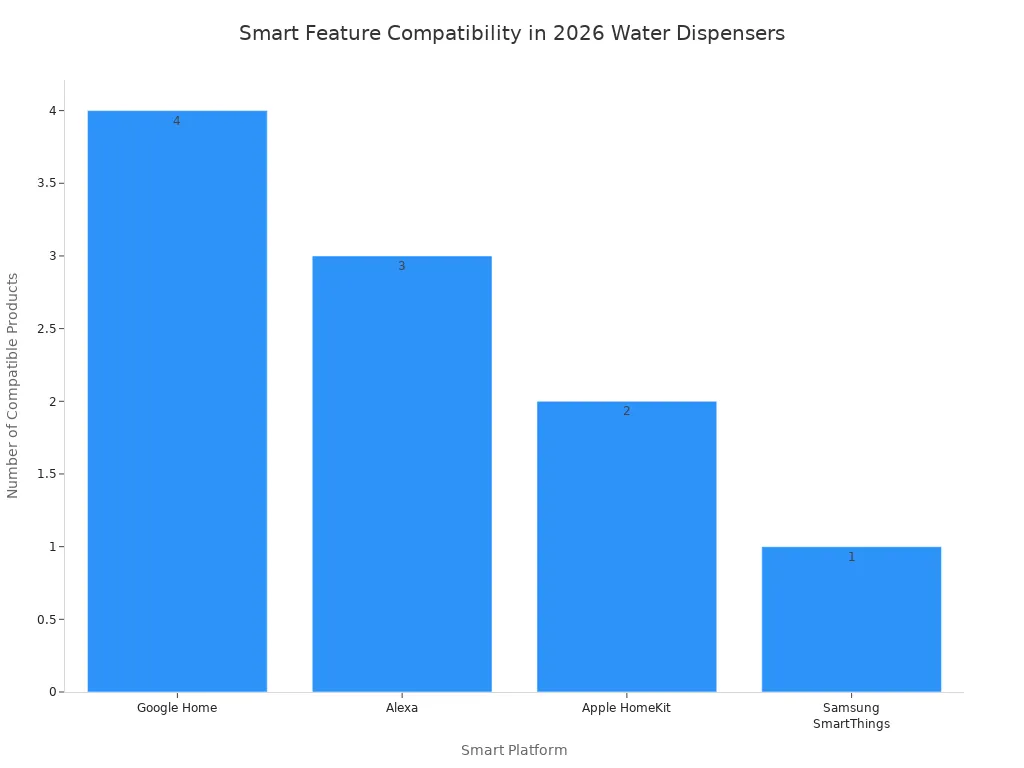
Top models now include smart technology for ultimate convenience. You can use voice commands or a mobile app to control your dispenser. Many units connect with popular smart home systems.
Safety First! ⚠️ For households with children, a safety lock on the hot water tap is a must. The most common type is a button lock, which requires you to press a button and push the lever at the same time. This simple dual-motion prevents accidental burns.
Matching Capacity to Your Needs
You need to select a dispenser that can keep up with your daily water consumption. Choosing the right capacity prevents you from running out of water during peak times. It ensures everyone gets a refreshing drink when they want one.
Assessing Household or Office Usage
First, you should estimate how much water your family or team drinks. A good rule of thumb is to plan for about half a gallon of water per person each day. Consider your specific environment to get a more accurate number.
- Small Household (1-3 people): A countertop model with a 2-3 gallon capacity is usually sufficient.
- Large Household (4+ people): You will likely need a freestanding model or a POU system to meet demand.
- Small Office (Under 15 employees): A high-capacity freestanding unit works well.
- Large Office (15+ employees): A bottleless POU system is the most practical choice for an endless supply.
Understanding Tank Size vs. Flow Rate
Capacity involves more than just the main water bottle size. You must also understand the difference between the internal tank size and the system's flow rate.
| Concept | Description | Best For |
|---|---|---|
| Tank Size | The amount of hot or cold water stored inside the unit, ready for immediate use. | Users who need instant hot or cold water for several cups in a row. |
| Flow Rate | The speed at which the unit filters and dispenses water from its source (bottle or water line). | High-traffic areas where many people fill bottles back-to-back. |
Pro Tip 💡 A large cold water tank is great for filling a few glasses quickly. A high flow rate is better for refilling large sports bottles without a long wait. You should balance both features for the best experience.
Comparing the Top Models of 2026
Now you can explore the top models available this year. Each one offers a unique combination of features, performance, and price. This comparison will help you find the perfect crystal water dispenser for your home or office.
Model A: The Filtration Powerhouse
You should consider Model A if your top priority is water purity. This dispenser is built for users who want the most thorough filtration possible. It uses a comprehensive multi-stage system to ensure your water is exceptionally clean.
The system starts with sediment and carbon filters to remove large particles and chlorine. It then uses a Reverse Osmosis (RO) membrane to eliminate up to 99% of dissolved solids. A final UV purification stage deactivates any remaining bacteria and viruses. This makes it ideal for areas with questionable water quality.
Who is it for? 🔬 This model is best for health-conscious individuals, families with young children, or anyone living in a region with poor tap water quality. It provides peace of mind with every glass.
Model B: The Smart Home Favorite
You will love Model B if you enjoy technology and convenience. This dispenser integrates seamlessly into your smart home ecosystem. You can use voice commands with Google Home or Alexa to dispense water. A dedicated mobile app also lets you control settings and track your water consumption from your phone.
Model B offers unique programmable features that set it apart.
- You can use its optional portion control to pre-set custom dispense amounts for your favorite cups or water bottles.
- It includes an energy-saving standby function that reduces power use by 75%, lowering your electricity bill.
This model combines high-tech convenience with efficient operation, making it a top choice for modern households.
Model C: The Best Value Option
You can get excellent features without a high price tag with Model C. This model is the perfect choice for budget-conscious shoppers. It delivers the core functions you need, like reliable filtration and multiple temperature settings.
While it may not have advanced smart features, Model C includes a solid three-stage filtration system. This system effectively reduces chlorine, sediment, and unpleasant odors. It provides instant hot and cold water and features a child safety lock on the hot water tap. It proves that you do not need to spend a lot to enjoy clean, refreshing water.
You can see a summary of how these models compare below.
| Feature | Model A: Filtration Powerhouse | Model B: Smart Home Favorite | Model C: Best Value Option |
|---|---|---|---|
| Best For | Maximum Purity | Tech & Convenience | Budget-Friendly |
| Filtration | 5-Stage RO + UV | 4-Stage with App Tracking | 3-Stage Carbon |
| Smart Features | No | Yes (Voice & App Control) | No |
| Specialty | Removes 99.9% of contaminants | Programmable Dispensing | Essential Features, Low Cost |
| Price Point | High | Mid-High | Low |
Planning for Maintenance and Costs
You should consider the long-term upkeep of your dispenser before you buy it. Planning for maintenance and operating costs ensures your investment provides clean water for years to come. This helps you budget for filters and electricity.
Filter Replacement Schedules
You must replace your filters regularly to maintain water quality. Each filter type has a different lifespan. Following the manufacturer's schedule is crucial for performance. You can see general guidelines below.
| Filter Type | Replacement Frequency |
|---|---|
| Dispenser or Pitcher | 2-4 months |
| Under-Sink System | 6-12 months |
| RO System Filter | 6 months to 2 years |
You can easily find certified replacement filters from brands like Brita, AQUA CREST, and PUR on major retail websites.
Annual Operating Costs
Your annual costs will include filter replacements and electricity. You can save money by choosing an Energy Star-rated model. These efficient units use significantly less power.
- Cold-only models use less than 0.16 kWh per day.
- Hot and cold models use less than 1.2 kWh per day in standby mode.
This efficiency helps keep your electricity bills low while you enjoy instant access to filtered water.
Simple Cleaning and Sanitization
You need to clean your crystal water dispenser to prevent bacteria and mold growth. A simple routine keeps your water tasting fresh and safe. Manufacturers recommend a deep clean every three to six months.
Daily Tip 🧼 You should wipe down high-touch areas like the taps and drip tray every day. Use a food-safe sanitizing wipe to remove germs and keep the unit looking its best.
Your ideal crystal water dispenser perfectly balances filtration quality, capacity, and convenience. You must evaluate your needs for space and water temperature before you buy.
Thinking about long-term maintenance costs helps you make a smart, sustainable investment in your health and hydration for years to come.
FAQ
How often should I clean my water dispenser?
You should deep clean your dispenser every 3 to 6 months. Wipe the taps and drip tray daily with a food-safe wipe to prevent germ buildup and keep it fresh.
Can I install a point-of-use (POU) dispenser myself?
You can install some POU models with basic plumbing skills. We recommend professional installation to ensure secure connections, prevent leaks, and guarantee optimal performance for your unit.
Do all crystal water dispensers provide hot water?
Most modern dispensers offer hot, cold, and ambient water. However, some budget or specialized models may not. You should always check the product specifications to confirm its features. 🔎