A Guide to Fabric Dyeing Machine Types
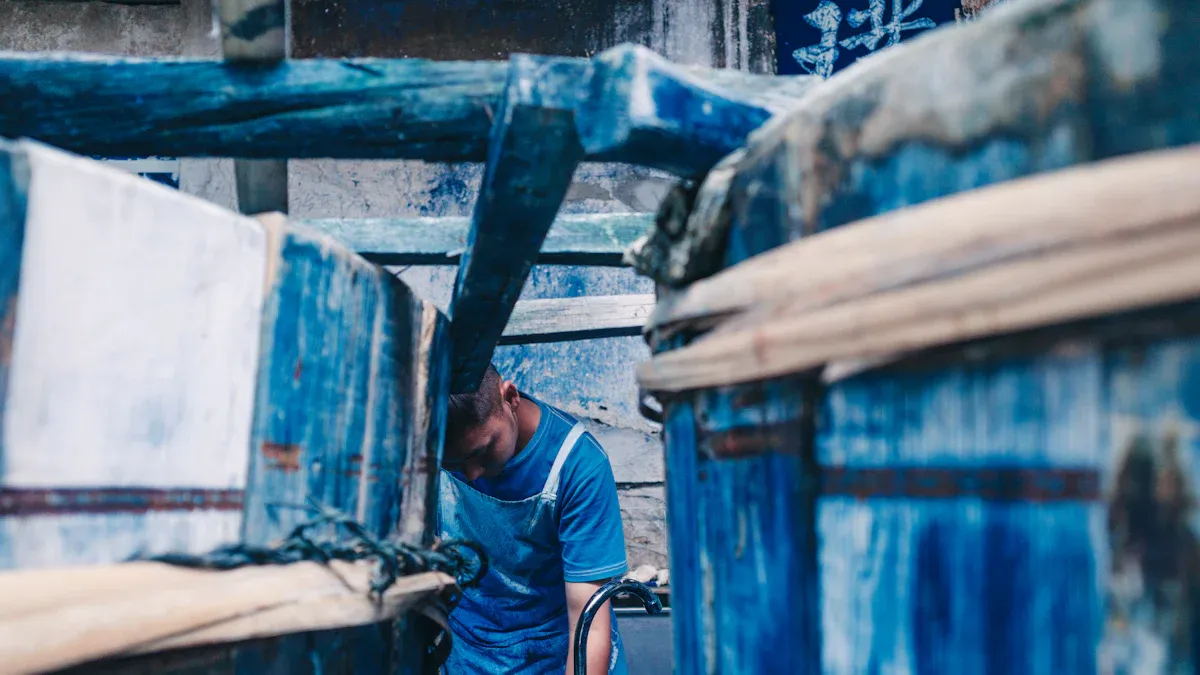
The global fabric dyeing machine market is expanding, with a valuation over $1.2 billion. You must select the right equipment for quality results. The most common options you will encounter are Jet, Jigger, and Beam machines. Your choice depends directly on the fabric's characteristics and the desired final appearance.
Key Takeaways
- Choose the right dyeing machine based on your fabric type. Jet and Soft Flow machines work well for fabrics in rope form, while Jigger and Beam machines are better for open-width fabrics.
- Jet and Soft Flow machines are good for synthetic and delicate knitted fabrics. Jigger machines are best for woven fabrics like cotton and silk. Beam machines are ideal for very delicate, lightweight fabrics.
- Each machine has pros and cons. Jet and Soft Flow machines save water and energy. Jigger machines prevent creases. Beam machines protect delicate fabrics from damage.
Jet and Soft Flow Dyeing Machines
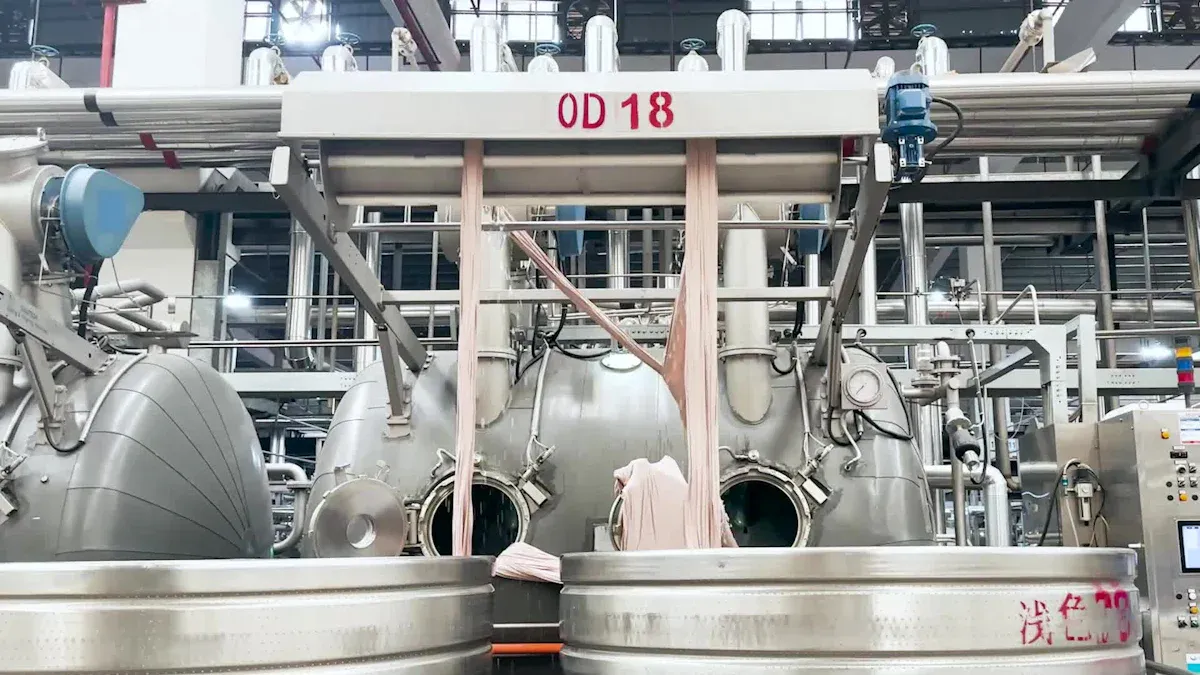
You will find that Jet and Soft Flow machines are among the most popular choices for processing fabric in rope form. This type of Fabric Dyeing Machine operates within an enclosed, high-temperature environment, making it highly effective for dyeing synthetic fibers like polyester.
Working Principle
In these machines, you place the fabric into the chamber in a continuous loop. A high-velocity jet of dye liquor propels the fabric through the dyeing tube. This action ensures both fabric circulation and excellent dye penetration.
Soft Flow machines offer a gentler alternative. They use a lower-pressure stream of liquor to move the material.
- Water keeps the fabric in constant circulation.
- The fabric rope moves continuously from loading to unloading.
- There are no stops for typical drain and fill steps, which protects delicate materials.
Suitable Fabrics
Jet dyeing machines are excellent for robust woven and knitted fabrics, particularly those made from polyester and its blends. Soft Flow machines are specifically designed for more delicate and tension-sensitive materials. You can use them for processing terry towels, fleece, and other knitted fabrics that are prone to pilling or distortion.
Key Advantages and Limitations
A primary advantage is the low liquor ratio, which reduces water, energy, and chemical consumption. Modern machines offer impressive efficiency.
| Machine Type | Typical Liquor Ratio |
|---|---|
| Jet Dyeing Machine | 1:5 - 1:12 |
| Soft Flow Dyeing Machine | 1:4 - 1:8 |
Note: The main limitation is the potential for fabric tangling and the formation of rope marks, especially with high-speed jets. However, advanced models have features to minimize these issues.
The Jigger Fabric Dyeing Machine
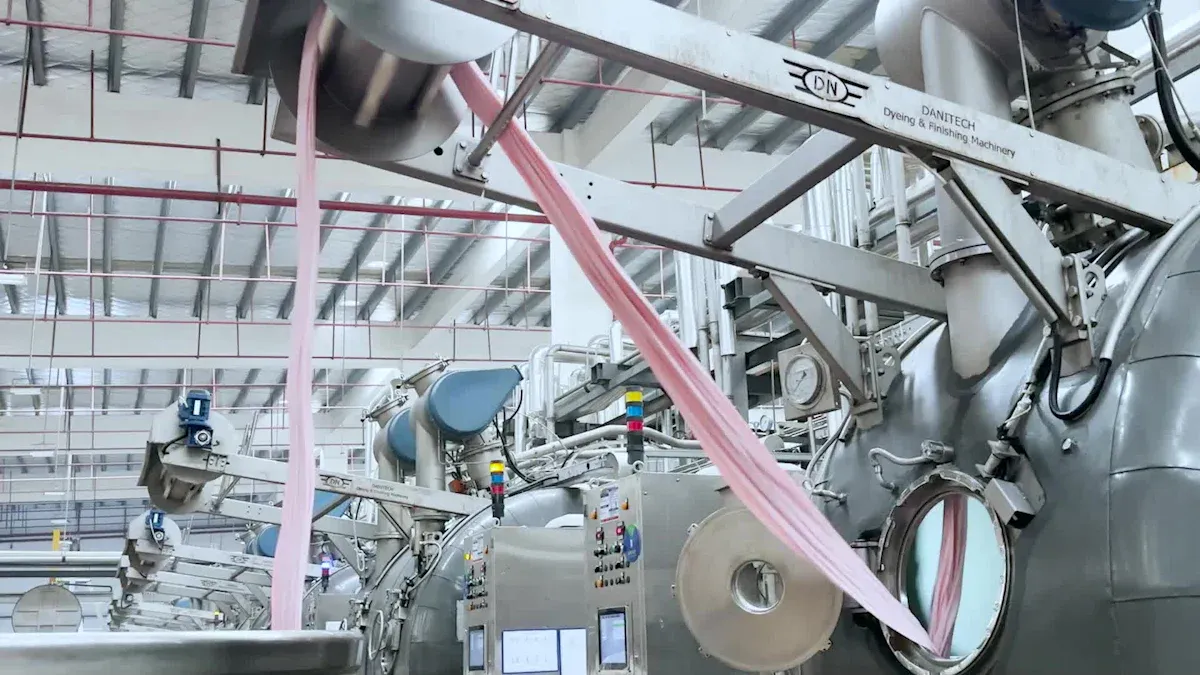
You will find the Jigger Fabric Dyeing Machine is a classic choice for processing woven fabrics in an open-width form. This method is ideal for materials that are sensitive to creasing or distortion when handled in rope form.
Working Principle
In a Jigger, you pass the fabric back and forth between two main rollers through a dye bath at the bottom of the machine. This repeated passage ensures the fabric is evenly saturated with dye. Modern machines use sophisticated systems to maintain constant fabric speed and tension.
- Tension Detection: Sensors constantly measure fabric tension.
- Signal Processing: A control system receives and processes these signals.
- Control Algorithm: The controller compares actual tension to your set value and calculates adjustments.
- Actuator Control: It then instructs motor drives to adjust roller speed and torque, regulating tension.
- Diameter Compensation: The system also calculates the changing roll diameter and compensates to keep tension uniform.
Suitable Fabrics
Jiggers are exceptionally well-suited for dyeing woven cotton, silk, rayon, and polyester blends. The machine's design gives you precise control, which is essential for achieving high-quality results on these diverse materials. You can achieve flawless dyeing because of several key features:
- Adjustable Tension: This ensures perfect processing for both robust cotton and delicate silk.
- Controlled Parameters: You can manage temperature and dye circulation for reproducible shades.
- Crease-Free Conveyance: Synchronized roller speeds prevent damage and ensure even results.
Key Advantages and Limitations
The primary advantage of this machine is its open-width processing. Keeping the fabric flat throughout the cycle prevents the formation of permanent creases and rope marks common in other dyeing methods. This leads to excellent dye uniformity and a high-quality surface finish.
On the other hand, Jiggers typically operate with a higher liquor ratio (around 1:3 to 1:8) compared to Jet machines, leading to higher water and chemical consumption. They are also less suitable for knitted fabrics, which can stretch excessively under tension.
Beam Dyeing Machines
You can use a Beam Fabric Dyeing Machine for processing delicate fabrics in an open-width form. This method is an excellent choice for materials that cannot withstand the mechanical stress of rope dyeing. It offers superior dimensional stability for sensitive textiles.
Working Principle
In this process, you wind the fabric onto a large, perforated beam, which is then placed inside the dyeing vessel. The fabric itself remains stationary. A powerful pump circulates the dye liquor through the material.
- The dye liquor is forced through the perforations in the beam.
- It flows from the inside out, penetrating all layers of the fabric roll.
- This process relies on creating a pressure difference to ensure even dye penetration.
Modern systems use sensors to measure differential pressure between the center and edges of the fabric roll. You can then make adjustments, such as modifying the perforation covering, to equalize the flow and achieve uniform color.
Suitable Fabrics
Beam dyeing is ideal for lightweight, woven fabrics that are prone to creasing or distortion. You will get excellent results with materials that require careful handling. This includes:
- Voiles and Chiffons
- Lightweight Taffetas
- Certain Knitted Goods for Automotive Interiors
- Open-weave Synthetics
The machine’s design is fundamentally different from a package dyeing machine, which is used exclusively for yarn.
Key Advantages and Limitations
The primary benefit is the complete lack of mechanical action on the fabric during dyeing. This static process prevents creasing, abrasion, and distortion.
You achieve exceptional surface quality and dimensional control because the fabric is never put under excessive tension or squeezed in a rope form.
On the other hand, batch sizes are fixed by the beam dimensions; a medium-sized unit may hold up to 200 kilograms. The process is also less suitable for very heavy or dense fabrics, as achieving uniform liquor flow can be challenging.
You must select the right Fabric Dyeing Machine to balance quality and efficiency. This guide offers a quick reference for your decision.
Consider key factors like fabric tension, water usage, and batch size. Your choice directly impacts the final product quality and your operational success.
FAQ
Which machine is best for delicate fabrics?
You should select a Soft Flow or Beam dyeing machine. Soft Flow offers a gentle process, while Beam dyeing eliminates mechanical stress, protecting your delicate materials from damage.
How does liquor ratio impact dyeing costs?
A lower liquor ratio reduces your consumption of water, chemicals, and energy. This directly translates to lower operational costs and improved efficiency for your production line.
| Liquor Ratio | Impact on Costs |
|---|---|
| Low | 👇 Lower Costs |
| High | 👆 Higher Costs |
Can you use a Jigger for knitted fabrics?
You should avoid using a Jigger for most knitted fabrics. The machine's tension can cause excessive stretching and distortion, permanently damaging the material's structure and fit.