How X-Ray Inspection Protects Your Confectionery Brand
X-ray inspection safeguards a confectionery brand's reputation. It detects and removes physically contaminated products before they reach consumers. Advanced chocolate bars x ray equipment provides a critical defense against product recalls. A single recall can cause significant brand damage.
- 15% of consumers state they would never again purchase a recalled brand.
- 21% would avoid any brand made by the same manufacturer.
This technology offers advanced contaminant detection, total quality assurance, and unwavering brand integrity.
What X-Ray Inspection Finds That Other Methods Miss
X-ray inspection technology provides a level of product safety and quality assurance that older methods cannot match. Its capabilities extend far beyond simple metal detection, offering a comprehensive view inside sealed confectionery products.
Detecting Dense Foreign Contaminants
X-ray systems identify foreign bodies by analyzing differences in density. This allows them to detect a wide range of physical hazards that are invisible to metal detectors. Common non-metallic contaminants found on production lines include:
- Glass fragments from light fixtures or jars
- Stones originating from raw agricultural materials
- High-density plastics and rubber from processing equipment
The system's ability to spot these dense materials provides a critical defense against contaminants that would otherwise go unnoticed.
Going Beyond Contamination to Ensure Quality
Modern X-ray equipment also functions as a powerful quality control tool. The technology performs several simultaneous checks to protect product integrity and consistency. For example, a system can measure the mass of a chocolate bar to prevent under-filling or over-filling. It also verifies component counts inside a box, identifies broken or misshapen products, and ensures fillings are correctly distributed. This removes defective items from the line, guaranteeing only perfect products reach the market.
X-Ray vs. Metal Detectors in Confectionery
While metal detectors are useful, they have significant limitations in a confectionery setting. Their performance drops when inspecting products wrapped in foil or metalized film, as the packaging interferes with detection signals. X-ray systems are unaffected by this type of packaging.
Key Takeaway: X-ray inspection offers superior detection for a wider range of contaminants and is not compromised by common confectionery packaging like foil.
| Feature | Metal Detectors | X-Ray Systems |
|---|---|---|
| Detection Principle | Senses magnetic & conductive properties | Senses differences in density |
| Foil Packaging | Ineffective; packaging interferes with signal | Highly effective; penetrates packaging |
| Contaminants Found | Primarily metals | Metal, glass, stone, bone, high-density plastics |
| Quality Checks | None | Mass, fill level, component count, product integrity |
The Direct Impact on Brand Protection and ROI
Investing in advanced inspection technology has a direct, measurable effect on a confectionery company's bottom line and market standing. X-ray systems move beyond being a simple operational expense. They become a strategic asset for financial stability and brand resilience. This technology provides a powerful defense against the enormous costs of product recalls while building a foundation for long-term profitability.
Preventing Costly Product Recalls
A single product recall can devastate a company's finances. The average cost of a food recall often exceeds $10 million when accounting for logistics, stock destruction, and legal liabilities. X-ray inspection equipment directly mitigates this risk. It identifies and removes contaminated products from the production line in real-time. This proactive measure prevents hazardous items from ever leaving the facility, effectively neutralizing the primary cause of physical contamination recalls. By stopping a recall before it starts, a manufacturer protects its financial resources from catastrophic, unbudgeted expenses.
Protecting Your Brand's Reputation
A brand's reputation is its most valuable, yet most fragile, asset. A recall event severely damages consumer trust and loyalty. The discovery of a foreign object in a popular chocolate bar can lead to viral social media posts and negative press, eroding years of brand-building efforts in an instant.
A Critical Risk: A contamination incident can alienate a significant portion of a brand's customer base. Some consumers will refuse to purchase the recalled product again, while others may avoid all products from the same manufacturer.
X-ray inspection serves as a powerful guardian of brand image. It demonstrates a company's commitment to the highest safety and quality standards. This dedication reassures retailers and consumers, strengthening the brand's position as a trusted, premium choice in a competitive market. Consistent delivery of safe, perfect products builds the unwavering consumer confidence necessary for long-term success.
Calculating the Return on Investment (ROI)
The financial case for X-ray inspection is clear and compelling. While there is an initial capital outlay, the return on investment is realized through significant cost savings and operational improvements. Most confectionery manufacturers achieve a full ROI within 18 to 36 months. The investment pays for itself by eliminating major expenses and creating new efficiencies.
Key quantifiable benefits include:
- Recall Prevention: Avoiding the multi-million dollar cost of just one recall can justify the entire investment.
- Reduced Product Waste: Precise detection minimizes the false rejection of good products, lowering scrap rates.
- Labor Savings: Automated inspection and quality checks reduce the need for manual line monitoring.
- Quality Improvement: Catching fill-level errors or broken items reduces customer complaints and associated costs.
- Enhanced Market Access: Compliance with stringent safety standards opens doors to premium retailers and new markets.
Manufacturers can calculate the specific ROI for their operation with a straightforward analysis. This process helps quantify the financial impact of adding an X-ray system to the production line.
A Step-by-Step Guide to Calculating ROI:
- Calculate the net change in labor costs. Subtract the projected labor costs with the new automated system from your current manual inspection costs.
- Determine the change in annual gross profit. Estimate the increase in output (packages per year) based on the new equipment's speed and calculate the resulting profit gain.
- Identify the net change in unique annual expenses. Sum your current costs (e.g., product scrap, rework) and subtract any new costs associated with the equipment.
- Find the total annual net benefit. Add the net gains or losses from labor, gross profit, and unique expenses together.
- Calculate the ROI. Use the formula:
(Total Annual Net Benefit / Total New Machine Cost) x 100. - Calculate the Payback Period (PBP). Use the formula:
Total New Machine Cost / Total Annual Net Benefit.
This calculation provides a clear financial justification, transforming the decision from an expense into a strategic investment in profitability and brand protection.
Meeting and Exceeding 2025 Food Safety Standards
Confectionery manufacturers must navigate a complex landscape of food safety regulations. X-ray inspection technology is a critical tool for meeting and surpassing these requirements. It provides the documentation and control needed to satisfy global standards and prepare for future rules.
Achieving GFSI, BRC, and SQF Compliance
Global Food Safety Initiative (GFSI) programs mandate robust foreign body control. Standards like the BRCGS Global Standard for Food Safety have specific clauses for managing physical hazards. X-ray inspection directly addresses these rules. The technology detects and removes contaminants that other systems miss, including:
- Metal fragments
- Glass shards
- Brittle plastics
- Stones and ceramics
X-ray systems with hygienic designs, such as an IP69 rating, also meet strict equipment requirements. This ensures machinery does not harbor bacteria and can withstand harsh cleaning, helping manufacturers achieve full compliance.
Using Inspection Data for Audits and Traceability
Auditors require verifiable proof of safety protocols. X-ray inspection provides this proof through detailed data. Unlike other methods, modern X-ray systems can archive an image of every single product inspected. This creates objective evidence for quality control and auditability.
Key for Traceability: Advanced software consolidates inspection data from multiple machines into a central database. This allows a manufacturer to track a product through every production stage, providing the complete traceability that auditors demand.
This digital record-keeping makes it simple to demonstrate compliance during an audit.
Future-Proofing Against Stricter Regulations
Food safety regulations are constantly evolving. Regulators now expect complete product traceability and real-time monitoring. Investing in X-ray inspection is a forward-thinking strategy. The technology already provides the data infrastructure needed to meet emerging demands for enhanced documentation. It prepares a company for future trends, such as AI-powered safety systems that analyze production data to predict risks. Adopting this technology now ensures a confectionery brand remains compliant and competitive as standards become even more stringent.
Implementing Chocolate Bars X Ray Equipment on Your Line
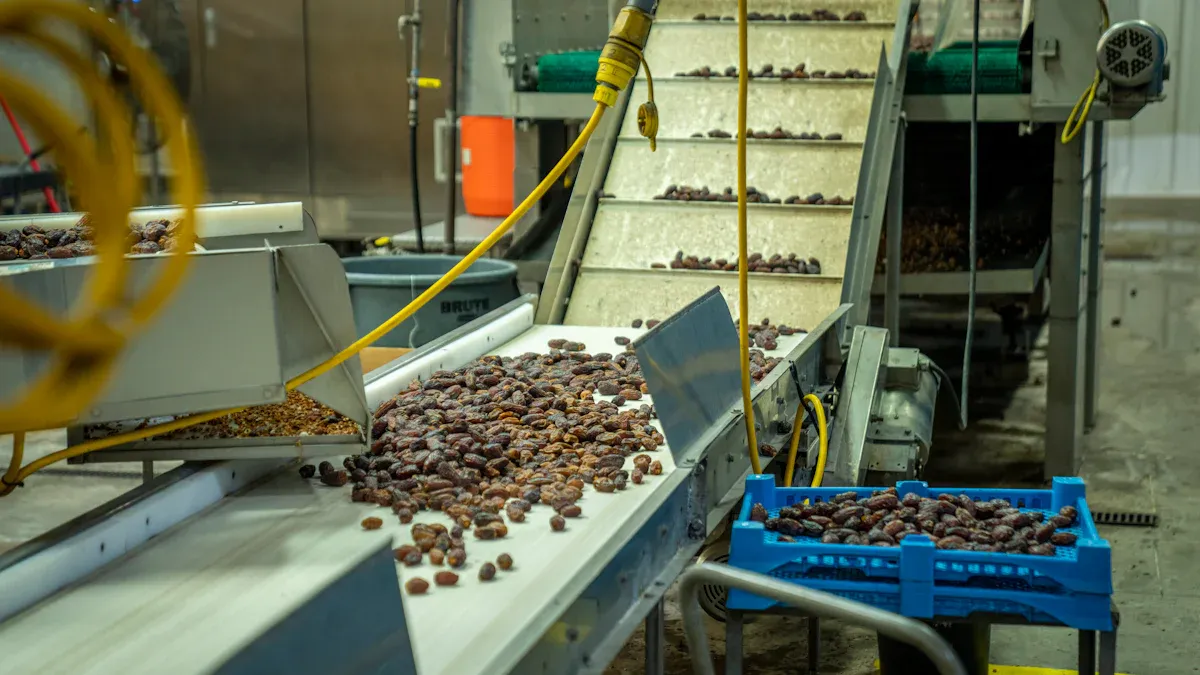
Integrating advanced inspection technology requires careful planning. A manufacturer must consider the specific system, operator safety, and long-term costs. A strategic approach ensures a smooth implementation and maximizes the return on investment for any chocolate bars x ray equipment.
Choosing the Right System for Your Products
Selecting the correct chocolate bars x ray equipment depends entirely on the product and production environment. Different systems are designed for specific applications. For example, a company must decide between a top-down or side-view inspection angle.
| Feature | Top-Down X-ray Systems | Side-View X-ray Systems |
|---|---|---|
| Detection Angle | X-ray beam from above the product | X-ray beam from the side of the product |
| Primary Use | Ideal for flat, uniform products | Best for taller, upright products |
| Best For | Packaged foods, candy bars, baked goods | Bottles, cans, jars, stand-up pouches |
Beyond the system's orientation, a manufacturer must evaluate factors like product uniformity and required inspection detail. An entry-level system may be cost-effective for basic applications. However, inspecting for fine details like air bubbles or small fillers inside a product requires higher-resolution chocolate bars x ray equipment. The right choice balances performance with the specific quality control challenges of the production line.
Addressing Common Safety Concerns
Modern chocolate bars x ray equipment is extremely safe. These are cabinet systems, meaning they are fully shielded to contain all radiation. They produce radiation levels at or below the natural background environment.
Important Note: Operator safety is guaranteed through proper training and system design. The equipment will not operate if access panels are open, preventing any accidental exposure.
Comprehensive training ensures regulatory compliance and safe operation. Operators should complete certified courses covering:
- Radiation Safety Officer (RSO) responsibilities
- Proper equipment handling and basic maintenance
- Regulatory compliance standards
This training empowers employees to operate the chocolate bars x ray equipment safely and efficiently.
Understanding the Total Cost of Ownership
The initial purchase price is only one part of the investment. The Total Cost of Ownership (TCO) provides a complete financial picture over the system's lifespan. When evaluating chocolate bars x ray equipment, a company must account for all associated expenses.
Key factors contributing to TCO include:
- Initial equipment and installation costs
- Operator and maintenance training
- Ongoing service and preventative maintenance
- Energy consumption and utility needs
Annual running costs, driven primarily by power consumption, are a significant factor. Calculating the TCO helps a manufacturer understand the long-term financial commitment of new chocolate bars x ray equipment and make a fully informed purchasing decision.
X-ray inspection is an essential tool for protecting a modern confectionery brand from significant financial and reputational risks. It delivers superior contaminant detection and comprehensive quality control, providing robust brand protection that other methods cannot match. Protect your brand today. Contact our experts to find the right solution for your line.
FAQ
Is X-ray inspection safe for food?
Yes, it is completely safe. The radiation levels are extremely low and do not affect the food's safety, flavor, or texture. The food does not become radioactive.
Can X-ray systems find all contaminants?
X-ray systems detect contaminants based on density. They excel at finding metal, glass, and stone. Low-density items like hair, wood, or cardboard are generally not detectable.
How fast can an X-ray system inspect products?
Modern systems operate at high speeds to match production line requirements. They inspect hundreds of products per minute without slowing down the manufacturing process, ensuring full line integration.
See Also
Discovering Top Chinese Suppliers for X-Ray Inspection Equipment Purchases
Essential Industrial Checkweighers: A Must-Have for Every Food Processing Facility
Understanding Pharmaceutical Checkweighers: Key Features and Core Definitions Explained
Capsule Checkweighers: Top Models for Buyers to Evaluate in 2025
Automatic UV Coaters: Crucial for Achieving High-Speed, Quality Printing Operations