The Essential Guide to Buying Your First Food Packaging Machine
A thorough analysis of the product and its packaging is the foundational step. This initial evaluation directly influences the selection of the right food packaging machine. It prevents costly errors and ensures operational efficiency from the start.
Identify Your Product's Form
The physical characteristics of a food product dictate the type of handling it requires.
- Solids: Items like cookies, candy, or hardware need machines that can handle their size and shape.
- Liquids/Pastes: Products such as sauces, juices, or creams require specific pumps and nozzles to prevent spills and ensure accurate filling.
- Powders/Granules: Coffee, flour, or spices need auger fillers or volumetric cup fillers to manage dust and measure precise amounts.
- Fragile Items: Chips, crackers, or delicate baked goods demand gentle handling to minimize breakage during the packaging process.
Select Your Packaging Material
The choice of packaging material is as important as the product itself. The machine must be compatible with the film, pouch, or container selected. Common materials include flexible films like Polyethylene (PE) or Polypropylene (PP), pre-made pouches, and rigid containers. The material's thickness, sealing properties, and artwork registration all impact machine configuration. A supplier can confirm if a chosen machine works with a specific packaging film.
Tip: Always test the chosen packaging material on the machine before finalizing a purchase. This simple test can save significant time and resources later.
Define Your Production Speed Needs
Production speed requirements are critical for meeting market demand and achieving profitability. A business must calculate its target output in packages per minute (PPM) or packages per hour (PPH).
| Business Scale | Typical Speed (PPM) | Machine Type |
|---|---|---|
| Startup | 10 - 40 PPM | Semi-automatic |
| Mid-size | 40 - 80 PPM | Automatic |
| Large-scale | 80+ PPM | High-speed |
A company should consider its current needs and future growth projections. Selecting a machine with scalable speed capabilities provides flexibility for future expansion. This foresight ensures the equipment remains a valuable asset as the business grows.
Step 1: Analyze Your Product and Packaging
A thorough analysis of the product and its packaging is the foundational step. This initial evaluation directly influences the selection of the right food packaging machine. It prevents costly errors and ensures operational efficiency from the start.
Identify Your Product's Form
The physical characteristics of a food product dictate the type of handling it requires.
- Solids: Items like cookies, candy, or hardware need machines that can handle their size and shape.
- Liquids/Pastes: Products such as sauces, juices, or creams require specific pumps and nozzles to prevent spills and ensure accurate filling.
- Powders/Granules: Coffee, flour, or spices need auger fillers or volumetric cup fillers to manage dust and measure precise amounts.
- Fragile Items: Chips, crackers, or delicate baked goods demand gentle handling to minimize breakage during the packaging process.
Select Your Packaging Material
The choice of packaging material is as important as the product itself. The machine must be compatible with the film, pouch, or container selected. Common materials include flexible films like Polyethylene (PE) or Polypropylene (PP), pre-made pouches, and rigid containers. The material's thickness, sealing properties, and artwork registration all impact machine configuration. A supplier can confirm if a chosen machine works with a specific packaging film.
Tip: Always test the chosen packaging material on the machine before finalizing a purchase. This simple test can save significant time and resources later.
Define Your Production Speed Needs
Production speed requirements are critical for meeting market demand and achieving profitability. A business must calculate its target output in packages per minute (PPM) or packages per hour (PPH).
| Business Scale | Typical Speed (PPM) | Machine Type |
|---|---|---|
| Startup | 10 - 40 PPM | Semi-automatic |
| Mid-size | 40 - 80 PPM | Automatic |
| Large-scale | 80+ PPM | High-speed |
A company should consider its current needs and future growth projections. Selecting a machine with scalable speed capabilities provides flexibility for future expansion. This foresight ensures the equipment remains a valuable asset as the business grows.
Step 2: Understand Common Machine Types
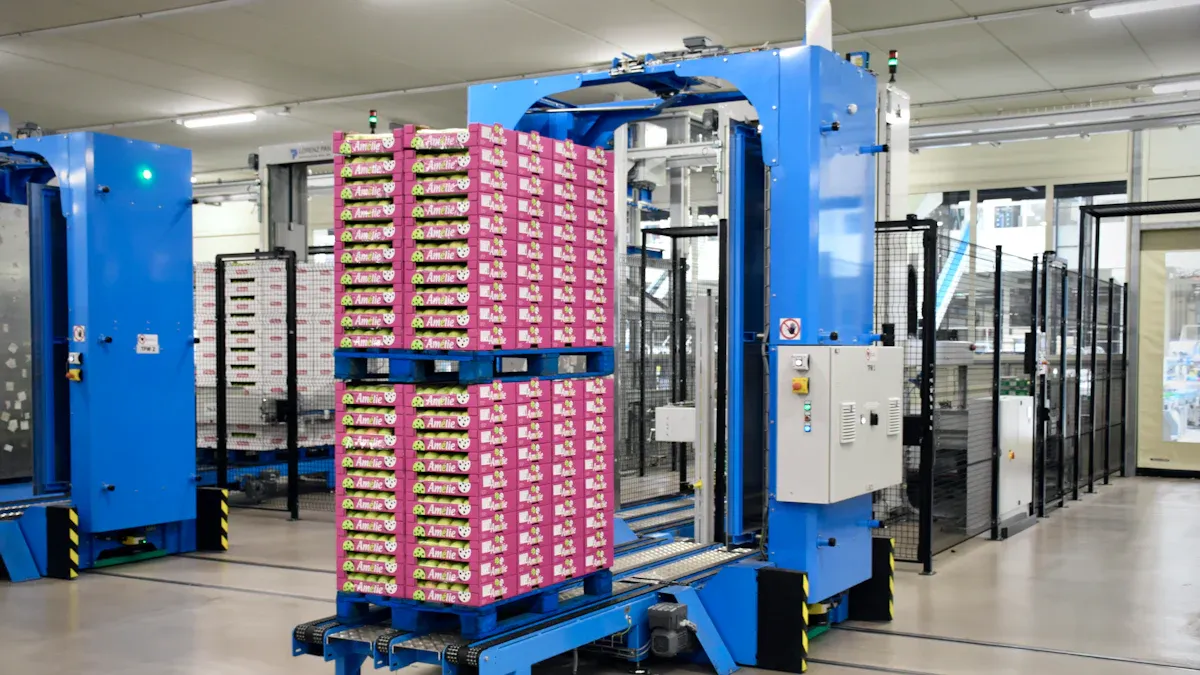
After analyzing your product and production goals, the next step is to explore the equipment itself. The world of packaging machinery is vast, but most operations begin with a few common types. Understanding how each food packaging machine works is essential for matching its capabilities to your specific product and business needs.
Vertical Form-Fill-Seal (VFFS)
A Vertical Form-Fill-Seal (VFFS) machine is one of the most versatile and widely used systems. It creates bags from a flat roll of film, fills the bags with product, and seals them, all in a continuous vertical motion. The film is pulled downward over a forming tube, which shapes it into a bag. The machine then makes a vertical seal and a bottom seal, the product is dispensed, and a top seal is made to complete the package.
VFFS machines are excellent for a wide range of loose products.
- Powders: Flour, protein powder, coffee grounds
- Granules: Sugar, salt, coffee beans
- Liquids: Sauces, soups, dressings
- Snacks: Potato chips, popcorn, pretzels
Key Advantage: VFFS machines typically have a small footprint. Their vertical design saves valuable floor space, making them an ideal choice for facilities with limited room.
Horizontal Form-Fill-Seal (HFFS)
A Horizontal Form-Fill-Seal (HFFS) machine, also known as a flow wrapper, operates on a horizontal plane. Products are fed into the machine individually on a conveyor. The machine then wraps them in film, seals the package on three sides, and cuts it. This process is ideal for solid items that can be handled and pushed easily.
HFFS systems excel at packaging single, uniform items. They are the go-to solution for products that need to be packaged individually before being placed in a larger box or case.
| Product Category | Examples |
|---|---|
| Bakery | Cookies, brownies, pastries |
| Confectionery | Chocolate bars, candy bars |
| Produce | Single peppers, tomatoes, corn on the cob |
| Non-Food | Soap bars, medical devices |
The horizontal motion is gentler than the drop in a VFFS system. This makes HFFS machines a superior choice for delicate or fragile products that could break during a vertical drop.
Pouch Filling and Sealing Machines
Unlike VFFS and HFFS machines that create bags from film rolls, pouch filling and sealing machines work with pre-made pouches. These machines automate the process of opening, filling, and sealing ready-made bags. This equipment is perfect for businesses that want a premium, retail-ready look for their packaging.
The process is straightforward:
- A robotic arm picks a pre-made pouch from a magazine.
- The pouch is opened by grippers or a jet of air.
- A filler dispenses the product into the open pouch.
- The machine seals the top of the pouch shut.
These machines can handle a variety of pouch styles, offering great flexibility for branding and consumer convenience. Common pouch types include stand-up pouches, zippered bags, and spouted pouches for liquids. They are suitable for solids, powders, and liquids, making them highly versatile.
Vacuum Packaging Machines
Vacuum packaging machines extend product shelf life by removing air from the package before sealing it. This process, known as vacuum sealing, significantly reduces oxidation and inhibits the growth of aerobic bacteria and fungi. This type of food packaging machine is essential for preserving the freshness, flavor, and color of many food products.
The operation is typically straightforward:
- An operator places the product inside a special vacuum pouch.
- The open end of the pouch is placed over a seal bar inside the machine's chamber.
- After closing the lid, a pump removes the air from the chamber and the pouch.
- Once the vacuum is achieved, the seal bar heats up to create a strong, airtight seal.
Pro Tip: Vacuum packaging not only preserves food but also prevents freezer burn. It is also an excellent method for marinating meats, as the vacuum pressure helps open the pores of the food, allowing for deeper flavor absorption.
This method is ideal for a variety of products, especially in the meat, poultry, cheese, and seafood industries.
Flow Wrappers
A flow wrapper is another name for the Horizontal Form-Fill-Seal (HFFS) machine mentioned earlier. The term "flow wrapper" perfectly describes its continuous, high-speed operation. Products "flow" along a conveyor belt in a single line and are wrapped in a continuous tube of film. The machine then seals the film at both ends and cuts the individual packages apart.
Flow wrappers are the industry standard for packaging solid items that have a consistent shape and size. Their efficiency makes them indispensable for high-volume production lines. They create a tight, protective, and visually appealing package often referred to as a "pillow pouch."
| Common Applications | Product Examples |
|---|---|
| Snack Foods | Granola bars, energy bars, single-serving crackers |
| Baked Goods | Individual muffins, snack cakes, cookies |
| Frozen Novelties | Ice cream bars, popsicles |
| Multi-packs | Grouping several candy bars or other small items together |
The primary advantage of a flow wrapper is its speed. These machines can wrap hundreds of products per minute, making them a cornerstone of automated packaging operations for consumer goods.
Step 3: Match the Right Food Packaging Machine to Your Product
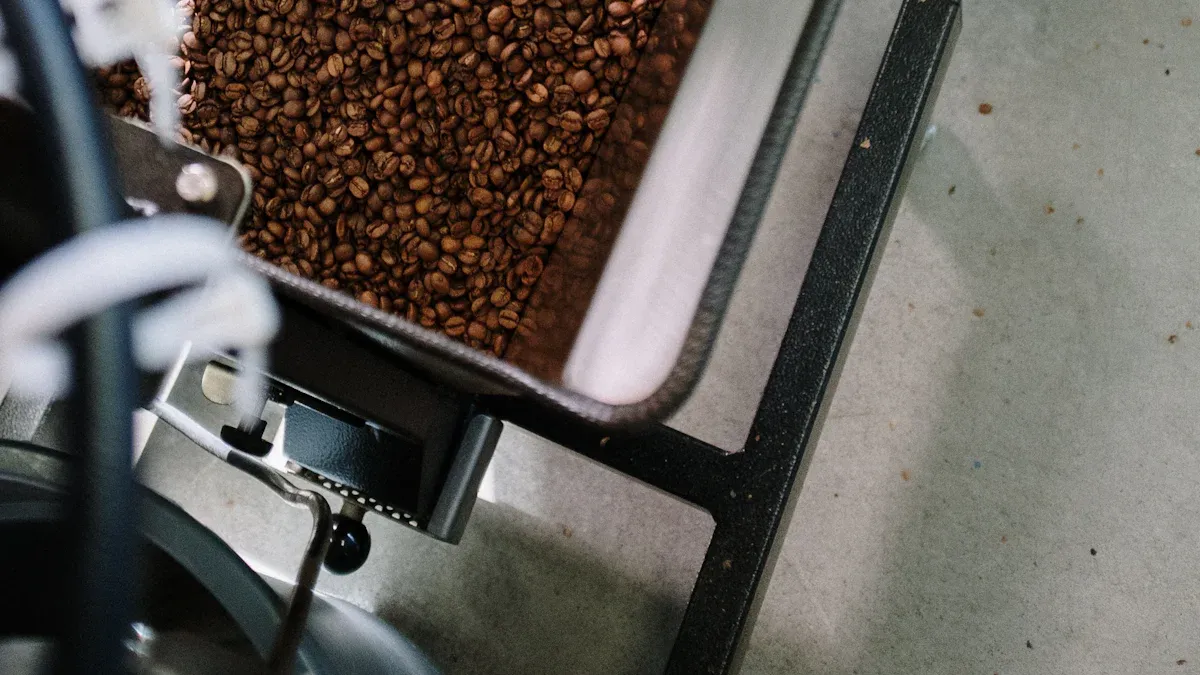
Selecting the correct equipment requires a direct comparison between your product's characteristics and a machine's capabilities. The previous steps helped define your product and survey the available technology. This step connects that knowledge, guiding you to the most effective solution for your specific application. A proper match ensures efficiency, product integrity, and a strong return on investment.
Best Machines for Solids and Granules
Solid and granular products represent a vast category, from durable hardware to delicate snacks. The key is to differentiate between single, uniform items and loose, free-flowing products. Each type demands a different mechanical approach for optimal packaging.
Horizontal Form-Fill-Seal (HFFS) machines, or flow wrappers, are the premier choice for solid, individual items. These machines gently handle products on a conveyor, making them perfect for fragile goods like cookies, chocolate bars, and pastries. The horizontal process minimizes breakage from drops.
Vertical Form-Fill-Seal (VFFS) machines excel with loose, bulk products. These systems use gravity to help fill the bag, making them highly efficient for items like coffee beans, nuts, candy, and popcorn. A multi-head weigher or volumetric filler is paired with the VFFS system to ensure precise measurement for each package.
| Product Type | Recommended Machine | Why It Works |
|---|---|---|
| Single, Solid Items (e.g., granola bars, brownies) | HFFS / Flow Wrapper | Provides gentle handling and creates a tight, individual wrap. |
| Loose, Bulk Items (e.g., coffee beans, pretzels) | VFFS with a weigher | Offers high-speed, accurate filling for free-flowing products. |
| Premium Stand-Up Pouches (e.g., gourmet nuts) | Pouch Filling Machine | Automates filling of pre-made bags for a high-end retail look. |
Best Machines for Powders
Packaging powders like flour, spices, and protein mixes presents unique challenges. Dust control is critical to maintain a clean work environment and prevent machine contamination. Accurate dosing is also essential to avoid product waste and ensure consistent package weights.
The industry-standard solution for powders is a Vertical Form-Fill-Seal (VFFS) machine combined with an auger filler.
- Auger Filler: This specialized dosing device uses a rotating screw to dispense a precise volume of powder. It provides excellent accuracy and helps control dust during the filling process. The auger's design can be customized for different powder types, from fine talc to coarser grounds.
- VFFS Machine: The VFFS system efficiently forms the bag, receives the dose from the auger filler, and seals it securely. This combination creates a streamlined and contained packaging process.
Expert Tip: For extremely fine or dusty powders, ask suppliers about dust collection shrouds or vacuum systems. These accessories integrate with the filler to capture airborne particles at the source, ensuring a cleaner operation and reducing product loss.
Pouch filling machines are also a viable option for powders, especially for brands using premium stand-up pouches. These systems can be equipped with an auger filler to handle the specific needs of powder products.
Best Machines for Liquids and Pastes
Liquids and pastes require a food packaging machine that guarantees a clean fill and a leak-proof seal. Product viscosity—its thickness or resistance to flow—is the most important factor in selecting the right filling technology. Other considerations include product temperature and whether it contains particulates like vegetables in a soup.
VFFS machines are highly effective for packaging liquids when paired with the appropriate filler.
- Piston Fillers: These are ideal for viscous products like thick sauces, pastes, and creams. They use a piston to pull in and push out a precise volume of product, providing high accuracy.
- Pump Fillers: Pumps are better suited for low-to-medium viscosity liquids such as juices, dressings, and oils. They transfer the product from a holding tank into the package.
Pouch filling machines are another excellent choice, particularly for retail products. They can handle pre-made stand-up pouches and are especially popular for items with spouts, like apple sauce or yogurt. The machine fills the pouch and then heat-seals the top or cap to secure the contents. This solution offers great consumer convenience and shelf appeal.
Solutions for Fragile Products
Packaging fragile products requires special attention to prevent breakage and preserve product integrity. Items like potato chips, delicate cookies, and crackers can easily be damaged during the packaging process. The primary goal is to minimize impact, drops, and rough handling. Selecting a machine designed for gentle operation is crucial for these applications.
The most effective solutions prioritize controlled movement over speed alone.
-
Horizontal Form-Fill-Seal (HFFS) / Flow Wrappers: These machines are the top choice for fragile items. Products travel along a flat conveyor belt and are gently wrapped without any significant drops. This horizontal motion is ideal for maintaining the shape and structure of delicate goods.
-
Modified Vertical Form-Fill-Seal (VFFS) Machines: A standard VFFS machine uses gravity, which can cause breakage. However, manufacturers can modify these systems for fragile products. Key adaptations include adding sloped chutes or baffles inside the forming tube to slow the product's descent. Reducing the drop height between the filler and the bottom of the bag also minimizes impact.
-
Pouch Filling Machines: These systems can also be suitable for fragile items. The filling process can be adjusted for a slower, more controlled product transfer into the pre-made pouch. This method gives operators significant control over handling.
Important Consideration: When packaging fragile items, the filling system is just as important as the bagging machine. A multi-head weigher designed for fragile products will use lower vibration levels and shorter drop heights to protect the items before they even reach the bag.
The table below summarizes the best machine choices based on the type of fragile product.
| Fragile Product Type | Recommended Machine | Key Feature for Protection |
|---|---|---|
| Individual Items (e.g., cookies, wafers) | HFFS / Flow Wrapper | Horizontal conveyor prevents drops. |
| Loose Bulk Items (e.g., potato chips, pretzels) | Modified VFFS | Gentle slope chutes and reduced drop height. |
| Gourmet Snacks in Pouches (e.g., baked crisps) | Pouch Filling Machine | Controlled and gentle filling cycle. |
Ultimately, a business must test its specific product with a potential machine. A reputable supplier will offer product trials to demonstrate the machine's handling capabilities and ensure the final packaged product meets quality standards.
Step 4: Evaluate Key Machine Features
A machine's specifications sheet provides a wealth of information. A business must look beyond the basic functions to evaluate features that impact daily operations, efficiency, and long-term value. These details often separate a good investment from a frustrating one.
Speed vs. Changeover Time
Production speed, measured in packages per minute (PPM), is a primary metric. However, overall throughput also depends on changeover time. Changeover is the process of switching the machine from one product or package size to another. A company with a diverse product line may perform several changeovers per day.
A machine with a slightly lower top speed but a much faster changeover time can be more productive overall. Businesses should analyze their production schedules.
- High-volume, single-product runs: Prioritize maximum PPM.
- Multiple products or package sizes: Prioritize quick, tool-less changeovers.
Evaluating this balance helps a company select a machine that truly matches its operational workflow.
Footprint and Space Requirements
The physical size, or footprint, of a food packaging machine is a critical logistical factor. A business must measure its available facility space before shopping for equipment. The measurement should account for more than just the machine's dimensions. It must also include necessary clearance for:
- Operator access for loading materials and monitoring operation.
- Maintenance personnel to service the equipment.
- Storage of raw materials like film rolls and finished goods.
Forgetting to plan for this surrounding operational space can lead to an inefficient and unsafe work environment.
Ease of Cleaning and Sanitation
In the food industry, sanitation is non-negotiable. A machine must be easy to clean to prevent cross-contamination and comply with food safety standards. Equipment designed for easy sanitation saves significant time and reduces labor costs.
Design for Sanitation: Look for machines with stainless steel construction, sloped surfaces that shed water, and minimal flat areas where debris can collect. Parts that contact food should be easily removable for cleaning without the need for tools.
A machine that is difficult to clean poses a risk to product safety and can become a major operational bottleneck. This feature is a crucial aspect of a machine's total value.
Automation and User Interface
The level of automation and the quality of the user interface directly affect a machine's usability and efficiency. Modern food packaging machines rely on a Programmable Logic Controller (PLC) to manage their functions. The operator interacts with this system through a Human-Machine Interface (HMI), which is typically a touchscreen panel. A well-designed HMI simplifies complex operations, reduces training time, and minimizes the risk of operator error.
An intuitive interface is a significant asset for any production line. Businesses should look for an HMI that provides clear navigation and easy access to critical functions. Key features of a user-friendly system include:
- Recipe Storage: Allows operators to save settings for different products and packages. This feature makes changeovers faster and more consistent.
- On-Screen Diagnostics: Helps identify and troubleshoot problems quickly, reducing downtime.
- Multi-Language Support: Accommodates a diverse workforce.
- Real-Time Production Data: Displays important metrics like output speed and package counts.
Pro Tip: Always request a demonstration of the machine's user interface. A system that is easy to navigate for operators will improve overall productivity. An overly complicated interface can become a constant source of frustration and operational delays.
The level of automation should also match a company's needs. Fully automatic systems require minimal operator intervention, handling tasks from film feeding to package discharge. Semi-automatic machines may require an operator to manually place products or initiate each cycle. A business must evaluate the trade-off between the higher initial cost of full automation and the long-term savings in labor and increased throughput.
Step 5: Calculate the Total Cost of Ownership
A smart investment looks beyond the initial price tag. The Total Cost of Ownership (TCO) provides a complete financial picture of the food packaging machine over its lifespan. A business must evaluate all associated expenses to understand the true cost and ensure long-term profitability. This calculation prevents unexpected financial strain and helps justify the capital expenditure.
Beyond the Initial Purchase Price
The purchase price is only the starting point. Several other one-time costs contribute to the initial investment. A comprehensive budget should include these items to avoid surprises.
- Shipping and Freight: The cost to transport the machine from the manufacturer to the facility.
- Installation and Commissioning: Fees for a technician to set up the machine and ensure it runs correctly.
- Initial Operator Training: The cost to train the team to operate and maintain the equipment safely and efficiently.
Considering these factors provides a realistic view of the upfront capital needed.
Factoring in Consumables and Parts
Ongoing operational costs significantly impact the TCO. A business must account for the materials and components the machine uses daily. Consumables are items the machine uses to create the final package, such as packaging film, labels, and ink.
Wear parts are components that degrade over time and require periodic replacement. These include items like sealing jaws, blades, and belts.
Pro Tip: Request a recommended spare parts list from the supplier. This list helps a business budget for future maintenance and minimizes potential downtime by having critical components on hand.
Estimating Energy and Labor Costs
Energy and labor are two of the largest recurring expenses. A business should estimate these costs to complete its TCO analysis. Modern machines often provide energy consumption ratings, measured in kilowatts (kW). Some machines also require compressed air, which adds to utility costs.
Labor costs depend on the machine's level of automation. A fully automatic system may only need one operator to oversee production. A semi-automatic machine might require more hands-on involvement. A company must calculate the hourly wage of operators and the number of shifts to determine the total labor expense.
Step 6: Plan for Long-Term Success
Purchasing a food packaging machine is a significant milestone. A business must also plan for its long-term operation to maximize the return on investment. A forward-thinking strategy considers support, training, and future growth. This approach ensures the machine remains a productive asset for years to come.
The Value of After-Sales Support
The relationship with a supplier does not end after the machine is installed. Reliable after-sales support is crucial for maintaining operational uptime. A machine breakdown can halt production and lead to significant financial losses. A supplier with a strong support system provides a safety net for the business.
Key support services to look for include:
- Technical Phone and Video Support: Quick access to experts for troubleshooting.
- Readily Available Spare Parts: Fast shipment of critical components to minimize downtime.
- Field Service Technicians: The ability to dispatch a professional for on-site repairs.
A responsive support team protects the initial investment and ensures production continuity.
Training and Technical Assistance
Proper training empowers a company's team to operate the new equipment effectively and safely. Comprehensive training from the supplier reduces operator errors, improves efficiency, and minimizes the risk of accidents. The training should cover machine operation, daily maintenance, and basic troubleshooting.
Pro Tip: A business should inquire about ongoing training options. As new employees join or the machine's software is updated, refresher courses keep the team's skills sharp and the machine running at peak performance.
Well-trained staff can handle routine issues independently. This capability reduces reliance on external technicians and lowers long-term maintenance costs.
Ensuring Future Scalability
A business should purchase a machine that meets its current needs and accommodates future growth. Scalability refers to the equipment's ability to handle increased production volume. A machine that is running at maximum capacity from day one leaves no room for expansion. This limitation can force a premature and costly upgrade.
Companies should evaluate a machine's potential for growth.
| Scalability Factor | What to Ask the Supplier |
|---|---|
| Speed Range | What is the machine's maximum rated speed? |
| Upgrade Paths | Can the machine be upgraded with faster fillers or other modules? |
| Size Flexibility | How easily can it adapt to larger or different package sizes? |
Choosing a machine with scalable features provides flexibility. It allows the business to grow without needing to replace its core packaging equipment.
How to Find a Reputable Supplier
Selecting the right supplier is as important as choosing the right machine. A reputable supplier acts as a long-term partner, offering expertise and support that extends far beyond the initial sale. A business must conduct thorough research to find a partner committed to its success. This due diligence protects the investment and ensures a smooth operational future.
A company can identify a quality supplier by evaluating several key areas. A systematic approach helps narrow down the options to find the best fit.
- Industry Experience: Look for suppliers with a proven track record in the food industry. They understand the specific challenges of food packaging, including sanitation standards and product handling. Their experience provides invaluable guidance.
- Customer Testimonials and Case Studies: Reputable suppliers proudly showcase their successes. A business should review case studies and testimonials from companies with similar products. This research offers real-world insight into the supplier's performance.
- Technical Support Structure: A strong support system is non-negotiable. A company needs to ask about the availability of technicians, the process for ordering spare parts, and the typical response time for service requests.
- Product Testing: A trustworthy supplier will offer to test a company's specific product and film on their machines. This trial run demonstrates the equipment's capabilities and confirms it can meet quality standards before a purchase is made.
Actionable Tip: Always ask for customer references. Speaking directly with another business that has used the supplier's equipment and services provides the most honest and valuable feedback. This step can reveal a supplier's true level of commitment and reliability.
Finding a supplier is about building a relationship. A partner who is transparent, knowledgeable, and responsive will be a tremendous asset as a business grows.
Selecting the right equipment is a critical decision that impacts business growth. A structured approach ensures a successful investment. A business should follow a clear path to make an informed choice.
- Analyze the product and packaging needs.
- Understand common machine types and their functions.
- Evaluate key features like speed and sanitation.
- Calculate the total cost of ownership beyond the price tag.
A well-chosen machine is a cornerstone of production efficiency. Use this guide as a checklist during supplier consultations to find the perfect solution for your operation.
FAQ
Should a business buy a new or used machine?
New machines offer a full warranty and the latest technology. Used machines provide a lower initial cost but may carry higher risks. A business must evaluate its budget and risk tolerance carefully. This decision directly impacts long-term reliability and support.
How important is a product trial before purchase?
A product trial is essential. It confirms the machine handles a specific product and film correctly. This test prevents costly mistakes and ensures the final package meets quality standards. The process validates the investment before final commitment.
How long does installation and setup take?
Installation time varies by machine complexity. A simple tabletop unit may take a few hours. A fully integrated automatic line could require a week or more. The supplier provides a detailed timeline during the purchasing process for clear planning.
What is the typical lifespan of a food packaging machine?
A well-maintained machine can last 15 to 20 years. Its lifespan depends on build quality, operating environment, and consistent preventive maintenance. Regular service is the key to maximizing the equipment's longevity and performance over its entire life cycle.
See Also
Essential Industrial Checkweighing Machines for Modern Food Processing Facilities
Leading Capsule Checkweighing Solutions for Discerning Buyers in the Coming Year
Innovative Folder Gluer Advancements Shaping Carton Production Lines by 2025
Six Crucial Industrial Vacuum Cleaners for Every Business Operation to Evaluate
Comparing Top Ampoule Filling Production Line Manufacturers: A Comprehensive Industry Review