Your 2026 Guide to Buying a Portable Hot Water Dispenser
The market for the portable hot water dispenser is projected to reach $70.59 million by 2026. To choose the best model, you must first identify your primary use—whether for travel, office, or home. Next, compare essential features like capacity, temperature control, and power source to find a device that fits your needs.
Key Takeaways
- Choose your portable hot water dispenser based on where you will use it most, like for travel, office, or home.
- Compare important features such as how much water it holds, how hot it gets, and how it gets power to find the best fit.
- Always check for safety features like auto shut-off and boil-dry protection, and clean your dispenser regularly to keep it working well.
What Is a Portable Hot Water Dispenser?
A portable hot water dispenser is a compact appliance that heats water for you anywhere. You can choose between two main types. Your choice depends on how you plan to use the device and how it consumes energy.
Instant vs. Pour-Over Models
Instant dispensers keep a small tank of water constantly hot, giving you heated water immediately. Pour-over models, like an electric kettle, heat a specific amount of water only when you need it. This difference affects heating speed and energy use.
Tip: Instant models are great for frequent use, while pour-over models are more energy-efficient if you only need hot water occasionally.
Here is a quick comparison of the two styles:
| Feature | Pour-Over Models (Kettles) | Instant Dispensers |
|---|---|---|
| Heating Method | Heats a batch of water on demand | Keeps a tank of water constantly hot |
| Heating Speed | Takes 3–7 minutes to boil | Provides hot water instantly |
| Temp. Control | Basic models boil; others are adjustable | Often has fixed temperature presets |
| Energy Use | Uses power only when heating | Uses power continuously on standby |
Key Benefits for On-the-Go Lifestyles
Using a modern dispenser offers you several key advantages, especially when you are away from home. These devices bring convenience directly to your daily routine.
- Ultimate Convenience: Enjoy a hot cup of tea, coffee, or soup in your car, at your desk, or in a hotel room without searching for a kettle or microwave.
- Speed and Efficiency: You get hot water in minutes, or even seconds with an instant model. This is much faster than waiting for a pot to boil on a stove.
- Perfect Temperature: Many models let you select the ideal temperature for your drink. This ensures you never burn your green tea or under-heat water for oatmeal.
Step 1: Match the Dispenser to Your Needs
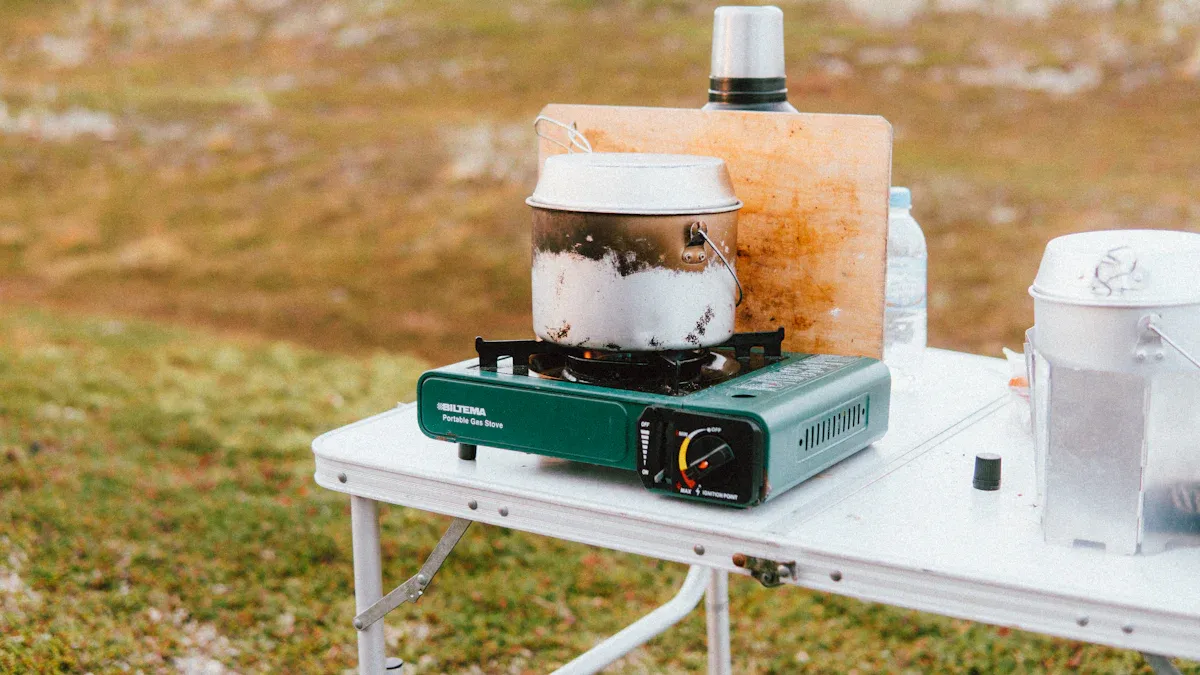
The best portable hot water dispenser for you depends entirely on your lifestyle. You must first identify where you will use it most. A model perfect for a camper is too bulky for a commuter, and a tiny travel kettle may not serve a family at a picnic.
For Travel and Commuting
When you are on the move, size and weight are your top priorities. You need a device that fits easily into a backpack, carry-on, or glove compartment.
- For Daily Commutes: Look for ultra-compact models. Some devices, like the Henotix HX Mini, are small enough to fit in your palm. They are lightweight and provide just enough hot water for a single cup of coffee or tea.
- For International Travel: You need a dispenser that works in different countries. Many brands offer dual-voltage products that support both 120V and 220V power. Models from Bonavita or Unold often include a switch on the bottom. You just need to select the correct voltage to avoid damaging the appliance.
- For Road Trips: If you can boil water before you leave, a thermal dispenser is a great choice. The Andrew James Airpot, for example, has double-walled insulation. It keeps pre-boiled water hot for up to 24 hours, so you can enjoy a warm drink anytime during your drive.
Traveler's Tip: Always check the voltage switch on a dual-voltage kettle before plugging it in. Setting it to 120V in a country with 240V power can permanently damage the device.
For the Office and Dorm Room
In an office or dorm, you have more space than in a travel bag but still need a compact solution. Your goal is to get hot water quickly without disturbing others or cluttering your desk.
Choose a quiet, efficient pour-over model or a small instant dispenser. These devices give you immediate access to hot water for instant noodles, oatmeal, or an afternoon tea break. This saves you from waiting for the shared office kettle. A small footprint ensures the dispenser fits neatly on your desk, a small shelf, or a nightstand.
For Home and Outdoor Events
For home use or larger gatherings, capacity and durability become more important. You need a device that can serve multiple people or withstand the elements.
At home, a larger dispenser can supplement your main kettle during parties. For outdoor events like camping or tailgating, you need a rugged and reliable machine. Portable tankless water heaters, such as models from Eccotemp, are built for tough conditions. Their robust designs can handle job sites and remote outdoor settings. A thermal pot like the Andrew James Airpot also works well for picnics, keeping water hot for hours without needing a power source.
This table helps you compare needs for these different settings:
| Feature | Home Use | Outdoor Events |
|---|---|---|
| Primary Need | High capacity for guests | Durability and reliability |
| Power Source | Wall outlet | Propane, battery, or car adapter |
| Ideal Model | Large instant dispenser | Rugged tankless heater or thermal pot |
| Key Feature | Fast dispensing for groups | All-weather construction |
Step 2: Compare Essential Features
After you identify your primary use, you can dive into the technical details. Comparing key features helps you find a model that performs exactly how you need it to.
Capacity: From a Single Cup to a Full Pot
Capacity is the amount of water a dispenser can hold or heat at one time. This feature directly impacts the device's size and weight. A larger capacity means a heavier, less portable unit. A dispenser holding 5-10 liters can weigh between 5-15 kg, making it difficult to carry. You must balance your need for hot water with your need for portability.
For solo use, a small model that heats a single cup (8–12 oz) is perfect. It is lightweight and easy to pack. For serving a group at a picnic or a small office meeting, you will need a much larger capacity. Some high-capacity systems can even fill a full pot of coffee or tea.
- Single® AXIOM® GPR 35: Holds 1.5 gallons.
- AXIOM® DV-APS Airpot System: Designed for large airpots.
- CWTF15-TC Thermal Carafe System: Fills a 12-cup carafe.
Temperature Control: Getting the Heat Just Right
The right water temperature unlocks the best flavor in your beverages. Boiling water (212°F / 100°C) can burn delicate tea leaves, while lukewarm water will not properly brew coffee. A quality portable hot water dispenser gives you control over the heat.
Many 2026 models offer variable temperature settings. This feature lets you select the perfect temperature for any drink. For example, the VEVOR Hot Water Dispenser provides 11 different temperature options, from 104°F to 194°F (40°C to 90°C). This precision ensures you get the best taste every time.
Did You Know? Top-tier models are incredibly accurate. In tests, the Zojirushi hot water dispenser held a precise temperature of 191°F for four hours, proving its consistency and reliability.
Use this simple guide to get started:
| Beverage | Optimal Water Temperature |
|---|---|
| Green Tea | 167°F – 176°F (75°C – 80°C) |
| Black Tea | 210°F (99°C) |
| Coffee | 195°F – 205°F (90°C – 96°C) |
Power Source: Wall, Battery, or Car Adapter
Your dispenser's power source determines where you can use it. You have three main options.
- Wall Outlet: Most dispensers plug into a standard wall outlet. This is ideal for home, office, and hotel use where power is readily available.
- Car Adapter: For road trips and long commutes, you can find models that plug directly into your vehicle's 12V lighter socket. These devices are perfect for heating water on the go. Popular options include the 12 Volt 20oz. Car Hot Pot and the compact 12 Volt Beverage Heater.
- Battery: For true off-grid freedom, a battery-powered system is your best choice. These units often use propane for heating and a rechargeable battery to power the pump and ignition. They are perfect for remote camping or beach trips.
Here are the main trade-offs for battery-powered models:
| Pros 👍 | Cons 👎 |
|---|---|
| Works anywhere, with any water source | Higher price than basic models |
| Rechargeable battery lasts for multiple uses | Heavier system to carry |
| Often includes a professional carrying case | Battery needs periodic recharging |
Heating Speed and Wattage
Heating speed tells you how long you will wait for hot water. This is directly related to the appliance's wattage (W). A higher wattage means more power and faster heating.
Dispensers with high-power heating elements, around 2000W to 2300W, can heat water in as little as 20 seconds. Models with specially designed 3kW (3000W) elements are even faster, heating water to 205°F (96°C) almost instantly. Lower-wattage models, especially those powered by a car adapter (around 85W–96W), will take much longer.
Pro Tip: If speed is your top priority, look for a dispenser with at least 1500W. If you are using a car adapter, plan for a longer wait time.
Step 3: Consider Safety and Maintenance
A great dispenser is not just convenient; it is also safe and easy to maintain. You should check for key safety features and understand the cleaning process before you buy. This ensures your device works safely and lasts a long time.
Must-Have Safety Features
You must prioritize safety when choosing an electrical appliance that handles hot water. Look for products with safety certifications. The UL Mark is one of the most recognized safety marks in the world. UL Solutions tests products to ensure they do not pose a risk of electric shock or fire. This certification gives you confidence that your dispenser is safe, even if it malfunctions.
Modern dispensers also include built-in safety functions. Two essential features are:
- Auto Shut-Off: This feature automatically turns the dispenser off when the water reaches the right temperature.
- Boil-Dry Protection: This prevents the device from heating when there is no water inside, which protects the heating element from damage. The Ovente KS755 Series is one model that includes both of these important protections.
Cleaning and Long-Term Care
Regular cleaning keeps your dispenser working efficiently and ensures your water tastes fresh. Over time, mineral deposits (limescale) can build up inside. You need to descale your dispenser to remove them. While instructions vary slightly between models, the general process is simple.
Quick Cleaning Guide 🧼
- Fill the dispenser with water and let it heat up.
- Add a descaling solution and let it sit for the recommended time.
- Drain the dispenser completely.
- Flush the system with fresh water before using it again.
Following these simple maintenance steps will keep your portable hot water dispenser in top condition for years to come.
Your perfect portable hot water dispenser is the one that fits your lifestyle. Prioritize the right balance of capacity, temperature, and power source. This guide helps you confidently choose a device that brings convenient hot water wherever you need it in 2026.
FAQ
Can I use tap water in my dispenser?
Yes, you can use tap water. Using filtered water is better. It prevents mineral buildup inside the dispenser and keeps your water tasting fresh and clean.
How much energy does an instant dispenser use?
Instant dispensers use energy on standby to keep water hot. This uses more power than pour-over models. You can find energy-efficient options to save electricity.
Is it safe to pack a dispenser in my luggage?
Yes, it is safe. You must ensure the dispenser is completely empty and dry before packing. This simple step prevents leaks and protects your other belongings.