How to Choose the Perfect Hot and Cold Water Dispenser
An increasing number of households are choosing water dispensers. The market is growing steadily, showing a strong demand for these convenient appliances.
| Metric | Value |
|---|---|
| Market Value in 2022 | USD 2.90 billion |
| Projected Market Value (2032) | USD 5.09 billion |
| Growth Rate (CAGR 2024-2032) | 9.45% |
This guide helps you choose the best hot and cold water dispenser. You must first decide between a bottleless or a bottled model. Then, you can check important features like filtration and safety locks.
Key Takeaways
- Choose between bottleless or bottled dispensers. Bottleless models connect to your water line for unlimited, filtered water. Bottled models use large jugs and offer flexible placement.
- Consider important features for your needs. Look for good filtration, adjustable temperature controls, and child safety locks if you have kids.
- Think about long-term costs. Bottleless dispensers cost more at first but save money over time. Bottled dispensers are cheaper to buy but cost more for water refills.
What Are the Main Dispenser Types?
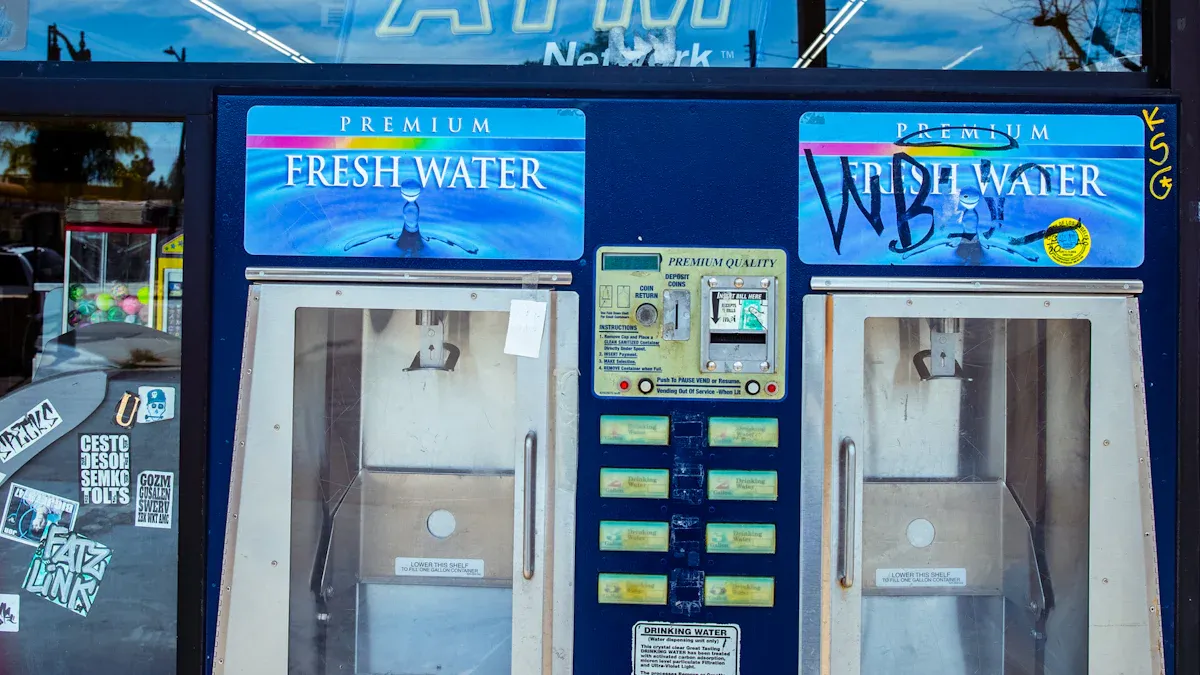
Your first big decision is choosing the fundamental type of water dispenser. Each one offers a different approach to providing hot and cold water. Your choice here will influence cost, convenience, and placement in your home. Let's look at the two main options: bottleless and bottled dispensers.
Bottleless (Point-of-Use) Dispensers
A bottleless dispenser connects directly to your home's water line. It acts like a mini water treatment station, filtering your tap water on demand before heating or chilling it. People often call these "point-of-use" or POU systems.
These models offer a continuous supply of fresh water. You never have to schedule a delivery or worry about running out. They are a "set-it-and-forget-it" solution for many households.
The benefits of a bottleless system are significant:
- Cost-Effective: You pay for your regular tap water, which is much cheaper than bottled water. Your cost per gallon can drop from around $0.79 for bottled water to as little as $0.02 for filtered tap water. This leads to major savings over the year.
- Highly Convenient: You can forget about lifting and storing heavy 5-gallon jugs. There are no deliveries to schedule and no empty bottles cluttering your space.
- Healthier and Cleaner: These dispensers use a sealed, airtight system. This design prevents contamination from airborne particles or germs from human contact. Advanced filtration removes impurities like chlorine and lead, while also preventing exposure to chemicals like BPA that can leach from plastic bottles.
- Environmentally Friendly: You directly reduce your carbon footprint. Bottleless systems eliminate the need for plastic bottle production and the fuel used by delivery trucks. This helps lower greenhouse gas emissions and reduces plastic waste in landfills.
Note: Installation Needs 💧 A bottleless dispenser has specific requirements. You will need a potable water source within about 200 feet and a standard grounded power outlet within 6 feet of the unit. While some people DIY the installation, professional setup is often recommended to ensure the connections are secure and the system runs perfectly.
Bottled Water Dispensers
Bottled water dispensers are the traditional coolers you are likely familiar with. These freestanding units hold a large 3- or 5-gallon water bottle on top or hidden in a bottom cabinet. You simply place the unit where you want it and plug it in.
This type is known for its simplicity and flexibility. You do not need a water line, so you can place it in almost any room, from the kitchen to a home office or garage.
The main advantages of a bottled dispenser include:
- Placement Freedom: No plumbing connection is necessary. You can move the dispenser anywhere you have a power outlet.
- Simple Setup: Operation is straightforward. Just load a new bottle, plug it in, and you have hot and cold water.
- Pre-Filtered Water: The water you buy in the jugs is typically already filtered, which many people prefer for its taste.
However, you should also consider the logistics. You will need to manage the heavy water jugs, which involves lifting, storing, and scheduling replacements. This physical effort and the storage space required for full and empty bottles are common challenges.
To help you decide, here is a quick comparison:
| Feature | Bottleless (Point-of-Use) | Bottled Dispenser |
|---|---|---|
| Water Source | Connects to your water line | Uses large, replaceable bottles |
| Convenience | Unlimited water, no lifting | Requires bottle replacement and storage |
| Upfront Cost | Generally higher | Generally lower |
| Long-Term Cost | Very low (tap water + filters) | High (recurring cost of bottled water) |
| Placement | Needs access to water and power | Needs access to power only |
| Environmental Impact | Low | High (plastic bottles, transportation) |
Countertop vs. Freestanding: Which Fits Your Space?
After choosing between a bottleless or bottled system, you need to decide where the dispenser will live. Your choice between a freestanding or countertop model depends on your available space and how you plan to use it.
Freestanding Models
Freestanding dispensers are tall, standalone units. You can place them almost anywhere with a power outlet. These models are a great fit if you have open floor space in your kitchen, breakroom, or home gym. They are powerful and built to serve many people.
This makes them ideal for:
- Larger families with high water needs.
- Workplaces, cafes, and gyms.
- Reception areas or meeting rooms.
Size Check 📏 Freestanding units are substantial. A typical model might stand around 40 inches tall and weigh over 40 pounds. You should measure your intended space to ensure a good fit.
Countertop Models
Countertop dispensers offer a compact solution for instant hot and cold water. You can save floor space by placing these smaller units directly on your kitchen counter or in a breakroom. They provide the same benefits as larger models but in a more space-efficient design.
These models work best when you want to keep your floor clear. They are perfect for small offices and home kitchens where counter space is available. Countertop units often connect to your water line, giving you unlimited filtered water without the clutter of bottles. They are an excellent eco-friendly choice that reduces plastic waste.
Key Features to Find the Best Hot and Cold Water Dispenser
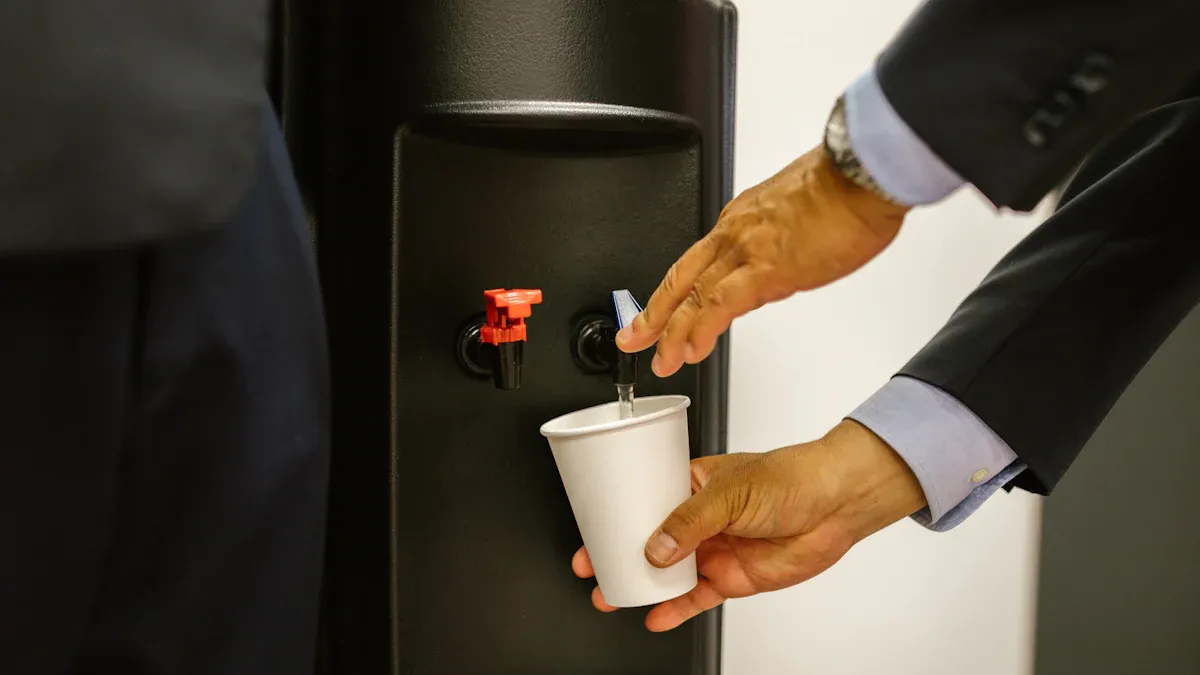
Once you know the type and style you want, you can focus on the specific features that make the best hot and cold water dispenser for your needs. These details determine the quality of your water, your daily convenience, and the safety of your household.
Filtration Systems: From Carbon to RO
Filtration is a critical feature, especially for bottleless (point-of-use) models that connect to your tap water. A good filter system removes impurities, improves taste, and ensures your water is clean and healthy. Excellent filtration is a non-negotiable feature if you are choosing a bottleless model, and it's a key factor in finding the best hot and cold water dispenser overall.
Here are the most common types of filters you will encounter:
- Carbon Filters: These are the most common. They use activated carbon to remove chlorine, pesticides, and other chemicals that affect taste and odor.
- Sediment Filters: These filters capture larger particles like dirt, rust, and sand. They often work as a pre-filter to protect more sensitive filters down the line.
- Reverse Osmosis (RO) Filters: This is one of the most effective filtration methods. An RO system uses a semipermeable membrane to remove up to 99% of dissolved solids, including heavy metals like lead, fluoride, and bacteria.
Look for Certifications 🏆 When comparing models, check for certifications from the National Sanitation Foundation (NSF). Standards like NSF/ANSI 42 (for chlorine, taste, and odor) and NSF/ANSI 53 (for health-related contaminants like lead) confirm that the filter performs as advertised.
Adjustable Temperature Controls
A key benefit of a water dispenser is instant access to water at the perfect temperature. Most modern units offer fixed hot and cold settings, but some advanced models give you more control.
The typical temperature ranges are designed for common uses.
| Setting | Temperature Range |
|---|---|
| Cold | 43°F–50°F (6°C–10°C) |
| Hot | 165°F–194°F (74°C–90°C) |
Cold water in this range is crisp and refreshing, perfect for a hot day. The hot water is ideal for making instant coffee, oatmeal, or soup. Some high-end models can even produce water at approximately 200°F (93°C), which is hot enough to properly brew black tea. If you are a tea or coffee enthusiast, a dispenser with adjustable or higher temperature settings might be a great choice.
Capacity and Dispensing Rate
Capacity and dispensing rate affect how well the dispenser keeps up with your needs.
- Capacity refers to how much hot and cold water the unit can hold in its internal tanks at one time. A larger tank means more chilled or heated water is ready to go, which is great for busy households or offices.
- Dispensing Rate, or flow rate, measures how quickly water comes out of the faucet. It is often measured in gallons per minute (GPM). A slow flow rate can be frustrating when you are filling a large water bottle or pot.
While a dispenser's flow rate is usually lower than a kitchen faucet's, it helps to have a general idea of how it compares to other appliances.
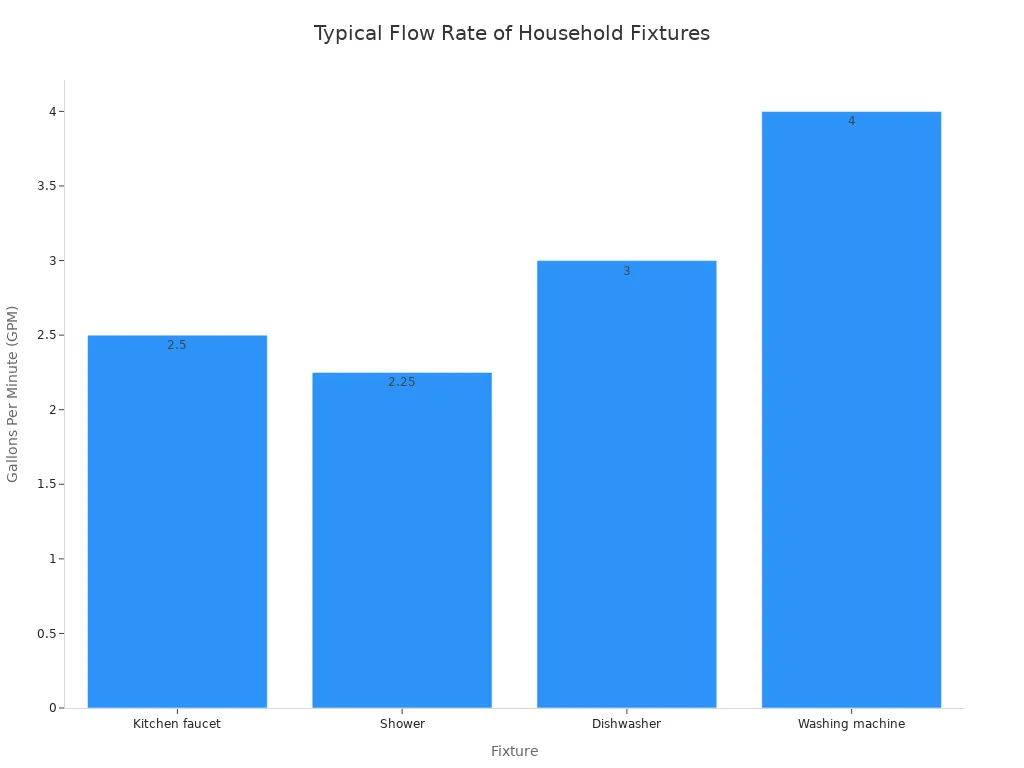
A faster dispensing rate means less waiting. You can test this by filling a measuring cup for 10 seconds and doing a simple calculation to find the GPM.
Child Safety Locks
If you have young children at home, a child safety lock on the hot water tap is not just a feature—it is a necessity. Hot water from a dispenser can cause serious burns in seconds. This feature is essential for finding the best hot and cold water dispenser for a family home.
Manufacturers use several types of safety mechanisms to prevent accidents:
- Button Lock Mechanisms: These require you to press a separate safety button while pushing the hot water lever. This two-handed action is difficult for a small child to perform.
- Lever Lock and Lift-to-Unlock Designs: These systems use a mechanical block. You must first slide or lift a part of the lever before it will dispense hot water.
- Child-Proof Safety Switches: Some models place a switch on the back or top of the unit to disable the hot water function entirely.
This table breaks down the most common lock types:
| Safety Lock Type | Activation Method | Primary Advantage | Common Usage Environment |
|---|---|---|---|
| Button Lock | Press button + push lever simultaneously | Prevents accidental activation through dual motion | Households, offices |
| Lever Lock | Lift or slide lever before pressing | Mechanical simplicity and durability | Offices, commercial areas |
| Dual-Step System | Press safety switch + engage lever | Enhanced protection with electrical control | Public and industrial environments |
| Child-Proof Switch | Toggle or hidden button placement | Prevents child access effectively | Homes, schools, childcare centers |
When you shop, look for products that are UL Certified or Energy Star Approved. These labels indicate that the dispenser has passed general safety and performance tests.
Understanding Long-Term Costs
A water dispenser is a long-term investment. You should look beyond the initial price tag. Consider the ongoing costs to understand the total expense over time. This helps you make a smart financial choice.
Upfront Purchase Price
Your initial cost will depend on the dispenser's type and features. Bottled dispensers usually have a lower purchase price. Bottleless models often cost more upfront. Advanced features also increase the price. For example, a dispenser with a basic under-sink filter might cost between $170 and $580. A model with a more complex reverse osmosis (RO) system can range from $300 to $950.
| System Type | Total Investment |
|---|---|
| Under-sink Filter | $170 – $580 |
| Under-sink Reverse Osmosis | $300 – $950 |
Energy Consumption
Your water dispenser will use electricity to heat and cool water. This adds a small amount to your monthly utility bill. You can look for an Energy Star certified model. These units are designed to be more efficient. They use less power, which saves you money over the life of the appliance.
Ongoing Maintenance and Supplies
Ongoing costs are where you see the biggest difference between dispenser types. A bottled water service for a family can cost $30 to $50 each month. Bottleless systems save you money by using your tap water.
| Feature | Bottled Water Dispenser (Monthly) | Bottleless Water Dispenser (Monthly) |
|---|---|---|
| Water Cost | $7 - $10 per jug | Included in your water bill |
| Rental/Service Fee | $5 - $9 | $55 - $75 (fixed price) |
| Typical Office Cost | $80 - $110 | $55 - $75 (unlimited water) |
Bottleless models require filter changes. The replacement schedule depends on the filter type and your water usage.
- Carbon filters: Replace every 6 to 12 months.
- Sediment filters: Replace every 6 to 9 months.
- Reverse osmosis membranes: Replace every 2 years.
Installation and Placement Guide
Proper installation and placement ensure your water dispenser works safely and efficiently. You need to decide if you will install it yourself or hire a professional. You also need to find the right spot for it in your home.
DIY vs. Professional Installation
You can install a bottleless water dispenser yourself if you are comfortable with basic plumbing. A DIY project requires the right tools and careful steps.
DIY Installation Checklist 🛠️ Before you start, make sure you have the necessary tools. You will likely need:
- An adjustable wrench and pliers
- Screwdrivers and a utility knife
- Plumber’s tape for a secure seal
- A bucket and towels for any spills
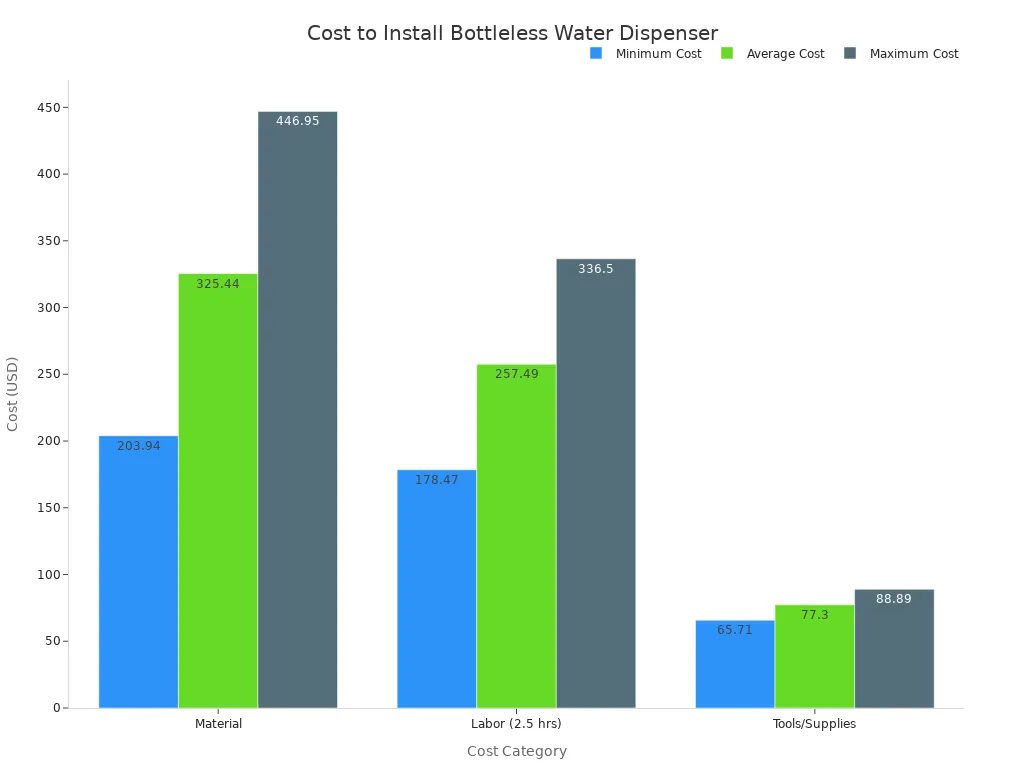
Hiring a professional is a great option if you are not comfortable with plumbing. A pro ensures the connections are secure and leak-free. Professional installation costs vary, but the average price is around $660. This cost covers labor, materials, and supplies.
Location and Ventilation Needs
Where you place your dispenser matters. The unit needs good airflow to work correctly. The cooling system can overheat without proper ventilation.
Follow these simple placement rules:
- Leave at least 6 inches of clearance on all sides of the dispenser.
- Do not place the unit in direct sunlight.
- Keep it away from heat sources like ovens or radiators.
Following these guidelines helps your dispenser run efficiently. It also extends the life of the appliance.
Cleaning and Maintenance Essentials
You must keep your water dispenser clean for it to work well and provide safe water. Regular maintenance prevents bacteria growth and ensures great-tasting water. Some models offer features to help, while others require manual cleaning.
Self-Cleaning Functions
Many modern dispensers have self-cleaning technology. This feature makes maintenance much easier. These systems use advanced methods to keep the water tanks sanitary without harsh chemicals.
- UV Cleaning: This method uses ultraviolet light inside the cold water tank. The UV light kills bacteria and stops them from growing. It often runs on an automatic schedule, like a 40-minute cycle every few hours.
- Ozone Cleaning: This system creates an ozone solution from air, water, and electricity. The ozone kills bacteria and prevents biofilm buildup. It is a safe method used for over a century.
Manual Cleaning Routines
Even with self-cleaning features, you will need to perform some manual cleaning. A regular cleaning schedule keeps your dispenser in top condition.
Recommended Cleaning Schedule 🗓️
- Monthly: You should drain the dispenser completely. Then, flush it with about 5 liters of fresh water.
- Quarterly: A full sanitization is necessary. For bottleless models, you should also replace the filters on a similar schedule.
You can use simple, safe household products to sanitize your dispenser. These solutions effectively remove germs and mineral buildup.
- White vinegar: Mix a solution of half water and half white vinegar.
- Baking soda: You can make a paste of baking soda and water to scrub away stubborn buildup.
Choosing the best hot and cold water dispenser means balancing dispenser type with features and cost. You must decide between a bottleless unit's unlimited supply or a bottled model's simple setup. Reviewing filtration, temperature controls, and safety will help you confidently select the best hot and cold water dispenser for your home.
FAQ
How often should I clean my water dispenser?
You should clean your dispenser every 3 to 6 months. Regular cleaning prevents bacteria buildup. It also ensures your water always tastes fresh and stays safe to drink.
Can I turn off the hot or cold water function?
Yes, you can save energy. Most dispensers have switches on the back. You can use them to turn off the heating or cooling functions when you do not need them.
How long do water filters last in a bottleless dispenser?
Filter life depends on the filter type and your water usage. You should replace most carbon filters every 6 to 12 months. RO membranes can last up to 2 years.