Your 2026 Buyer's Guide to Sweet Potato Processing Lines
The global sweet potato market is forecast to reach an estimated value of USD 40.05 billion by 2026. Processed products, with a projected 10-12% Compound Annual Growth Rate, comprise a significant 40% of this expanding sector.
A standard processing line configuration includes a Washing/Peeling Machine, Cutting Machine, Blanching Machine, Dehydrator/Frying Machine, and Packaging Machine.
However, the final product dictates the exact machinery required, from a dried sweet potatoes sorting machine for snacks to a finisher for purees.
Step 1: Match Machinery to Your End-Product

The journey from raw sweet potato to a finished, marketable good is a specialized one. The specific equipment in a processing line is determined entirely by the final product. A line designed for fries will not produce flour, and a puree line requires unique finishing equipment. Businesses must first define their product to select the correct machinery.
For Sweet Potato Fries and Chips
Processors require a specific sequence of machines for sweet potato fries and chips. This linear process flow ensures consistency in shape, texture, and taste. Each stage prepares the product for the next, culminating in a ready-to-package snack.
The standard production line for fries and chips includes:
- Washing and Peeling Machine: Removes dirt and skin. Brush-type peelers are common for this application.
- Cutting Machine: Slices the sweet potatoes into uniform strips (fries) or thin rounds (chips). Blade customization is key for product consistency.
- Blanching Machine: A brief heat treatment in hot water or steam. This step deactivates enzymes, preserves color, and pre-cooks the product slightly.
- De-watering Machine: Uses centrifugal force or air blasts to remove surface water after blanching. This is a critical step for achieving a crispy texture and ensuring safety during frying.
- Frying or Drying Machine: This is the main cooking stage. Continuous fryers submerge the product in hot oil, while industrial air dryers offer a lower-fat alternative.
- De-oiling Machine: Vibrating conveyors or centrifugal spinners remove excess oil from fried products.
- Seasoning Machine: A rotating drum evenly coats the fries or chips with flavorings.
- Packaging Machine: Weighs and seals the final product into bags for distribution.
Note: The choice between a continuous fryer and an industrial air dryer is a major decision point. Fried products have a traditional taste and texture, while air-dried or baked alternatives cater to the health-conscious market. This single choice significantly alters the line's configuration, cost, and energy footprint.
For Sweet Potato Flour and Starch
The process for flour production follows a different path. It focuses on dehydration and pulverization. The primary goal is to break down the cellular structure of the sweet potato and mill it into a fine, consistent powder.
The typical process involves washing, peeling, slicing, and extensive drying. After the sweet potato slices are completely dehydrated, the milling stage begins. Several types of milling machines are available, each offering different capabilities.
- Grinders and Mashers: These machines, such as the Fresh Sweet Potato Grinder, can achieve a fine particle size, often up to 200 mesh, suitable for high-quality flour.
- Electric Paste Milling Machines: These are also capable of reaching a 200-mesh particle size, turning dried sweet potato pieces into a fine powder.
- General Pulverizers: These machines are common for flour production. They come in different models, including 'ordinary pulverizers' and more advanced 'water-cooled pulverizers' that prevent overheating during the milling process, which can protect the nutrients and color of the flour.
Selecting the right mill depends on the desired fineness of the flour and the production scale.
For Sweet Potato Puree
Creating a smooth puree, especially for products like baby food or gourmet sauces, requires a focus on texture refinement. The initial steps often involve washing, peeling, and cooking the sweet potatoes, typically through steaming, to soften them completely.
The critical stage is the finishing process, where the cooked sweet potato is transformed into a smooth, homogenous paste. Processors primarily choose between two machines for this task: a colloid mill or a homogenizer. Each operates on a different principle and delivers a distinct final texture.
Pro Tip: A colloid mill is often sufficient for creating a very fine puree. However, for products demanding an exceptionally smooth, stable, and non-gritty mouthfeel, such as premium baby foods, manufacturers often pass the puree through a homogenizer after initial milling.
The table below outlines the key differences between these two essential pieces of equipment.
| Feature | Colloid Mill | Homogenizer |
|---|---|---|
| Mechanism | High-speed rotor-stator interaction (shearing) | High-pressure pumping through a narrow valve |
| Texture Output | Ultra-fine, smooth puree | Fine, emulsified, uniform texture |
| Particle Size Reduction | Shears food particles through narrow gaps | Breaks down fat globules and solid particles |
| Emulsion Stability | Excellent for emulsification and dispersion | Helps stabilize mixtures, prevents separation |
| Mouthfeel | Produces ultra-fine purees | Enhances palatability, eliminates grittiness |
| Common Use | Food (purees, sauces), pharma, cosmetics | Dairy, sauces, infant formulas, beverages |
| Baby Food Use | Widely used for ultra-fine purees | Used after milling for silky-smooth consistency |
This choice directly impacts the final product's quality, stability, and consumer appeal, making it a crucial consideration in line design.
Step 2: Consider Specialized and Ancillary Equipment
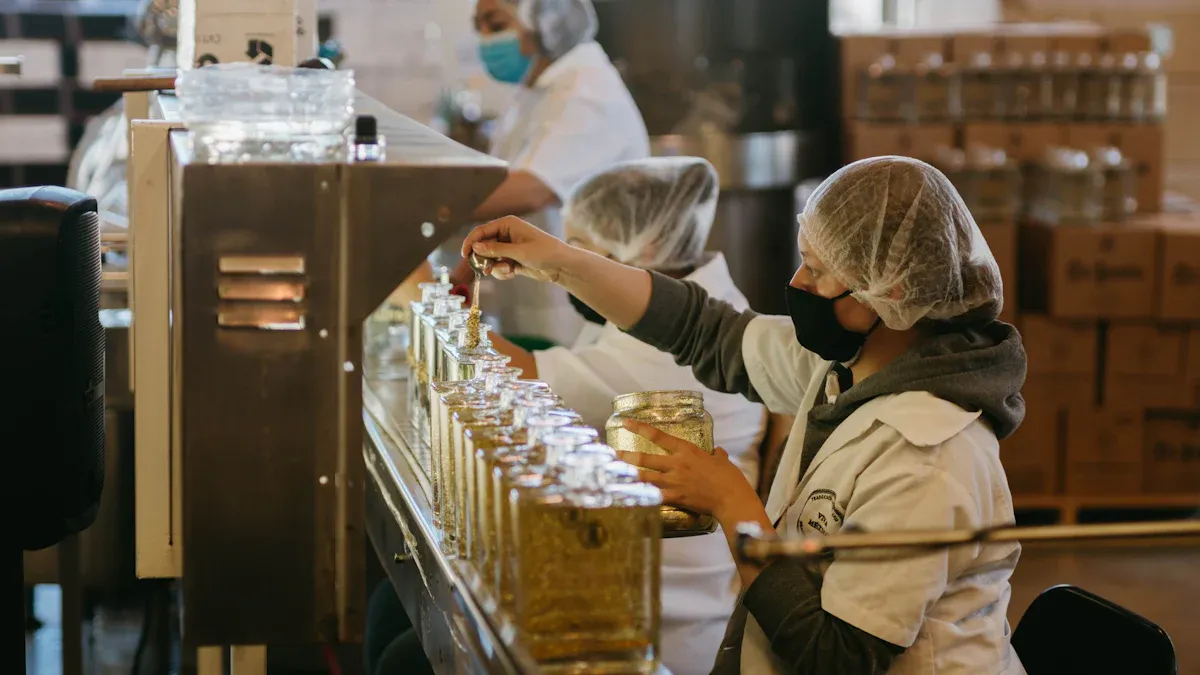
Beyond the core processing sequence, ancillary machines play a vital role in elevating product quality, ensuring consistency, and improving operational efficiency. These systems handle tasks from initial raw material inspection to resource management, directly impacting the final output and profitability.
Sorting and Grading Machines
Automated sorting is the first step toward a premium product. Optical sorting machines provide high throughput and exceptional accuracy, automating the quality grading process. This automation increases the yield of graded lots and boosts revenue. Processors program modern grading equipment, which uses AI computer vision and X-ray technology, to enforce strict quality standards.
USDA Grading Standards Sorting machines separate sweet potatoes based on criteria such as:
- Cleanliness and Firmness
- Sizing (length, diameter, weight)
- Shape (well-shaped vs. misshapen)
- Freedom from damage, disease, or defects
Dried Sweet Potatoes Sorting Machine
For snack products, a specialized dried sweet potatoes sorting machine is indispensable for post-processing quality control. After frying or dehydrating, pieces can still have defects that compromise the final product. An advanced dried sweet potatoes sorting machine uses AI to identify and remove imperfect items with precision. The capabilities of a modern dried sweet potatoes sorting machine are critical for brand protection. This investment in a quality dried sweet potatoes sorting machine ensures only the best products reach the consumer by detecting issues like:
- Old or new bruises
- Rot or green spots
- Misshapen pieces
- Sprouts or growth cracks
Choosing the right dried sweet potatoes sorting machine is a key decision for any snack producer.
Water Treatment and Recycling
Sweet potato processing is water-intensive. Effective water treatment systems are crucial for sustainability and reducing operational costs. Processors can implement various technologies to manage wastewater. Mechanical systems like refining sieves and hydro cyclones efficiently separate larger solids such as fibers and peels. For finer contaminants, advanced technologies like precoat filtration or specialized adsorption filters effectively remove suspended starches and proteins, allowing for water recycling and reducing the environmental footprint of the facility.
Step 3: Evaluate Key Technical Specifications
After defining the product and line configuration, buyers must scrutinize the technical specifications of the machinery. These details determine the line's performance, durability, and operational efficiency.
Processing Capacity (kg/hr)
Processing capacity dictates the volume of raw material the line can handle per hour. This specification must align with the business's production targets. Manufacturers offer lines for various scales.
| Scale of Production Line | Capacity Range (kg/hr) |
|---|---|
| Small-scale | 50 - 300 |
| Large-scale (Automatic) | 300 - 2000 |
Specific configurations, such as a 500 kg/hr line, are common. Many of these machines are also versatile enough to process other root vegetables like cassava and taro.
Material and Construction (SUS304 vs. SUS316)
The construction material directly impacts food safety and equipment longevity. Food processing machinery must use food-grade stainless steel.
For a material to be considered food-grade, it must be compliant with FDA regulations. Organizations like the NSF certify that materials meet standards for food contact. A key requirement is that the stainless steel contains a minimum of 16% chromium for corrosion resistance.
SUS304 is the industry standard, offering excellent corrosion resistance. For processing lines that use high salt or acidic ingredients, SUS316 provides superior resistance and is the preferred choice.
Automation and Control Systems (PLC)
Modern processing lines use Programmable Logic Controllers (PLCs) to automate and monitor operations. A PLC system enhances consistency and reduces labor costs by minimizing the need for manual intervention. It executes repetitive tasks with high precision, reducing human error. For example, in a blanching machine, a PLC can:
- Maintain water temperature within ±1°C.
- Adjust blanching time with second-level precision.
- Control conveyor speed to prevent jams.
Energy and Water Consumption
Buyers should request detailed data on the energy (kWh) and water (m³/hr) consumption for each machine. Efficient equipment lowers long-term operational expenditures (OPEX) and supports sustainability goals. Analyzing these figures is essential for calculating the total cost of ownership and ensuring profitability.
Step 4: Analyze the Total Cost of Ownership (TCO)
A smart investment looks beyond the initial price tag. The Total Cost of Ownership (TCO) provides a comprehensive financial picture, encompassing the initial purchase, setup, and long-term operational expenses. Businesses must evaluate all three areas to accurately forecast profitability.
Initial Purchase Price (CAPEX)
The initial purchase price, or Capital Expenditure (CAPEX), is the most visible cost. This figure varies widely based on capacity and automation level. For example, a semi-automated line with a 500 kg/hr capacity can range from $50,000 to $80,000. Smaller, more basic lines might start as low as $3,000, while highly automated, large-scale systems can exceed $80,000. Many of these lines offer versatility, allowing processors to handle other products like potato chips or fries with minimal modification.
Installation and Commissioning Costs
The purchase price does not cover the costs of getting the line operational. Buyers must budget for several additional expenses. These often include:
- Freight, shipping insurance, and import duties.
- Site preparation, including utility hookups (power, water, drainage).
- Fees for the supplier’s technicians to oversee installation and train staff.
- Initial raw materials for testing and calibration runs.
These costs can add a significant amount to the initial investment.
Long-Term Operational Costs (OPEX)
Operational Expenditures (OPEX) are the ongoing costs required to run and maintain the processing line. Key OPEX components include labor, utilities, and spare parts. Maintenance is a particularly critical factor. While world-class facilities aim for annual maintenance costs between 2-5% of the equipment's value, many plants spend far more.
A comprehensive TCO analysis prevents surprises. Factoring in OPEX from the start helps businesses set realistic production cost targets and ensure long-term financial health. 📈
Ignoring these recurring expenses can seriously impact a business's bottom line.
Step 5: Select a Reliable Supplier
The long-term success of a processing line depends heavily on the manufacturer. A partnership with a reliable supplier ensures quality equipment, responsive service, and ongoing support. Diligent vetting is a non-negotiable final step in the procurement process.
A Checklist for Vetting Suppliers
Buyers should use a systematic approach to evaluate potential suppliers. A thorough background check confirms a manufacturer's credibility and commitment to quality. This checklist provides a strong starting point.
- Verify Industry Experience: Investigate the supplier's history and track record within the food processing industry.
- Check Certifications: Reputable manufacturers adhere to international standards. Buyers should look for key certifications that demonstrate a commitment to quality, safety, and environmental management.
ISO 9001(Quality Management)ISO 14001(Environmental Management)ISO 45001(Occupational Health & Safety)ISO 12100(Machinery Safety)
- Request Customer References: Speak with existing clients to gauge their satisfaction with the equipment and the supplier's service.
- Assess Manufacturing Capabilities: If possible, arrange a visit to the supplier’s factory to observe their production processes firsthand.
Critical Questions to Ask Suppliers
Engaging suppliers with precise questions helps clarify expectations and prevent future issues. These inquiries should cover the entire equipment lifecycle, from purchase to long-term operation.
Pro Tip: Document all responses in writing. This creates a clear record of the supplier's commitments. ✍️
Key questions include:
- What is the warranty period for the core components? A one-year warranty after successful installation is a common industry benchmark.
- What does your after-sales support include? Inquire about the availability of a technical support network, on-site installation assistance, and operator training programs, which may include online learning hubs or in-person sessions.
- What are the lead times for manufacturing and delivery?
- Can you provide a complete list of recommended spare parts for the first two years of operation?
Success in sweet potato processing rests on four pillars. Businesses must define product-specific machinery, evaluate technical specifications, calculate total costs, and vet suppliers. This process avoids pitfalls like unstable equipment from unreliable manufacturers. A strategic plan can transform roots into high-value products like biscuits. This guide provides the essential checklist. 📝
FAQ
Can a sweet potato line process other vegetables?
Yes. Many lines can process other root vegetables like potatoes, taro, and cassava. Buyers should confirm this capability with the supplier for specific models.
How often does a processing line require maintenance?
Regular preventive maintenance is crucial. Most suppliers recommend daily cleaning and weekly inspections. Major servicing is typically scheduled annually to ensure optimal performance and longevity.
How much factory space is needed for a processing line?
Space requirements vary by capacity. A small-scale line may need 50-100 square meters. Large, automated lines can require over 500 square meters for operation.
See Also
Essential Folder Gluer Innovations for Modern Carton Production Lines in 2025
Three Indispensable Industrial Checkweighers for Optimal Food Plant Operations
Key Capsule Checkweighers Prospective Buyers Must Evaluate for 2025
Leading Ampoule Filling Production Line Manufacturers: A Comprehensive Industry Comparison
Evaluating Investment in Automated Virus Sampling Tube Assembly Lines: A Critical Look