Food X-Ray Implementation A Comprehensive Safety Guide
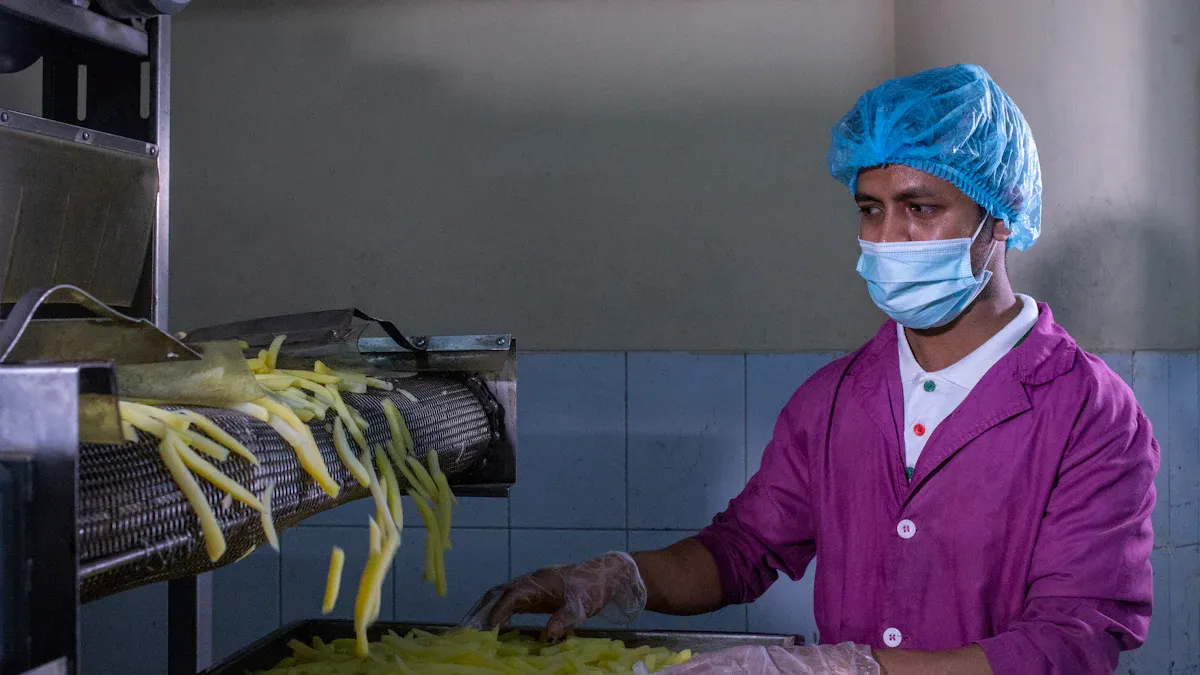
Foreign object contamination presents a significant industry challenge. Global incidents escalated sharply in 2024, with reports concentrated in key regions.
- Europe (Germany, France, Belgium, Netherlands)
- North America (United States)
The smt x ray inspection in food industry offers a proven solution. Global bodies, including the FDA and WHO, confirm its safety for both food and operators.
How X-Ray Inspection Guarantees Food Safety

X-ray inspection technology provides a powerful layer of protection for food products. It operates on a simple yet effective scientific principle: density-based detection. This method allows systems to "see" inside packaged and unpackaged goods to identify physical hazards that do not belong.
The Science of Density-Based Detection
X-ray systems differentiate materials by measuring their ability to absorb X-ray energy. Denser objects absorb more energy. This difference creates a grayscale or color-coded image that highlights foreign bodies.
- Sensitive detectors capture variations in X-ray absorption to generate a detailed image of the product.
- Sophisticated algorithms analyze this image, using density mapping to spot irregularities that differ from the food's expected profile.
- Denser contaminants appear as darker or distinctly colored areas on the scan, making them easy to identify.
Contaminants X-Ray Systems Can Find
The effectiveness of smt x ray inspection in food industry lies in its ability to detect a wide range of dense foreign objects. This capability extends far beyond what many other inspection methods can achieve. Common detectable contaminants include:
- Metal fragments (ferrous, non-ferrous, and stainless steel)
- Pieces of glass
- Calcified bone
- High-density plastics and rubber
While standard plastics are typically invisible to X-rays, manufacturers can use special plastics containing detectable resin additives. These additives make the plastic dense enough for the system to identify, offering an extra layer of safety.
Understanding Detection Limitations
No technology is perfect, and X-ray inspection has its limits. Its detection capability depends entirely on density differences. The system may struggle to find contaminants with a density similar to or lower than the food product itself.
X-ray detectors will have issues if the mass density of the food and the contaminant is similar. For example, an X-ray system will generally have trouble detecting wood in a cheesecake that contains walnuts, as their densities are comparable.
Other low-density materials like hair, cardboard, or thin plastics are also challenging for X-ray systems to reliably detect.
Addressing Radiation and Operator Safety Concerns

The word "radiation" often raises questions for food manufacturers and consumers alike. However, when it comes to X-ray inspection, a deep dive into the science and regulations reveals a technology built on a foundation of safety. Global health organizations and regulatory bodies have thoroughly vetted these systems, confirming their safety for food products, operators, and the work environment.
Is X-Rayed Food Safe to Eat?
The answer is an unequivocal yes. The energy levels used in food X-ray inspection are extremely low and have no impact on the food itself. Numerous studies from globally recognized authorities support this conclusion.
Scientific bodies like the U.S. Food and Drug Administration (FDA) have performed studies concluding that scanning food with X-ray scanners does not pose a health risk. A landmark 1997 study by the World Health Organization (WHO) confirmed that radiation doses up to 10,000 Gray (Gy) do not affect the nutritional value or safety of food. This dose is approximately 10 million times stronger than the exposure from a typical X-ray inspection system. As a result, foods remain safe and nutritionally unchanged, with no measurable alteration to flavor, texture, or vitamin content.
Note: The radiation dose a food product receives during X-ray inspection is less than the background radiation it is exposed to during its growth, processing, and transport. It does not make the food radioactive.
Protecting Your Team: Operator Safety
Modern X-ray inspection systems are fully enclosed, cabinet-style units designed with comprehensive operator safety features. These systems are fully shielded, typically with stainless steel bodies and lead-impregnated curtains, to contain the X-rays.
The radiation leakage from a modern system is exceptionally low. Many units are designed to keep leakage at or below 1 microsievert (µSv) per hour. To put this in perspective, the average person naturally absorbs around 2,400 µSv each year from background sources like the sun and soil. This means an operator would need to stand next to the machine for thousands of hours to receive a dose equivalent to their annual natural exposure.
In the United States, the Occupational Safety and Health Administration (OSHA) sets strict rules to protect employees. Employers must:
- Monitor occupational exposure to ensure it remains below legal dose limits.
- Survey the work area for radiation hazards.
- Provide comprehensive training on safe operating procedures.
- Post caution signs where appropriate.
OSHA also mandates yearly training for personnel to ensure they understand the equipment and safety protocols. Because modern systems are so well-shielded, operators do not require personal protective equipment (PPE) like lead aprons during normal operation.
Meeting Global Radiation Safety Standards
The design and operation of X-ray inspection systems are governed by strict international standards. In the United States and Canada, the maximum permissible radiation leakage level is set at 5 µSv per hour at any point 5 cm from the external surface. Production systems operate well below this regulatory limit.
It is important to distinguish between X-ray inspection and food irradiation. Irradiation is a separate process that uses much higher energy levels to sterilize food or inhibit sprouting. The Codex Alimentarius Commission provides guidelines for these applications, which are categorized by dose.
| Application Category | Dose (kGy) Range | Example Applications |
|---|---|---|
| Low Dose | Up to 1 kGy | Inhibit sprouting (potatoes), prevent insect infestation (grains). |
| Medium Dose | 1 kGy to 10 kGy | Extend shelf-life (fish), reduce pathogens (poultry). |
| High Dose | Above 10 kGy | Sterilization of spices, or foods for NASA astronauts (44 kGy). |
The dose used in the smt x ray inspection in food industry is less than 0.002 kGy, placing it millions of times below even the lowest-dose irradiation applications. Compliance with global standards is achieved by using certified equipment, adhering to manufacturer guidelines for installation, and performing routine performance and safety verifications.
A Practical Comparison: X-Ray vs. Metal Detection
Choosing the right inspection technology is a critical decision for any food manufacturer. Both metal detectors and X-ray systems serve to protect consumers, but they operate differently and offer distinct advantages. Understanding these differences is key to selecting the most effective solution for a specific production line.
Detection Capabilities Head-to-Head
The primary distinction lies in the range of contaminants each technology can identify. Metal detectors, as their name implies, specialize in finding metallic foreign bodies. X-ray inspection systems offer a broader scope. They detect contaminants based on density, allowing them to find not only all types of metal but also other physical hazards. These include glass shards, calcified bone, and high-density stones or plastics. This makes X-ray a more comprehensive solution for overall foreign object detection.
Performance with Different Packaging
Packaging material significantly impacts inspection performance. X-ray systems are unaffected by packaging type. They easily see through materials like metallized film or aluminum foil to detect dense contaminants inside. Metal detectors, in contrast, struggle with these conductive materials. For instance, a snack producer using aluminum foil packaging found their metal detector could not identify stainless steel or other hazards. An X-ray system, however, successfully detected metal, glass, and stone through the foil, ensuring product safety without compromising detection sensitivity.
Cost and Return on Investment
X-ray systems generally require a higher initial investment than metal detectors. However, the return on investment (ROI) often justifies the cost, primarily through risk mitigation. Preventing a single product recall is a major financial benefit.
A single major recall can cost a company between $10 million and $30 million, factoring in logistics, lost sales, and brand damage.
By preventing such an event, an X-ray system can pay for itself many times over. Most facilities see a full return on investment within 12 to 36 months. The investment protects brand integrity and prevents catastrophic financial losses, making it a crucial part of a modern quality assurance strategy.
Key Steps for Successful Implementation and Compliance
Integrating an X-ray inspection system requires more than just purchasing equipment. A successful program depends on careful planning, precise execution, and disciplined management. Following key steps for selection, installation, training, and record-keeping ensures the system operates effectively and meets stringent compliance standards.
Selecting the Right X-Ray System
Choosing the correct X-ray system is the foundational step for a successful implementation. The decision should align with specific production needs and safety goals. A thorough evaluation of several factors ensures the selected equipment provides maximum value and protection.
Key selection criteria include:
- Product and Contaminant Profile: The product type and target contaminants drive system choice. Single-energy systems work well for detecting dense materials like glass or metal. Dual-energy systems offer superior performance for inspecting products with complex textures, like granola or mixed nuts, and finding lower-density contaminants.
- Product and Package Size: The system must accommodate the product's physical dimensions. Manufacturers produce large-format X-ray systems specifically for bulky items, such as large bags of pet food.
- Accuracy and Reliability: The system must reliably pinpoint specified contaminants. Its accuracy depends on its design and the density difference between the foreign object and the food product. A reliable machine enhances productivity and prevents bottlenecks in distribution.
- Ease of Use: A system with a user-friendly interface and automation features reduces training time and improves line efficiency. Simple operation minimizes the potential for human error.
- Safety: The equipment must guarantee safety for both consumers and employees. Modern systems operate with extremely low radiation and contain it within a shielded cabinet, posing no risk to food or operators.
Critical Installation and Calibration Steps
Proper installation and validation are non-negotiable for ensuring an X-ray system performs to specification. These steps provide objective evidence that the device can consistently detect target contaminants under real-world production conditions.
The Quality Assurance (QA) department typically leads this process, following a structured approach:
- Initial Validation: QA conducts validation studies immediately after commissioning. This process confirms the equipment can detect specified contaminant sizes and that all features, like the reject mechanism, function correctly.
- Sensitivity Specification: QA documents the minimum detectable contaminant sizes for each product. This specification is based on risk assessments, customer requirements, and equipment capabilities.
- Test Piece Management: A robust system for managing certified test pieces is essential. QA ensures the correct test pieces are available, are within their certification period, and are stored properly.
- Failsafe System Testing: Teams must establish protocols to regularly test failsafe mechanisms. These include reject confirmation sensors, bin-full alerts, and air pressure monitors.
- Maintenance and Engineering Support: Maintenance personnel perform preventative tasks like cleaning and physical inspections. They also handle specialized activities such as generator performance checks and detector calibration, documenting all adjustments.
Re-validation is mandatory after any significant change. This includes introducing new products, altering packaging material, changing machine settings, or modifying process speeds. The goal is to confirm the system's effectiveness remains unchanged.
Essential Operator Training Protocols
Comprehensive training empowers employees to operate equipment safely and effectively. A well-structured program ensures every team member understands their role in the food safety process. Many organizations use a tiered approach to deliver targeted training based on job function.
A multi-level training program might look like this:
- Tier A: General Awareness (All Personnel): All employees working near the equipment learn the basics of contamination prevention and their responsibilities regarding food safety.
- Tier B: Routine Operation (Line Operators, Supervisors): This tier covers the content from Tier A plus the fundamentals of how an X-ray system works, routine testing procedures, and password management.
- Tier C: Subject Matter Expert (QA/QC, Technical Staff): Experts receive all training from Tiers A and B. They also learn about maintenance principles, performance validation, and how to set up new products while optimizing detection sensitivities.
- Tier D: Engineering (Engineers, Maintenance Managers): This advanced training includes all previous tiers. It adds a focus on manufacturer maintenance recommendations, good engineering practices, and troubleshooting to maximize uptime.
All training must emphasize core safety rules. Operators learn never to bypass safety interlocks, tamper with shielding, or attempt to repair the unit themselves. They must understand their responsibility to report any malfunctions immediately to a supervisor. This knowledge is critical for the safe use of smt x ray inspection in food industry equipment.
Maintaining Records for HACCP and GFSI
Meticulous record-keeping is the cornerstone of modern food safety compliance. X-ray inspection systems support this by generating detailed digital logs for every product they scan. These records are indispensable for demonstrating compliance with Hazard Analysis and Critical Control Points (HACCP) plans and Global Food Safety Initiative (GFSI) schemes.
When an X-ray system serves as a Critical Control Point (CCP), its records must align with the HACCP plan. This includes logs of monitoring activities, test results, corrective actions, and verification checks. These digital records provide objective evidence that the CCP is under control.
For GFSI schemes like BRCGS and SQF, traceability is paramount. Advanced X-ray systems capture and store inspection images and data in a centralized database. Teams can access this information in real-time or retrieve it later to investigate any safety issue. This capability provides the robust traceability required by auditors and directly demonstrates a commitment to food safety compliance.
Optimizing Performance of SMT X Ray Inspection in Food Industry
Achieving peak performance from an X-ray system involves managing detection sensitivity, minimizing incorrect rejections, and adhering to a strict verification schedule. Mastering these areas ensures maximum safety and operational efficiency.
Factors Influencing Detection Sensitivity
Several product characteristics directly influence detection sensitivity. The system's ability to find a contaminant depends on the density difference between the foreign object and the food. Product texture, thickness, and temperature variations can create a "product effect" that complicates detection. For example, frozen foods present a wide range of densities, from soft berries to dense meat. Low-temperature environments also introduce challenges like frost and condensation, which can create image noise. This requires advanced image processing and specialized cold-resistant components to maintain consistent accuracy.
Minimizing False Reject Rates
False rejects occur when the system flags a safe product as contaminated. This disrupts production and creates waste. Common causes include:
- Dirty or fraying conveyor belts
- Hardware or software malfunctions
- Improper machine settings or alignment
Modern software for smt x ray inspection in food industry dramatically reduces these errors. Advanced algorithms and deep learning models learn from thousands of production images. This allows the system to distinguish between actual contaminants and acceptable product variations, such as packaging artifacts or moisture. Intelligent software automates settings and optimizes image contrast, ensuring only non-compliant products are rejected.
Routine Performance Verification
Routine verification confirms the system operates correctly. This process is essential for compliance and safety assurance. Manufacturers should conduct comprehensive maintenance checks annually.
Key verification steps include testing the mechanical functions, realigning the X-ray beam, and checking the generator's voltage output and exposure time.
Additionally, teams must recalibrate the system whenever a new product is introduced. This allows the smt x ray inspection in food industry equipment to store product-specific limits, ensuring continued accuracy without the need for constant adjustments unless packaging or other parameters change.
X-ray inspection provides a safe, compliant, and effective tool for enhancing food safety. Successful implementation depends on proper system selection, installation, and ongoing operational discipline. Companies see tangible benefits from this technology.
- The Stephano Group, a snack manufacturer, implemented an Eagle™ Pack 320 PRO system.
- This improved foreign body detection and helped meet safety standards.
This guide offers the necessary steps to confidently integrate an X-ray system into any quality control strategy.
FAQ
Does X-ray inspection make food radioactive? ☢️
No. The energy level is extremely low and passes through the food. It does not alter the food's atomic structure or leave any residual radiation. The food remains completely safe.
Can X-ray systems detect all types of contaminants?
No. X-ray systems detect contaminants based on density. They cannot find low-density items like hair or cardboard. The technology excels at finding metal, glass, and dense plastics.
What is the difference between X-ray inspection and food irradiation?
X-ray inspection uses very low energy to find physical contaminants. Food irradiation uses a much higher energy dose to sterilize food or kill pathogens, extending its shelf life.
See Also
Essential Safety Protocols for Secure Nitric Acid Storage Facilities
Three Indispensable Industrial Checkweighers for Modern Food Processing Plants
Premier Destinations to Acquire X-Ray Inspection Equipment from China
Comparing EHEDG and 3A SSI Standards for Optimal Hygienic Equipment Design
Professional Guidance for Welding Pass Partition Plates: Insights for 2025