The Ultimate 2025 Guide to 309S Stainless Steel Pipe Fittings
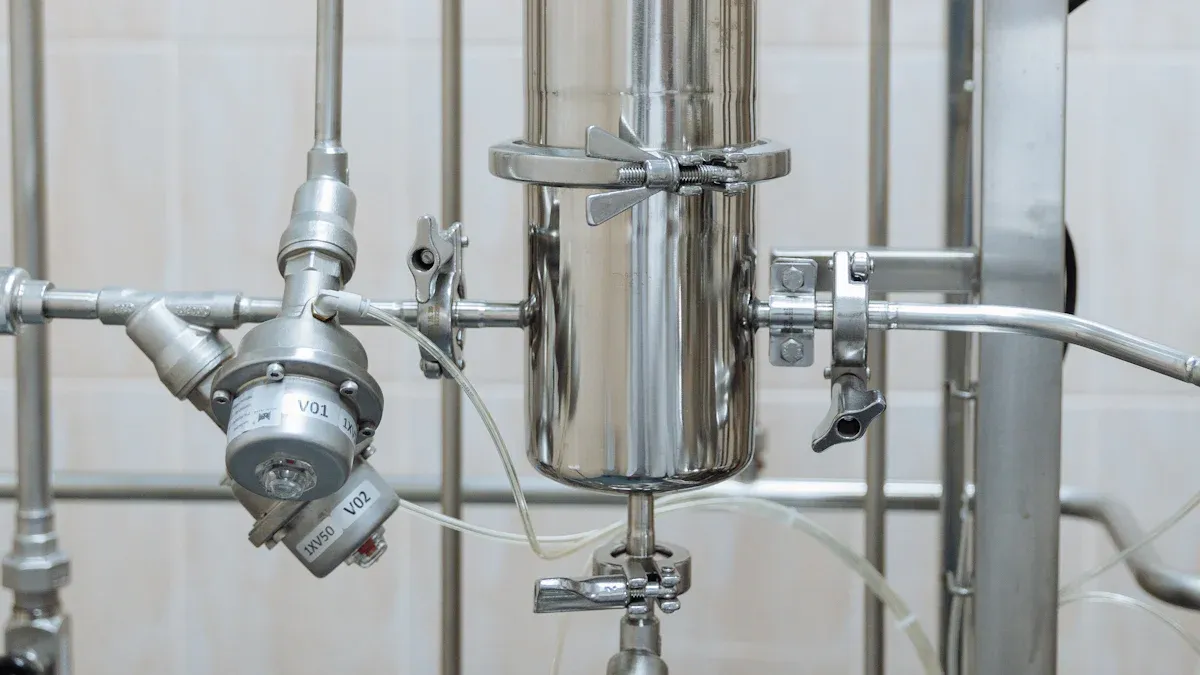
Engineers design 309S Stainless Steel Pipe Fittings with high chromium and nickel content. This composition delivers superior performance in extreme heat and corrosive conditions. The fittings maintain structural integrity and resist oxidation at continuous service temperatures up to 1000°C (1832°F), a demanding environment where grades like 904L stainless steel pipe fittings might not suffice. Furthermore, the low carbon content enhances weldability and minimizes carbide precipitation. This combination ensures long-term reliability for fabricated systems operating under intense thermal stress.
Key Takeaways:
- High-Temperature Strength: Resists oxidation and maintains integrity up to 1000°C.
- Enhanced Weldability: Low carbon content ensures reliable, strong joints during fabrication.
- Superior Durability: High chromium and nickel provide excellent corrosion resistance.
Key Takeaways
- 309S stainless steel pipe fittings work well in extreme heat.
- They resist rust and stay strong at very high temperatures.
- Low carbon makes them easy to weld and very reliable.
Why Choose SASA for 309S Stainless Steel Pipe Fittings?
SASA provides industry-leading 309S fittings engineered for unmatched reliability in demanding operational environments. The alloy’s unique properties deliver a powerful combination of heat resistance, structural strength, and weldability. This makes it the premier choice for critical systems where failure is not an option.
Unpacking the Chemical Composition
The performance of 309S stainless steel originates from its carefully balanced chemical makeup. A high concentration of chromium (around 23%) and nickel (around 14%) forms the foundation of its strength. This robust composition provides the material with its signature resistance to high-temperature oxidation and corrosion.
A key differentiator for the 309S grade is its controlled low carbon content. This feature directly enhances its suitability for fabrication, particularly in welded assemblies. SASA ensures its material meets precise specifications, distinguishing it from other 309 variants.
| Grade | Carbon Content (max.) | Primary Application Focus |
|---|---|---|
| 309 | 0.20% | General high-temperature use |
| 309S | 0.08% | Enhanced weldability and fabrication |
| 309H | 0.04% min. - 0.10% max. | Improved high-temperature strength (creep resistance) |
The lower carbon in 309S minimizes the risk of carbide precipitation during welding. This process can weaken the metal at the grain boundaries, making it susceptible to intergranular corrosion. By choosing 309S, engineers ensure stronger, more durable welded joints that maintain their integrity over long service cycles.
Superior High-Temperature Strength
Engineers specify 309S Stainless Steel Pipe Fittings for applications involving extreme heat. The material maintains excellent mechanical strength and resists deformation at elevated temperatures. Its austenitic structure, stabilized by the high nickel content, provides exceptional toughness even after prolonged exposure to thermal stress.
The alloy's primary advantage is its outstanding oxidation resistance. SASA's 309S fittings perform reliably in continuous service up to 1050°C (1922°F). The material also withstands intermittent temperature peaks, though operating conditions like sulfur content can influence its maximum service temperature.
💡 Engineer's Note: 309S Oxidation Resistance Limits The following table outlines the maximum recommended service temperatures for 309S in oxidizing atmospheres. Adhering to these limits ensures optimal component lifespan.
Service Type Temperature (°F) Temperature (°C) Continuous Service 1922 1050 Peak Temperature 2012 1100 Max Temp (Sulfur > 2 g/m³) 1742 950
This resilience makes 309S ideal for components that experience frequent thermal cycling, such as furnace parts and exhaust systems, where it resists scaling and maintains structural integrity.
Advanced Corrosion Resistance
Beyond its thermal stability, 309S offers advanced protection against various forms of corrosion. The high chromium content is instrumental in forming a stable, passive oxide layer on the material's surface. This self-healing film acts as a barrier, shielding the underlying metal from chemical attack.
This characteristic gives 309S superior resistance to:
- Oxidizing and Carburizing Atmospheres: Common in furnaces and heat treatment equipment.
- Sulfidation: Protects against sulfur compounds found in fossil fuel combustion and petrochemical processing.
- Aqueous Corrosion: While not its primary application, 309S offers better general corrosion resistance than common grades like 304 in many environments.
Its robust defense against corrosive media makes it a reliable material for chemical processing equipment, boiler components, and other systems handling aggressive substances at high temperatures.
Section Highlights:
- Optimized Chemistry: 309S features high chromium and nickel for heat resistance and low carbon for superior weldability.
- Extreme Heat Performance: It maintains structural integrity in continuous service up to 1050°C (1922°F).
- Robust Corrosion Defense: The alloy effectively resists oxidation, sulfidation, and other forms of high-temperature chemical attack.
SASA's Technical Specifications for 309S Fittings
SASA manufactures 309S stainless steel pipe fittings to meet rigorous international standards. This commitment ensures every component delivers predictable performance, dimensional accuracy, and material integrity. Engineers can confidently specify these fittings for critical systems, knowing they align with established safety and quality benchmarks.
Key Manufacturing Standards (ASTM/ASME)
Adherence to industry standards is fundamental for ensuring the reliability of piping components. SASA produces its 309S fittings in strict compliance with the leading specifications set by ASTM International and the American Society of Mechanical Engineers (ASME).
The primary manufacturing standard for wrought fittings is ASTM A403 / ASME SA403. This specification covers the material properties, manufacturing processes, and testing requirements for austenitic stainless steel fittings. For dimensional accuracy, SASA follows key standards like ASME B16.9.
| Standard Type | Governing Specifications |
|---|---|
| Manufacturing | ASTM A403, ASME SA403 |
| Dimensional | ASME B16.9, ASME B16.28, MSS-SP-43 |
| Forged Fittings | ASTM A182, ASME SA182 |
These standards mandate precise chemical and mechanical properties to guarantee performance. SASA ensures every fitting meets these stringent requirements for strength, ductility, and hardness.
| Property | ASTM A403 WP309S Requirement |
|---|---|
| Chemical Composition | |
| Chromium (Cr) | 22.0 - 24.0% |
| Nickel (Ni) | 12.0 - 15.0% |
| Carbon (C) | 0.08% max |
| Manganese (Mn) | 2.0% max |
| Silicon (Si) | 1.0% max |
| Mechanical Properties | |
| Tensile Strength (min) | 75 ksi (515 MPa) |
| Yield Strength (min) | 30 ksi (205 MPa) |
| Elongation (min) | 35% |
Available Dimensions and Schedules
SASA provides a comprehensive inventory of 309S fittings to accommodate a wide array of piping system designs. The fittings are available in both seamless and welded configurations, with dimensions conforming to ASME B16.9 standards. This ensures full interchangeability and proper fit-up during installation. The available diameter range is extensive, spanning from ½ inch to 48 inches.
Our manufacturing capabilities cover a broad spectrum of sizes.
| Characteristic | Typical Range |
|---|---|
| Outer Diameter (OD) | 6 mm - 1100 mm |
| Wall Thickness | 0.3 mm - 40 mm |
Pipe schedules define the wall thickness of a fitting, which is critical for determining its pressure-handling capability. SASA offers a full range of schedules to match specific design pressures.
Commonly available schedules include:
- SCH 5S, SCH 10, SCH 10S
- SCH 20, SCH 30
- SCH 40, SCH 40S (STD)
- SCH 80, SCH 80S (XS)
- SCH 120, SCH 160, SCH XXS
This wide selection allows engineers to optimize material use and cost while meeting the safety requirements for their specific application.
Pressure and Temperature Ratings
The pressure rating of a 309S fitting is not a single, fixed value. It is directly dependent on the operating temperature and the fitting's schedule (wall thickness). As the service temperature increases, the material's strength decreases, which in turn reduces its maximum allowable working pressure.
💡 Design Consideration: The Pressure-Temperature Relationship Engineers must consult the pressure-temperature rating tables specified in ASME B16.9 for the corresponding material and schedule. For example, a Schedule 80 fitting will have a significantly higher pressure rating than a Schedule 10 fitting of the same diameter at the same temperature. Never assume a pressure rating without verifying it against the correct standard for your specific operating conditions.
While 309S excels at high temperatures up to 1050°C (1922°F) in terms of oxidation resistance, its ability to contain pressure must be carefully calculated for the intended service environment. Thicker-walled fittings (higher schedules) are necessary for applications involving both high pressure and high temperature. SASA provides all necessary documentation to help engineers make the correct selection for safe and reliable operation.
Section Highlights:
- Certified Compliance: SASA's 309S fittings are manufactured in accordance with key standards like ASTM A403 and ASME B16.9.
- Extensive Selection: A wide range of dimensions (½" to 48") and schedules (SCH 5S to SCH XXS) are available to meet diverse project requirements.
- Engineered for Safety: Pressure ratings are dependent on temperature and schedule, requiring careful calculation based on ASME standards to ensure system integrity.
Industrial Applications for 309S Fittings
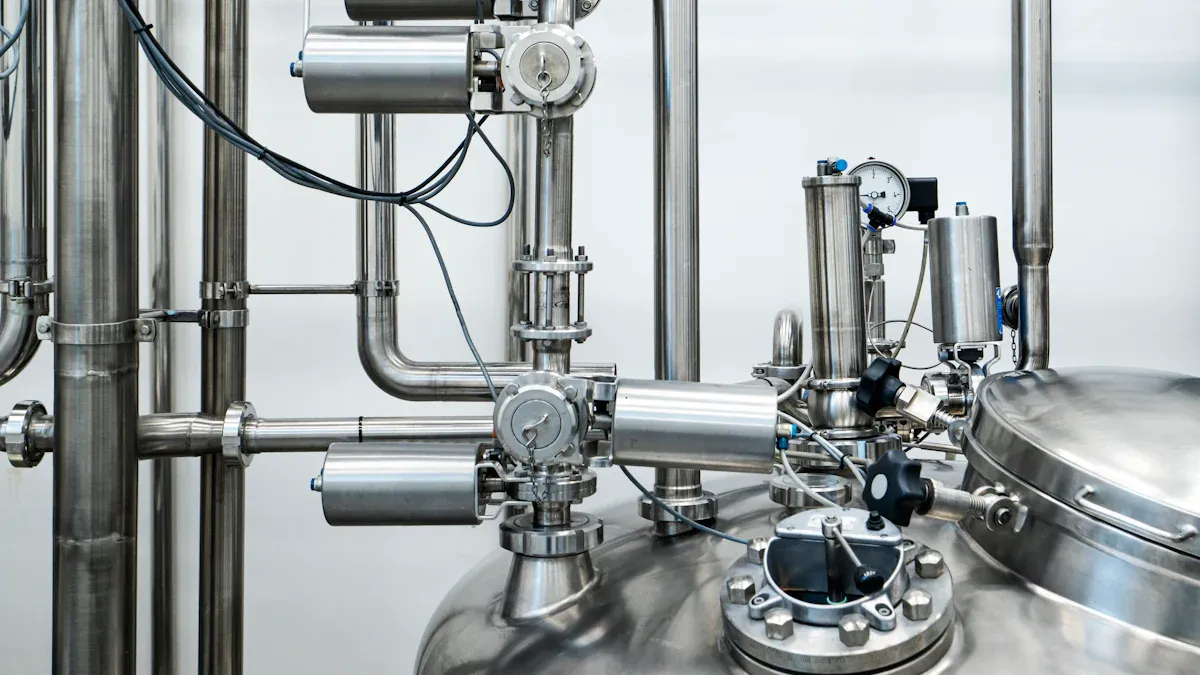
The unique properties of 309S stainless steel make it an essential material for industries operating under extreme thermal and chemical stress. Its reliability in high-temperature, corrosive environments ensures operational safety and longevity for critical components.
Furnace and Boiler Components
Engineers frequently specify 309S for constructing industrial furnaces and boilers. The material's excellent resistance to oxidation and scaling at high temperatures makes it ideal for components in direct contact with intense heat. It is commonly used for furnace linings and various heat treatment fixtures.
Specific applications include:
- Tube hangers and supports
- Grids, piping, and wind boxes in fluidized bed furnaces
- Annealing covers, burners, and walking beams
- Muffles, retorts, and neutral salt pots
Petrochemical and Chemical Processing
The petrochemical and chemical industries rely on materials that can withstand aggressive process streams. 309S fittings provide robust defense against high-temperature corrosion, particularly from sulfur compounds (sulfidation). This makes them suitable for handling hot, corrosive gases and liquids in reactors, crackers, and processing pipelines. The alloy’s stability ensures system integrity and prevents contamination in sensitive chemical production environments.
Exhaust Systems and Heat Exchangers
309S Stainless Steel Pipe Fittings are a superior choice for high-performance exhaust systems and heat exchangers. Standard grades like 304 stainless steel cannot withstand the combination of high temperatures and corrosive gases found in these applications. 309S excels due to its ability to resist oxidation and corrosion from exhaust fumes, especially in aircraft and high-performance vehicle systems. In heat exchangers, its resistance to thermal cycling prevents material fatigue and failure, ensuring efficient and reliable heat transfer over long service periods.
Application Highlights:
- Furnaces: Used for critical internal components like tube hangers and burners that require high-temperature strength.
- Petrochemical: Ideal for handling hot, corrosive media and sulfur-rich process streams.
- Exhausts: Provides superior durability in high-performance automotive and industrial exhaust systems where heat and corrosion are extreme.
Fabrication Guide for 309S Stainless Steel Pipe Fittings
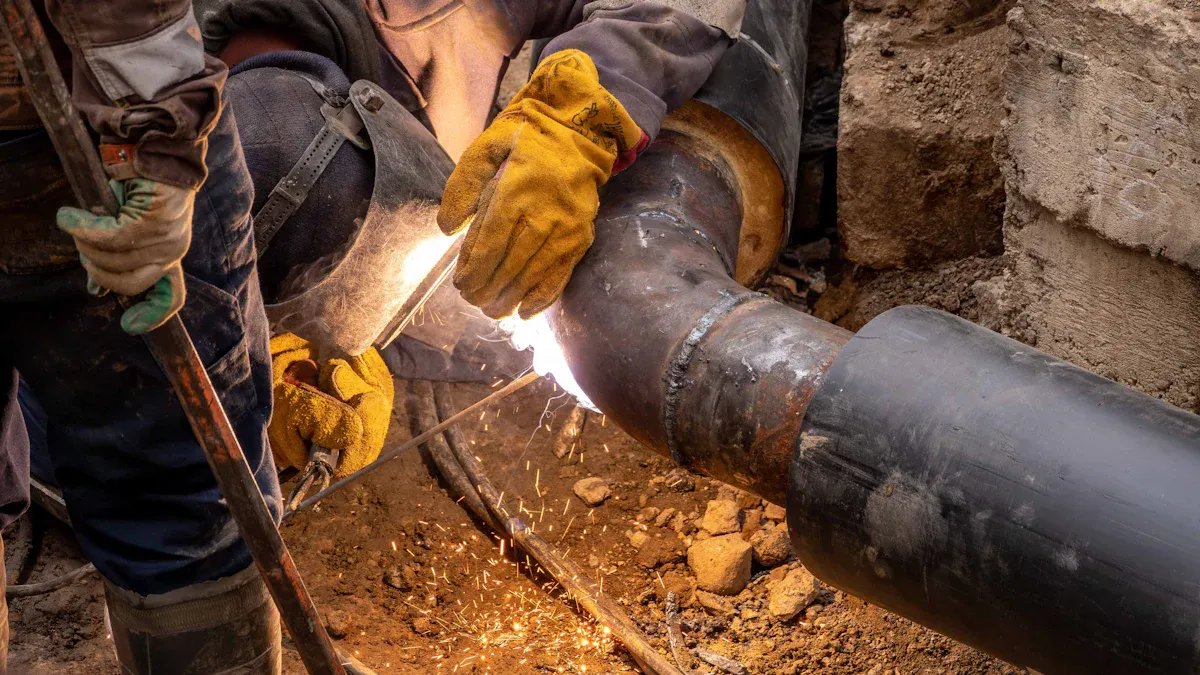
Proper fabrication techniques are crucial for maximizing the performance and lifespan of systems built with 309S stainless steel. Adhering to best practices ensures that welded joints maintain the alloy's inherent strength and corrosion resistance.
Best Practices for Welding
The low carbon content of 309S significantly enhances its weldability, reducing the risk of carbide precipitation at the grain boundaries. This characteristic helps maintain corrosion resistance in the heat-affected zone (HAZ). For most applications, special heat treatments are not required.
- Preheating: Fabricators generally do not need to preheat 309S stainless steel before welding.
- Post-Weld Heat Treatment (PWHT): Stress relief through PWHT is rarely necessary for typical service conditions.
- Filler Metals: Welders should use matching filler metals, such as AWS E309L or ER309L, to ensure the weld deposit has comparable properties to the base metal.
For critical high-temperature service, fabricators must pay close attention to filler material selection and control interpass temperatures to manage dilution.
Avoiding Sigma Phase Embrittlement
A key consideration during fabrication is the potential for sigma phase embrittlement. Sigma phase is a hard, brittle, chromium-rich intermetallic compound. It forms when the material is held within a specific temperature range for an extended period.
💡 Pro Tip: The Critical Temperature Zone Sigma phase formation occurs when 309S stainless steel remains in the temperature range of 600–900°C (1112–1652°F). To prevent this, fabricators should ensure rapid cooling through this zone after welding or heat treatment.
Prolonged exposure to these temperatures can reduce the material's toughness and corrosion resistance at room temperature. Minimizing time in this critical range is essential for maintaining the alloy's optimal mechanical properties.
Mating with Other Stainless Grades
Grade 309S is highly valued for its ability to weld dissimilar metals. Its unique chemistry allows it to create a stable transition joint between austenitic stainless steels and carbon or low-alloy steels. This makes it an excellent choice for repair work and for joining different components in a complex system.
| Base Metal 1 | Base Metal 2 | Recommended Filler Metal |
|---|---|---|
| 304L Stainless Steel | Carbon Steel | 309L |
| 316L Stainless Steel | Carbon Steel | 309L |
| 410 Stainless Steel | Carbon Steel | 309 |
Using a 309-type filler metal provides a buffer layer that accommodates differences in thermal expansion and prevents the formation of brittle microstructures at the weld interface.
Section Highlights:
- Simplified Welding: 309S generally requires no preheating or post-weld heat treatment due to its low carbon content.
- Avoid Embrittlement: Rapidly cool the material through the 600–900°C range to prevent the formation of brittle sigma phase.
- Dissimilar Metal Welding: Use 309L filler metals to reliably join stainless steels to carbon steels.
SASA's 2025 Cost Analysis for 309S Fittings
Understanding the cost structure of specialty alloys is essential for effective project budgeting. The price of 309S fittings reflects their high-performance composition and the dynamic global metals market. SASA provides this analysis to help engineers and procurement managers make informed decisions.
Key Market Cost Drivers
The price of 309S is directly linked to the cost of its primary alloying elements: nickel and chromium. The 2025 market has seen significant price volatility. After a price decline in Q1 2025, chromium prices rose sharply in Q2 due to geopolitical instability and new tariffs.
Key factors influencing the cost include:
- Raw Material Prices: Fluctuations in nickel and chromium markets are the most significant cost driver.
- Geopolitical Factors: Political instability and trade policies in major producing countries like South Africa and Kazakhstan can disrupt supply chains.
- Supply and Demand: High demand from the stainless steel and aerospace industries puts upward pressure on prices.
- Environmental Regulations: Stricter mining and processing laws increase operational costs, which are passed on to consumers.
309S vs. 304/316 and Other Alloys
While grades 304 and 316 are cost-effective for general-purpose applications, they cannot match the performance of 309S in extreme heat. The higher initial investment in 309S provides long-term value by preventing premature failure and reducing maintenance costs in high-temperature environments.
Alloy Comparison: Cost vs. Performance
Alloy Relative Cost Max. Service Temp. (Continuous) Primary Advantage 304 Low ~870°C (1598°F) General corrosion resistance 316 Medium ~870°C (1598°F) Enhanced pitting corrosion resistance 309S High ~1050°C (1922°F) Superior high-temperature strength
Choosing 309S is a strategic decision for applications where thermal stability is the critical design requirement.
Sourcing from SASA
Sourcing directly from a specialized manufacturer like SASA offers significant advantages. As a professional manufacturer and global supplier, SASA manages its supply chain effectively to mitigate the impact of market volatility. This direct-sourcing model ensures customers receive competitively priced, high-quality components without intermediary markups. SASA's expertise guarantees that every fitting meets stringent international standards, providing a reliable and cost-effective solution for critical industrial applications.
Section Highlights:
- Market Volatility: 309S costs are driven by fluctuating nickel and chromium prices, influenced by geopolitics and supply chain issues.
- Performance Value: 309S has a higher initial cost than 304/316 but delivers superior value and safety in high-temperature applications.
- Direct Sourcing: Partnering with SASA provides cost stability and ensures access to high-quality, certified fittings.
Procurement and Availability Trends from SASA
Navigating the procurement landscape for specialty alloys requires a strategic approach. SASA offers insights into market trends and supplier selection to ensure project success. This guidance helps procurement teams secure high-quality components while managing costs and timelines effectively.
2025 Market Outlook
The 2025 market for high-performance alloys remains dynamic. Global demand from the energy and petrochemical sectors continues to drive consumption. This environment underscores the importance of partnering with a supplier who can maintain a stable inventory and mitigate supply chain disruptions. A proactive procurement strategy focuses on building relationships with established manufacturers to ensure consistent access to critical materials.
Selecting a Reliable Supplier
Choosing the right supplier is paramount for guaranteeing the quality and safety of your system. A dependable partner provides more than just components; they offer documented proof of quality and technical expertise. Buyers should seek suppliers who operate under a stringent ISO 9001 certified quality management system. This ensures full material traceability.
Key indicators of a reliable supplier include:
- Certifications and Standards Compliance: The supplier must provide clear documentation, including ISO 9001:2015 and Pressure Equipment Directive (PED) 2014/68/EU certifications. They should also furnish Mill Test Certificates (MTCs) like EN 10204 3.1 for complete material verification.
- Material Quality and Product Range: A top-tier supplier offers a diverse range of grades and fitting types. They demonstrate deep material science knowledge and source raw materials from certified mills.
- Manufacturing Capabilities: Advanced fabrication equipment and an expert engineering team are signs of a capable manufacturer. Robust internal quality control, from material inspection to final checks, is essential.
- Reputation and Industry Experience: A long-standing market presence, positive client feedback, and a strong reputation confirm a supplier's credibility and service quality.
SASA's Global Supply Capabilities
SASA embodies the qualities of a premier global supplier. As a professional manufacturer specializing in industrial flanges and pipe fittings, SASA operates with full ISO 9001:2015 and PED certifications. This commitment to quality ensures every component meets rigorous international standards, including ASTM, ASME, and DIN. SASA's global supply network provides customers with reliable access to a comprehensive inventory, backed by expert technical support and a proven track record of excellence in the industry.
Section Highlights:
- Market Stability: The 2025 market requires partnering with suppliers who can ensure a stable supply of specialty alloys.
- Supplier Vetting: A reliable supplier must provide key certifications like ISO 9001 and PED, along with full material traceability.
- Global Reach: SASA combines certified manufacturing with a robust global supply chain to deliver high-quality fittings worldwide.
For applications demanding reliability in high-temperature, corrosive environments, 309S stainless steel pipe fittings from SASA are the optimal choice over standard grades like 304 and 316. Their key benefits—exceptional durability, resistance to thermal cycling, and excellent weldability—ensure long-term performance and operational safety. Engineers should specify SASA's 309S fittings when the critical design requirement is unwavering strength in extreme heat.
Final Takeaways:
- Superior Performance: Outperforms standard grades in extreme heat and corrosive conditions.
- Long-Term Reliability: Ensures operational safety through durability and thermal resistance.
- Critical Specification: The premier choice for applications requiring strength at high temperatures.
FAQ
What is the main difference between 309S and 316 stainless steel?
Grade 309S offers superior strength and oxidation resistance at extreme temperatures up to 1050°C (1922°F). In contrast, 316 stainless steel provides better resistance to pitting corrosion from chlorides but has a significantly lower maximum service temperature, making it unsuitable for intense heat applications.
Can 309S fittings be used in water or acidic environments?
Engineers primarily specify 309S for high-temperature service, not aqueous corrosion. While it offers good general corrosion resistance, other alloys may provide better performance and cost-effectiveness for highly acidic or chloride-rich environments. Its strength lies in resisting heat, not aggressive liquids at ambient temperatures.
Is post-weld heat treatment required for 309S?
No, post-weld heat treatment is generally unnecessary for 309S fittings. The alloy's low carbon content minimizes harmful carbide precipitation during welding. This characteristic ensures the welded joint retains its strength and corrosion resistance without additional thermal processing, simplifying fabrication and reducing costs.
Why is 309S more expensive than 304?
The higher cost of 309S stems from its rich chemical composition. It contains significantly more nickel and chromium than 304 stainless steel. These alloying elements provide its exceptional high-temperature performance but are more expensive raw materials, directly increasing the final product's price.
FAQ Highlights:
- Performance Focus: 309S excels in high-temperature strength, while 316 is better for chloride corrosion resistance.
- Simplified Fabrication: 309S typically requires no post-weld heat treatment due to its low carbon content.
- Cost Factor: The high nickel and chromium content makes 309S more expensive than standard grades like 304.
See Also
Mastering Pass Partition Plate Welding: Expert Strategies for 2025 Success
Industrial Semi-welded Plate Heat Exchangers: A Comprehensive Guide for 2025
Assessing Molybdenum Plugs: Seamless Steel Pipe Manufacturing Insights for 2025
Optimizing Steel Processing: Consistent Results in Heat Exchange Applications
Leading Precoating Materials: Enhancing Filtration System Performance in 2025