Why Is Graphite or Silicon Carbide Essential in Modern Block Type Heat Exchangers
Graphite stands out in block type heat exchanger designs due to its unmatched heat transfer capabilities and resistance to harsh chemicals. Many industries trust graphite for corrosion-resistant heat exchangers, especially when handling aggressive fluids or high temperatures. Graphite delivers reliable heat management, while silicon carbide provides similar advantages and can withstand temperatures close to 1000°C. SHPHE’s Wide Gap Welded Plate Heat Exchanger uses advanced graphite construction, ensuring smooth heat flow and long-lasting durability. These features make graphite the go-to material for efficient heat transfer, minimal maintenance, and robust performance in demanding environments.
Material Properties in Block Type Heat Exchangers
Thermal Conductivity
Thermal conductivity plays a key role in the performance of any block type heat exchanger. Graphite stands out for its ability to transfer heat quickly and efficiently. This material allows heat exchangers to reach high levels of energy efficiency, even in challenging industrial settings. Silicon carbide also offers impressive thermal conductivity, making it a strong choice for demanding applications.
Silicon carbide: Thermal conductivity ranges from 120 to 200 W/m·K.
Graphite: Known for excellent heat transfer, especially in block type heat exchanger designs.
SHPHE’s Wide Gap Welded Plate Heat Exchanger uses advanced graphite construction to maximize heat transfer. This design ensures that heat exchangers can handle high temperatures and aggressive fluids without losing efficiency. High thermal conductivity means less energy is wasted, which helps industries save on operating costs.
Corrosion Resistance
Corrosion resistance is essential for block type heat exchangers that operate in harsh environments. Graphite provides outstanding protection against corrosive chemicals. Many industries use graphite heat exchangers to process aggressive fluids, such as strong acids and alkalis. This material resists chemical attack, which extends the service life of the equipment.
Silicon carbide also excels in corrosion resistance. It remains stable when exposed to strong acids, alkalis, and solvents. Unlike some metals, silicon carbide does not need protective coatings. This reduces the risk of contamination and lowers maintenance costs.
Silicon carbide shows near-inert behavior in aggressive chemicals.
Graphite block heat exchangers offer exceptional resistance to corrosive environments.
The Wide Gap Welded Plate Heat Exchanger from SHPHE demonstrates how advanced materials like graphite and silicon carbide can handle the toughest industrial fluids. These properties make them ideal for chemical processing and other industries that require reliable heat exchangers.
Mechanical Strength
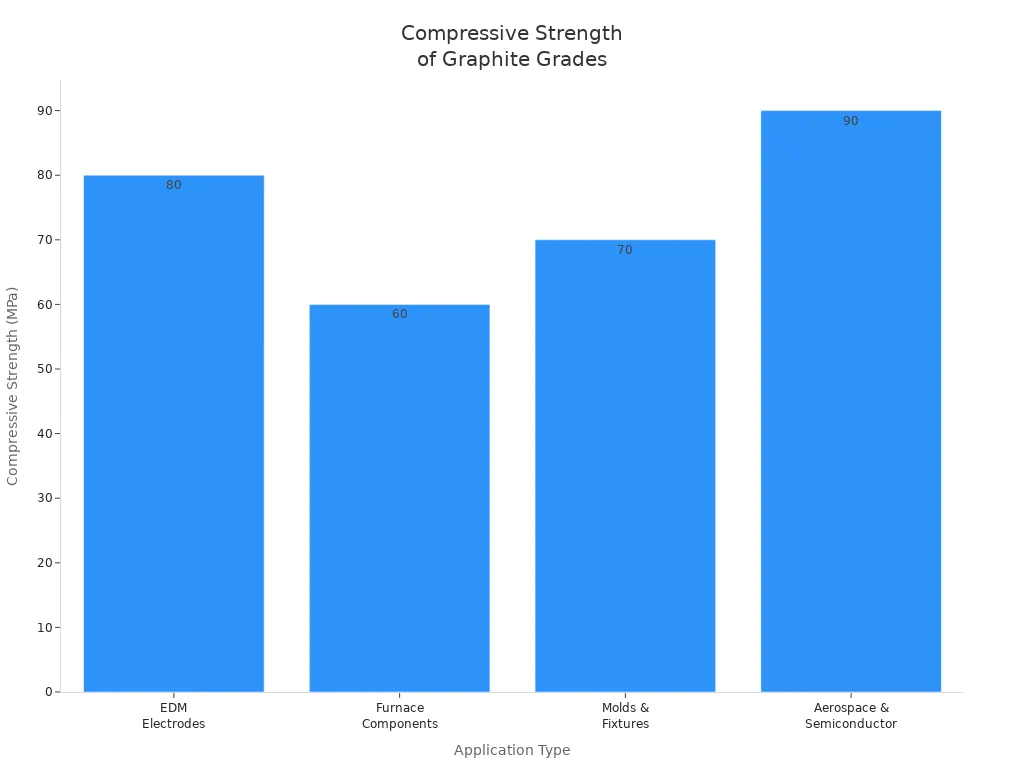
Mechanical strength determines how well a block type heat exchanger can withstand pressure and physical stress. Graphite combines lightweight construction with high durability. This makes it suitable for harsh operating conditions. The mechanical strength of graphite varies by grade and application.
Application Type | Recommended Graphite Grade | Min. Compressive Strength | Key Properties |
|---|---|---|---|
EDM Electrodes | Ultrafine Isotropic | 80 MPa | High density, excellent surface finish, low wear rate |
Furnace Components | High-Purity Synthetic | 60 MPa | Thermal shock resistance, low expansion, oxidation resistant |
Molds & Fixtures | Medium-Fine Grain | 70 MPa | Good machinability, moderate strength, cost-effective |
Aerospace & Semiconductor | Ultra-High Purity | 90 MPa | Low ash, high conductivity, exceptional purity |
Silicon carbide is known for its exceptional mechanical strength and hardness. This material resists wear and abrasion, which is important for maintaining performance in industrial settings. Both graphite and silicon carbide provide the durability needed for reliable operation in block type heat exchangers.
Graphite is lightweight and durable, making it suitable for harsh environments.
It resists corrosion and erosion, which increases reliability.
Silicon carbide offers high mechanical strength and corrosion resistance.
Both materials help reduce maintenance costs and improve energy efficiency.
SHPHE’s Wide Gap Welded Plate Heat Exchanger uses these advanced materials to deliver long-lasting performance. The combination of high thermal conductivity, corrosion resistance, and mechanical strength ensures that these heat exchangers meet the demands of modern industry.
Performance Advantages
Efficiency and Reliability
Graphite and silicon carbide give block type heat exchanger designs a clear advantage in efficiency. These materials transfer heat quickly, which boosts thermal efficiency in many industrial processes. Graphite stands out for its ability to manage heat in sectors like petrochemicals and pharmaceuticals. Silicon carbide works well in high-temperature and chemically aggressive environments. Both materials help heat exchangers maintain stable performance, even when handling aggressive fluids or high-viscosity suspensions.
Note: High thermal conductivity means less energy is wasted during heat transfer. This leads to lower operating costs and better overall efficiency.
Graphite also provides excellent resistance to corrosion. This property keeps heat exchangers running smoothly, even when exposed to strong acids or alkalis. The purity of graphite reduces the risk of contamination, which is important for industries that require clean processing. Silicon carbide adds another layer of resistance, making these exchangers reliable under extreme conditions.
Maintenance and Longevity
Heat exchangers made with graphite or silicon carbide require less maintenance than those made with traditional metals. Their resistance to corrosion and erosion means fewer repairs and less downtime. These properties extend the service life of the equipment, which saves money over time.
Graphite resists wear and pressure, so it stays strong in harsh environments.
Silicon carbide keeps its strength and resistance, even after long periods of use.
The durability of these materials means heat exchangers can handle tough jobs without frequent replacement. Industries that process aggressive fluids or thick suspensions benefit from this reliability. The open design of some exchangers, like the Wide Gap Welded Plate Heat Exchanger, makes cleaning and inspection easier. This helps maintain high performance and reduces the risk of unexpected failures.
Comparison with Metals
Metal Limitations
Traditional metals, such as stainless steel and titanium, often face significant challenges in block type heat exchanger applications. Stainless steel is vulnerable to localized corrosion, especially in aggressive environments like seawater desalination. Chlorination increases the corrosion potential, which leads to severe material degradation over time. Titanium, while known for its corrosion resistance, can still experience pitting corrosion and transgranular cracking when exposed to certain chemicals at elevated temperatures. Welding titanium presents difficulties, particularly for thin-walled components, and requires specialized methods to prevent defects. The high cost of titanium also limits its use in large-scale projects. Titanium’s lower thermal conductivity compared to copper-nickel alloys can hinder heat transfer efficiency unless thin-walled tubes are used.
Metals may offer durability, but their limitations in corrosion resistance and heat transfer performance restrict their effectiveness in harsh industrial settings.
Material Benefits
Graphite and silicon carbide provide clear advantages over metals in block type heat exchanger designs. These materials excel in heat transfer and resistance to corrosion, making them ideal for demanding environments. Graphite heat exchangers deliver excellent corrosion resistance, especially in processes involving strong acids and alkalis. They offer a longer service life and require less maintenance compared to metal heat exchangers. Silicon carbide heat exchangers resist thermal shock and erosion damage, which is crucial for maintaining performance in extreme conditions. The silicon carbide heat exchange block demonstrates remarkable durability in harsh chemical environments, significantly outlasting graphite and metal alternatives.
Material | Corrosion Resistance | Heat Transfer Performance |
|---|---|---|
Metals | Limited; prone to rust and wear | Common, but less durable |
Graphite | Good in specific settings; lower ratings | Moderate |
Silicon Carbide | Excellent; withstands harsh conditions | High, suitable for extreme use |
The DIABON graphite block heat exchanger stands out as a robust and flexible option for handling corrosive media. It ensures reliable performance even in challenging conditions. SICABON tube heat exchangers, designed with advanced sealing technologies and a corrosion-resistant SiC intermediate plate, enhance operational safety and performance. These properties make graphite and silicon carbide essential for modern block type heat exchangers, offering superior reliability and efficiency.
Industrial Applications
Chemical Processing
Industries rely on block type heat exchanger designs for efficient heat transfer in chemical processing. Graphite stands as the ideal material for these applications because it resists corrosion and handles aggressive fluids. Chemical refining plants use graphite heat exchangers to manage heat during acid production, solvent recovery, and evaporation. These exchangers support processes involving strong acids and bases, ensuring stable operation and easy maintenance. Chemical applications represent 58% of the total demand for block type heat exchangers. The Asia-Pacific region leads the market, holding a 42% share, followed by Europe and North America.
Chemical refining benefits from graphite’s ability to withstand harsh environments and maintain high thermal conductivity.
Metallurgy and Pharmaceuticals
Metallurgy and pharmaceutical industries depend on graphite and silicon carbide for specialized heat applications. Heavy chemistry uses graphite heat exchangers in phosphoric acid production, titanium dioxide processing, and hydrometallurgy. Metal pickling, which accounts for 27% of the market, relies on these exchangers for carbon and stainless steel treatment. Fine chemistry and pharmacy utilize graphite for heating, cooling, and condensation of reactants. Pharmaceutical manufacturing involves active ingredient production and crop protection, where graphite ensures precise heat control and easy maintenance.
Heavy chemistry: Phosphoric acid, titanium dioxide, hydrometallurgy
Fine chemistry: Active pharmaceutical ingredients, crop protection
Metal pickling: Carbon and stainless steel treatment
SHPHE and WGPHE Examples
Shanghai Plate Heat Exchanger’s Wide Gap Welded Plate Heat Exchanger demonstrates the advantages of graphite and silicon carbide in demanding industrial settings. These block type heat exchangers handle challenging fluids and high-viscosity suspensions with ease. Silicon carbide excels in high-temperature applications such as acid recovery systems and hydrochloric acid synthesis. Its superior thermal conductivity and corrosion resistance make it reliable for extreme environments. The WGPHE design allows for smooth heat flow, prevents clogging, and supports easy maintenance.
Material Type | Performance Features |
|---|---|
Silicon Carbide | Excellent thermal conductivity, corrosion resistance, suitable for extreme temperatures |
Graphite | Versatile design for heating, cooling, and evaporation in chemical and petroleum industries |
Heat exchangers built with graphite and silicon carbide deliver consistent performance in chemical processing, metallurgy, and pharmaceuticals. Their durability and efficiency make them the ideal material for modern industrial applications.
Graphite and silicon carbide play a vital role in block type heat exchanger designs. Their high thermal conductivity, corrosion resistance, and mechanical durability support efficient heat transfer and reliable operation.
Silicon carbide excels in extreme temperatures and aggressive chemical processes.
Graphite offers excellent thermal conductivity and withstands high temperatures, making it ideal for heat recovery.
Shanghai Plate Heat Exchanger’s WGPHE demonstrates these advantages in real-world applications.Industry experts recommend investing in advanced materials and coating technologies to improve performance and sustainability. The market for silicon carbide block heat exchangers is expected to grow rapidly, driven by demand for energy efficiency and durability.
FAQ
What makes graphite and silicon carbide better than metals in heat exchangers?
Graphite and silicon carbide resist corrosion and transfer heat efficiently. Metals often corrode or lose performance in harsh environments. These advanced materials help heat exchangers last longer and work better.
Can the Wide Gap Welded Plate Heat Exchanger handle fluids with solids?
Yes. The WGPHE uses wide gap channels that prevent clogging. It works well with fluids containing solids or high-viscosity suspensions. This design keeps operations smooth and reliable.
How does silicon carbide perform at high temperatures?
Silicon carbide withstands temperatures close to 1000°C. It keeps its strength and resists chemical attack. This makes it ideal for extreme industrial processes.
Is maintenance easier with graphite or silicon carbide heat exchangers?
Maintenance becomes easier because these materials resist corrosion and wear. The openable bolted connection on some models, like the WGPHE, allows for quick inspection and cleaning.
Which industries benefit most from these materials?
Chemical processing
Metallurgy
Pharmaceuticals
These industries use graphite and silicon carbide heat exchangers to handle aggressive fluids, high temperatures, and demanding processes.