A Complete Guide to Granule Bag Packing Machine Features and Specifications
A granule bag packing machine automates the process of filling and sealing bags with granular products, streamlining packaging for industries worldwide. Buyers focus on features and specifications because these details directly affect productivity, product quality, and cost control.
- The global market for bagging machines, including granule bag packing machines, is projected to grow from USD 15.49 billion in 2026 to USD 29.2 billion by 2035.
- This growth reflects a 7.3% CAGR, driven by increased packaged food demand, e-commerce, stricter safety standards, advanced automation, and sustainability efforts.
Manufacturers see significant efficiency improvements from these machines:
| Aspect | Description |
|---|---|
| Automation | Granule packing machines automate the packaging process, reducing manual labor. |
| Speed | These machines increase packaging speed, shortening production cycles. |
| Accuracy | They ensure precise measurements, minimizing waste and enhancing efficiency. |
Key Features of Granule Bag Packing Machines
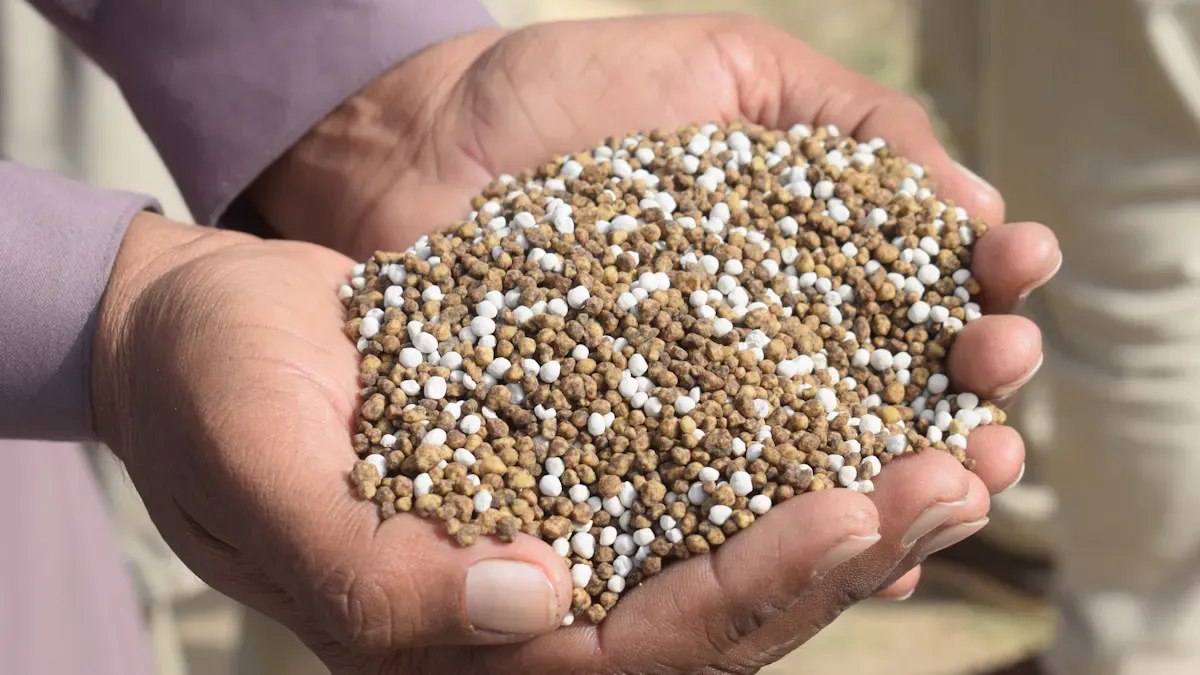
Weighing Technology
Modern granule bag packing machines rely on advanced weighing technology to deliver precise and consistent results. Manufacturers commonly use several weighing systems:
- Electronic weighing systems, such as electronic combination weighing and linear weighing, offer high accuracy and adaptability for different granular materials.
- Multi-head weighers utilize multiple weighing heads, enabling rapid and precise filling. This technology is especially popular in the snack and pet food industries.
- Combination weighing systems employ multiple weigh buckets to achieve target weights efficiently, balancing speed and accuracy for free-flowing granules.
Accurate weighing technology is essential for maintaining product quality. Product density plays a significant role in filling accuracy. Higher density products flow more smoothly, reducing variation in fill height. Advanced programmable controllers and sensors further enhance precision, allowing for tailored production settings. Machines may also include agitation and vibration features to address challenges with low-density products, ensuring reliable weight control.
Supported Bag Styles
A granule bag packing machine supports a wide variety of bag styles, giving manufacturers flexibility in packaging design. Common supported bag types include:
- Pouch style
- Spout bag
- Back seal bag
- Flat bottom bag
- Quad seal bag
- Pillow bag
- 3 side seal bag
- 4 side seal bag
- Doypack bag
The ability to work with various bag types gives manufacturers the flexibility to choose the best packaging format for their product, enhancing both functionality and presentation.
Gusset Bag Packing Machine are not only versatile in handling different product types but also excel in packaging delicate or irregularly shaped items. These specialized features enhance their adaptability, allowing businesses to cater to more sensitive or complex packaging needs.
Packing Speed and Throughput
Packing speed and throughput are critical factors for any granule bag packing machine. The typical speed range varies by machine type:
- Vertical form-fill-seal (VFFS) and horizontal form-fill-seal (HFFS) machines usually produce tens to low hundreds of bags per minute.
- Specialized multi-lane systems can reach several hundred bags per minute.
- Pre-made pouch machines generally operate at 16–50 bags per minute, with multi-head versions doubling this output.
- Fully automatic granule packing machines can achieve speeds of 30–100+ bags per minute, making them ideal for large-scale production.
- Duplex attachments on HFFS machines can boost output to approximately 110–120 bags per minute.
These high speeds enable manufacturers to meet demanding production targets and respond quickly to market needs.
Accuracy and Consistency
Consistency in packaging is vital for brand reputation and regulatory compliance. Manufacturers ensure accurate and consistent results in granule bag packing machines by:
- Implementing automated checkweighing and rejection systems to address material and equipment variations.
- Utilizing volumetric and gravimetric methods for precise measurements.
- Leveraging advanced technologies and features to maintain accuracy throughout the process.
- Conducting regular Factory Acceptance Testing (FAT) to document optimal settings for different products.
Quality control systems and automated checkweighing play a central role in maintaining high standards, reducing waste, and ensuring every bag meets specifications.
Automation Levels
Automation defines the efficiency and labor requirements of a granule bag packing machine. The industry offers a range of automation options:
| Machine Type | Automation Grade |
|---|---|
| Granules Packing Machines | Automatic |
| Automatic Vertical High Speed Servo Bagger | Automatic |
| Rice Pulses Grains Packing Machine | Automatic |
| Automatic Form Fill Seal Packaging Machines | Automatic |
Automation can reduce labor costs by up to 30%. Enhanced operational efficiency results from better resource allocation, and companies adopting automation often see significant productivity improvements.
Construction Materials and Durability
Durability and hygiene are essential in packaging equipment. Most granule bag packing machines use high-quality materials:
| Material | Description |
|---|---|
| 304 Stainless Steel | Food grade, nanometer processing, anti-fingerprint, anti-dust, anti-oil, high performance, high quality |
| Material Type | Impact on Durability and Lifespan |
|---|---|
| Food-grade stainless steel SS304 | Standard material, prevents corrosion, essential for reliability. |
| Food-grade stainless steel SS316 | Recommended for corrosive or acidic products, increases material cost but enhances durability. |
| Core components from reputable brands | Higher initial cost but leads to reliable operation and reduced maintenance costs over time. |
Stainless steel construction ensures machines remain reliable and easy to clean, even in demanding environments. For industries handling corrosive or acidic products, SS316 stainless steel provides additional protection and longevity.
Special Options and Customization
Customization allows a granule bag packing machine to meet unique production requirements. Manufacturers offer a wide range of options:
| Customization Feature | Description |
|---|---|
| Bag Size and Style | Options include pillow bags, gusseted bags, and stand-up pouches. |
| Filling Systems | Choices include multi-head weigher, volumetric cup, and auger filler. |
| Adjustable Weighing Range | Capable of weighing from 50g to 5kg or more. |
| Smart Features | Includes nitrogen flushing, hole punching, tear notches, and date coding. |
| Integration Capabilities | Can integrate with upstream/downstream equipment like elevators and checkweighers. |
Additional packaging options include zipper, resealable, ziplock, gusset, spout, and pallet bag packaging. Every machine is customized based on specific granule sizes and bag dimensions, ensuring that unique industry requirements are met. Customization options also enable seamless integration with existing production lines, supporting a wide range of applications in food, pharmaceuticals, and other sectors.
Types of Granule Bag Packing Machines
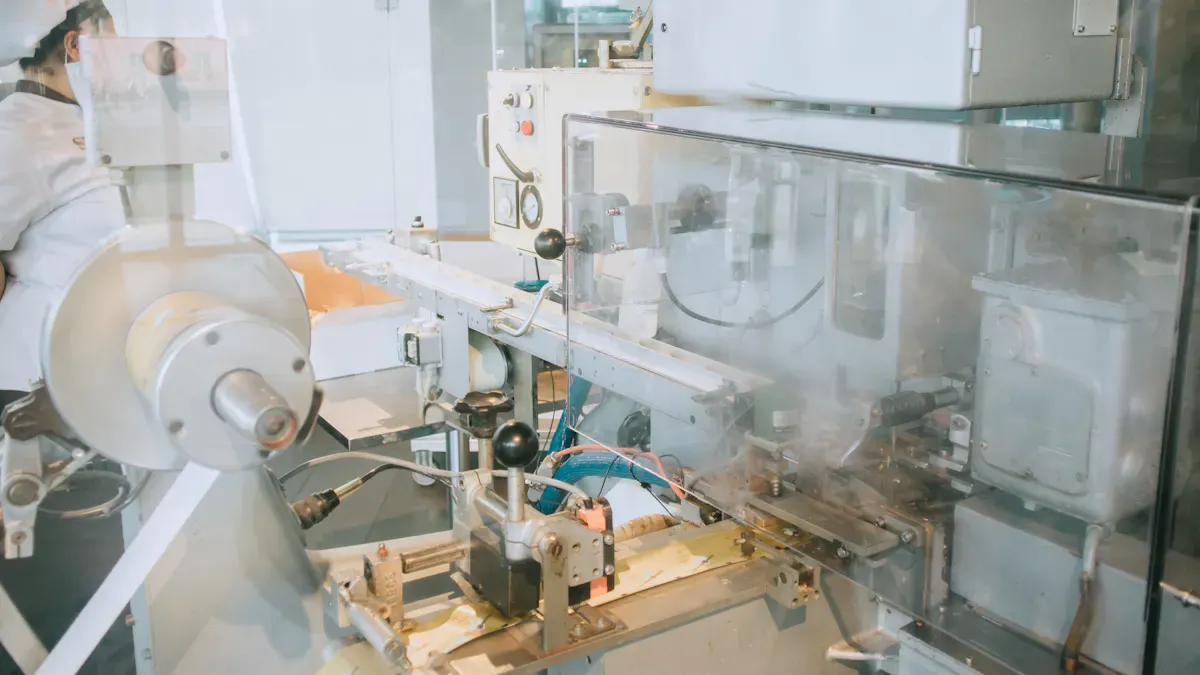
Vertical Form Fill Seal Granule Bag Packing Machine
Vertical form fill seal (VFFS) machines create bags from a continuous film and fill them in a vertical orientation. These machines serve the food, chemical, and pharmaceutical industries. They handle a wide range of products, including liquids, powders, and granules. VFFS machines offer efficient bag-making, filling, sealing, and cutting in one operation. Operators can adjust packing speed and bag length through intelligent settings, which eliminates the need for part changes. Independent temperature control ensures consistent quality for different packing materials.
| Feature | Vertical Form Fill Seal (VFFS) Machines |
|---|---|
| Bag Creation | Creates bags from a continuous film |
| Filling Method | Vertical orientation |
| Applications | Liquids, powders, granules |
Open Mouth Granule Bag Packing Machine
Open mouth granule bag packing machines use pre-made bags and suit bulk materials such as sugar, salt, flour, and feed. These machines excel in handling large volumes and provide reliable sealing for heavy-duty applications. They are ideal for grains and chemicals, where durability and speed are essential.
| Feature | Open Mouth Granule Bag Packing Machines |
|---|---|
| Bag Creation | Uses pre-made bags |
| Filling Method | Suited for bulk materials |
| Applications | Grains, chemicals, bulk products |
Semi-Automatic vs. Fully Automatic Granule Bag Packing Machines
Semi-automatic and fully automatic machines differ in speed, labor dependency, and investment. Semi-automatic models suit startups and seasonal producers, while fully automatic machines fit large-scale manufacturers.
| Feature | Semi-Automatic | Fully Automatic |
|---|---|---|
| Speed | 10–25 bags/min | 30–100+ bags/min |
| Labor Dependency | Higher | Reduced |
| Initial Investment | $3,000–$8,000 | $15,000–$60,000+ |
| Complexity | Less complex | More complex |
Integrated Weighing and Packing Systems
Integrated weighing and packing systems combine modular design with advanced controls. These systems adapt to various product types and sizes. Operators can change weight settings quickly using PLC touchscreens. The machines support a wide range of particle sizes, from fine granules to larger products. Flexible downstream options include premade bags, form-fill-seal units, or bottle filling lines. Key benefits include automatic stop functions for safety, reduced material waste, and efficient operation.
Tip: Integrated systems streamline bag-making, filling, sealing, and heating, which increases productivity and reduces manual intervention.
Applications and Product Compatibility
Common Granule Products Packed
Granule bag packing machines handle a diverse range of products across multiple industries. The following table highlights typical granule products commonly packed:
| Industry | Common Granule Products |
|---|---|
| Food Industry | Seasonings, cereal products, nuts, dried fruit, candy, chocolate, coffee beans, etc. |
| Medical Industry | Capsules, tablets, Chinese medicine granules, vitamins, fish oil capsules |
| Chemical Industry | Fertilizers, pesticides, plastic raw materials, chemical reaction granules |
| Agricultural Industry | Seeds, pet food pellets, corn kernels, wheat pellets |
| Electronics Industry | Resistors, capacitors, diodes, and other electronic components |
Manufacturers select these machines for their ability to maintain product integrity and ensure precise portioning, regardless of granule size or density.
Bag Types and Sizes
Granule bag packing machines support a wide variety of bag types and sizes, offering flexibility for different packaging needs. The table below summarizes compatible bag styles and their typical size ranges:
| Bag Type | Size Range |
|---|---|
| Stand-up Pouches | Flexible |
| Pillow Bags | Flexible |
| Gusseted Bags | Flexible |
| Quad Seal Bags | Flexible |
| Three-sided Sealed | 913CM to 1826CM |
| Back Sealed Bags | 913CM to 1826CM |
| Self-supporting Bags | 913CM to 1826CM |
| Zipper Bags | 913CM to 1826CM |
Note: This versatility allows manufacturers to tailor packaging to specific branding, storage, and transportation requirements.
Industry Use Cases
Many industries rely on granule bag packing machines to streamline their operations and maintain high standards of efficiency:
- Food and beverage sector
- Packaging of snacks and confectionery
- Companies like Hardy Buoys Smoked Fish
These machines play a crucial role in automating packaging lines, supporting consistent product quality, and meeting the demands of large-scale production environments.
How to Choose the Right Granule Bag Packing Machine
Matching Machine to Product Characteristics
Selecting the right granule bag packing machine starts with understanding the product’s unique properties. Particle size, flow behavior, and bulk density all influence machine compatibility and efficiency. Buyers should match filling methods to product needs. For example, auger fillers suit free-flowing materials, while multi-head weighers deliver high precision for delicate or coated granules. The following table summarizes key features to consider:
| Feature | Description |
|---|---|
| Filling Methods | Auger for free-flowing; Multi-head for precision |
| Material Compatibility | Non-stick hoppers for sticky or coated products |
| Bag Size and Format | Machine flexibility for various bag types |
| Construction Quality | Stainless steel for hygiene and durability |
| Control System | PLC touchscreen for ease of use |
| Sealing Mechanism | Consistent temperature control prevents leaks or burns |
Considering Bag Type and Size
Bag size and format flexibility play a crucial role in machine selection. Buyers should determine the range of bag dimensions required and confirm that the machine supports these needs. Modular jaws allow switching between pillow bags and quad-seal types. Advanced models offer tool-free changeover kits for efficiency. Space requirements also matter. Measuring available floor or counter space ensures the machine fits the production area.
When choosing a filler, consider the product’s physical behavior to ensure smooth operation and optimal efficiency.
Assessing Production Volume Needs
Production volume directly impacts machine choice. Buyers should:
- Test equipment stability to guarantee consistent accuracy and quality.
- Evaluate automation levels, as higher automation boosts efficiency and lowers operational costs.
- Confirm that machine materials match the product to maintain safety and prevent contamination.
Integration with Existing Equipment
Seamless integration with current production lines maximizes efficiency. Companies should ensure compatibility with conveyors, scales, and interface protocols. Implementing feedback loops optimizes filling speed and alignment. Regular maintenance and calibration keep machines running smoothly and reduce downtime.
Tailoring the machine to existing workflows supports continuous, reliable production.
Operation, Maintenance, and Efficiency Tips
Best Practices for Setup and Operation
Proper setup and operation ensure that granule bag packing machines deliver optimal performance. Operators should follow key practices to maintain accuracy and efficiency. The table below outlines essential steps:
| Practice | Details |
|---|---|
| Positioning the Machine | Place on a level floor, align with production line, and ensure clearances for maintenance. |
| Calibration and Testing | Adjust bag size, set film tension, and conduct dry runs to verify mechanical accuracy. |
| Dosing Accuracy Setup | Program weighers for precision, test with various products, and use anti-bridge agitators. |
| Daily Operation Steps | Follow startup procedures, monitor output, and train staff for early issue detection. |
| Routine Maintenance | Clean components, schedule lubrication, and inspect extraction units regularly. |
| Maximizing Efficiency | Store multiple product recipes, monitor data, and optimize speed versus accuracy. |
Operators who follow these practices help maintain consistent output and reduce the risk of errors.
Routine Maintenance Guidelines
Routine maintenance extends machine life and supports reliable operation. Key tasks include:
- Clean product contact parts daily and remove any powder or granule residues.
- Inspect sealing surfaces for foreign material and ensure basic lubrication at designated points.
- Weekly, check belts, chains, bearings, pneumatic lines, and test all safety devices.
- Monthly, deep clean feeding and filling systems, inspect servo motors, back up PLC parameters, and replace worn parts as needed.
Regular cleaning and vigilant inspection prevent unexpected breakdowns and maintain hygiene standards.
Maximizing Efficiency and Reducing Downtime
Manufacturers can boost productivity and minimize interruptions by adopting proven strategies. The following table summarizes effective approaches:
| Strategy | Description |
|---|---|
| Advanced Technology | High-speed filling machines increase throughput and reduce cycle times. |
| Real-time Monitoring | User-friendly interfaces provide constant performance insights for quick troubleshooting. |
| Regular Maintenance | Scheduled servicing and operator training keep machines running smoothly and efficiently. |
Consistent monitoring and proactive maintenance help companies achieve higher output and reduce costly downtime.
Granule bag packing machines deliver speed, accuracy, and flexibility for modern production lines. Buyers and operators should:
- Match equipment type to product needs.
- Select dosing mechanisms carefully.
- Evaluate total cost of ownership.
- Check facility compatibility.
- Choose suppliers with strong technical support.
Smart selection ensures long-term efficiency and reliability.
FAQ
What products can a granule bag packing machine handle?
They can package items like seeds, nuts, coffee beans, fertilizers, and small hardware. The machine adapts to different granule sizes and densities.
How does a granule bag packing machine improve production efficiency?
This equipment automates weighing, filling, and sealing. It reduces manual labor, increases speed, and ensures consistent packaging quality.
What maintenance does a granule bag packing machine require?
Operators should clean contact parts daily, inspect moving components weekly, and schedule regular lubrication. Routine checks help maintain optimal performance.
See Also
Innovative Folder Gluer Attributes for Carton Lines in 2025
Essential Capsule Checkweighers to Evaluate for 2025 Purchases
Enhancing Pharmaceutical Efficiency with Advanced Capsule Decapsulation Machines
Comparative Analysis of Ampoule Filling Line Manufacturers
Three Essential Industrial Checkweighers for Food Processing Facilities