Key Google SEO Ranking Factors for 2025 How to Do It More Effectively

An effective Google SEO strategy centers on creating helpful, reliable, people-first content that directly addresses user questions. This approach includes optimizing for a seamless user experience, a key page signal for search algorithms.
Google often uses Core Web Vitals as a decisive factor, differentiating websites that have similar content quality and relevance.
Additionally, demonstrating strong expertise (E-E-A-T) and building deep topical authority are foundational pillars for achieving high rankings and establishing credibility with both users and search engines.
Key Takeaways
- Create helpful content for people. This content should answer user questions. It builds trust with both users and search engines.
- Improve your website's user experience. Make sure your site loads fast. It should also work well on mobile phones.
- Show your experience and knowledge. This is called E-E-A-T. It helps Google see your content as trustworthy.
- Build topic authority. Organize your content into groups. This shows you are an expert on a subject.
Factor 1: Create Helpful, People-First Content
Google's core mission is to deliver the most relevant and helpful results. Therefore, the foundation of any modern google seo strategy is creating content designed for people, not just algorithms. This means prioritizing the reader's needs, demonstrating deep subject knowledge, and ensuring a satisfying user experience. Content creators should avoid tactics like keyword stuffing or producing shallow articles just to rank.
Focus on Answering User Intent
Understanding user intent is critical. A user's query can be informational ("how to bake bread"), transactional ("buy sourdough starter"), or navigational ("King Arthur Flour website"). Aligning content with this intent is non-negotiable.
Pro Tip: Use tools like Semrush, Ahrefs, or Clearscope to analyze the primary intent behind your target keywords. These platforms help identify whether users are seeking information or are ready to make a purchase.
Case studies confirm this approach's effectiveness. Growth Machine, for instance, achieved higher rankings and more featured snippets by focusing its framework on informational intent. Similarly, HubSpot saw higher-quality leads by segmenting content for different stages of commercial research.
Audit and Improve Existing Content
Creating helpful content also involves maintaining what you already have. A content audit identifies underperforming pages that can be improved. The process is straightforward:
- Scan your website using a crawler to gather all URLs and metadata.
- Collect performance data like traffic, engagement metrics, and SEO rankings from tools like Google Search Console.
- Analyze the data to identify pages with low traffic or conversions.
- Categorize pages to decide whether to keep, update, or remove them.
Refreshing existing content can yield dramatic results. A strategic update can transform a low-performing asset into a traffic-driving machine.
| Company | Content Refresh Success |
|---|---|
| Hunter.io | Increased monthly traffic by over 500% after updating a post on follow-up emails. |
| LearnWorlds | Grew organic visits from 3,700 to 13,000 (251% increase) after refreshing an article. |
| KeeperTax | Took an article with zero traffic to 1,900 monthly visitors six months after a major overhaul. |
Regularly auditing and improving content ensures your entire site remains a valuable resource for your audience and a top performer in search results.
Factor 2: Master User Experience and Page Signals

A superior user experience is no longer a bonus; it is a core component of a successful google seo strategy. Google's page experience signals measure how users perceive the experience of interacting with a web page. While high-quality content remains paramount, Google uses these signals as a tiebreaker between pages with similarly relevant information. Optimizing for these factors ensures a site is not just helpful but also accessible and enjoyable to use.
Optimize for Core Web Vitals
Core Web Vitals are specific metrics that score a page's loading performance, interactivity, and visual stability. The three key metrics are:
- Largest Contentful Paint (LCP): Measures loading performance.
- Interaction to Next Paint (INP): Measures responsiveness.
- Cumulative Layout Shift (CLS): Measures visual stability.
Google provides clear thresholds for what it considers a "Good" or "Poor" score for each metric.
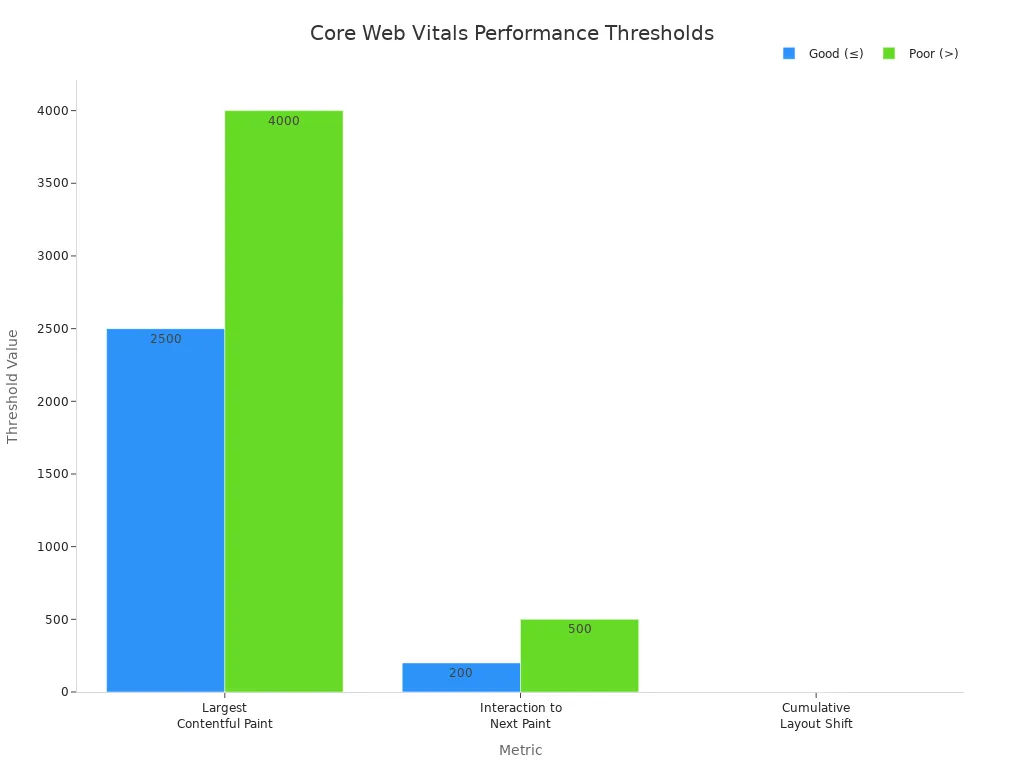
Site owners can improve these scores by optimizing technical elements. Effective techniques include compressing images into next-gen formats like WebP, minifying CSS and JavaScript files to reduce their size, and using a Content Delivery Network (CDN) to decrease server response times.
Ensure Flawless Mobile Usability
With Google's mobile-first indexing, the mobile version of a site is the primary one for ranking and indexing. A poor mobile experience can therefore severely harm search visibility. Common mobile usability errors flagged in Google Search Console include:
- Text that is too small to read
- Clickable elements that are too close together
- Content wider than the screen
Note: Some errors reported by Google's tools on CMS platforms can be misleading. They may occur if the page has not fully rendered before Google finishes its crawl. In these cases, validating the fix in Search Console is often sufficient.
Fixing these issues involves straightforward technical adjustments. Web developers should implement a responsive design, ensure font sizes are at least 16px for readability, and add adequate spacing between buttons and links. Setting the viewport meta tag is also essential:
<meta name="viewport" content="width=device-width, initial-scale=1">
Factor 3: Demonstrate E-E-A-T for Better Google SEO
Google's Quality Rater Guidelines emphasize E-E-A-T, which stands for Experience, Expertise, Authoritativeness, and Trustworthiness. These signals help Google evaluate the credibility of content. A strong E-E-A-T profile improves search rankings, increases user trust, and enhances brand reputation.
| Term | Definition |
|---|---|
| Experience | The creator's first-hand involvement with the topic. |
| Expertise | The creator's demonstrable skill and knowledge in the field. |
| Authoritativeness | The reputation of the creator and website as a go-to source. |
| Trustworthiness | The accuracy, honesty, and reliability of the content. |
Showcase First-Hand Experience and Expertise
Content creators must actively demonstrate their qualifications. Author bios are a powerful tool for this purpose. An effective bio, written in the third person, should be concise and highlight the author's job title, years of experience, and credentials. For example, a medical article from the Mayo Clinic gains immense credibility because it is written and reviewed by medical professionals.
Pro Tip: Inject personality into author bios. Sharing a personal passion or a brief, relevant story makes the author more relatable and trustworthy.
Websites can further showcase expertise by:
- Featuring author bios with credentials and qualifications.
- Sharing personal anecdotes and real-world case studies.
- Publishing content from recognized industry experts.
Build Authority with Quality Backlinks
Backlinks from other websites act as votes of confidence, signaling authority to search engines. However, not all links are equal. A successful google seo strategy focuses on acquiring high-quality backlinks.
| Feature | High-Quality Backlink | Low-Quality Backlink |
|---|---|---|
| Source Authority | From reputable, trusted sites (e.g., industry leaders) | From spammy sites or Private Blog Networks (PBNs) |
| Relevance | Topically relevant to your content | Irrelevant to your industry or niche |
| Placement | Placed naturally within the main content | Hidden in footers, sidebars, or comment sections |
Earning these valuable links requires a strategic approach. Effective white-hat methods include guest posting on authoritative sites, creating unique data-driven stories for digital PR, and using the Skyscraper technique to build superior content that attracts links naturally.
Factor 4: Build Topical Authority with Content Clusters

Topical authority signals to Google that a website is a subject matter expert. Instead of writing isolated articles, a content cluster strategy organizes content around a central "pillar" topic. This structure demonstrates comprehensive knowledge. It helps search engines understand the depth of a site's expertise. Building this authority is a key part of any modern google seo plan.
Map and Develop Topic Clusters
The first step is to map out topic clusters. This process begins with identifying a broad pillar topic. Then, content creators research and list all related subtopics or specific questions users ask. These subtopics become individual "cluster" articles.
Tools like Keyword Cupid or Keyword Insights can analyze SERPs to group related keywords. This data helps build a logical cluster map based on user search patterns.
A well-executed cluster strategy produces significant results. It establishes a site as a go-to resource, leading to better rankings and more organic traffic.
| Strategy Implemented | Impact on SEO Metrics |
|---|---|
| Building content clusters | +269% organic traffic growth |
| Refreshing underperforming articles | Doubled traffic for many pages |
| Ethical link building | Strengthened domain authority |
Use Internal Linking and Schema Markup
Internal linking connects the pillar page and cluster content. Each cluster article should link back to the main pillar page. The pillar page, in turn, should link out to its supporting cluster articles. This creates a web of context for search engines. Anchor text for these links should be specific and relevant to the linked page's content.
Schema markup further clarifies this structure for search engines.
- Article Schema: Defines the main content.
- FAQPage Schema: Highlights questions and answers within the article.
Nesting FAQPage schema inside Article schema can create rich results in SERPs. This technique improves visibility and provides direct answers to users. It reinforces a page's role as a comprehensive resource on a topic. This structured approach is vital for effective content organization and search performance.
Success in 2025 SEO requires a strategy centered on four pillars: Helpful Content, User Experience, E-E-A-T, and Topical Authority. These elements work together to build a strong brand and fulfill user intent.
An immediate action plan includes auditing top pages against helpful content guidelines, checking Core Web Vitals in Google Search Console, and updating author and "About Us" pages.
Ultimately, the most effective SEO strategy is one that consistently provides genuine value to its audience, establishing a site as a trustworthy and authoritative resource.
FAQ
What is the most important SEO factor for 2025?
Helpful, people-first content is the most critical factor. Search engines prioritize pages that directly answer user questions and provide a satisfying experience. This content forms the foundation of any successful SEO strategy, influencing all other ranking signals and building user trust.
How much do Core Web Vitals affect rankings?
Core Web Vitals act as a significant tiebreaker. When multiple pages offer similarly relevant content, Google may use page experience signals to determine ranking order. A strong score can provide a competitive edge, while a poor score may hinder visibility.
Pro Tip: Focus on content quality first. Then, use Core Web Vitals optimization to outperform competitors with similar content.
Does E-E-A-T apply to all websites?
E-E-A-T applies to all topics, but its importance is higher for Your Money or Your Life (YMYL) subjects. For topics like finance or health, demonstrating experience and trustworthiness is crucial. For other niches, it still helps build credibility and user confidence.
How many articles should a topic cluster contain?
The number of articles is less important than comprehensiveness. A cluster should thoroughly cover the pillar topic and its related subtopics. The goal is to answer all potential user questions, establishing the site as an authority. This could range from 5 to 50+ articles.
See Also
Top 25 Construction Website Designs: Inspiring Digital Presence Examples
Achieving PED 2014/68/EU Certification: Crucial Steps for Compliance
Best Capsule Checkweighers for Buyers to Consider in 2025
Identifying the Best Nameplate Suppliers: Key Qualities for 2025
Important Updates Regarding Bearing Box Freight Classification Changes