Discovering Glucosamine Hydrochloride for Healthy Cartilage
Glucosamine hydrochloride supports healthy cartilage and joint comfort. Many adults rely on this supplement for joint health:
- Nearly 20% of middle-aged adults in the U.S., U.K., and Australia use it regularly.
- The global glucosamine market reached USD 871.5 million in 2022, with significant growth expected.
Glucosamine Hydrochloride and Cartilage Health
What Is Glucosamine Hydrochloride?
Glucosamine hydrochloride is a compound widely used in dietary supplements for joint health. It is a form of glucosamine, a naturally occurring amino sugar found in the body, especially in cartilage. Manufacturers often derive glucosamine hydrochloride from sources such as Aspergillus niger and maize fruit. The chemical structure and origin of this compound are summarized in the table below:
| Property | Details |
|---|---|
| Chemical Name | D-Glucosamine hydrochloride |
| Molecular Formula | C6H14ClNO5 |
| Biological Source | Aspergillus niger, maize fruit |
Glucosamine hydrochloride differs from glucosamine sulfate, another common supplement form. While both forms provide glucosamine, they have distinct chemical compositions and absorption profiles. The hydrochloride form contains a higher concentration of glucosamine per dose, but it generally shows lower bioavailability and joint fluid concentrations compared to the sulfate form. The table below highlights these differences:
| Factor | Glucosamine Sulfate | Glucosamine Hydrochloride |
|---|---|---|
| Chemical composition and bioavailability | Higher oral bioavailability and synovial fluid levels at equivalent doses. | Higher glucosamine content but lower bioavailability and joint-fluid concentrations. |
| Absorption rate and joint exposure | Supports sustained exposure with measurable plasma levels. | Lower and more variable systemic exposure, leading to faster decline in tissue levels. |
How Glucosamine Hydrochloride Works in the Body
Glucosamine hydrochloride plays a role in the body by supporting the synthesis and maintenance of cartilage. After ingestion, the body metabolizes glucosamine hydrochloride into glucosamine-6-phosphate and N-acetylglucosamine. These metabolites are essential for producing glycosaminoglycans, which are key building blocks of cartilage. This process helps maintain the structure and function of joint tissues.
Research shows that glucosamine hydrochloride can stimulate the production of cartilage matrix components. It also inhibits factors that contribute to cartilage degradation and inflammation. By influencing these biological pathways, glucosamine hydrochloride may help protect joint tissues and support their repair.
Note: The body uses glucosamine as a direct precursor in the biochemical pathways that form and repair cartilage, making it vital for joint health.
Role in Supporting Healthy Cartilage
Cartilage is a flexible connective tissue that cushions joints and supports smooth movement. Its main components include proteoglycans and glycosaminoglycans, which provide strength and elasticity. Glucosamine hydrochloride supplementation can influence these components, especially by contributing to the formation of glycosaminoglycans such as hyaluronic acid, chondroitin sulfate, and keratan sulfate. D-glucosamine, present in glucosamine hydrochloride, is a crucial element in these polymer chains.
Several biological mechanisms explain how glucosamine hydrochloride supports cartilage health:
- It induces the production of hyaluronic acid in human chondrocytes and synovial cells.
- It modulates enzymes responsible for hyaluronic acid synthesis, which benefits cartilage structure.
- Animal studies show chondroprotective effects and reduced biomarkers of cartilage degradation.
Despite these promising mechanisms, clinical studies have produced mixed results. For example, a six-month study involving 201 adults found no significant reduction in knee cartilage damage, pain relief, or improved function in patients with chronic knee pain who took 1,500 mg of glucosamine hydrochloride daily. The study concluded that glucosamine hydrochloride did not outperform a placebo in improving joint health.
Tip: While glucosamine hydrochloride may support cartilage health at the molecular level, its effectiveness in relieving joint symptoms can vary among individuals.
Who Should Use Glucosamine Hydrochloride?

Common Conditions Like Osteoarthritis
Osteoarthritis affects a significant portion of the aging population.
- In 2000, about 9.6% of men and 18% of women over 60 experienced symptomatic osteoarthritis.
- By 2050, projections show that 33% of Europe’s and 27% of North America’s population will be over 60.
Glucosamine hydrochloride, a derivative of glucose metabolism, forms part of the cartilage matrix. Many clinicians recommend it for osteoarthritis because it may provide symptomatic relief by supplying building blocks for cartilage repair. Researchers believe it can reduce inflammatory markers in joint tissues, although the exact mechanism remains unclear.
Who May Benefit from Glucosamine Hydrochloride
Middle-aged and older adults often benefit most from supplementation. Nearly 20% of this group in the U.S., U.K., and Australia use glucosamine products. Regular use links to a lower risk of heart failure in men. However, younger individuals under 65 may face a higher risk of atrial fibrillation, so caution is necessary.
The following table summarizes conditions and symptoms that may indicate potential benefit:
| Condition/Symptom | Evidence |
|---|---|
| Kashin-Beck disease | Early evidence shows benefits when combined with chondroitin sulfate. |
| Frequent knee pain due to injury | Some early evidence suggests pain relief. |
| Knee osteoarthritis | Improvement in pain with specific glucosamine products. |
| Combination with prescription meds | Reduced pain compared to placebo, but no effect on inflammation/swelling. |
When to Consult a Healthcare Provider
Individuals should consult a healthcare provider before starting supplementation, especially if they have certain conditions or take specific medications.
| Condition/Medication | Caution Required |
|---|---|
| Cardiovascular Disease | Yes |
| Diabetes | Yes |
| Shellfish Allergy | Yes |
| Asthma | Yes |
| Heart Medications | Yes |
| Anticoagulants | Yes |
| Diabetes Medications | Yes |
| Pregnant/Breastfeeding | Yes |
| Children/Adolescents | Yes |
Tip: A healthcare provider can help determine if glucosamine hydrochloride is appropriate based on individual health status and medication use.
Safe and Effective Use of Glucosamine Hydrochloride
Recommended Dosage and Forms
Most clinical studies recommend a daily dose of 1,500 mg for glucosamine sulfate. For chondroitin sulfate, the typical range is 800–1,200 mg per day. Some people use a combination of glucosamine and chondroitin, but combined dosing may lower glucosamine levels in the blood compared to taking glucosamine alone.
- Glucosamine hydrochloride and glucosamine sulfate are the main forms available.
- Reviews show glucosamine sulfate provides more noticeable improvement in osteoarthritis symptoms than glucosamine hydrochloride.
- Some trials report that glucosamine hydrochloride offers benefits similar to placebo for many users.
How Long to Take Glucosamine Hydrochloride
People usually notice benefits from glucosamine supplements within 4 to 8 weeks. Many reviews suggest that pain relief and improved mobility often appear after six to eight weeks of consistent use. Experts recommend a trial period of 30 to 90 days. Physicians should monitor ongoing use to check for side effects.
Evidence for Effectiveness
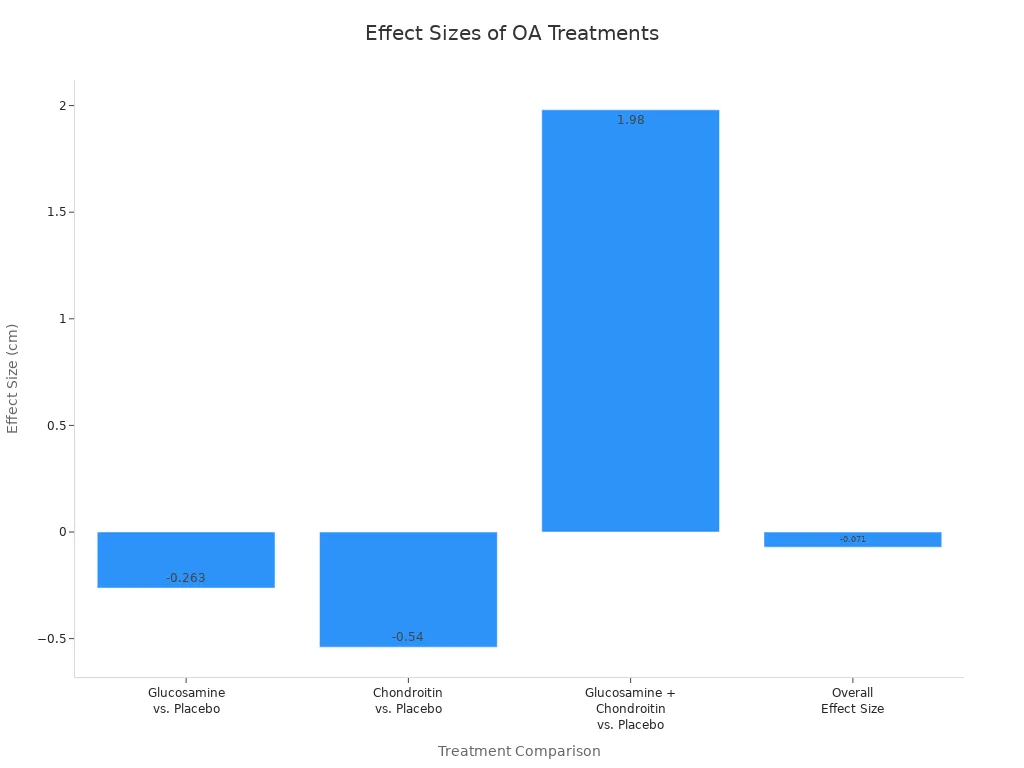
Meta-analyses show mixed results for glucosamine hydrochloride in treating osteoarthritis. The table below summarizes the effect sizes compared to placebo:
| Treatment Comparison | Effect Size (cm) | 95% Confidence Interval |
|---|---|---|
| Glucosamine vs. Placebo | -0.263 | (-0.635 to 0.113) |
| Chondroitin vs. Placebo | -0.540 | (-0.900 to -0.178) |
| Glucosamine + Chondroitin vs. Placebo | 1.980 | (-0.740 to 4.700) |
| Overall Effect Size | -0.071 | (-0.228 to 0.085) |
Possible Side Effects and Interactions
Most people tolerate glucosamine hydrochloride well, but some experience side effects:
| Common Side Effects | Less Common Side Effects | Serious Events |
|---|---|---|
| Dyspepsia | Drowsiness | Onset of diabetes |
| Nausea | Headache | Hypothyroidism |
| Vomiting | Skin reactions | Peripheral edema |
| Diarrhea | Sexual dysfunction | |
| Constipation | Elevated blood pressure | |
| Chest pain |
Some drugs interact with glucosamine hydrochloride. Warfarin, anisindione, and dicumarol may increase the risk of bleeding when combined with high doses. People should consult a healthcare provider before starting supplementation.
Glucosamine hydrochloride may help maintain healthy cartilage and joint function, though research shows mixed results.
| Key Findings | Description |
|---|---|
| Protective Role | Delays cartilage breakdown and supports repair. |
| Anti-inflammatory Effects | Regulates enzymes linked to joint health. |
| Dose-dependent Effects | Higher doses show stronger effects. |
Many believe glucosamine relieves joint pain, but scientific studies remain inconclusive. Some experts note that inconsistent results often stem from study design or supplement form.
- Future research should develop better testing models and outcome measures.
FAQ
Is glucosamine hydrochloride safe for long-term use?
Most studies show that adults tolerate glucosamine hydrochloride well for up to three years. They should consult a healthcare provider for ongoing monitoring.
Can people with shellfish allergies take glucosamine hydrochloride?
Manufacturers often derive glucosamine hydrochloride from non-shellfish sources like corn. People with allergies should check product labels and consult their doctor.
Does glucosamine hydrochloride interact with other medications?
- Glucosamine hydrochloride may interact with blood thinners and diabetes medications.
- Patients should inform their healthcare provider about all supplements and prescriptions.
See Also
Exploring The Health Benefits Of Bovine Gelatin Powder
Evidence-Based Strategies For Enhancing 2 5-Furandicarboxylic Acid Sustainability
Silicone Sealant: The Essential Adhesive For Contemporary Homes
Innovative Techniques For Synthesizing Aminoguanidine Bicarbonate In Industry
Comparative Analysis Of Bovine Gelatin And Other Gelatin Types