Gelatin sheet secrets for perfect recipes in 2026
Gelatin sheet remains essential for chefs who value precise texture and clarity in recipes. In 2026, powdered gelatin leads the market with over 52% share, serving confectionery and dairy desserts, while gelatin sheet holds around 25%, thriving in premium confectionery and gourmet desserts.
| Type of Gelatin | Market Share (%) | Key Applications |
|---|---|---|
| Powdered Gelatin | Over 52% | Confectionery, dairy desserts, beverages, pharmaceuticals |
| Sheet Gelatin | Approximately 25% | Premium confectionery, gourmet desserts |
Gelatin sheet vs powdered gelatin: Key differences
Texture and clarity in recipes
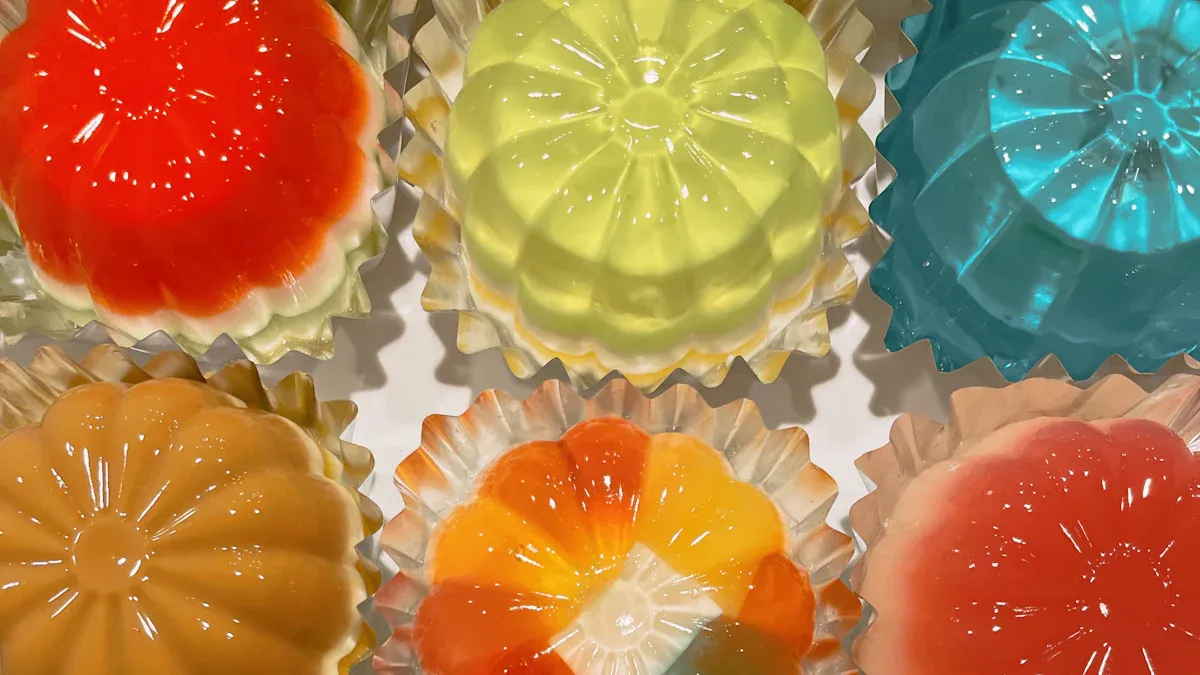
Texture and clarity set the foundation for a flawless dessert. Professional chefs often select gelatin sheet for its ability to deliver a pristine finish in delicate dishes. The manufacturing process for sheets avoids harsh grinding, which preserves the continuity of the gelatin at a microscopic level. Once melted, sheets form a uniform three-dimensional network structure. This structure produces a gel with high clarity and an impressive refractive index, eliminating grainy textures that sometimes appear with powdered gelatin.
Note: Sheet gelatin offers a consistent gel strength, usually around 200 Bloom, which ensures reliable results in recipes that demand precision.
Chefs rate the visual clarity of desserts made with gelatin sheets higher than those made with powdered gelatin. The following table highlights the differences:
| Characteristic | Gelatin Sheets | Powdered Gelatin |
|---|---|---|
| Clarity and purity | High | Variable |
| Consistent gel strength | High | Variable |
| Slow dissolution rate | Yes | No |
| Ability to create smooth textures | Yes | No |
Sheet gelatin stands out in gourmet desserts, where clarity and texture matter most.
Ease of use and preparation
Preparation methods for gelatin sheet and powdered gelatin differ, but both require similar time investments. Sheet gelatin requires soaking in cold water for five to ten minutes, followed by draining and dissolving in a warm liquid. Powdered gelatin involves measuring, blooming in cold liquid, and then dissolving in a hot mixture.
| Gelatin Type | Preparation Steps |
|---|---|
| Gelatin Sheets | 1. Soak in cold water for 5-10 minutes. 2. Squeeze or drain excess water. 3. Add to warm liquid (do not boil). |
| Powdered Gelatin | 1. Measure the required amount. 2. Dissolve in cold liquid for 5-10 minutes (will swell). 3. Combine with hot liquid for setting. |
Both types require five to ten minutes for preparation. Powdered gelatin dissolves quickly in warm liquids, making it ideal for recipes like mousses and jellies. Sheet gelatin, while slightly slower to dissolve, provides more control during the preparation process.
Tip: Avoid boiling gelatin, as high temperatures can weaken its gelling ability and affect the final texture.
Consistency and reliability
Consistency and reliability play a crucial role in professional kitchens. Gelatin sheet offers exceptional purity and consistent results, which is why many chefs prefer it for premium desserts. The gelling strength remains stable, allowing for precise control in culinary applications.
- Gelatin leaves are a premium choice for their performance.
- They ensure consistent results in various culinary applications.
- Unlike powdered gelatin, they allow for better control in recipes.
The following table summarizes how professionals evaluate both types:
| Feature | Gelatin Sheets | Powdered Gelatin |
|---|---|---|
| Handling | More control and elegance in use | Easier to find in stores |
| Solubility | Superior solubility and clarity | May require more effort to dissolve |
| Applications | Preferred in gourmet cooking | Common in everyday recipes |
Gelatin sheet remains the preferred choice for chefs who demand reliability and flawless results, especially in large-scale or high-end production.
Gelatin sheet advantages in recipes

Best uses for gelatin sheet
Culinary professionals rely on gelatin sheet for recipes that demand clarity, purity, and a refined finish. Chefs often select this form for desserts and pastries where texture and appearance matter most. The following types of recipes benefit greatly from its use:
- Jellies and clear glazes, where transparency is essential for visual appeal.
- Panna cotta, which requires a stable yet delicate set.
- Bavarian cream, where a light, airy texture is crucial.
- Mousses and cold soufflés, which depend on a smooth, elastic gel for mouthfeel.
- Pastry creams and lemon curd, where stability at room temperature is necessary.
In fine dining and pastry arts, gelatin sheet also plays a role in savory dishes such as aspic and terrines. These applications highlight its ability to bind ingredients without altering natural flavors.
Achieving professional results
Professional kitchens value gelatin sheet for its consistent performance and superior results. When used correctly, it produces a silky, elastic texture that enhances the mouthfeel of desserts. Chefs appreciate its ability to provide firmness and stability in layered creations without affecting taste. The process for achieving these results involves several precise steps:
- Soak the gelatin sheet in cold water until softened.
- Warm the base liquid, such as fruit juice or cream, just to the boiling point.
- Remove from heat and add the softened gelatin, stirring until fully dissolved.
- Pour the mixture into molds or pans and chill until set.
This method ensures a flawless finish, exceptional transparency, and moisture retention in both sweet and savory dishes. Higher bloom numbers in gelatin sheet indicate stronger gelling power, making it ideal for fine dining presentations.
When to choose powdered gelatin
Everyday and quick recipes
Powdered gelatin stands out as a practical choice for everyday cooking and time-sensitive recipes. Home cooks and professionals often select it for its ability to enhance the consistency of food in various formats. Many find working with powdered gelatin enjoyable, as it brings a sense of creativity to the kitchen. Recipes using this form of gelatin typically require minimal preparation time, making them ideal for busy schedules.
- Gelatin-based recipes often use only three ingredients, streamlining the process.
- Clean ingredients in powdered gelatin support long-term use and comfort for chefs.
- Quick preparation allows for creative presentation and experimentation.
A comparison of gelling strength and convenience highlights why powdered gelatin excels in fast-paced environments:
| Gelatin Type | Gelling Strength (Bloom) | Hydration Method | Convenience Level |
|---|---|---|---|
| Powdered Gelatin | 225 | Sprinkled over water to absorb evenly | Easy to measure |
| Gelatin Sheets | 160 | Blooms in just enough water to cover | Preferred in culinary |
Convenience and versatility
Powdered gelatin remains the most demanded gelling agent in the food industry. Its versatility extends across a wide range of culinary applications:
- Used in desserts, confectionery, and dairy products.
- Serves as a clarifying agent in beverages.
- Functions as a stabilizer and thickener in yogurt and cream cheese.
- Creates a gel that is thermo-reversible, allowing for diverse textures.
- Acts as a blank canvas for flavors due to its mild taste.
Chefs rely on powdered gelatin to mimic fat texture in reduced-fat products and to provide structure in both sweet and savory dishes. Its adaptability and ease of use make it a staple in kitchens focused on efficiency and variety.
Gelatin sheet and powdered gelatin conversion
Substituting gelatin sheet for powder
Cooks often need to substitute gelatin sheets for powdered gelatin in recipes. They must understand the conversion process to achieve the desired texture and set. Gelatin sheets provide ease of use and cleaner results, but the weight and bloom strength can vary by brand and type. The following steps outline a reliable method for substitution:
- Determine the number of gelatin sheets required by the recipe.
- Calculate the total weight. For example, three sheets at 1.7 grams each equal 5.1 grams.
- Measure an equivalent weight of powdered gelatin to replace the sheets.
- Hydrate the powdered gelatin in cold water before incorporating it into the recipe.
Note: Always check the bloom strength of both gelatin forms. Platinum sheets have higher bloom strength than bronze sheets, which affects the final texture.
Cooks face several challenges during substitution. The table below summarizes common issues and solutions:
| Challenge | Solution |
|---|---|
| Variability in weight and bloom | Understand conversion ratios |
| Incorrect hydration | Ensure proper hydration |
| Improper incorporation into recipes | Follow specific incorporation techniques |
They should follow recipes closely and remain aware of brand differences.
Substituting powder for gelatin sheet
Professional kitchens often substitute powdered gelatin for gelatin sheets when sheets are unavailable. The conversion depends on the recipe and the type of sheet used. The table below provides a quick reference:
| Powdered Gelatin | Gelatin Sheets |
|---|---|
| 1 tablespoon | 3–4 sheets |
| 1 teaspoon | 1–2 leaves |
No direct correlation exists between powdered and sheet gelatin due to weight and bloom variations. Many pastry chefs prefer sheets because they are standardized and easier to handle. When using powder, chefs must hydrate it properly and incorporate it gently to avoid lumps. They should always adjust for the specific bloom strength to maintain recipe integrity.
Expert tips for perfect gelatin results
Proper blooming techniques
Experts recommend several blooming techniques to ensure optimal gelatin performance in culinary and industrial settings:
- Select gelatin with a Bloom strength of 100 to 200 grams for desserts and gummies. This range produces the desired texture and mouthfeel.
- For pharmaceutical applications, use gelatin with a Bloom strength of 200 to 300 grams. This ensures stability and controlled release.
- In industrial processes, choose higher Bloom strengths for photographic emulsions and lower strengths for food processing.
Chefs always soak gelatin in cold water before heating. This step prevents clumping and ensures even hydration.
Avoiding common mistakes
Mistakes during gelatin preparation can ruin a recipe. The table below outlines frequent errors and their solutions:
| Mistake | Solution |
|---|---|
| Clumping | Sprinkle the gelatin powder evenly and do not pour it all at once. |
| Insufficient Blooming | Let the gelatin sit for the recommended amount of time before heating. |
| Overheating | Apply gentle heat to avoid degradation of gelling properties. |
Improper blooming leads to texture issues. The following table shows how different mistakes affect the final product:
| Cause of Improper Blooming | Effect on Texture and Setting |
|---|---|
| Poor and uneven bloom | Results in clumps of gelatin |
| Too much heat or rapid boiling | Destroys gelling ability, leading to a product that does not set properly |
| Signs of Over-Blooming | Gelatin sets too softly, texture is not firm |
| Signs of Under-Blooming | Gelatin fails to dissolve well, resulting in lumps or grainy texture |
Storing gelatin sheet and powder
Proper storage preserves the quality of both gelatin sheet and powdered gelatin:
- Store gelatin between 15°C and 25°C to prevent thermal degradation.
- Maintain humidity below 60% to avoid moisture absorption.
- Use opaque containers to protect from light and prevent photo-oxidation.
- Keep powdered gelatin in air-tight containers to prevent clumping.
- Store gelatin sheets flat in rigid boxes to avoid warping or sticking.
These practices help chefs maintain consistent results and extend shelf life.
Culinary experts recommend selecting the gelatin type based on recipe needs and kitchen comfort.
- Gelatin powder dissolves easily and stores well for future use.
- Gelatin sheet requires soaking but offers greater control and precision.
Both forms have unique advantages, so matching the choice to the dish ensures optimal results.
FAQ
How does gelatin sheet differ from powdered gelatin in recipes?
Gelatin sheet provides superior clarity and texture. Powdered gelatin offers convenience. Chefs select sheets for gourmet dishes and powder for everyday recipes.
Can chefs mix gelatin sheet and powdered gelatin in one recipe?
Experts advise against mixing forms. Each type hydrates and dissolves differently. Consistency and texture may suffer if combined.
What is the best way to store gelatin products?
Store gelatin in airtight containers at 15°C–25°C. Keep humidity below 60%. Use opaque packaging to protect from light.
See Also
Creative Methods to Incorporate Bovine Gelatin Powder in Cooking
Comparing Bovine Gelatin Powder with Fish and Pork Varieties
Key Indicators of High-Quality Bovine Gelatin Powder to Recognize
The Production Process and Ingredients of Edible Gelatin Explained
Reasons Why Bovine Gelatin Powder Is an Effective Health Booster