Gelatin Food Supplement Guide for Smart Choices
You want to make smart choices when selecting a gelatin food supplement. Many people now use these supplements for joint health, skin support, and overall wellness.
- The market grows quickly at 13.5% each year.
- Athletes, older adults, and health-conscious people find them useful.
Key Takeaways
- Identify your health goals before choosing a gelatin supplement. Focus on joint health, skin support, or digestion to find the right product for you.
- Check the source of gelatin. Bovine, porcine, and fish sources have different nutritional values and cultural acceptability. Choose one that fits your dietary needs.
- Always read the label for allergens and additives. Look for certifications like non-GMO or organic to ensure quality and safety.
Identify Your Needs for a Gelatin Food Supplement
Health Goals: Joints, Skin, and Digestion
You should start by thinking about your main health goals. Many people use a gelatin food supplement to support joint comfort, skin appearance, or digestion. Scientific studies show that gelatin may help ease joint pain and reduce swelling in arthritis. Animal studies also suggest anti-inflammatory effects. For digestion, experts believe gelatin may offer benefits, but specific studies are limited. No strong evidence supports its use for skin health at this time.
| Health Goal | What Studies Show |
|---|---|
| Joint Health | May ease joint pain and reduce swelling in arthritis (animal studies) |
| Digestive Health | Possible benefits, but few specific studies |
| Skin Health | No strong evidence found |
Dietary Restrictions and Preferences
You need to consider your diet and any allergies. Gelatin comes from animal sources, so it does not fit vegetarian or vegan diets. Most people tolerate gelatin well, but those with animal product allergies should avoid it. If you follow a plant-based diet, you may want to look for alternatives like pea protein.
| Dietary Consideration | Gelatin | Pea Protein |
|---|---|---|
| Vegetarian/Vegan Diets | Not suitable | Suitable |
| Allergies/Intolerances | Usually safe, but avoid if allergic to animal products | Good for soy/dairy allergies, avoid if allergic to peas |
Tip: Always check the label for allergen information before you buy any supplement.
Preferred Supplement Forms: Powder, Capsules, and More
You can choose from several forms of gelatin food supplement. Powders mix easily into drinks or recipes. Capsules offer a quick and easy option if you do not like the taste or texture. Some brands also offer gummies or ready-to-drink options. Think about your daily routine and pick the form that fits best.
Key Factors When Selecting a Gelatin Food Supplement
Source: Bovine, Porcine, or Fish
You need to know where your gelatin food supplement comes from. The source affects not only the nutritional value but also cultural and dietary acceptance. Most supplements use gelatin from bovine (cow), porcine (pig), or fish. Each source has unique features.
| Gelatin Source | Nutritional Value | Allergen Risk |
|---|---|---|
| Bovine | Higher melting and gelling points | Cultural restrictions in Hinduism |
| Porcine | Higher melting and gelling points | Prohibited in Islam and Judaism |
| Fish | Lower melting and gelling points | No risk of BSE, less cultural restriction |
- Bovine gelatin is not allowed in Hinduism.
- Porcine gelatin is not accepted in Islam and Judaism.
- Fish gelatin is usually accepted across cultures.
You should also think about how the source affects the product's texture and use. Fish gelatin melts at lower temperatures, so it works well in cold recipes. Bovine and porcine gelatin hold up better in hot foods.
Purity, Additives, and Bioavailability
When you choose a gelatin food supplement, check the label for purity. Some products contain additives to improve texture, color, or shelf life. Common additives include plasticizers like oleic acid and triethyl citrate. These make the supplement more flexible but can lower purity. Colorants, both natural and synthetic, change the appearance. Synthetic colorants may face safety concerns. Opacifiers like titanium dioxide make the product look less clear, but some experts question their safety. Preservatives such as sorbic acid and parabens help keep the product fresh, but too much can affect your health.
Bioavailability means how well your body absorbs and uses the nutrients. Gelatin has lower digestibility than other animal proteins. However, some parts of gelatin, like prolyl-hydroxyproline, help your body absorb iron better. Studies in rats show that a diet with gelatin can help build hemoglobin faster than some other proteins.
Tip: Choose a product with fewer additives for better purity and safety.
Certifications: Non-GMO, Organic, and Quality Marks
Certifications help you know if a gelatin food supplement meets high standards. Look for these important marks:
- Food-Grade Manufacturing Practices: Shows the product follows FDA rules for safety and cleanliness.
- FDA GRAS and Food/Color Additive Compliance: Confirms the ingredients and additives are safe.
- Halal and Kosher Certifications: Important if you follow religious dietary laws.
- Non-GMO Verification: Means the ingredients are not genetically modified.
- BSE- and Prion-Free Compliance: Ensures safety from animal diseases.
- Vegan Society Certification: For plant-based alternatives.
- Fair Trade Certification (EU): Shows ethical sourcing and fair labor.
You can find these marks on the label or the company’s website. They help you make a safe and smart choice.
Allergen and Sensitivity Information
You must check allergen and sensitivity information before you buy a gelatin food supplement. Some people react to animal proteins. Bovine and porcine gelatin can cause issues for those with allergies to beef or pork. Fish gelatin is a better choice if you have these allergies, but it can still cause problems for people with fish allergies.
Note: Always read the label for allergen warnings and consult your doctor if you have food allergies or sensitivities.
Comparing Gelatin Food Supplement Products
Reading and Understanding Labels
When you pick a gelatin food supplement, you should always read the label carefully. The label gives you important information about what you are putting into your body. Here are the main things you need to look for:
- Health claims: Check if the product promises benefits like joint support or better skin.
- Allergens: Look for warnings about animal sources, especially if you have allergies or follow a special diet.
- Supplement facts: Find out the serving size, number of servings per container, and the amount of each nutrient.
- Ingredients: See if the product contains only gelatin or if it has fillers, sweeteners, preservatives, or other additives.
- Certifications: Look for marks like gluten-free, non-GMO, or organic if these matter to you.
Tip: If you need to avoid gluten, make sure the label says "certified gluten-free." Always check for hidden ingredients that may not fit your diet.
Recognizing Reputable Brands
Choosing a trusted brand helps you stay safe and get the best results. You can use several criteria to spot a reputable company. The table below shows what to look for:
| Criteria | Description |
|---|---|
| Product Quality & Purity | High-grade, contaminant-free gelatin keeps you safe and healthy. |
| Innovation & Formulation | Brands that create new formulas or improve absorption stand out. |
| Supply Chain Reliability | Reliable companies deliver products on time and keep quality steady. |
| Regulatory Compliance | Good brands follow rules from groups like the FDA or EFSA. |
| Pricing & Value | Fair prices with good quality give you more for your money. |
| Customer Support & Technical Assistance | Helpful support makes it easy to ask questions or solve problems. |
| Track Record & Reputation | A long history of happy customers shows you can trust the brand. |
| Innovation in Sustainability | Eco-friendly brands care about the planet and use safe sources. |
You can also check safety ratings and reviews. The table below lists some popular brands and their safety ratings:
| Brand Name | Safety Rating | Notes |
|---|---|---|
| Perfect Supplements' Hydrolyzed Collagen | High | Independently tested, glyphosate residue-free, pasture-raised, 97% bioavailable. |
| Ancient Nutrition Multi-Collagen Peptides | Moderate | Tested for trace levels of mercury. |
| Beachbody Collagen Peptides | Moderate | No specific safety data provided. |
| Bulletproof Collagen Protein Chocolate | Low | Contains lead and cadmium above California safety limits. |
| Orgain Grassfed Pasture Raised Collagen Peptides | Low | Tested for lead above California safety limits and trace amounts of mercury. |
| Vital Proteins Collagen Peptides | Low | Tested for trace amounts of mercury; has numerous legal notices regarding safety. |
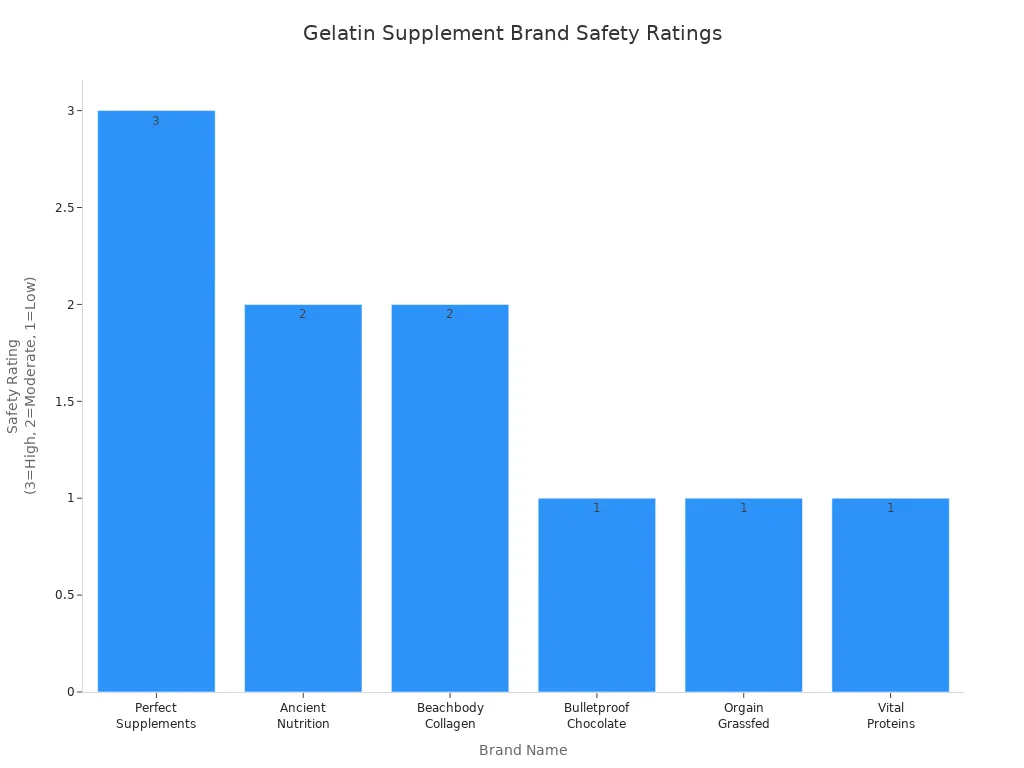
Note: Brands with high safety ratings often use better testing and cleaner sources. Always check for recent reviews and third-party testing.
Price Versus Quality Considerations
You want to get the best value when you buy a gelatin food supplement. Prices can change based on many things. Here are some factors that affect the cost:
- Raw material availability: If there are fewer cows, pigs, or fish, prices may go up.
- Industrial demand: More people using gelatin in food or medicine can raise prices.
- Regional production: Where the gelatin comes from can change the price.
- Economic factors: Things like inflation or trade rules can make products more expensive.
- Processing methods: Special ways to make gelatin pure or easy to use can add to the cost.
In the USA, the average price for gelatin is about $6,452 per metric ton. You may pay more for products with extra certifications, higher purity, or special sources. Sometimes, a higher price means better quality, but not always. You should compare the label, brand reputation, and safety before you decide.
Tip: Do not choose only by price. Look for a balance between cost, quality, and safety to make a smart choice.
Safe and Effective Use of Gelatin Food Supplements
Dosage and Usage Guidelines
You should follow safe dosage guidelines when you use a gelatin food supplement. Most people can safely eat gelatin in food amounts. Some people use larger amounts for health reasons. Health experts say you can take up to 10 grams daily for up to six months. The right dose depends on your age, health, and needs. Always talk to your doctor before you start a new supplement.
- Gelatin is likely safe in food amounts.
- Up to 10 grams daily is possibly safe for up to six months.
- The best dose depends on your personal health.
- Ask a healthcare professional for advice.
Potential Side Effects and Precautions
Most people do not have problems with gelatin, but some may notice mild side effects. You might feel bloated or full. Some people have mild stomach discomfort. These side effects usually depend on how your body reacts and how you prepare the supplement.
- Bloating or fullness can happen.
- Mild digestive discomfort is possible.
- Side effects are not common for everyone.
Note: If you feel unwell after taking gelatin, stop using it and talk to your doctor.
Tips for Daily Integration
You can add gelatin to your daily routine in fun and healthy ways. Try these ideas to get the most benefit:
- Make your own healthy jello with juice for a tasty, low-calorie snack.
- Create low-sugar gummies at home using just three ingredients.
- Mix gelatin into smoothies or coffee for a protein boost.
- Add gelatin to soups, stews, or sauces to thicken them and add nutrition.
These tips help you enjoy the benefits of a gelatin food supplement every day.
Gelatin Food Supplement Frequently Asked Questions
You may have questions before you start using a gelatin food supplement. Here are answers to some of the most common ones:
1. What are the main sources of gelatin?
You can find gelatin made from pork skin, beef hides and bones, or fish. Pork skin works well for food because it gives clear results and strong gels. Beef hides and bones are often used for capsules. Fish sources are popular for people who avoid land animals.
2. How do you know if gelatin is safe?
Manufacturers must follow strict rules. They use animals checked by veterinarians. Beef gelatin comes from countries with very low risk of diseases like BSE. Fish gelatin must meet rules like those for medicine. All types must pass tests for germs. For example, the total aerobic microbial count must stay below 1,000 CFU per gram, and there can be no Salmonella.
3. What do Kosher and Halal mean for gelatin?
Kosher and Halal gelatin comes from animals processed under religious rules. Special supervisors check every step. This helps people with religious needs choose the right product.
4. Can you have allergies to gelatin?
Some people react to animal proteins. If you have allergies to beef, pork, or fish, you should check the label and talk to your doctor.
5. How do you pick the best gelatin food supplement?
Look for clear labels, trusted brands, and certifications. Make sure the product fits your diet and health needs.
Tip: Always read the label and ask your doctor if you have health concerns.
| Source Type | Main Use | Safety Standards |
|---|---|---|
| Porcine (Pork) | Food applications | Vet-inspected, clear, strong gels |
| Bovine (Beef) | Capsules, supplements | Sourced from safe countries, strict disease controls |
| Marine (Fish) | Special diets | Pharmaceutical-level safety, unique texture |
You can make smart choices by checking the source, moisture content, and safety of each gelatin food supplement.
- Choose skin-derived gelatin and look for BSE-free sources.
- Check for stable moisture and safe additives.
| Benefit | Description |
|---|---|
| Joint Health | Supports cartilage and flexibility |
| Skin Health | Improves elasticity and moisture |
Informed choices help you reach your health goals with confidence.
FAQ
Can you take gelatin supplements every day?
You can take gelatin daily. Most people use 5–10 grams per day. Ask your doctor for advice if you have health concerns.
Is gelatin safe for children?
You can give gelatin to children in food amounts. Always check with your pediatrician before starting any supplement for your child.
How do you store gelatin supplements?
Store gelatin in a cool, dry place. Keep the container tightly closed. Avoid heat and moisture to keep the supplement fresh.
See Also
Discover The Health Benefits Of Bovine Gelatin Powder
Creative Methods To Incorporate Bovine Gelatin Into Dishes
Key Indicators Of High-Quality Bovine Gelatin Powder
Comparing Bovine Gelatin Powder With Fish And Pork Varieties