Is It a Galvanizing Kettle or Just a Big Zinc Planter
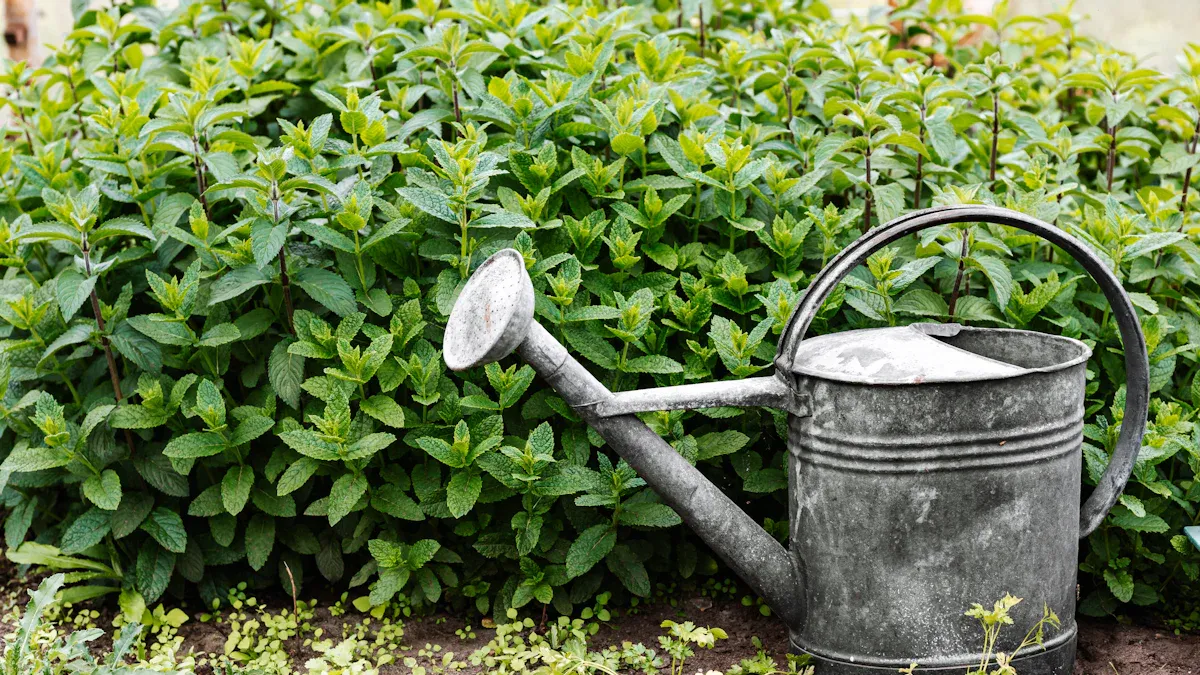
No, they are not the same. A galvanizing kettle is a specialized industrial crucible. It holds molten zinc at over 840°F (450°C). A zinc planter is a decorative container for plants. A Zinc pot sales manufacturer provides kettles for major uses like Pipes Galvanizing lines. The industry's growth is notable.
| Metric | Value |
|---|---|
| Market Size in 2024 | $65.26 billion |
| Market Size in 2029 | $87.71 billion |
| CAGR (2024-2029) | 6.2% |
Key Takeaways
- A galvanizing kettle is a large industrial tool. It holds hot liquid zinc to coat steel. This protects steel from rust.
- A zinc planter is a small container for plants. It holds soil and helps plants grow. It is for decoration.
- Kettles are huge and made of thick steel. Planters are small and made of thin metal. Planters have drainage holes, but kettles do not.
What Is the Purpose? Function Defines the Object
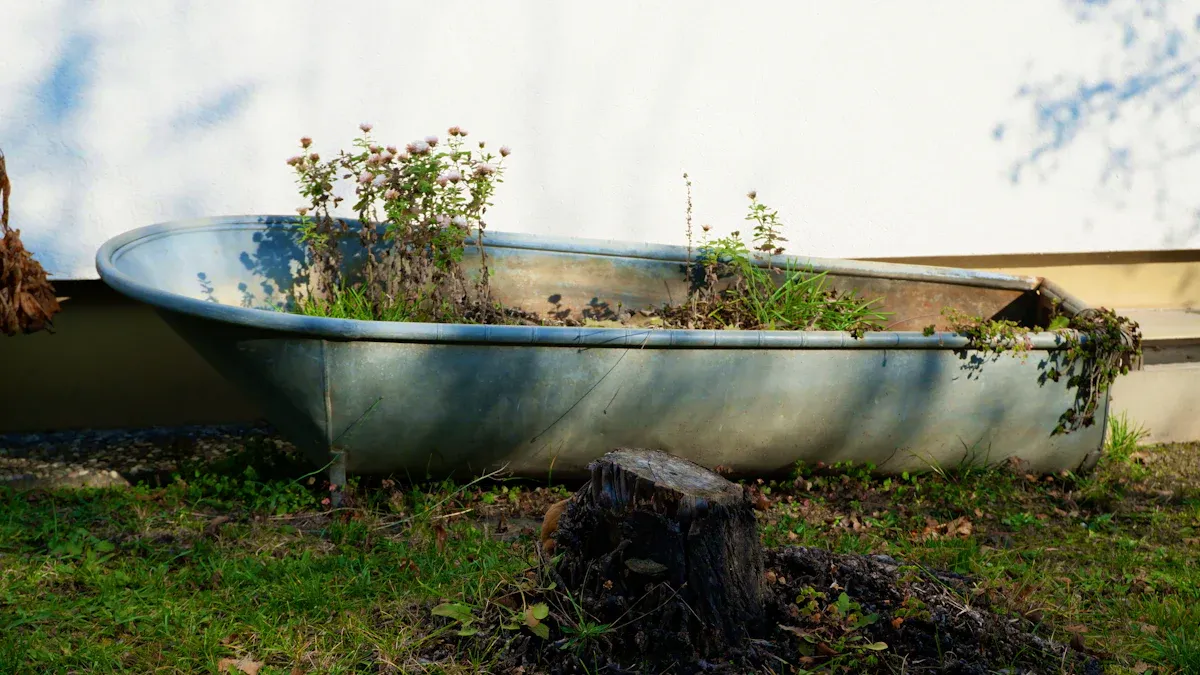
An object's primary function often reveals its true identity. A galvanizing kettle and a zinc planter may look similar from a distance, but their purposes are worlds apart. One is a tool for heavy industry, while the other is a simple container for gardening.
Galvanizing Kettle: A Crucible for Molten Metal
A galvanizing kettle serves a single, critical industrial purpose. It is a crucible designed to hold and heat molten zinc. This allows steel parts to be submerged in the hot liquid, which is kept at temperatures between 820-860°F (438-460°C). The process creates a protective coating that prevents rust.
The operational stages are very specific:
- Immersion: Workers dip clean steel into the kettle's molten zinc bath.
- Diffusion: The steel remains in the kettle until it reaches the same temperature as the zinc. A chemical reaction occurs, forming a series of tightly-bonded, zinc-iron alloy layers on the steel's surface.
- Withdrawal: The newly coated steel product is removed from the kettle. This entire dipping process is surprisingly fast.
This metallurgical bond between the zinc and steel is the entire reason for the kettle's existence.
Zinc Planter: A Home for Plants
A zinc planter has a much simpler and gentler function. It is a decorative container built to hold soil and give plants a home. Its design focuses on aesthetics and providing a suitable environment for plant life, not on withstanding extreme heat.
However, the zinc material does affect its function. Zinc conducts heat well. This property can cause the soil inside to heat up quickly in direct sun and cool down fast in cold weather. As a result, the soil may dry out faster, requiring more frequent watering.
Note: To protect plant roots from temperature swings, many gardeners use a liner inside a zinc planter. A liner made of plastic or coco coir insulates the soil. It also creates a barrier that prevents moist soil from directly touching the metal, which helps the planter last longer.
How Is It Made? Material and Construction
An object's construction reveals its purpose. The materials and building methods for a galvanizing kettle are completely different from those for a zinc planter. One is built for extreme industrial conditions, while the other is made for simple garden use.
Kettle: Heavy-Duty, Low-Silicon Steel
Manufacturers build galvanizing kettles from specialized, heavy-duty steel plates. This is not ordinary steel. It is a specific low-carbon, low-silicon steel. The choice of material is critical for the kettle's survival.
Why Low-Silicon Steel? Silicon in steel reacts aggressively with molten zinc. This reaction, known as the Sandelin effect, can rapidly dissolve the steel kettle walls. Using steel with very low silicon content (typically below 0.03%) slows this corrosion process, extending the kettle's operational life.
The construction process involves several key steps:
- Plate Selection: Engineers choose thick steel plates, often 2 inches (50 mm) or more, to withstand the immense pressure and heat.
- Fabrication: Workers cut and bend these massive plates into the required trough shape.
- Welding: Expert welders join the plates using specialized techniques to create seamless, strong joints that can contain tons of molten metal without leaking.
- Reinforcement: The kettle's structure includes external reinforcements to prevent the walls from bulging under the weight and thermal stress of the hot zinc.
The final product is an incredibly heavy and robust vessel, engineered for safety and longevity in a harsh factory environment.
Planter: Thin-Gauge Zinc or Coated Metal
A planter's construction prioritizes appearance and cost-effectiveness over industrial strength. Most "zinc" planters are not made of solid zinc. They are typically constructed from thin sheets of galvanized steel or other metals coated to look like zinc.
These planters are lightweight and easy to move. The metal is usually thin-gauge, meaning it is only a few millimeters thick. This makes it easy to shape into various decorative forms.
Many planters achieve a "zinc look" without using much zinc at all. Crafters and manufacturers use several techniques to create this popular aged-metal appearance.
- Antiquing Solutions: A special zinc antiquing solution can be applied to galvanized metal. This chemical process creates a matte, chalky finish with green undertones, mimicking the look of naturally aged zinc.
- Paint and Primer: A simple gray spray paint over a good primer can give any metal planter a basic zinc-like color.
- Faux Patina Effects: More complex finishes involve multiple layers to create depth.
- A base coat of spray primer is applied.
- One or two coats of black craft paint follow the primer.
- A dry-brush technique with silver paint adds metallic highlights.
- Dabs of bronze metallic paint can provide additional color variation and depth.
These methods show that a planter's material is chosen for its look, not for its ability to hold molten metal. The thin, often coated, construction is a clear sign that the object is a decorative planter.
What Does It Look Like? Scale and Key Features
Visual inspection is one of the easiest ways to tell a kettle from a planter. Their differences in scale, size, and key features are immediately obvious. One is a giant industrial vessel, while the other is a manageable garden accessory.
The Immense Scale of a Kettle
A galvanizing kettle is enormous. Its size is not for decoration; it is a direct result of its industrial function. The kettle must be large enough to submerge massive steel structures, from highway guardrails to building beams. These are objects measured in feet and tons, not inches and pounds.
The typical dimensions of a galvanizing kettle show its impressive scale.
| Dimension | Typical Range |
|---|---|
| Length | 30 – 60 feet (10 – 15 meters) |
| Width | 5 – 8 feet (1 – 4 meters) |
| Depth | 6 – 12 feet (2.5 – 4.5 meters) |
| Capacity | 1,000 – 20,000 liters |
To put this into perspective, a common kettle in North America is around 40 feet long. That is longer than a school bus. Some kettles are even larger. For example, Court Galvanizing Ltd. operates a kettle that is 55 feet long. This massive size allows workers to dip very long steel pieces in a single immersion. 🏗️
The kettle's size also determines the maximum size of the steel it can handle.
- Single Dip: A 42-foot-long kettle can galvanize a 42-foot-long beam in one go.
- Progressive Dip: Workers can use a technique called progressive dipping for even larger items. They dip one half of the steel, pull it out, and then dip the other half. This method allows a 40-foot kettle to coat items up to 60 feet long or more.
The weight involved is also staggering. Molten zinc is very heavy, weighing about 6.8 kg per liter. A kettle must support the immense weight of the liquid metal plus the weight of the steel parts being dipped.
The Manageable Size of a Planter
A zinc planter is built on a completely different, human-friendly scale. Its size is designed for convenience in a home, garden, or patio setting. You can lift, move, and plant in it without needing a crane. Planters come in a variety of manageable sizes to suit different needs.
Common planter sizes include:
- Small Pots: Perfect for a single herb or flower on a windowsill.
- Window Boxes: Designed to fit on a ledge or railing, usually a few feet long.
- Trough Planters: Larger rectangular boxes that can hold multiple plants. Even a large trough planter is rarely more than 4-6 feet long.
- Tall Urns: Decorative vertical planters that add height to a garden design.
Key Takeaway: The largest residential zinc planter would look like a toy next to the smallest industrial galvanizing kettle. A person can easily stand next to a planter. A person could fall into a galvanizing kettle.
The size of a planter is all about its purpose: holding soil and plants in a decorative way. It needs to be big enough for roots to grow but small enough to fit in its intended space. This focus on aesthetics and home use keeps its dimensions practical and easy to handle. 🪴
Quick ID Guide and Sourcing from a Zinc Pot Sales Manufacturer
You can quickly tell a kettle from a planter by looking at a few key details. The construction, features, and source reveal the object's true purpose. A reliable zinc pot sales manufacturer focuses on industrial-grade products, not garden decor.
Wall Thickness and Weight
A galvanizing kettle is incredibly heavy. Its walls are made from thick steel plates to hold molten metal. A planter is lightweight and has thin walls. The difference in thickness is significant. A zinc pot sales manufacturer provides kettles with specific wall dimensions.
| Material Type | Thickness Range (Inches) | Thickness Range (mm) |
|---|---|---|
| Carbon Steel | 1 to 2.5 | 25.4 to 63.5 |
| Stainless Steel | 1 to 2.25 | 25.4 to 57 |
| Stainless Clad | Up to 2.1 | Up to 52.3 |
Drainage Holes vs. Reinforced Walls
Planters have holes in the bottom. Kettles do not. The holes in a planter are essential for plant health.
Drainage is crucial for planters. It prevents plants from drowning due to overwatering or rain. Gardeners often add rocks to the bottom to help water escape.
A galvanizing kettle has reinforced walls instead. These supports provide superior mechanical strength. They help the tank withstand the pressure and heat of continuous use. A zinc pot sales manufacturer engineers these walls for safety and stability.
Surface Finish and Wear
A used kettle shows signs of industrial life. Its surface may have dross, scorch marks, or uneven wear from contact with molten zinc. A planter has a decorative finish. It might be smooth, painted, or chemically treated to look aged, but it lacks true industrial wear.
Sourcing Authentic Kettles
You find authentic kettles from an industrial zinc pot sales manufacturer. You will not find them at a garden center. A professional zinc pot sales manufacturer provides quality certifications for their products. Look for credentials like:
- ISO 9001:2015 Certification
- CE Certificate for Galvanizing Kettles
- ASTM material standards
These documents prove the kettle is built for industrial use. Always check the credentials of any zinc pot sales manufacturer.
A galvanizing kettle and a zinc planter may share a basic trough shape. Their industrial and decorative purposes, however, demand completely different construction. A person can easily distinguish between them.
Examine the material, weight, scale, and look for drainage holes. These details reveal the object's true identity. ✅
FAQ
Why can't a planter hold molten zinc?
A planter's thin metal cannot handle extreme heat. Molten zinc at 840°F would melt or destroy the planter instantly. Its construction is for decoration, not industry.
What is the main job of a galvanizing kettle?
A galvanizing kettle holds molten zinc. Workers dip steel parts into the hot zinc. This process creates a protective, rust-proof coating on the steel.
How can I tell them apart quickly?
Look for drainage holes. Planters have them for plant health. Kettles never have holes. Kettles are also enormous and made of very thick steel. ✅
See Also
Optimized Steel Processing Consistently Delivers Superior Heat Exchange Performance
Your 2025 Comprehensive Guide to Industrial Semi-welded Plate Heat Exchangers
Unexpected Strategies for Effective Troubleshooting of Sulfur Recovery Catalysts
Innovative Heat Exchanger Production Advances Significantly Boost Industrial Efficiency
A 2025 Performance Comparison of Shell and Plate Heat Exchangers