Future Trends in Compact Heat Exchanger Design
The next generation of compact heat exchangers is driven by three pivotal innovations: advanced materials, additive manufacturing, and intelligent digitalization. These trends directly answer the industry’s call for unprecedented thermal efficiency, enhanced sustainability, and superior operational performance.
Note: Adopting these designs can lead to a projected 40% improvement in energy efficiency and a 35% reduction in maintenance costs.
Core Innovations Shaping Next-Generation Compact Heat Exchangers
The evolution of compact heat exchangers is accelerating, driven by a trio of powerful innovations. These advancements in materials, manufacturing, and digitalization are not just incremental improvements; they represent a fundamental shift in how we design, build, and operate thermal management systems. They unlock new levels of performance, enabling industries to meet aggressive efficiency and sustainability goals.
Advanced Materials and Protective Coatings
The foundation of any high-performance heat exchanger is its material composition. Next-generation designs are moving beyond traditional stainless steel and copper to leverage advanced alloys and specialized coatings that withstand extreme conditions. Materials like Inconel and titanium aluminides offer superior strength and corrosion resistance at high temperatures, making them ideal for demanding applications in aerospace and chemical processing.
| Material | Corrosion Resistance | Thermal Conductivity | Applications for Heat Exchangers |
|---|---|---|---|
| Inconel | Excellent | Moderate | High-temperature and corrosive environments |
| Titanium Aluminides | High | Moderate | Aerospace and high-temperature systems |
| Aluminum Alloys | Good | High | General-purpose and lightweight applications |
Beyond the core materials, protective coatings are creating a new frontier in thermal efficiency and longevity. Graphene-based nanoparticle coatings, for example, offer remarkable benefits:
- They possess exceptionally high thermal conductivity, which directly boosts heat transfer rates.
- They create a durable, stable surface with low erosion and corrosion, extending the equipment's operational life.
- The significant increase in heat transfer efficiency can allow for a reduction in the physical size of the heat exchanger, saving space and material costs.
Additive Manufacturing and Complex Geometries
Additive manufacturing (AM), or 3D printing, is revolutionizing heat exchanger design by making previously impossible geometries a reality. Traditional manufacturing methods are limited to simple fins, plates, and tubes. AM liberates engineers to create highly complex internal structures that maximize the surface area for heat transfer within a given volume.
One of the most promising developments is the ability to print triply periodic minimal surfaces (TPMS). These are intricate, lattice-like structures that dramatically enhance thermal performance. The process of creating them, known as Selective Laser Melting (SLM), works as follows:
- A machine lays down a fine bed of metal powder.
- A high-powered laser selectively melts and fuses the powder according to a 3D digital model.
- The final geometry is built up layer by layer, forming a solid, complex component.
Performance Leap: The results are staggering. Studies show that 3D-printed lattice structures can increase the heat transfer coefficient by over 60% and the Nusselt number—a key measure of convective heat transfer—by as much as 300% compared to traditional designs.
This technology allows for the fabrication of specialized reactors and heat exchangers from advanced alloys, perfectly suited for high-pressure and high-temperature applications. While challenges like managing large design files and ensuring internal surface smoothness exist, the performance gains confirm that AM is a cornerstone of future heat exchanger technology.
Digitalization with IoT and Digital Twins
The final pillar of innovation is making heat exchangers intelligent. By embedding Internet of Things (IoT) sensors and creating virtual "digital twin" models, operators can gain unprecedented insight into real-time performance and health.
IoT sensors act as the nervous system for the equipment, continuously monitoring critical parameters:
- Temperature Sensors: Provide a detailed thermal map across the unit, instantly flagging hotspots or inefficiencies.
- Pressure Sensors: Detect changes that may indicate fouling or blockages, allowing for proactive maintenance before performance degrades.
- Flow Rate Sensors: Ensure the hot and cold fluid streams remain balanced for optimal thermal exchange.
This stream of live data feeds into a digital twin—a high-fidelity virtual model of the physical heat exchanger. This model is not static; it evolves with the real unit. Platforms like Hexxcell Studio™ use this hybrid AI approach to:
- Predict Fouling: Forecast when and where fouling will occur and assess its impact on performance.
- Optimize Cleaning Schedules: Recommend the most cost-effective time to perform maintenance, minimizing downtime and maximizing output.
- Run "What-If" Scenarios: Simulate the effects of changing operating conditions without any risk to the physical asset.
By leveraging AI to analyze this data, control systems can move beyond fixed setpoints. They can continuously adapt to changing loads and ambient conditions, identifying optimal control strategies that boost energy efficiency and ensure stable, reliable operation. This intelligent, data-driven approach transforms compact heat exchangers from passive components into active, optimized assets.
Industrial Impact and Application Breakthroughs
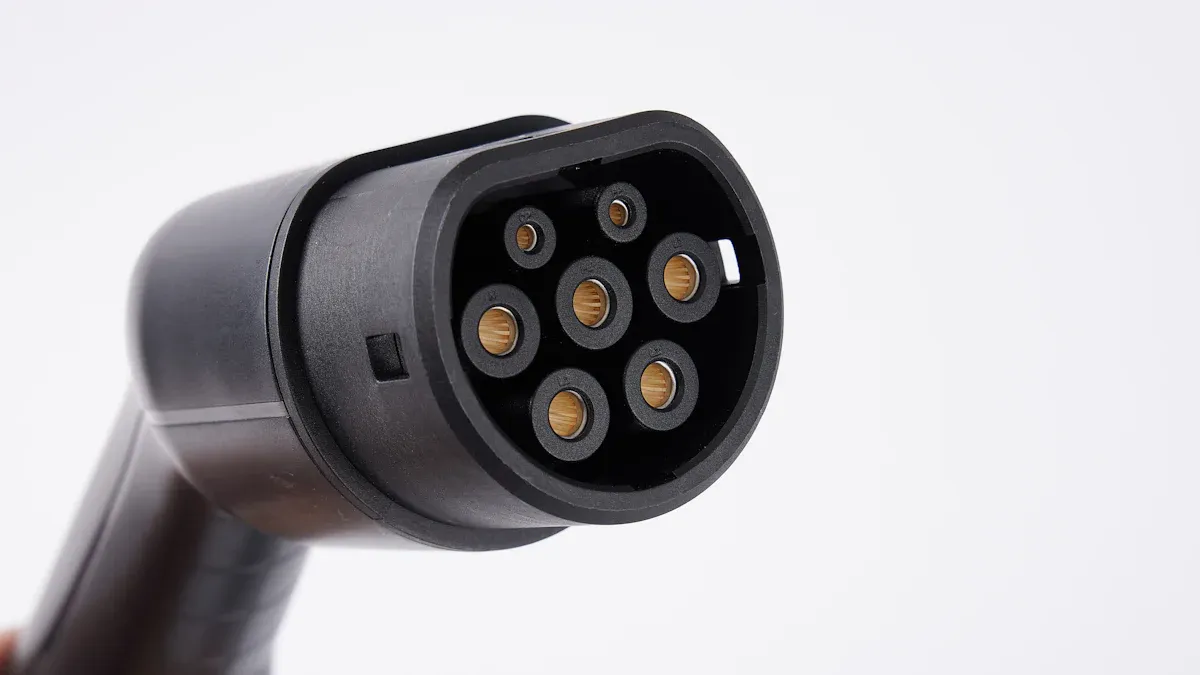
The convergence of advanced materials, manufacturing, and digitalization is creating breakthrough applications across critical industries. These next-generation thermal management solutions are not just improving existing processes; they are enabling entirely new technologies to emerge. From electrifying transportation to powering the digital economy, innovative heat exchanger designs are at the core of industrial progress.
EV Battery Thermal Management
The widespread adoption of electric vehicles (EVs) hinges on overcoming a major hurdle: fast charging. High-current fast charging generates immense heat within the battery pack. This rapid temperature rise presents significant challenges.
- Performance Degradation: Excessive heat can damage battery cells, shorten the battery's lifespan, and force the system to reduce charging power, slowing down the process.
- Safety Risks: In extreme cases, overheating can lead to thermal runaway—an uncontrollable self-heating cycle that poses a serious fire hazard.
- Environmental Extremes: Effective thermal management becomes even more difficult in very hot or cold ambient conditions, further impacting battery performance.
Advanced liquid cooling systems directly address these issues. Liquid cold plates, designed with intricate internal channels, distribute coolant evenly across battery modules. This process prevents localized hot spots and maintains a uniform temperature, which is crucial for battery health and performance. Micro-channel heat sinks (MCHSs) are particularly effective, significantly reducing peak temperatures and enhancing reliability. Automakers are already implementing these advanced solutions.
| Vehicle | Heat Exchanger Type | Key Features |
|---|---|---|
| General Motors' Chevrolet Volt | Aluminum cold plates | Interwoven with battery cells; features five individual parallel coolant paths. |
| Porsche Boxster E | Liquid-filled cooling plate | Optimized with computational fluid dynamics (CFD) for high efficiency and even temperature distribution. |
| XING Mobility | Direct liquid immersion cooling | Submerges 4,200 individual lithium-ion cells in a non-conductive engineered fluid for maximum thermal contact. |
The High-Pressure Hydrogen Economy
The transition to a green hydrogen economy requires robust infrastructure, especially for high-pressure refueling stations. When hydrogen is compressed to pressures above 700 bar for vehicle storage, its temperature rises dramatically. This heat must be removed efficiently to ensure safe and fast refueling.
Printed Circuit Heat Exchangers (PCHEs) are an ideal solution for this demanding application. PCHEs are built by chemically etching complex flow patterns onto thin metal sheets, which are then stacked and diffusion-welded into a solid block. This process creates extremely compact heat exchangers with superior strength and efficiency.
Did You Know? PCHEs can be over 90% efficient and are significantly smaller than traditional designs, making them perfect for the limited space in modular hydrogen refueling stations.
These units are specifically designed for clean, high-pressure environments.
- Materials and Design: They often use 316L Stainless Steel and diffusion welding to create a microchannel structure capable of withstanding pressures up to 1,000 bar (14,500 psi).
- Function: In a refueling station, the PCHE precools the high-pressure hydrogen by exchanging heat with a refrigerant. This allows for faster filling rates and a better state of charge in the vehicle's tank.
- Safety and Reliability: Manufacturing and operation adhere to strict safety standards like API 934-A and ASME BPVC to prevent hydrogen embrittlement. Rigorous non-destructive testing (NDT), including ultrasonic and radiographic inspection, ensures weld integrity and operational safety.
High-Density Data Center Cooling
Modern data centers are the backbone of the digital world, but their high-density server racks generate enormous amounts of heat. Managing this thermal load efficiently is critical for performance, reliability, and sustainability. The industry measures this efficiency using Power Usage Effectiveness (PUE), where a lower number is better. Top-tier facilities now target PUE values below 1.2, with some high-performance computing centers achieving ratings as low as 1.036.
Traditional air cooling is no longer sufficient for these high-density environments. As a result, the industry is rapidly shifting toward direct-to-chip and immersion liquid cooling. These methods bring a coolant directly to the heat source, offering far superior thermal performance.
| Feature | Direct-to-Chip Liquid Cooling | Traditional Air Cooling |
|---|---|---|
| Heat Transfer Efficiency | Significantly higher; liquid is a much better heat conductor. | Lower; air is a poor conductor of heat. |
| Power Consumption | Lower; requires less energy to pump liquid than to power large fans. | Higher; fans consume substantial energy to move massive air volumes. |
| Space Requirements | Less; enables higher server rack density. | More; requires large CRAC units and space for airflow. |
| Noise Levels | Quieter; operates with fewer high-speed fans. | Louder; generates considerable noise from server and cooling unit fans. |
Leading research and data hosting facilities have already demonstrated the power of this technology.
| Data Center | Solution | Key Benefits |
|---|---|---|
| Lawrence Livermore National Laboratory | Immersion cooling for supercomputers | Improved efficiency, energy savings, and noise reduction. |
| Advania Data Centers | Two-phase liquid cooling | Enhanced scalability, sustainable operations, and high performance. |
| Tech Data Advanced Solutions | Direct-to-chip liquid cooling for HPC | Enabled overclocking, reduced maintenance, and future-proofed infrastructure. |
By adopting advanced liquid cooling, data centers can support next-generation AI and HPC workloads while dramatically reducing their energy consumption and environmental footprint.
Strategic Outlook and Future-Proofing Design
Looking ahead, the design philosophy for heat exchangers is shifting toward long-term value, adaptability, and sustainability. Future-proofing these critical components involves a strategic focus on regulatory compliance, scalable architecture, and miniaturization. These strategies ensure that thermal management systems not only meet today's demands but are also prepared for the challenges of tomorrow.
Meeting Regulatory and Sustainability Mandates
Global regulations increasingly push industries toward greater environmental responsibility. Directives like the EU's Ecodesign Directive establish mandatory ecological requirements for energy-related products, focusing on efficiency and material use. To meet these standards, designers now use Life Cycle Assessment (LCA) to evaluate a product's total environmental impact.
Eco-Design Insight: LCA studies reveal that material choice is critical. For instance, systems using plastic materials often have a lower environmental impact than those relying heavily on copper, whose raw material extraction and processing carry a larger footprint.
Modular Designs for Scalability
Modular design is a cornerstone of future-proof engineering. This approach uses standardized, interchangeable components to build thermal systems. For example, a fully welded plate heat exchanger's plate pack can be installed into a frame configured with interchangeable corner girders and side covers. This modularity offers powerful advantages:
- Easy Scalability: Operators can add or remove modules to adjust thermal capacity without a complete system overhaul.
- Simplified Maintenance: Individual components can be serviced or replaced without shutting down the entire operation, minimizing downtime in settings like manufacturing plants and hospitals.
- Cost Efficiency: This plug-and-play design reduces initial installation time and long-term maintenance expenses.
The Rise of Micro and Mini Heat Exchangers
The trend of miniaturization is creating powerful new classes of compact heat exchangers. Micro heat exchangers are defined by their incredibly small channels, with hydraulic diameters often between 10 and 200 micrometers (μm). This creates an extremely high surface-area-to-volume ratio, enabling rapid heat transfer in a tiny footprint. These devices are critical in applications where space and weight are paramount. In the aerospace industry, for example, microtube heat exchangers provide essential cooling for avionics and power systems while reducing component weight by up to 80% compared to conventional units. While their fabrication requires advanced micromanufacturing techniques, their performance benefits are driving innovation across multiple sectors.
The convergence of advanced materials, additive manufacturing, and digitalization is redefining performance limits. These intelligent and efficient designs for compact heat exchangers are becoming essential for enabling progress in critical global industries. The future of industrial thermal management will be built upon these transformative principles, driving significant market expansion.
The broader heat exchanger market is projected to reach USD 38.6 billion by 2034, reflecting the growing demand for these innovative solutions.
FAQ
How does additive manufacturing benefit heat exchanger design?
Additive manufacturing enables the creation of complex internal geometries. These intricate structures maximize the surface area for heat transfer, significantly boosting thermal efficiency beyond the limits of traditional methods.
What is the role of a digital twin in thermal management?
A digital twin uses live sensor data to create a virtual model. It predicts performance issues like fouling, optimizes maintenance schedules, and helps operators improve overall system efficiency.
Why are modular designs considered future-proof?
Modular designs provide exceptional scalability and simplify maintenance. Operators can easily add capacity or replace components. This adaptability reduces long-term costs and minimizes operational downtime in critical industrial settings.
See Also
Innovative Materials Transforming Heat Exchanger Manufacturing and Availability Today
Unveiling Advantages: Commercial Heat Exchangers' Impact in the Year 2025
Performance Showdown: Shell Versus Plate Heat Exchangers in the Coming Year
Essential 2025 Handbook: Semi-welded Plate Heat Exchangers for Industrial Applications
Revolutionary Advances in Heat Exchanger Manufacturing Boosting Industrial Efficiency Significantly